

Passed Jan 30, 2023
1 co-sponsor
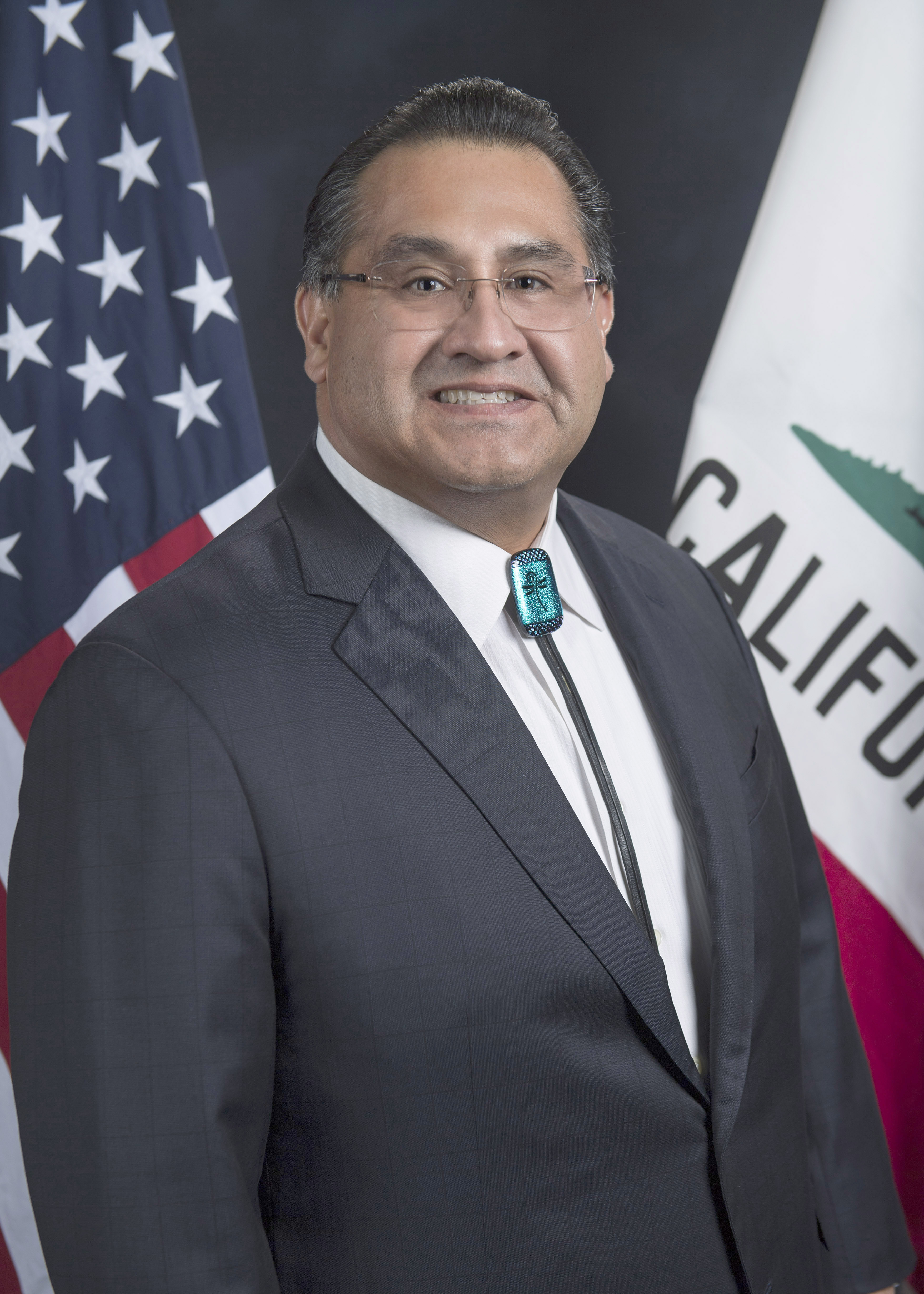
Asm. James Ramos
Total votes
17,608
all sessions
Attendance
93%
1,027 missed
Near the chamber average
With party
99%
of cast votes
Near the chamber average
Bipartisan score
0%
crosses aisle rarely
Near the chamber average
Sponsored
1,475
bills & resolutions
Lower than 80% of chamber peers
Committees
8
assignments
1,475 bills and resolutions
Sponsored bills
Total
1,475
Primary
167
Co-sponsor
1,308
This page
1,475
matching current filters
Passed Jan 23, 2023
1 co-sponsor
Theft: shoplifting: amount.
Existing law, the Safe Neighborhoods and Schools Act, enacted as an initiative statute by Proposition 47, as approved by the electors at the November 4, 2014, statewide general election, makes the theft of money, labor, or property petty theft punishable as a misdemeanor, whenever the value of the property taken does not exceed $950. Under existing law, if the value of the property taken exceeds $950, the theft is grand theft, punishable as a misdemeanor or a felony. Proposition 47 requires shoplifting, defined as entering a commercial establishment with the intent to commit larceny if the value of the property taken does not exceed $950, to be punished as a misdemeanor. Under existing law, entering a commercial establishment with the intent to take property exceeding $950 is burglary, punishable as a misdemeanor or a felony. This bill would amend Proposition 47 by reducing the threshold amount for petty theft and shoplifting from $950 to $400. The bill would provide that it shall become effective only when submitted to, and approved by, the voters of California.
Failed Oct 24, 2022
1 co-sponsor
Mental health: information sharing.
Existing law, the Children's Civil Commitment and Mental Health Treatment Act of 1988, authorizes a minor, if they are a danger to self or others, or they are gravely disabled, as a result of a mental health disorder, and authorization for voluntary treatment is not available, upon probable cause, to be taken into custody and placed in a facility designated by the county and approved by the State Department of Health Care Services as a facility for 72-hour treatment and evaluation of minors. Existing law, the Lanterman-Petris-Short Act, also authorizes the involuntary commitment and treatment of persons with specified mental health disorders. Under the act, if a person, as a result of a mental health disorder, is a danger to self or others, or is gravely disabled, the person may, upon probable cause, be taken into custody and placed in a facility designated by the county and approved by the State Department of Health Care Services for up to 72 hours for assessment, evaluation, and crisis intervention, or placement for evaluation and treatment. Existing law prohibits a person detained pursuant to the Lanterman-Petris-Short Act because the person is a danger to self or others, from owning, possessing, controlling, receiving, or purchasing, or attempting to own, possess, control, receive, or purchase, any firearm. In order for the Department of Justice to determine the eligibility of the person to own, possess, control, receive, or purchase a firearm, existing law requires each designated facility, within 24 hours of admitting an individual subject to that prohibition, to submit a report to the Department of Justice that contains specified information, including the identity of the person. This bill would require the Department of Justice to provide to the State Department of Health Care Services, in a secure format, a copy of reports submitted pursuant to those provisions on a quarterly basis. The bill would also require the State Department of Health Care Services to share the information it receives from the Department of Justice and designated facilities with county mental health or behavioral health departments on a quarterly basis. The bill would also require a designated facility to submit a quarterly report to the State Department of Health Care Services that identifies people admitted to the facility pursuant to the Lanterman-Petris-Short Act because the person is gravely disabled and minors admitted pursuant to the Children's Civil Commitment and Mental Health Treatment Act of 1988 who are younger than 13 years of age. The bill would require the designated facility to include in the report the same information required to be reported to the Department of Justice for individuals who are subject to the above-described firearms restrictions. The bill would require the State Department of Health Care Services to annually submit a publicly accessible report to the Legislature of deidentified and aggregated data received pursuant to these provisions, as specified. The bill would require the State Department of Health Care Services to implement these provisions no later than January 1, 2024, and would require the State Department of Health Care Services to, without taking regulatory action, issue guidance to implement these provisions in a manner that does not duplicate reporting requirements for designated facilities and local mental health directors.
Vetoed Sep 29, 2022
0 co-sponsors
Communications: California Advanced Services Fund.
Existing law vests the Public Utilities Commission with regulatory authority over public utilities, including telephone corporations. Existing law requires the commission to develop, implement, and administer the California Advanced Services Fund (CASF) to encourage deployment of high-quality advanced communications services to all Californians that will promote economic growth, job creation, and the substantial social benefits of advanced information and communications technologies. Existing law authorizes the commission to impose a surcharge, until December 31, 2032, to collect up to $150,000,000 per year for deposit into the CASF. Existing law requires the commission to establish specified accounts within the CASF, including the Broadband Infrastructure Grant Account to fund the deployment of broadband infrastructure and the Federal Funding Account to fund last-mile broadband projects, as specified. This bill would expressly authorize otherwise eligible wireless broadband service providers to receive funding from the Broadband Infrastructure Grant Account and the Federal Funding Account. The bill would, for purposes of the Federal Funding Account, require the commission to review completed applications within a review period, to document the basis for denial of an application, to authorize the amendment and resubmission of denied applications for consideration in a future review period, and to periodically establish an application deadline. The bill would, for purposes of the Federal Funding Account, authorize the commission to adopt affordability requirements for a recipient of a grant. This bill would incorporate additional changes to Section 281 of the Public Utilities Code proposed by AB 1426 to be operative only if this bill and AB 1426 are enacted and this bill is enacted last. Under existing law, a violation of the Public Utilities Act or any order, decision, rule, direction, demand, or requirement of the commission is a crime. Because the above provisions would be part of the act and a violation of a commission action implementing this bill's requirements would be a crime, the bill would impose a state-mandated local program. The California Constitution requires the state to reimburse local agencies and school districts for certain costs mandated by the state. Statutory provisions establish procedures for making that reimbursement. This bill would provide that no reimbursement is required by this act for a specified reason. This bill would declare that it is to take effect immediately as an urgency statute.
Vetoed Sep 29, 2022
1 co-sponsor
Mental health: 988 Suicide and Crisis Lifeline.
(1) Existing law, the Warren-911-Emergency Assistance Act, requires every local public agency, as defined, to have an emergency communication system and requires the digits "911" to be the primary emergency telephone number within the system. Existing law specifies provisions governing the operation and financing of community mental health services for the mentally disordered in every county through locally administered and locally controlled community mental health programs. Existing law specifies that county mental health services should be organized to provide immediate response to individuals in precrisis and crisis and to members of the individual's support system on a 24-hour, 7-day-per-week basis and authorizes provision of crisis services offsite as mobile services. Existing federal law, the National Suicide Hotline Designation Act, designates the 3-digit telephone number "988" as the universal number within the United States for the purpose of the national suicide prevention and mental health crisis hotline system operating through the 988 Suicide and Crisis Lifeline maintained by the Assistant Secretary for Mental Health and Substance Abuse and the Veterans Crisis Line maintained by the Secretary of Veterans Affairs. This bill would enact the Miles Hall Lifeline and Suicide Prevention Act. The bill would require the Office of Emergency Services to verify, no later than July 16, 2022, that technology that allows for transfers between 988 centers as well as between 988 centers and 911 public safety answering points, is available to 988 centers and 911 public safety answering points throughout the state. The bill would require, no later than 90 days after passage of the act, the office to appoint a 988 system director, among other things. The bill would require, no later than July 1, 2024, the office to verify interoperability between and across 911 and 988. The bill would require the office to consult with specified entities on any technology requirements for 988 centers. This bill would require the California Health and Human Services Agency to create, no later than December 31, 2023, a set of recommendations to support a 5-year implementation plan for a comprehensive 988 system. The bill would require that agency to convene a state 988 advisory group, as described, for purposes of advising the agency on the set of recommendations. The bill would require the agency to report annually, on or before December 31, beginning December 31, 2024, and until December 31, 2029, to the Legislature on the status of 988 implementation in the state, as described. The Administrative Procedure Act generally governs the procedure for the adoption, amendment, or repeal of regulations by state agencies and for the review of those regulatory actions by the Office of Administrative Law. The bill would provide that regulations and other similar instruments made pursuant to these provisions by the Office of Emergency Services and the California Health and Human Services Agency are not subject to the rulemaking provisions of the Administrative Procedure Act. (2) Existing law, the Knox-Keene Health Care Service Plan Act of 1975, provides for the licensure and regulation of health care service plans by the Department of Managed Health Care and makes a willful violation of the act a crime. Existing law also provides for the regulation of health insurers by the Department of Insurance. Existing law requires a health care service plan contract or disability insurance policy issued, amended, or renewed on or after January 1, 2021, to provide coverage for medically necessary treatment of mental health and substance use disorders, as defined, under the same terms and conditions applied to other medical conditions. This bill would require health care service plans and insurers to cover medically necessary treatment of a mental health or substance use disorder, including behavioral health crisis services, provided by a 988 center or mobile crisis team, regardless of whether the service is provided by an in-network or out-of-network provider, at the in-network cost-sharing amount, as defined. By creating a new crime under the Knox-Keene Act, this bill would impose a state-mandated local program. (3) Existing law, the Emergency Telephone Users Surcharges Act, generally imposes a surcharge on each access line for each month or part thereof for which a service user subscribes with a service supplier, at an amount no greater than $0.80, based on the Office of Emergency Services' estimate of the number of access lines to which the surcharge will be applied per month for a calendar year period that it estimates, pursuant to a specified formula, will produce sufficient revenue to fund the current fiscal year's 911 costs. Existing law imposes a surcharge on the purchase of prepaid mobile telephony services at the time of each retail transaction in this state, at the rate equal to the monthly surcharge amount per access line, to be paid by prepaid consumers and collected by sellers, as defined. Existing law exempts certain lines from the surcharge, including lines supplying lifeline service. Existing law requires the surcharge to be remitted to, and administered by, the California Department of Tax and Fee Administration, in accordance with specified provisions. Existing law makes certain violations of the Emergency Telephone Users Surcharge Act a crime. Existing law requires amounts to be paid to the state pursuant to the Emergency Telephone Users Surcharge Act to be deposited into the State Emergency Telephone Number Account and that the amounts deposited, upon appropriation by the Legislature, be spent solely for specified purposes, including payment for the installation of, and ongoing expenses for, a basic system. This bill would create a separate surcharge, beginning January 1, 2023, on each access line for each month or part thereof for which a service user subscribes with a service supplier. The bill would set the 988 surcharge for the 2023 and 2024 calendar years at $0.08 per access line per month and, for years beginning January 1, 2025, at an amount based on a specified formula, but no greater than $0.30 per access line per month. This bill would make applicable relevant provisions of the Emergency Telephone Users Surcharge Act to the 988 surcharge, as provided, including existing surcharge exemptions. The bill would authorize the 911 and 988 surcharges to be combined into a single-line item, as described. The bill would provide for specified costs to be paid by the fees prior to distribution to the Office of Emergency Services. The bill would make conforming changes in regard to the 988 surcharge. This bill would create the 988 State Suicide and Behavioral Health Crisis Services Fund and would require the fees to be deposited along with other specified moneys into the fund. The bill would provide that the funds be used, upon appropriation by the Legislature, for specified purposes and in accordance with specified priorities. The bill would require the Office of Emergency Services to require an entity seeking moneys available through the fund to annually file an expenditure and outcomes report containing specified information. (4) This bill would appropriate $300,000 from the General Fund to the 988 State Suicide and Behavioral Health Crisis Services Fund for expenditure by the California Department of Tax and Fee Administration in the 2022–23 fiscal year for purposes of implementing the amendments to the Emergency Telephone Users Surcharge Act. (5) This bill would incorporate additional changes to Section 41100 of the Revenue and Taxation Code proposed by SB 1496 to be operative only if this bill and SB 1496 are enacted and this bill is enacted last. (6) By expanding the scope of crimes imposed by the Emergency Telephone Users Surcharge Act, this bill would impose a state-mandated local program. The California Constitution requires the state to reimburse local agencies and school districts for certain costs mandated by the state. Statutory provisions establish procedures for making that reimbursement. This bill would provide that no reimbursement is required by this act for a specified reason. (7) This bill would declare that it is to take effect immediately as an urgency statute.
Signed into law Sep 29, 2022
1 co-sponsor
State holidays: Juneteenth.
Existing law designates specific days as holidays in this state. Existing law designates holidays on which community colleges and public schools are required to close, including days appointed by the President. Existing law entitles state employees, with specified exceptions, to be given time off with pay for specified holidays. This bill would add June 19, known as "Juneteenth," to the list of state holidays. The bill would specify that holidays created by federal legislation signed by the President are considered days appointed as holidays for the purposes of the above-described provisions requiring community colleges and public schools to close. The bill would authorize state employees to elect to take time off with pay in recognition of Juneteenth, as specified. This bill would incorporate additional changes to Sections 45203, 79020, and 88203 of the Education Code proposed by AB 1801 to be operative only if this bill and AB 1801 are enacted and this bill is enacted last. This bill would incorporate additional changes to Sections 6700, 19853, and 19853.1 of the Government Code proposed by AB 1801 and AB 2596 to be operative only if this bill and either or both AB 1801 and AB 2596 are enacted and this bill is enacted last.
Signed into law Sep 29, 2022
1 co-sponsor
Agricultural labor relations: elections.
Existing law, the Alatorre-Zenovich-Dunlap-Berman Agricultural Labor Relations Act of 1975, grants agricultural employees the right to form and join labor organizations and engage in collective bargaining with respect to wages, terms of employment, and other employment conditions, and authorizes employees to elect exclusive bargaining representatives for these purposes. Existing law creates the Agricultural Labor Relations Board and prescribes its composition, duties, and powers. Existing law authorizes the board to hold hearings and conduct investigations and requires that certain procedures be the exclusive method of redressing unfair labor practices. Under existing law, any person who willfully resists, prevents, or interferes with a member of the board or its agents or agencies in the performance of their duties is guilty of a misdemeanor. Existing law requires the board to certify the results of an election conducted by secret ballot of employees in a collective bargaining unit to designate a collective bargaining representative, unless the board determines there are sufficient grounds to refuse to do so. Existing law further provides that if the board refuses to certify an election because of employer misconduct that would render slight the chances of a new election reflecting the free and fair choice of employees, the labor organization shall be certified as the bargaining representative for the bargaining unit. This bill would refer to the election by secret ballot process as a polling place election. The bill would establish alternative procedures to the polling place election and authorize a labor organization to be certified as the exclusive bargaining representative of a bargaining unit through either a labor peace election or a non-labor peace election, as prescribed, dependent on whether an employer enrolls and agrees to a labor peace election for labor organization representation campaigns. The bill would provide that a labor peace election or a non-labor peace election permits a bargaining unit to summarily select a labor organization as its representative for collective bargaining purposes without using the existing polling place process. Under the bill, a labor peace election would be a mail ballot election and a non-labor peace election would establish a process for the submission of a petition with proof of majority support, subject to certification by the board. Among other provisions, the bill would require for both alternative procedures that an employer respond to the board with regard to a petition, including providing a specified list of employees to the board. By expanding the definition of a crime, this bill would impose a state-mandated local program. This bill would establish a schedule for agricultural employers to indicate to the board whether they agree to a labor peace compact, defined to mean an agreement by the employer to, among other things, make no statements for or against union representation to its employees or publicly, in any written or oral form, at any time during employee hire, rehire, or orientation, or after certain documents regarding organization are filed with the board. The bill would prohibit a labor peace compact from prohibiting an employer from communicating truthful statements to employees regarding workplace policies or benefits, as specified. The bill would require the board to develop an online web-based labor peace election process that will allow employers to indicate their labor peace choice online, and that will allow labor organizations to see whether a specific agricultural employer has agreed to a labor peace election campaign. This bill would repeal the above provisions on January 1, 2028. This bill would prescribe civil penalties to be imposed upon an agricultural employer who commits an unfair labor practice in an amount not to exceed $10,000 for each violation, and would increase that sum to an amount not to exceed $25,000 for specified violations. The bill would require the board to consider specified factors in determining the amount of a civil penalty pursuant to these provisions. The bill would also authorize the board to impose personal liability for these penalties upon a director or officer of an employer in certain circumstances. Existing law authorizes a person aggrieved by the final order of the board granting or denying in whole or in part the relief sought for an unfair labor practice, to obtain a review of the order in a specified court of appeal by filing in the court a written petition requesting that the order of the board be modified or set aside. This bill would require an employer who appeals or petitions for a writ of review of any order of the board involving make-whole, backpay, or other monetary awards to employees, to post an appeal bond in the amount of the entire economic value of the order, as specified, and would provide for the bond to be forfeited under specified conditions. This bill would state that its provisions are severable. The California Constitution requires the state to reimburse local agencies and school districts for certain costs mandated by the state. Statutory provisions establish procedures for making that reimbursement. This bill would provide that no reimbursement is required by this act for a specified reason.
Signed into law Sep 28, 2022
1 co-sponsor
Children's psychiatric residential treatment facilities.
Existing law, the California Community Care Facilities Act, provides for the licensing and regulation of community care facilities, including a children's crisis residential program, by the State Department of Social Services, and defines a children's crisis residential program to mean a facility licensed as a short-term residential therapeutic program and approved by the State Department of Health Care Services, or a county mental health plan, to operate a children's crisis residential mental health program to serve children experiencing mental health crises as an alternative to psychiatric hospitalization. Existing law provides for the Medi-Cal program, which is administered by the State Department of Health Care Services, under which qualified low-income individuals receive health care services, including specified mental health and substance use disorder services. The Medi-Cal program is, in part, governed and funded by federal Medicaid provisions. Existing federal Medicaid regulations provide for inpatient psychiatric services for individuals under 21 years of age in psychiatric facilities, as prescribed. This bill would require the State Department of Health Care Services to license and establish regulations for psychiatric residential treatment facilities, which the bill would define as a licensed residential facility operated by a public agency or private nonprofit organization that provides psychiatric services, as prescribed under the Medicaid regulations, to individuals under 21 years of age, in an inpatient setting. The bill would require the department to establish regulations for the facilities that include, among other things, the implementation of a plan that is designed to achieve the patient's discharge from inpatient status, step-down service, at the earliest possible time. For purposes of admission and continued stay at a psychiatric residential treatment facility, the bill would require that a patient's psychiatric condition requires services on an inpatient basis under the direction of a physician, that the services can reasonably be expected to improve the patient's condition or prevent further regression such that inpatient services will no longer be needed, and that the facility is the least restrictive setting for treatment of the patient's psychiatric condition. The bill would require the department to inspect psychiatric residential treatment facilities and would authorize any officer, employee, or agent of the department to enter and inspect the facility at any time to investigate compliance with applicable requirements. The bill would require the department to impose a licensing and application fee to be deposited into the Mental Health Facility Licensing Fund. The bill would require each psychiatric residential treatment facility to provide the department data, as specified. Existing law authorizes the court to limit the control to be exercised over a minor, if the minor is adjudged a ward or dependent child of the court, by any parent, guardian, or Indian custodian, if applicable, and requires the court by its order to clearly and specifically set forth all those limitations. When a parent, guardian, or Indian custodian who retains physical custody of a child under the jurisdiction of the juvenile court seeks to have a child admitted to a psychiatric residential treatment facility or when a child seeks to make a voluntary admission, the bill would require the social worker or probation officer to file an ex parte application for an order authorizing the voluntary admission, if certain requirements are met and within a certain time frame, and to include, among other things, a brief description of the child's mental disorder. The bill would require the social worker and probation officer to follow certain procedures, including notice, as specified. This bill would allow the court to grant a parent, guardian, or Indian custodian's request to have the child admitted, or authorize a child's voluntary consent to admission, into a psychiatric residential treatment facility, only if it finds, by clear and convincing evidence, that certain requirements are met, including, among other things, that the child suffers from a mental disorder which may reasonably be expected to be cured or ameliorated by a course of treatment offered by the hospital, facility, or program in which the child wishes to be placed. The bill would also provide a procedure to be followed by a social worker or probation officer if the dependent is a nonminor and the nonminor dependent seeks to voluntarily consent to admission to a psychiatric residential facility. The bill would require the child welfare agency or probation department to obtain authorization from the juvenile court prior to any voluntary admission of a minor dependent or ward into a psychiatric residential treatment facility. For a dependent, ward, or nonminor dependent admitted to a psychiatric residential treatment facility, the bill would require the county child welfare agency or probation department to, among other things, maintain regular and consistent communication with the dependent's, ward's, or nonminor dependent's treatment team in order to ensure that the dependent, ward, or nonminor dependent is receiving necessary services and to report on the dependent's, ward's, or nonminor dependent's progress to the court. By imposing additional duties on local child welfare agencies, social workers, and probation departments, this bill would impose a state-mandated local program. The California Constitution requires the state to reimburse local agencies and school districts for certain costs mandated by the state. Statutory provisions establish procedures for making that reimbursement. This bill would provide that with regard to certain mandates no reimbursement is required by this act for a specified reason. With regard to any other mandates, this bill would provide that, if the Commission on State Mandates determines that the bill contains costs so mandated by the state, reimbursement for those costs shall be made pursuant to the statutory provisions noted above.
Signed into law Sep 27, 2022
0 co-sponsors
Bulk merchandise pallets.
Existing law authorizes junk dealers and recyclers, as defined, to sell and purchase junk, which includes secondhand and used furniture, pallets, or other personal property, as specified. Existing law prohibits junk dealers and recyclers from purchasing or receiving bulk merchandise pallets marked with an indicia of ownership from anyone except the indicated owner, unless specified information is provided to the junk dealer or recycler, and requires the junk dealer or recycler to maintain a written record of that information. Existing law makes a violation of these recordkeeping requirements a misdemeanor. This bill would revise the above provisions on bulk merchandise pallets to apply only to the purchase of bulk merchandise pallets marked with an indicia of ownership and would delete the provisions on receiving the bulk merchandise pallets, as described above. The bill would provide that those provisions do not prohibit a junk dealer or recycler from acquiring good faith possession of merchandise pallets based on the representations of the seller that the indicated owner cannot be located or has failed to retrieve the merchandise pallets on a timely basis. The bill would require a junk dealer or recycler who acquires good faith possession of merchandise pallets, if the indicated owner can be located, to give notice of good faith possession to the owner of those pallets. If, within 35 calendar days after the junk dealer or recycler notifies the indicated owner of having acquired good faith possession, the indicated owner demands a return of the pallets, the bill would permit a junk dealer or recycler to require payment of reasonable storage fees. The bill would provide that after 35 calendar days from when the junk dealer or recycler provides notice of good faith possession to the indicated owner, the owner is deemed to have relinquished possession of the merchandise pallets, and would permit the junk dealer or recycler to either sell the pallets or charge reasonable storage fees if the indicated owner demands a return and the pallets are still in the possession of the junk dealer or recycler. This bill would require the seller to retain a copy of the notice of good faith possession for at least 2 years, and would require the notice to contain specified information, including the name and contact information of the junk dealer or recycler that acquired good faith possession of the merchandise pallets. The bill would require the notice of good faith possession to be sent by mail or email to the indicated owner at their physical or email address, if known. By expanding the scope of a crime regarding the recordkeeping requirements of junk dealers and recyclers, the bill would impose a state-mandated local program. The California Constitution requires the state to reimburse local agencies and school districts for certain costs mandated by the state. Statutory provisions establish procedures for making that reimbursement. This bill would provide that no reimbursement is required by this act for a specified reason.
Signed into law Sep 25, 2022
1 co-sponsor
Ask Maddy
·
AI policy assistant
Ask Maddy about James Ramos
Scope: CA
Hi! I can help you understand James Ramos's legislative record. What would you like to know?
Try one of these
i
Maddy answers using official bill text and legislative records. Always verify before sharing.
Sources cited inline