

Children's psychiatric residential treatment facilities.
Summary
Existing law, the California Community Care Facilities Act, provides for the licensing and regulation of community care facilities, including a children's crisis residential program, by the State Department of Social Services, and defines a children's crisis residential program to mean a facility licensed as a short-term residential therapeutic program and approved by the State Department of Health Care Services, or a county mental health plan, to operate a children's crisis residential mental health program to serve children experiencing mental health crises as an alternative to psychiatric hospitalization. Existing law provides for the Medi-Cal program, which is administered by the State Department of Health Care Services, under which qualified low-income individuals receive health care services, including specified mental health and substance use disorder services. The Medi-Cal program is, in part, governed and funded by federal Medicaid provisions. Existing federal Medicaid regulations provide for inpatient psychiatric services for individuals under 21 years of age in psychiatric facilities, as prescribed. This bill would require the State Department of Health Care Services to license and establish regulations for psychiatric residential treatment facilities, which the bill would define as a licensed residential facility operated by a public agency or private nonprofit organization that provides psychiatric services, as prescribed under the Medicaid regulations, to individuals under 21 years of age, in an inpatient setting. The bill would require the department to establish regulations for the facilities that include, among other things, the implementation of a plan that is designed to achieve the patient's discharge from inpatient status, step-down service, at the earliest possible time. For purposes of admission and continued stay at a psychiatric residential treatment facility, the bill would require that a patient's psychiatric condition requires services on an inpatient basis under the direction of a physician, that the services can reasonably be expected to improve the patient's condition or prevent further regression such that inpatient services will no longer be needed, and that the facility is the least restrictive setting for treatment of the patient's psychiatric condition. The bill would require the department to inspect psychiatric residential treatment facilities and would authorize any officer, employee, or agent of the department to enter and inspect the facility at any time to investigate compliance with applicable requirements. The bill would require the department to impose a licensing and application fee to be deposited into the Mental Health Facility Licensing Fund. The bill would require each psychiatric residential treatment facility to provide the department data, as specified. Existing law authorizes the court to limit the control to be exercised over a minor, if the minor is adjudged a ward or dependent child of the court, by any parent, guardian, or Indian custodian, if applicable, and requires the court by its order to clearly and specifically set forth all those limitations. When a parent, guardian, or Indian custodian who retains physical custody of a child under the jurisdiction of the juvenile court seeks to have a child admitted to a psychiatric residential treatment facility or when a child seeks to make a voluntary admission, the bill would require the social worker or probation officer to file an ex parte application for an order authorizing the voluntary admission, if certain requirements are met and within a certain time frame, and to include, among other things, a brief description of the child's mental disorder. The bill would require the social worker and probation officer to follow certain procedures, including notice, as specified. This bill would allow the court to grant a parent, guardian, or Indian custodian's request to have the child admitted, or authorize a child's voluntary consent to admission, into a psychiatric residential treatment facility, only if it finds, by clear and convincing evidence, that certain requirements are met, including, among other things, that the child suffers from a mental disorder which may reasonably be expected to be cured or ameliorated by a course of treatment offered by the hospital, facility, or program in which the child wishes to be placed. The bill would also provide a procedure to be followed by a social worker or probation officer if the dependent is a nonminor and the nonminor dependent seeks to voluntarily consent to admission to a psychiatric residential facility. The bill would require the child welfare agency or probation department to obtain authorization from the juvenile court prior to any voluntary admission of a minor dependent or ward into a psychiatric residential treatment facility. For a dependent, ward, or nonminor dependent admitted to a psychiatric residential treatment facility, the bill would require the county child welfare agency or probation department to, among other things, maintain regular and consistent communication with the dependent's, ward's, or nonminor dependent's treatment team in order to ensure that the dependent, ward, or nonminor dependent is receiving necessary services and to report on the dependent's, ward's, or nonminor dependent's progress to the court. By imposing additional duties on local child welfare agencies, social workers, and probation departments, this bill would impose a state-mandated local program. The California Constitution requires the state to reimburse local agencies and school districts for certain costs mandated by the state. Statutory provisions establish procedures for making that reimbursement. This bill would provide that with regard to certain mandates no reimbursement is required by this act for a specified reason. With regard to any other mandates, this bill would provide that, if the Commission on State Mandates determines that the bill contains costs so mandated by the state, reimbursement for those costs shall be made pursuant to the statutory provisions noted above.
Bill status
signed
all 5 stages cleared
Introduction
Feb 2022
Committee Review
Aug 2022
Assembly Passage
May 2022
Senate Passage
Aug 2022
Signed into Law
Sep 2022
Introduced Feb 16, 2022
Signed Sep 27, 2022
Floor votes · Senate Aug 31, 2022 · Assembly May 23, 2022
How they voted
37–0
Passed
Total votes 37
Aug 31, 2022
D
Democratic29
100% Yea
R
Republican8
100% Yea
Vote distribution
All Yea
All Nay
Mixed
No data
Full legislative history
Actions timeline
Total actions
40
Key actions
14
Committee
17
Amendments
8
Sep 27, 2022
Signed into law
Approved by the Governor.
legislature
Aug 31, 2022
Lower · Passed
Senate amendments concurred in. To Engrossing and Enrolling. (Ayes 76. Noes 1.).
lower
Aug 31, 2022
Lower · Passed
From committee: That the Senate amendments be concurred in. (Ayes 14. Noes 0.) (August 31).
lower
Aug 31, 2022
Committee
Re-referred to Com. on HEALTH. pursuant to Assembly Rule 77.2.
lower
Aug 31, 2022
Introduced
In Assembly. Concurrence in Senate amendments pending.
lower
Aug 31, 2022
Upper · Passed
Read third time. Passed. Ordered to the Assembly. (Ayes 40. Noes 0. Page 5362.).
upper
Aug 25, 2022
Upper · Passed
From committee: Be re-referred to Com. on JUD. pursuant to Senate Rule 29.10(b). (Ayes 5. Noes 0.) Re-referred to Com. on JUD.
upper
Aug 25, 2022
Committee
Re-referred to Com. on RLS pursuant to Senate Rule 29.10.
upper
Aug 24, 2022
Upper · Passed
Read third time and amended. Ordered to second reading.
upper
Aug 11, 2022
Upper · Passed
From committee: Do pass. (Ayes 7. Noes 0.) (August 11).
upper
Aug 2, 2022
Committee
In committee: Referred to suspense file.
upper
Jun 28, 2022
Committee
Re-referred to Com. on APPR.
upper
Jun 28, 2022
Upper · Passed
In committee: Hearing postponed by committee.
upper
Jun 27, 2022
Introduced
From committee chair, with author's amendments: Amend, and re-refer to committee. Read second time, amended, and re-referred to Com. on JUD.
upper
Jun 23, 2022
Upper · Passed
From committee: Do pass and re-refer to Com. on JUD. (Ayes 9. Noes 0.) (June 22). Re-referred to Com. on JUD.
upper
Jun 16, 2022
Committee
Action rescinded whereby the bill was referred to Com. on HUMAN S.
lower
Jun 15, 2022
Committee
Re-referred to Coms. on HEALTH, JUD., and HUMAN S.
upper
Jun 8, 2022
Upper · Passed
Measure version as amended on June 6 corrected.
upper
Jun 6, 2022
Introduced
From committee chair, with author's amendments: Amend, and re-refer to committee. Read second time, amended, and re-referred to Com. on RLS.
upper
Jun 1, 2022
Committee
Referred to Com. on RLS.
upper
May 23, 2022
Lower · Passed
Read third time. Passed. Ordered to the Senate. (Ayes 74. Noes 0. Page 4841.)
lower
May 19, 2022
Lower · Passed
From committee: Do pass. (Ayes 16. Noes 0.) (May 19).
lower
May 18, 2022
Committee
In committee: Set, first hearing. Referred to suspense file.
lower
May 2, 2022
Committee
Re-referred to Com. on APPR.
lower
Apr 28, 2022
Lower · Passed
Read second time and amended.
lower
Apr 27, 2022
Introduced
From committee: Amend, and do pass as amended and re-refer to Com. on APPR. (Ayes 14. Noes 0.) (April 26).
lower
Mar 3, 2022
Committee
Referred to Com. on HEALTH.
lower
Feb 17, 2022
Lower · Passed
From printer. May be heard in committee March 19.
lower
1 primary · 0 co-sponsors
Sponsors
Role
Legislator
Party
State
District
P
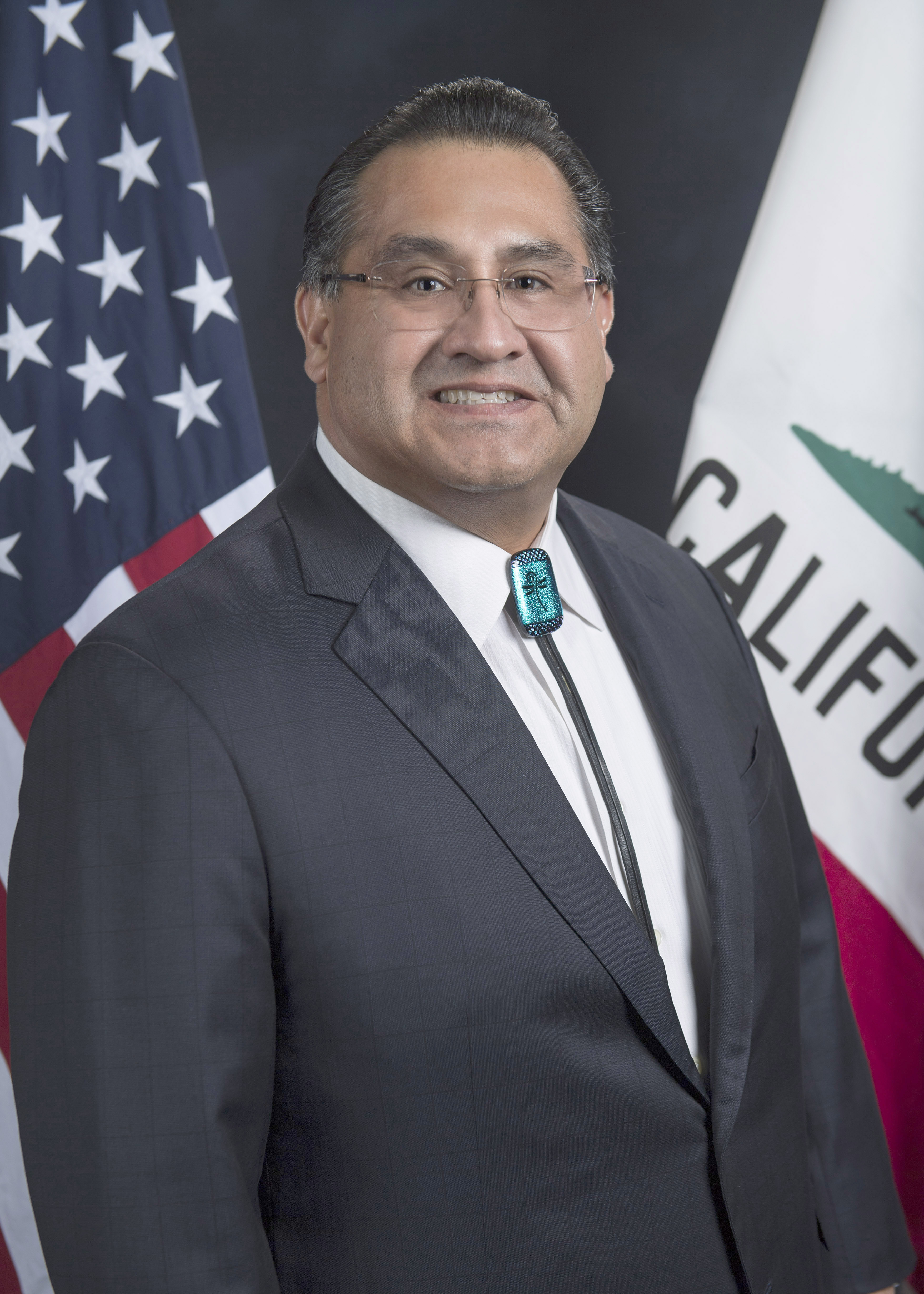
James Ramos
DDemocratic
Ask Maddy
·
AI policy assistant
Ask Maddy about AB 2317
Scope: CA
Hi! I can help you understand AB 2317. What would you like to know?
Try one of these
i
Maddy answers using official bill text and legislative records. Always verify before sharing.
Sources cited inline