

Existing law establishes the jurisdiction of the juvenile court, which may adjudge a child to be a dependent of the court under certain circumstances, including when the child suffered, or there is a substantial risk that the child will suffer, serious physical harm or illness as a result of the failure or inability of their parent or guardian to adequately supervise or protect the child. Existing law requires the court to review the status of every dependent child in foster care periodically, but no less frequently than once every 6 months. Existing law subjects a minor between 12 and 17 years of age, inclusive, who violates any federal, state, or local law or ordinance to, and a minor under 12 years of age who is alleged to have committed specified serious offenses to, the jurisdiction of the juvenile court, which may adjudge the minor to be a ward of the court. Existing law generally provides for the placement of foster youth in various placement settings and governs the provision of child welfare services, as specified. Existing law requires county child welfare agencies and probation departments to develop and implement specific protocols to expeditiously locate any child or nonminor dependent missing from foster care, including, but not limited to, the timeframe for reporting missing youth and the individuals or entities entitled to notice that a youth is missing, and requires the social worker or probation officer to determine the primary factors that contributed to the child or nonminor dependent running away or otherwise being absent from care, among other things. This bill, the Luke Madrigal Act, would, among other things, additionally require the social worker or probation officer, when they receive information that a child receiving child welfare services is absent from foster care to, among other things, engage in ongoing and intensive due diligence efforts, as defined, to locate, place, and stabilize the child, request that the juvenile court schedule a hearing to review the placement and the ongoing and intensive due diligence efforts to locate and return the child, notify specified individuals whose whereabouts are known about the hearing, and prepare, submit, and serve a report at the hearing and any subsequent hearings describing their ongoing and intensive due diligence efforts to locate, place, and stabilize the child. The bill would require the court to consider the safety of the child receiving child welfare services who is absent from foster care to determine the extent of the activities and compliance of the county with the case plan in making ongoing and intensive due diligence efforts to locate and return the child to a safe placement, and to continue to periodically review their case at least every 30 calendars days, as specified. The bill would define "absent from foster care" to mean when the whereabouts of a child receiving child welfare services is unknown to the county child welfare agency or probation department or when the county child welfare agency or probation department has located the child receiving child welfare services in a location not approved by the court that may pose a risk to the child. The bill would also define "child receiving child welfare services" to include a child or nonminor dependent placed in a specified foster care placement or in the home of an emergency caregiver, and dependents, nonminor dependents, wards, and minors who have been taken into temporary custody pursuant to specified provisions and who are in foster care. By increasing the duties of county child welfare agencies and probation departments, this bill would create a state-mandated local program. The California Constitution requires the state to reimburse local agencies and school districts for certain costs mandated by the state. Statutory provisions establish procedures for making that reimbursement. This bill would provide that no reimbursement is required by this act for a specified reason.
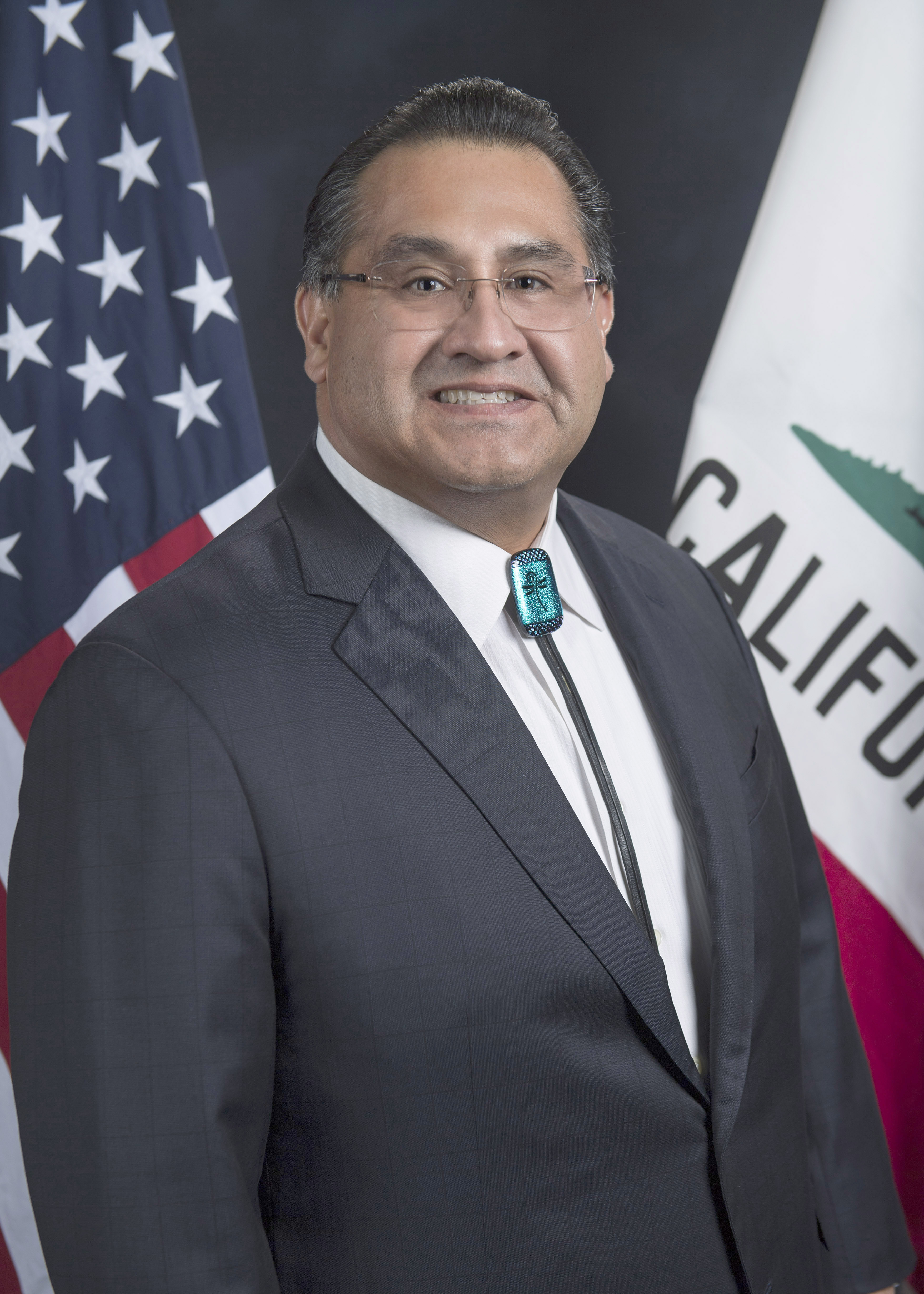
Asm. James Ramos
Sponsored bills
Existing law sets forth the general responsibilities and roles of the Business, Consumer Services, and Housing Agency, the Department of Housing and Community Development (department) , and the California Housing Finance Agency in carrying out state housing policies and programs. Existing law, the G. David Singleton California Indian Assistance Program, requires the department to provide comprehensive technical assistance to tribal housing authorities, housing sponsors, and governmental agencies on reservations, rancherias, and on public domain to facilitate the planning and orderly development of suitable, decent, safe, and sanitary housing for American Indians residing in these areas. Upon request of the governing body of a reservation or rancheria, existing law authorizes the department to act on behalf of the tribal housing authority and perform the functions thereof. This bill would remove the authority for the department to act on behalf of the tribal housing authority. The bill would also require the department to provide comprehensive technical assistance to tribes, designated tribal housing entities, and tribal housing departments on reservations, rancherias, and on public domain, and tribes that want to participate in tribal housing grant programs on fee simple land. The bill would additionally require the department to provide comprehensive technical assistance to facilitate the planning and orderly development of suitable, decent, safe, and sanity housing for American Indians residing within a tribe's designated service area, as defined by the tribe. The bill would require the department to provide outreach, education, and comprehensive technical assistance to tribes, tribal housing authorities, tribally designated housing entity, housing departments of a tribe, housing sponsors, and governmental agencies on reservations, rancherias, and on public domain in the development of tribal housing grant programs, and before, during, and after the grant application process. The bill would require data collected pursuant to these provisions to be kept confidential and not subject to public disclosure. Existing law authorizes the department to modify or waive various requirements of any state financing being provided to a housing development by the department in specified situations, if tribal law, tribal governance, tribal charter, or difference in tribal entity or agency legal structure would cause a violation or not satisfy the requirements for the financing. Existing law authorizes the department to waive, among other things, target population percentage requirements, not to exceed a change of more than 5% of any amount expressly set forth in statute and affordability levels and unit mix requirements, not to exceed a change of more than 5% of any amount expressly set forth in statute. This bill would instead authorize the department to waive the target population percentage requirements and affordability levels and unit mix requirements, without limitation. The bill would additionally authorize the department to waive, among other things, timeline requirements, service area requirements, fund matching requirements, shovel ready project requirements, and requirements related to housing elements and housing plans, and income limits. To provide assistance with these waivers, the bill would require the department to, among other things, assign each waiver submitted a waiver reference number and post on its internet website a waiver submitted to the department, including the nature of the waiver and the waiver reference number. This bill would require the department to include its designated tribal liaison or their designee in all discussions with tribes that are eligible recipients, unless those eligible recipients give permission for the tribal liaison or their designee to be absent. If the department requires a tribe that is an eligible recipient of state funding to waive tribal sovereignty in order to access funds, the bill would require the department to draft the waiver narrowly to serve both the individual needs of the tribe and make the funding agreement enforceable. Existing constitutional provisions require that a statute that limits the right of access to the meetings of public bodies or the writings of public officials and agencies be adopted with findings demonstrating the interest protected by the limitation and the need for protecting that interest. This bill would make legislative findings to that effect.
Existing federal law, the Indian Gaming Regulatory Act of 1988, provides for the negotiation and execution of tribal-state gaming compacts for the purpose of authorizing certain types of gaming on Indian lands within a state. The California Constitution authorizes the Governor to negotiate and conclude those compacts, subject to ratification by the Legislature. Existing law expressly ratifies a number of tribal-state gaming compacts, and amendments to tribal-state gaming compacts, between the State of California and specified Indian tribes. The California Environmental Quality Act (CEQA) requires a lead agency to prepare, or cause to be prepared, and certify the completion of, an environmental impact report on a project, as defined, that it proposes to carry out or approve that may have a significant effect on the environment, as defined, or to adopt a negative declaration if it finds that the project will not have that effect. This bill would ratify the tribal-state gaming compacts entered into between the State of California and the Cahto Tribe of the Laytonville Rancheria, the Ewiiaapaayp Band of Kumeyaay Indians, California, the Manchester Band of Pomo Indians of the Manchester Rancheria, California, the Resighini Rancheria, and the Sherwood Valley Rancheria of Pomo Indians of California. The bill would provide that, in deference to tribal sovereignty, certain actions related to those compacts are not projects for the purposes of CEQA. This bill would declare that it is to take effect immediately as an urgency statute.
Existing law provides that 8 hours of labor constitute a day's work unless it is otherwise expressly stipulated in a collective bargaining agreement, and requires that any work in excess of specified hours in one workday or one workweek be compensated at a rate higher than the regular rate of pay for the employee, as specified. Existing law authorizes, upon the proposal of an employer, employees of an employer to adopt a regularly scheduled alternative workweek that authorizes work by the affected employees for no longer than 10 hours per day within a 40-hour workweek without the payment to the affected employees of an overtime rate of compensation, as specified. Existing law prohibits an employer from employing an employee for a work period of more than 5 hours per day without providing the employee with a meal period, as specified, but, notwithstanding these provisions, existing law authorizes the Industrial Welfare Commission to adopt a working condition order permitting a meal period to commence after 6 hours of work if specified conditions are met. Under existing law, the Industrial Welfare Commission issues wage orders that regulates wages, hours, and working conditions in various occupations, including Wage Order No. 10-2001, which regulates the amusement and recreation industry. This bill would provide that these provisions do not apply to a person who is covered by a contract to play baseball at the minor league level with a labor organization that has at least 10 years of experience representing baseball players and who is compensated pursuant to the terms of a valid collective bargaining agreement that expressly provides for the wages, hours of work, working conditions of employees, payment for time worked during the off-season and spring training, and final and binding arbitration of disputes. The bill would require the Department of Industrial Relations to amend and republish Wage Order No. 10-2001 to provide that specified provisions of the wage order do not apply to a person subject to these provisions, as specified. Existing law requires an employer, semimonthly or at the time of payment of wages, to furnish an employee an accurate, itemized, written statement containing specified information regarding the amounts earned, hours worked, and the employee's identity, among other things, subject to certain variations. Existing law provides that an itemized wage statement furnished by an employer pursuant to these provisions is not required to show total hours worked by the employee if, among other things, the employee is exempt from the payment of minimum wage and overtime under specified law. This bill would provide that an itemized wage statement furnished by an employer pursuant to these provisions is not required to show total hours worked by an employee if the employee is exempt from the payment of minimum wage and overtime under the bill's provisions described above. Existing law, the Administrative Procedure Act, governs, among other things, the procedures for the adoption, amendment, or repeal of regulations by state agencies. Existing law also describes procedures for the promulgation of regulations by the Industrial Welfare Commission. This bill would exempt these provisions from the rulemaking procedures described above. Existing constitutional provisions require that a statute that limits the right of access to the meetings of public bodies or the writings of public officials and agencies be adopted with findings demonstrating the interest protected by the limitation and the need for protecting that interest. This bill would make legislative findings to that effect. This bill would declare that it is to take effect immediately as an urgency statute.
Existing law prohibits a local authority from enacting or enforcing an ordinance on matters covered by the Vehicle Code unless expressly authorized by the Vehicle Code. Existing law authorizes local authorities to adopt rules and regulations by ordinance or resolution regarding specified matters, including, among others, crossing guards, the operation of bicycles, the removal of illegally parked vehicles, and cruising, as defined. This bill would remove the authorization for a local authority to adopt rules and regulations by ordinance or regulation regarding cruising. Existing law makes it unlawful to operate a passenger vehicle, or commercial vehicle under 6,000 pounds, that has been modified from its original design so that any portion of the vehicle, other than the wheels, has less clearance from the surface of a level roadway than the clearance between the roadway and the lowermost portion of any rim of any wheel in contact with the roadway. This bill would repeal that prohibition. This bill would incorporate additional changes to Section 21100 of the Vehicle Code proposed by AB 825 and SB 50 to be operative only if this bill and AB 825, this bill and SB 50, or this bill, AB 825, and SB 50 are enacted and this bill is enacted last.
Existing law establishes the Department of Housing and Community Development and sets forth its powers and duties, including promoting the development of affordable housing in the state. Existing law creates the California Housing Finance Agency within the Business, Consumer Services, and Housing Agency and authorizes the agency to make loans to finance affordable housing. Existing law establishes the California Tax Credit Allocation Committee to allocate specified federal low-income housing tax credits. Existing law also establishes the California Debt Limit Allocation Committee for the purpose of implementing the volume limit for the state on private activity bonds established pursuant to federal law. Under existing law, the committee's duties include annually determining a state ceiling on the aggregate amount of private activity bonds that may be issued, and allocating that amount among state and local agencies. This bill would require specified reviewing entities, as defined as the above-described entities, to jointly convene an Affordable Housing Finance Workgroup to develop recommendations for state-administered programs to utilize a consolidated application for multifamily affordable rental housing developers to use to obtain grants, soft loans, low-income housing tax credits, tax exempt bonds, federal funds, as applicable, and other types of subsidies for building affordable housing, and develop a coordinated review process for the application, as described. The bill would require the workgroup to include representatives of the reviewing entities, nonprofit and for-profit affordable housing developers, and local and tribal governments. The bill would require the workgroup to identify specified information, including any state-administered program that may utilize the consolidated application and coordinated review process, and a timeline for developing a single consolidated application and coordinated review process. On or before, July 1, 2026, the bill would require the workgroup to report recommendations on implementing a single consolidated application and coordinated review process to the reviewing entities, the Legislature, and certain committees of the Legislature. The bill would require the reviewing entities to develop and report to the Legislature a plan to update state-administered programs that may utilize the consolidated application and coordinated review process based on the recommendations of the workgroup on or before January 1, 2027, as specified.
Existing law, the Mitigation Fee Act, imposes certain requirements on a local agency that imposes a fee as a condition of approval of a development project that is imposed to provide for an improvement to be constructed to serve the development project, or a fee for public improvements, as specified. In this regard, the Mitigation Fee Act requires the local agency to deposit the fee in a separate capital facilities account or fund, and to make certain information about the account or fund public annually, as specified. The Mitigation Fee Act requires that information to include an identification of an approximate date by which the construction of the public improvement will commence if the local agency determines that sufficient funds have been collected to complete financing on an incomplete public improvement, as specified. The Mitigation Fee Act also requires that information to include the amount of refunds made to the owners of the lots or units of the development project, as specified. This bill would require the report to include an identification of each public improvement identified in a previous report, whether construction began on the approximate date noted in the previous report, the reason for the delay, if any, and a revised approximate date that the local agency will commence construction, if applicable. The bill would also require the report to include the number of persons or entities identified to receive refunds. The Mitigation Fee Act authorizes a person to request an audit to determine whether a fee or charge levied by a local agency exceeds the amount reasonably necessary to cover the cost of a product, public facility, as defined, or service provided by the local agency. Existing law prohibits a local agency from imposing water or sewer connection fees or capacity charges that exceed the estimated reasonable cost of providing the service for which the fee or charge is imposed, unless voter approval is obtained, as specified. This bill, except with respect to the above-described connection fees and capacity charges, would expand the purposes of the audit to include a determination of when the revenue generated by a fee or charge is scheduled to be expended and when the public improvement is scheduled to be completed. The bill would require a local agency to inform a person paying a fee imposed as a condition of approval of a development project, as described above, of their right to request the audit described above and their right to file a written request for mailed notice of the local agency's meeting to review the fee account or fund information made public, as described above. The bill would also require the local agency to provide the person with a link to the page on the local agency's website where the fee account or fund information made public, as described above, is available for review. By imposing new duties on local agencies, the bill would impose a state-mandated local program. The California Constitution requires the state to reimburse local agencies and school districts for certain costs mandated by the state. Statutory provisions establish procedures for making that reimbursement. This bill would provide that no reimbursement is required by this act for a specified reason.