

Existing law establishes the California Statewide Housing Plan to serve as a state housing plan for all relevant purposes. Existing law requires that the plan incorporate, among other things, a statement of housing goals, policies, and objectives, and requires the Department of Housing and Community Development (department) to update and provide a revision of the plan to the Legislature every 4 years, as specified. Existing law requires each update and revision to the plan occurring on or after January 1, 2023, to include an inventory of the number of affordable units needed to meet the state's affordable housing needs for the plan period and to incorporate technical updates and provide technical recommendations, as specified. This bill would require each update and revision to the plan to also include (1) an analysis of first-time home buyer assistance policies, goals, and objectives; (2) recommendations for actions that will contribute to increasing home ownership opportunities for first-time home buyers in California; and (3) an evaluation and summary of demographic disparities in home ownership attainment in California, as specified. The bill would require the department to consult with the California Housing Finance Agency and would authorize the department to consult with other state departments and agencies deemed relevant to inform the plan pursuant to these provisions.
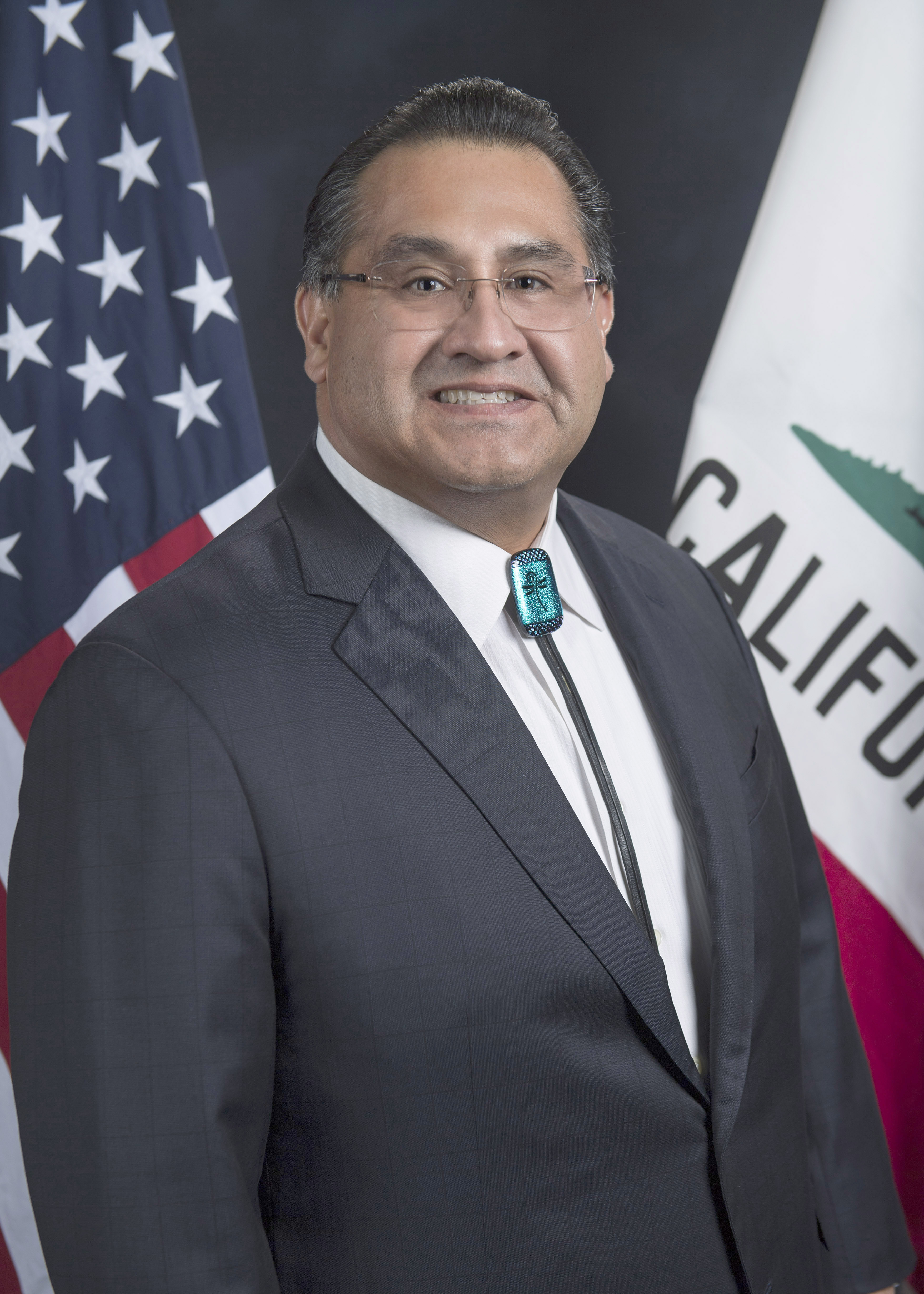
Asm. James Ramos
Sponsored bills
Existing law, known as the State Capitol Building Annex Act of 2016, authorizes the Joint Rules Committee to pursue the construction of a State Capitol Building Annex or the restoration, rehabilitation, renovation, or reconstruction of the existing State Capitol Building Annex. Existing law requires any construction, restoration, rehabilitation, renovation, or reconstruction work undertaken pursuant to the act to incorporate specified elements. This bill would require any construction, restoration, rehabilitation, renovation, or reconstruction work undertaken pursuant to the act to also incorporate a mural honoring Native Americans in California in one of the main hearing rooms in the newly constructed State Capitol Building Annex or the restored, rehabilitated, renovated, or reconstructed State Capitol Building Annex. The bill would require the mural to be designed in consultation with the Native American Heritage Commission.
Existing law establishes the California Law Enforcement Telecommunications System (CLETS) within the Department of Justice to facilitate the exchange and dissemination of information between law enforcement agencies in the state. This bill would require the department to grant access to the system to the law enforcement agency or tribal court of a federally recognized Indian tribe meeting certain qualifications, as specified.
The Planning and Zoning Law, among other things, provides for the creation of accessory dwelling units by local ordinance, or, if a local agency has not adopted an ordinance, by ministerial approval, in accordance with specified standards and conditions. Existing law prohibits a local agency from requiring an accessory dwelling unit to provide fire sprinklers, if they are not required for the primary residence. The State Housing Law, among other things, requires the Department of Housing and Community Development to adopt, amend, or repeal rules and regulations for the protection of the health, safety, and general welfare of the occupant and the public relating to specified residential structures, as provided, which apply throughout the state. A violation of the State Housing Law, or of the building standards or rules and regulations adopted pursuant to that law, is a misdemeanor. This bill, until January 1, 2027, would prohibit a local agency from imposing or enforcing any requirement to provide fire sprinklers for a temporary sleeping cabin that is on a site with 50 or fewer temporary sleeping cabins. The bill would define "temporary sleeping cabin" to mean a nonpermanent structure that is intended to provide temporary housing to people experiencing homelessness or at risk of homelessness, has a total floor area of less than 250 feet, and does not include plumbing. The bill would require a temporary sleeping cabin that does not include fire sprinklers to comply with alternative fire life and safety standards that include providing, among other things, a smoke alarm and carbon monoxide alarm in the unit, a fire extinguisher in the unit, and ingress and egress that facilitates rapid exit of the temporary sleeping cabin. By requiring local agencies to impose alternative fire life and safety standards for these units, the bill would impose a state-mandated local program. This bill would require violations of those alternative fire and life safety standards to be handled pursuant to specified provisions of the State Housing Law. By adding to the duties of local officials with respect to enforcement of the State Housing Law, the violation of which is a crime, this bill would impose a state-mandated local program. This bill would include findings that changes proposed by this bill address a matter of statewide concern rather than a municipal affair and, therefore, apply to all cities, including charter cities. The California Constitution requires the state to reimburse local agencies and school districts for certain costs mandated by the state. Statutory provisions establish procedures for making that reimbursement. This bill would provide that no reimbursement is required by this act for specified reasons.
Existing law establishes the California State University, under the administration of the Trustees of the California State University, as one of the segments of public postsecondary education in this state. The California State University comprises 23 institutions of higher education located throughout the state. The California Native American Graves Protection and Repatriation Act of 2001 requires all agencies and museums, which is defined to include higher education institutions, that receive state funding and have possession or control over collections of California Native American human remains and associated funerary objects to inventory those remains and objects for repatriation to the appropriate California Indian tribes, as specified. This bill would require the California State University to comply with various requirements regarding the handling, maintenance, and repatriation of Native American human remains and cultural items under the California Native American Graves Protection and Repatriation Act of 2001, including adopting and implementing systemwide policies that, among other things, prohibit the use of any Native American human remains or cultural items for purposes of teaching or research at the California State University while in the possession of a California State University campus or museum. The bill would make its provisions severable.
The California Constitution provides that the University of California constitutes a public trust, and requires the university to be administered by the Regents of the University of California, a corporation in the form of a board, with full powers of organization and government, subject to legislative control only for specified purposes. The California Native American Graves Protection and Repatriation Act of 2001 requires all agencies and museums, which is defined to include higher education institutions, that receive state funding and have possession or control over collections of California Native American human remains and associated funerary objects to inventory those remains and objects for repatriation to the appropriate California Indian tribes, as specified. This bill would urge the University of California to, on or before June 30, 2024, and annually thereafter, report each University of California campus's progress towards completing repatriation pursuant to the California Native American Graves Protection and Repatriation Act of 2001. The bill would urge the office of the President of the University of California to provide available funding to sufficiently support those efforts. The bill would urge the University of California to prohibit use of any Native American human remains or cultural items for purposes of teaching or research at the University of California. Existing law requires the California State Auditor to conduct an audit commencing in the year 2019 and again in 2021 regarding the University of California's compliance with the federal and California acts and to report its findings to the Legislature and all other appropriate entities. This bill would require the California State Auditor to additionally conduct an audit again in 2024 and 2026, and to also report its findings to the Native American Heritage Commission.
Existing law establishes the California State University, under the administration of the Trustees of the California State University, and the University of California, under the administration of the Regents of the University of California, as 2 of the segments of public postsecondary education in this state. Existing law provides for the missions and functions of these segments, and states that the University of California has the sole authority in public higher education to award doctoral degrees in all fields of learning, except that it may agree with the California State University to award joint doctoral degrees in selected fields. However, existing law authorizes the California State University to offer doctoral programs in education, audiology, physical therapy, occupational therapy, and public health without that agreement. This bill would authorize the California State University to award professional or applied doctoral degrees statewide that do not duplicate University of California doctoral degrees and satisfy certain requirements. The bill would require a California State University campus seeking authorization to offer a professional or applied doctoral degree program pursuant to the bill to submit specified information on the proposed doctoral degree for review by the office of the Chancellor of the California State University, and approval by the trustees, as provided. The bill would authorize professional or applied doctoral degree programs that are approved for implementation by the trustees pursuant to the bill to be implemented at any California State University campus, but would limit the number of doctoral degree programs that may be offered at a California State University campus. The bill would prohibit the trustees from approving more than 10 new doctoral degree disciplines pursuant to the bill per academic year. The bill would require the Legislative Analyst's Office to conduct a systemwide evaluation of doctoral degree programs established pursuant to the bill and report the results of the evaluation to the Legislature and the Governor on or before December 31, 2028.
Existing law requires a defendant out on bail, if a verdict is rendered against them, to be committed to the custody of the county to await judgment of the court upon the verdict, unless the court concludes that various factors, including the protection of the public and the probability of the defendant failing to appear, support a decision to allow the defendant to remain out on bail. Existing law gives a defendant convicted of an offense who has made an application for probation or who has appealed a right to be admitted to bail in misdemeanor or infraction cases. Existing law authorizes the court to admit a defendant convicted of an offense not punishable with death to bail in all other cases. This bill would prohibit a person convicted of an offense punishable by life without the possibility of parole from being released on bail. By requiring county jails to hold additional defendants, this bill would impose a state-mandated local program. The California Constitution requires the state to reimburse local agencies and school districts for certain costs mandated by the state. Statutory provisions establish procedures for making that reimbursement. This bill would provide that, if the Commission on State Mandates determines that the bill contains costs mandated by the state, reimbursement for those costs shall be made pursuant to the statutory provisions noted above.
Existing law establishes the Bureau of Gambling Control within the Department of Justice. Existing law also establishes the Indian Gaming Special Distribution Fund for the receipt and deposit of moneys received by the state from Indian tribes pursuant to the terms of tribal-state gaming compacts, to be available for appropriation by the Legislature for, among other things, regulatory costs incurred by the state in connection with the implementation and administration of tribal gaming. This bill would require the Department of Justice, by no later than June 1, 2025, to develop and implement a formal time tracking policy and procedure for employees assigned to the Bureau of Gambling Control to track those hours and other expenses that can be charged to the Indian Gaming Special Distribution Fund. The bill would, commencing January 1, 2026, require quarterly audits of timekeeping to ensure that only those hours and expenses directly related to tribal gaming are charged to the fund.
Existing law vests the Department of Transportation with full possession and control of all state highways. Existing law describes the authorized routes in the state highway system, including that for Route 210. Existing law requires the department to keep and repair all objects or markers adjacent to a state highway that have been erected to mark registered historical places. This bill would require the department, through the erection of highway signs and appropriate markers, to provide recognition of the historical and cultural importance of the California tribes local to, or historically located in, the Counties of Los Angeles and San Bernardino. The bill would require the department to work with certain entities, including, but not limited to, California tribes local to, or historically located along, Route 210, to name Route 210 and to identify appropriate locations for signs to recognize tribal lands along Route 210 in the Counties of Los Angeles and San Bernardino. The bill would require the department to erect those signs and other appropriate markers at the appropriate locations on Route 210, as part of the department's regularly scheduled replacement, modification, and maintenance of highway signs. The bill would specify that Route 210 shall be known and designated as the Southern California Native American Freeway or by the name developed by the department with the specified entities.