

Under existing law, it is unlawful to uproot, remove, harvest, or cut dudleya, as defined, from land owned by the state or a local government or from property not their own without written permission from the landowner in their immediate possession, except as provided, and to sell, offer for sale, possess with intent to sell, transport for sale, export for sale, or purchase dudleya uprooted, removed, harvested, or cut in violation of that provision. Existing law establishes specified criminal penalties for a violation of those provisions. This bill would extend those same prohibitions to white sage and would subject a violation of those prohibitions to the same criminal penalties established for dudleya. The bill, with respect to state and local property, would exempt the harvest and use of white sage for traditional tribal, cultural, or spiritual purposes by a member of a Native American tribe, as specified. The California Constitution requires the state to reimburse local agencies and school districts for certain costs mandated by the state. Statutory provisions establish procedures for making that reimbursement. This bill would provide that no reimbursement is required by this act for a specified reason.
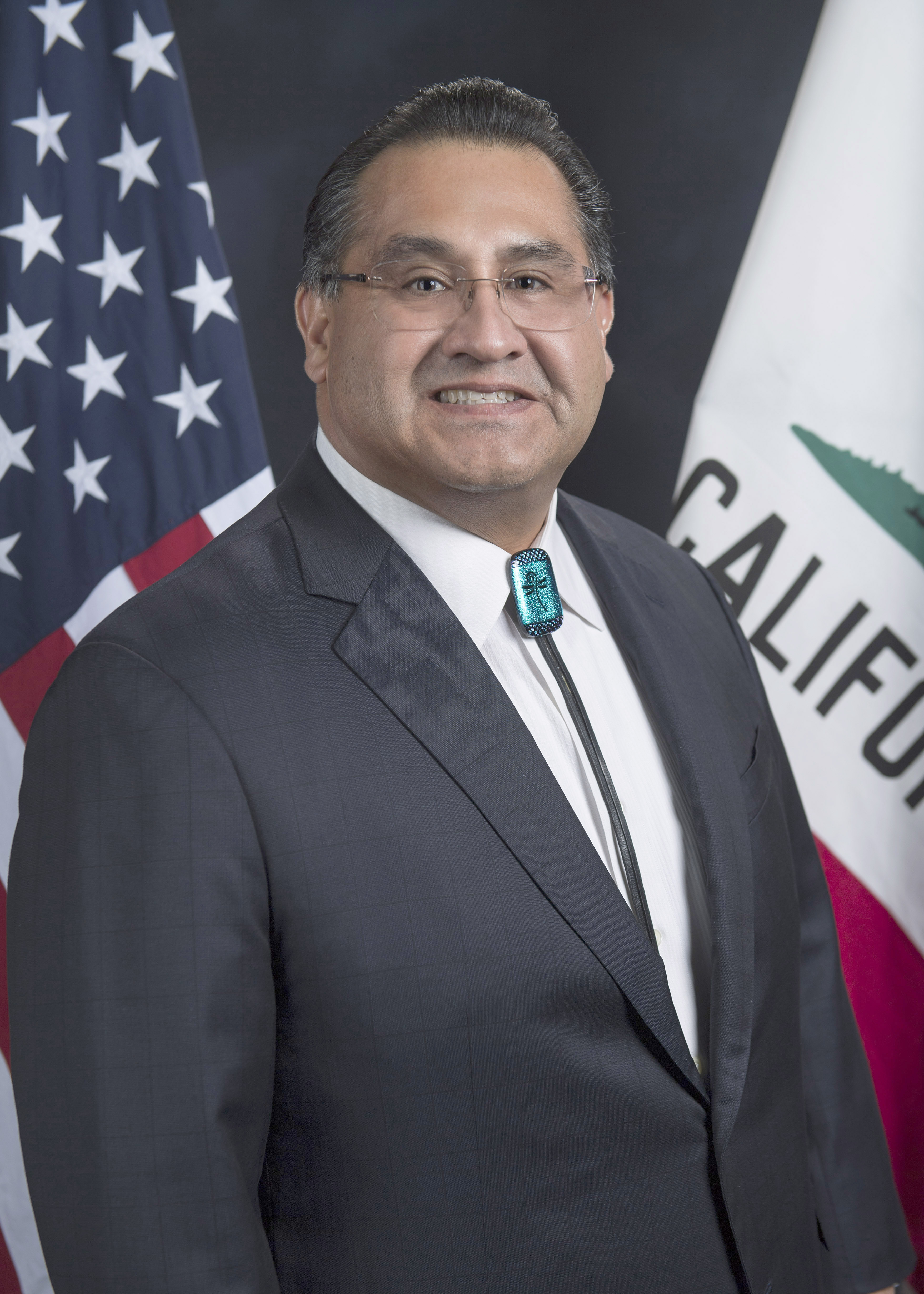
Asm. James Ramos
Sponsored bills
Existing law provides that the Department of Food and Agriculture has general supervision of the weights and measures and weighing and measuring devices sold or used in the state. This bill would make a nonsubstantive change to that provision.
Under existing law, by executive order, CaliforniaVolunteers is established in the Office of the Governor and is charged with overseeing programs and initiatives for service and volunteerism. Existing law authorizes CaliforniaVolunteers to form a nonprofit public benefit corporation or other entity exempt from income taxation, as provided, to raise revenues and receive grants or other financial support from private or public sources, for purposes of undertaking or funding any lawful activity authorized to be undertaken by CaliforniaVolunteers. Existing federal law, the National and Community Service Trust Act of 1993, also requires the state to create a commission to carry out specified duties relating to national service programs to be eligible for grants or allotments under certain programs, or to receive distributions of approved national service positions. Existing state law continues into existence the Board of Commissioners under CaliforniaVolunteers for purposes of meeting the requirements of the federal act and the act's implementing rules and regulations. #CaliforniansForAll Youth Jobs Corps is a program of the CaliforniaVolunteers. This bill would establish in statute the #CaliforniansForAll Youth Job Corps Program. The bill would require the CaliforniaVolunteers to expand the program, upon appropriation by the Legislature, which would fund supportive services, as specified, that are necessary for homeless youth and current or former foster youth to enable their participation in the workforce development program, as defined. Under the bill, grants would be awarded on a competitive basis. The bill would require the CaliforniaVolunteers to conduct outreach activities and to provide technical assistance to eligible applicants to ensure that grants are awarded to qualified applicants providing a broad spectrum of supportive services. The bill would prescribe definitions, duties for the CaliforniaVolunteers, and requirements for applications and applicants, including the requirement that applicants agree to provide the office any information that the office deems necessary to meet reporting requirements and other grant requirements. The bill would require the CaliforniaVolunteers to evaluate how grants awarded under the program address the needs of eligible targeted populations and, beginning one year after the initial award of grant funds, to post an annual report on its internet website regarding the progress and success of the program.
Existing law requires the State Department of Public Health, subject to an appropriation in the Budget Act of 2016, to award funding to local health departments, local government agencies, or on a competitive basis to other organizations, as specified, to support or establish programs that provide naloxone to first responders and to at-risk opioid users through programs that serve at-risk drug users. This bill would, until January 1, 2029, establish the Overdose Response Team Fund, to be available upon appropriation by the Legislature, for the administration of grants by the Board of State and Community Corrections to county sheriffs' departments' task forces established for overdose response. The bill would authorize a department receiving a grant to establish and implement overdose response teams with the sheriffs' departments of those counties. The bill would require the teams to respond to and investigate overdose deaths and nonfatal overdoses. The bill would require counties participating in these programs to send annual reports to the Assembly Committee on Public Safety, including the number of arrests for specified crimes, the amount of fentanyl and opioids seized in each county, and the number of units of opioid antagonists administered, distributed, or recovered at each overdose scene.
Existing law, the Planning and Zoning Law, sets forth various requirements relating to the review of development project permit applications and the issuance of development permits for specified classes of development projects. This bill would prohibit the County of Riverside, the County of San Bernardino, and any of the cities, joint powers authorities, or agencies with land use authority within those counties from approving the development or expansion of any logistics use, as defined, that is adjacent to sensitive receptors, as defined, unless the local agency imposes certain requirements, as specified, including a minimum setback on the logistics use of 300 feet if the logistics use consists of 400,000 or more square feet of building space, including, but not limited to, warehouses. By imposing new requirements on local agencies, the bill would impose a state-mandated local program. The bill would include findings that changes proposed by this bill address a matter of statewide concern rather than a municipal affair and, therefore, apply to all cities, including charter cities. This bill would make legislative findings and declarations as to the necessity of a special statute for the Counties of Riverside and San Bernardino, the cities located within those counties, and any joint powers authority or agency with land use authority in those counties. The California Constitution requires the state to reimburse local agencies and school districts for certain costs mandated by the state. Statutory provisions establish procedures for making that reimbursement. This bill would provide that no reimbursement is required by this act for a specified reason.
Under the Dental Practice Act, the Dental Board of California is responsible for the licensure and regulation of dentists. Existing law establishes the California Dental Corps Loan Repayment Program to assist dentists who practice in an underserved area with educational loan repayment pursuant to an agreement between the board and the dentist, as specified. Existing law requires the board to report to the Legislature, during its sunset review period, on the effectiveness of the program and recommendations for maintaining or expanding its operation. This bill would make a nonsubstantive change to that reporting requirement.
Existing law, the Planning and Zoning Law, requires each city, county, and city and county to prepare and adopt a general plan that contains certain mandatory elements, including a housing element. Existing law requires the housing element to identify the existing and projected housing needs of all economic segments of the community. Existing federal law requires a continuum of care, a group organized under the federal McKinney-Vento Homeless Assistance Act, to develop a plan that includes planning for and conducting, at least biennially, a point-in-time count of homeless persons within the geographic area. Existing law requires that information from the point-in-time count be used to, among other things, allocate funding for the Homeless Emergency Aid program and Homeless Housing, Assistance, and Prevention program. This bill would require a city, county, and city and county, within 60 days after the local continuum of care releases the results of a point-in-time count for a city, county, or city and county's jurisdiction, to, among other things, agendize the point-in-time count results at a meeting of the city, county, or city and county and present the steps the city, county, or city and county is taking to prevent and end homelessness, including, but not limited to, consideration of specified actions. By imposing new duties on local agencies, this bill would impose a state-mandated local program. The bill would include findings that changes proposed by this bill address a matter of statewide concern rather than a municipal affair and, therefore, apply to all cities, including charter cities. The California Constitution requires the state to reimburse local agencies and school districts for certain costs mandated by the state. Statutory provisions establish procedures for making that reimbursement. This bill would provide that, if the Commission on State Mandates determines that the bill contains costs mandated by the state, reimbursement for those costs shall be made pursuant to the statutory provisions noted above.
Existing law sets a statewide uniform guideline for determining child support. Existing law requires the Department of Child Support Services and the Judicial Council to meet and confer, no later than November 21, 2022, and for each entity to submit its own report to specified legislative committees on what additional legislative changes are required to comply with federal child support regulations. This bill would make a technical, nonsubstantive change to those provisions.
Existing law prescribes the duties of the State Registrar of Vital Statistics (State Registrar) and local registrars of births and deaths with respect to the registration of certificates of live birth, fetal death, or death, and marriage licenses. Existing law requires the State Registrar to prescribe and furnish all record forms for use in carrying out the provisions governing vital records and prohibits the use of any record form or format other than those prescribed by the State Registrar. Existing law requires every live birth, fetal death, death, and marriage that occurs in the state to be registered with the local registrar. Existing law requires certificates of live birth, fetal death, or death, and a marriage license to include specified information, such as the full name of the child on a certificate of live birth and the full names of the parties to be married on a marriage license. Existing law also requires the county clerk to issue a confidential marriage license, as specified, on a form prescribed by the State Registrar. This bill would require the State Registrar to require the use of a diacritical mark on an English letter to be properly recorded, when applicable, on a certificate of live birth, fetal death, death, marriage license and certificate, or confidential marriage license and certificate, and would require the use of a diacritical mark to be deemed an acceptable entry by the State Registrar. The bill would provide that the absence of a diacritical mark on a certificate of live birth, fetal death, or death, or a marriage license does not render the document invalid nor affect any constructive notice imparted by proper recordation of the document. The bill would authorize, if a name is not accurately recorded because of the absence of a diacritical mark on an English letter in any certificate of live birth, fetal death, death, or marriage already registered, the person asserting the omission, or the person's conservator, or if a minor, the person's parent or guardian, to submit a written request to the State Registrar for the issuance of a new certificate of birth, fetal death, death, or marriage stating the changes necessary to make the name correct. The bill would require the State Registrar to review the request and, if the request is accompanied with the payment of a specified fee, to issue a new certificate of live birth, fetal death, death, or marriage with the accurate name identified in the request. The bill would also authorize, if a name is not accurately recorded because of the absence of a diacritical mark on an English letter on any confidential license and certificate of marriage already registered, the party asserting the omission to make an affidavit, under oath, stating the changes necessary to make the record correct and file it with the county clerk. The bill would require the county clerk to review the amendment for acceptance for filing, and if accepted, file the amendment and note the fact of the amendment, with its date, on the otherwise unaltered original confidential license and certificate of marriage. By requiring the affidavit to be under oath, the bill would expand the crime of perjury, thereby imposing a state-mandated local program. By increasing duties on county clerks, the bill would impose a state-mandated local program. The California Constitution requires the state to reimburse local agencies and school districts for certain costs mandated by the state. Statutory provisions establish procedures for making that reimbursement. This bill would provide that with regard to certain mandates no reimbursement is required by this act for a specified reason. With regard to any other mandates, this bill would provide that, if the Commission on State Mandates determines that the bill contains costs so mandated by the state, reimbursement for those costs shall be made pursuant to the statutory provisions noted above.
Existing law requires the collection of specified fees for certified copies of a birth certificate, marriage record, or marriage dissolution record. Existing law imposes fees upon the application for an original class C or M driver's license or a renewal of a driver's license or for a license to operate a different class of vehicle, as described. This bill would instead exempt persons who are recipients of specified assistance programs from payment of a fee for certified copies of a birth certificate, marriage record, or marriage dissolution record. The bill would, beginning July 1, 2027, also exempt a person who can verify their status as a homeless person or homeless child or youth from payment of a fee upon the application for an original or renewal of a driver's license. The bill would require the verification of homeless status to be subject to regulations adopted by the Department of Motor Vehicles and may be made by a homeless services provider, as defined. By establishing an exemption as to fees paid for receipt of certified copies of vital records, this bill would create a state-mandated local program. The bill would make all these provisions operative only to the extent that funding is provided by express reference for these purposes. The California Constitution requires the state to reimburse local agencies and school districts for certain costs mandated by the state. Statutory provisions establish procedures for making that reimbursement. This bill would provide that, if the Commission on State Mandates determines that the bill contains costs mandated by the state, reimbursement for those costs shall be made pursuant to the statutory provisions noted above.