

Existing law establishes the California Racial Mascots Act, which prohibits public schools from using the term Redskins as a school or athletic team name, mascot, or nickname. Existing law requires the Superintendent of Public Instruction to establish and implement a system of complaint processing, known as the Uniform Complaint Procedures, for specified educational programs. This bill would exempt public schools operated by an Indian tribe or a tribal organization from this prohibition. The bill would prohibit, beginning July 1, 2026, public schools, except for public schools operated by an Indian tribe or tribal organization, from using any derogatory Native American term, as defined, as a school or athletic team name, mascot, or nickname, except as provided. The bill would require the Uniform Complaint Procedures to apply to school or athletic team names, mascots, or nicknames pursuant to the bill. To the extent that the bill would impose new duties on public schools, the bill would impose a state-mandated local program. The California Constitution requires the state to reimburse local agencies and school districts for certain costs mandated by the state. Statutory provisions establish procedures for making that reimbursement. This bill would provide that, if the Commission on State Mandates determines that the bill contains costs mandated by the state, reimbursement for those costs shall be made pursuant to the statutory provisions noted above.
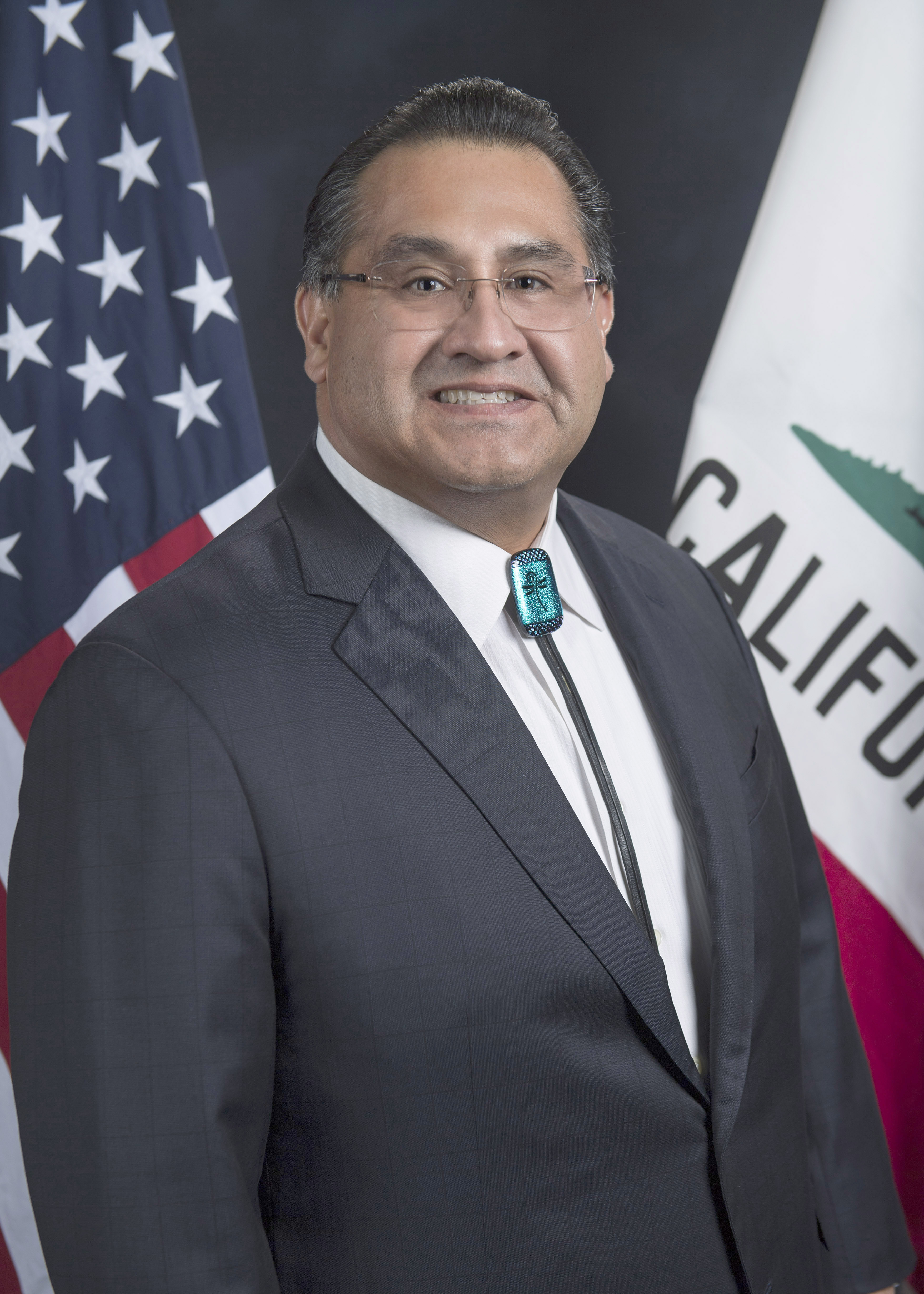
Asm. James Ramos
Sponsored bills
Existing law requires specified entities and individuals to maintain records required for the correct reporting of statistical data and to report that data to the Department of Justice at the time and in the manner prescribed by the Attorney General. This bill would require the above-described entities and individuals to disaggregate that data based on whether the incidents took place in Indian country, as defined. By expanding the duties of local law enforcement, this bill would create a state-mandated local program. The California Constitution requires the state to reimburse local agencies and school districts for certain costs mandated by the state. Statutory provisions establish procedures for making that reimbursement. This bill would provide that, if the Commission on State Mandates determines that the bill contains costs mandated by the state, reimbursement for those costs shall be made pursuant to the statutory provisions noted above.
Existing law generally provides for the placement of foster youth in various placement settings and governs the provision of child welfare services, as specified. Existing law requires county child welfare agencies and probation departments to develop and implement specific protocols to expeditiously locate any child or nonminor dependent missing from foster care, including, but not limited to, the timeframe for reporting missing youth and the individuals or entities entitled to notice that a youth is missing. Existing law requires the social worker or probation officer to determine the primary factors that contributed to the child or nonminor dependent running away or otherwise being absent from care, among other things. This bill, the Luke Madrigal Act, would, among other things, additionally require the social worker or probation officer, when they receive information that a child receiving child welfare services is missing from foster care, to immediately, but in no case later than 24 hours from the receipt of that information, notify specified entities or persons, including the local law enforcement agency and the child's or nonminor dependent's parents or guardians, except as specified. The bill would define "missing from foster care" to mean the whereabouts of a child subject to an order of foster care placement are unknown to the county child welfare agency or probation department, or when the county child welfare agency or probation department has located a child subject to an order of foster care placement in a location not approved by the court that may pose a risk to the child, as specified. The bill would include a nonminor dependent in this definition if, based on the totality of the circumstances, the county child welfare agency or probation department suspects that the nonminor dependent did not voluntarily leave foster care or is at risk of substantial harm. By increasing the duties of county child welfare agencies and probation departments, this bill would create a state-mandated local program. The California Constitution requires the state to reimburse local agencies and school districts for certain costs mandated by the state. Statutory provisions establish procedures for making that reimbursement. This bill would provide that no reimbursement is required by this act for a specified reason.
Existing law, the California Emergency Services Act, authorizes use of the Emergency Alert System to inform the public of local, state, and national emergencies. Existing law authorizes a law enforcement agency to request the Department of the California Highway Patrol to activate a "Feather Alert," as defined, if the law enforcement agency determines that specified criteria are satisfied with respect to an endangered indigenous person who has been reported missing under unexplained or suspicious circumstances. Existing law requires the department, if it concurs that those specified requirements are met, to activate a Feather Alert within the appropriate geographical area requested by the investigating law enforcement agency and to assist the agency by disseminating specified alert messages and signs. Existing law requires the department to create and submit a report to the Governor's office and the Legislature that includes an evaluation of the Feather Alert, as specified. This bill would require the department, in consultation with specified groups including tribal nations, to develop policies and procedures providing instruction specifying how a law enforcement agency and certain entities involved in emergency warnings are required to proceed after a missing person has been reported to a law enforcement agency, as defined, and prescribed conditions are met. The bill would require those policies and procedures to include, among other things, procedures for the transfer of information regarding the missing person and the circumstances surrounding the missing person's disappearance, as specified. This bill would require the department to respond to a law enforcement agency's or tribe's request to activate a Feather Alert within 48 hours of receiving the request. The bill would require the department to take reasonable steps to confirm that a report from a missing person's family members is not an attempt to locate an indigenous person who is intentionally avoiding or evading abuse, as specified. If the department declines to activate a Feather Alert, the bill would require it to provide written notice to the requesting law enforcement agency or tribe, as specified. This bill would revise the conditions under which a law enforcement agency or tribe may request the department to activate a Feather Alert. In this regard, the bill would authorize the agency or tribe to make that request if the law enforcement agency determines a Feather Alert would be an effective tool in the investigation of missing and murdered indigenous persons. To make that determination, the bill would require a law enforcement agency to consider prescribed factors, including, among other things, that the agency or tribe believes that the person is in danger and is missing under specified circumstances. The bill would require a law enforcement agency to make that determination within 24 hours following the initial report being made to the agency and would authorize a tribe to directly request the department to activate a Feather Alert if the law enforcement agency does not make a determination within 24 hours. By creating a new duty for local law enforcement agencies, this bill would impose a state-mandated local program. This bill would revise the reporting requirement described above to require the department to work with law enforcement agencies and tribal nations to create the report and to submit the report no later than January 1, 2027. The bill would require the report to include information on the efficacy and advantages of the Feather Alert, including, but not limited to, statistical data on the number of cases closed and the number of cases that remain open, and the impact of the Feather Alert on other alert programs. The California Constitution requires the state to reimburse local agencies and school districts for certain costs mandated by the state. Statutory provisions establish procedures for making that reimbursement. This bill would provide that, if the Commission on State Mandates determines that the bill contains costs mandated by the state, reimbursement for those costs shall be made pursuant to the statutory provisions noted above.
Existing law authorizes the operation of an autonomous vehicle on public roads for testing purposes by a driver who possesses the proper class of license for the type of vehicle operated if specified requirements are satisfied. Existing law prohibits the operation of an autonomous vehicle on public roads until the manufacturer submits an application to the Department of Motor Vehicles, as specified, and that application is approved. This bill would require a manufacturer of an autonomous vehicle to report to the department a collision on a public road that involved one of its autonomous vehicles with a gross vehicle weight of 10,001 pounds or more that is operating under a testing or deployment permit that resulted in damage of property, bodily injury, or death within 10 days of the collision. The bill would require a manufacturer of an autonomous vehicle to annually submit to the department specified information regarding the deactivation of the autonomous mode for its autonomous vehicles with a gross vehicle weight of 10,001 pounds or more that were operating under a testing or deployment permit that authorized the vehicle to operate on public roads. The bill would prohibit the operation of an autonomous vehicle with a gross vehicle weight of 10,001 pounds or more on public roads for testing purposes, transporting goods, or transporting passengers without a human safety operator physically present in the autonomous vehicle at the time of operation. The bill would require the Department of Motor Vehicles, by January 1, 2030, or 5 years after commencement of testing, whichever occurs later, and upon appropriation by the Legislature, to submit a report to the appropriate policy and fiscal committees of the Legislature evaluating the performance of autonomous vehicle technology and its impact on public safety and employment in the transportation sector for autonomous vehicles with a gross vehicle weight of 10,001 pounds or more. The bill would require the Department of the California Highway Patrol, the Labor and Workforce Development Agency, the Department of Transportation, the State Air Resources Board, and other relevant state agencies to provide additional information needed to research the report.
Existing federal law provides for allocation of federal funds to eligible states and tribes through the federal Temporary Assistance for Needy Families (TANF) block grant program. Existing state law provides for the California Work Opportunity and Responsibility to Kids (CalWORKs) program under which, through a combination of state and county funds and federal funds received through the TANF program, each county provides cash assistance and other benefits to qualified low-income families. Existing law requires the State Department of Social Services to annually allocate appropriated funds to each federally recognized American Indian tribe with reservation lands or rancherias in the state that administers a federal tribal TANF grant program. Existing law authorizes the Director of Social Services to provide funding to Indian health clinics to provide substance abuse and mental health services, and other related services authorized under the CalWORKs program to CalWORKs applicants and recipients and tribal TANF applicants and recipients living in California. This bill would identify those funding provisions as the Indian Health Clinic Program, and would revise the definition of "applicants and recipients" for purposes of the program to include individuals who self-attest to as either having applied for, or currently receiving, CalWORKs or tribal TANF assistance. The bill also would authorize an Indian health clinic to provide services to an individual the clinic verifies is enrolled in the Medi-Cal program, or who self-attests to their enrollment. The bill would authorize an Indian health clinic, at the beginning of each state fiscal year, to request an advance payment of up to 50% of the total allocated amount, contingent upon a written request and the clinic's timely and accurate submission, and the department's approval within 90 days of the completed submission, of specified reports from the prior year. The bill would require the department to remit this advance payment if funds have been appropriated through the annual Budget Act, and to remit the remainder of the total allocated amount as a reimbursement when in receipt of a written request and supporting documents from the Indian health clinic.
(1) Existing law authorizes specified state departments and authorities, upon determination that an advance payment is essential for the effective implementation of a program, to advance to a community-based private nonprofit agency with which it has contracted for the delivery of services funds not exceeding 25% of the annual allocation to be made to the agency during the fiscal year. Existing law authorizes an administering state agency to advance a payment to a recipient entity, defined to mean a private, nonprofit organization qualified under federal law, subject to meeting specified requirements. Existing law requires the administering state agency to prioritize recipient entities and projects serving disadvantaged, low-income, and under-resourced communities, and to ensure an advance payment to the recipient entity does not exceed 25% of the total grant or contract amount. Existing law requires the recipient entity to satisfy certain minimum requirements, including providing an itemized budget, submitting documentation, as required by the administering state agency, to support the need for advance payment, and demonstrating its current status in good standing as an organization exempt from taxation under federal law. Existing law declares the intent of the Legislature to improve and expand the state's existing advance payment practices for state grants and contracts with nonprofits. This bill would expand the definition of a "recipient entity" to include a federally recognized Indian tribe whose territorial boundaries lie wholly or partially within the State of California, and any agencies, entities, or arms of the tribe, as applicable, either together or separately. The bill would exempt a tribe from the requirement to demonstrate good standing as an organization exempt from taxation under federal law. The bill would additionally declare the intent of the Legislature to improve and expand the state's existing advance payment practices for state grants and contracts with tribes. (2) Existing law imposes various limitations on emissions of air contaminants for the control of air pollution from vehicular and nonvehicular sources. Existing law generally designates the State Air Resources Board (CARB) as the state agency with the primary responsibility for the control of vehicular air pollution. Existing law authorizes CARB to provide advance payments to grantees of a grant program or project if CARB determines specified conditions are met, including a condition that the grantee agrees not to provide an advance payment to any other entity. This bill would repeal that condition prohibiting an advance payment to any other entity, and instead would authorize a grantee to make an advance payment to a subrecipient consistent with the above-described law relating to advance payments by state agencies. For purposes of these provisions, the bill would expand the definition of "recipient entity" to include a local agency or a nongovernmental entity. The bill would exempt a subrecipient that is a local agency or nongovernmental entity, other than a private, nonprofit organization, from the requirement to demonstrate good standing as an organization exempt from taxation under federal law and instead would require the agency or entity to demonstrate good standing with the United States Internal Revenue Service.
Existing law, the California Emergency Services Act, authorizes use of the Emergency Alert System to inform the public of local, state, and national emergencies. Existing law authorizes a law enforcement agency to request the Department of the California Highway Patrol to activate a "Feather Alert," as defined, if the law enforcement agency determines that specified criteria are satisfied with respect to an endangered indigenous person who has been reported missing under unexplained or suspicious circumstances. Existing law requires the department, if it concurs that those specified requirements are met, to activate a Feather Alert within the appropriate geographical area requested by the investigating law enforcement agency and to assist the agency by disseminating specified alert messages and signs. Existing law requires the department to create and submit a report to the Governor's office and the Legislature that includes an evaluation of the Feather Alert, as specified. This bill would require the department, in consultation with specified groups including tribal nations, to develop policies and procedures providing instruction specifying how a law enforcement agency and certain entities involved in emergency warnings are required to proceed after a missing person has been reported to a law enforcement agency, as defined, and prescribed conditions are met. The bill would require those policies and procedures to include, among other things, procedures for the transfer of information regarding the missing person and the circumstances surrounding the missing person's disappearance, as specified. This bill would require the department to respond to a law enforcement agency's or tribe's request to activate a Feather Alert within 48 hours of receiving the request. The bill would require the department to take reasonable steps to confirm that a report from a missing person's family members is not an attempt to locate an indigenous person who is intentionally avoiding or evading abuse, as specified. If the department declines to activate a Feather Alert, the bill would require it to provide written notice to the requesting law enforcement agency or tribe, as specified. This bill would revise the conditions under which a law enforcement agency may request the department to activate a Feather Alert. In this regard, the bill would authorize the agency to make that request if it determines a Feather Alert would be an effective tool in the investigation of missing and murdered indigenous persons. To make that determination, the bill would require a law enforcement agency to consider prescribed factors, including, among other things, that the agency or tribe believes that the person is in danger and is missing under specified circumstances. This bill would revise the reporting requirement described above to require the department to work with law enforcement agencies and tribal nations to create the report and to submit the report no later than January 1, 2027. The bill would require the report to include information on the efficacy and advantages of the Feather Alert, including, but not limited to, statistical data on the number of cases closed and the number of cases that remain open, and the impact of the Feather Alert on other alert programs.
Existing law establishes the Attorney General as the head of the Department of Justice, with charge of all legal matters in which the state is interested, except as specified. Existing law requires the Attorney General, whenever they deem it advisable or necessary in the public interest, or when directed to do so by the Governor, to assist any district attorney in the discharge of the district attorney's duties, and authorizes them to take full charge of any investigation or prosecution of violations of law, as specified. Existing law establishes the Department of Industrial Relations in the Labor and Workforce Development Agency and vests it with various powers and duties to foster, promote, and develop the welfare of the wage earners of California, to improve their working conditions, and to advance their opportunities for profitable employment. Existing law establishes the Civil Rights Department within the Business, Consumer Services, and Housing Agency and sets forth its powers and duties relating to enforcement of civil rights laws. This bill would establish within the Department of Justice the Labor Trafficking Unit. The bill would require the unit to receive labor trafficking reports and complaints from law enforcement agencies and other governmental entities and refer the reports or complaints to appropriate agencies for investigation, prosecution, or other remedies. The bill would require the unit to coordinate with certain state agencies, including, among others, the Department of Industrial Relations and the Civil Rights Department. The bill would authorize the unit to coordinate with other relevant state agencies, as specified, state and local law enforcement agencies, tribal law enforcement agencies, and district attorneys' offices. The bill would require the unit to make efforts to ensure that local, state, and tribal entities use a victim-centered approach when receiving and processing victim reports or complaints of labor trafficking and when reporting suspected labor trafficking to the unit. The bill would require the unit to follow a victim-centered approach when processing labor trafficking reports or complaints and ensure that victims are informed of the services and options available to them, as specified. The bill would require the Department of Industrial Relations and the Civil Rights Department to collaborate with the unit to develop policies, procedures, and protocols to track, record, and report potential labor trafficking to the unit. The bill would require the unit to develop a tracking and reporting system to collect labor trafficking reports and complaints and would require the reports to be aggregated and analyzed to identify potential labor trafficking reports and complaints to be further investigated by the Department of Justice or referred for civil action, criminal prosecution, or other remedy, as specified. The bill would require the unit, from April 1, 2027, to January 1, 2036, inclusive, to annually submit a specified report to the Legislature relating to labor trafficking complaints or reports, including the number and type of reports, complaints, or referrals. The bill would require the Department of Industrial Relations and the Civil Rights Department to report this information to the unit on a quarterly basis and report suspected labor trafficking immediately to the unit, as specified. The bill would specify that the bill's operation is contingent upon adequate appropriation by the Legislature in the annual Budget Act or another statute for the bill's purposes. If the Legislature does not appropriate adequate funding by January 1, 2030, the bill would repeal its provisions and require the Department of Justice to file with the Secretary of State by January 1, 2030, the department's determination that the Legislature has not appropriated adequate funding.
Existing federal law, the Indian Gaming Regulatory Act of 1988, provides for the negotiation and execution of tribal-state gaming compacts for the purpose of authorizing certain types of gaming on Indian lands within a state. The California Constitution authorizes the Governor to negotiate and conclude those compacts, subject to ratification by the Legislature. Existing law expressly ratifies a number of tribal-state gaming compacts, and amendments to tribal-state gaming compacts, between the State of California and specified Indian tribes. The California Environmental Quality Act (CEQA) requires a lead agency to prepare, or cause to be prepared, and certify the completion of, an environmental impact report on a project, as defined, that it proposes to carry out or approve that may have a significant effect on the environment, as defined, or to adopt a negative declaration if it finds that the project will not have that effect. This bill would ratify the tribal-state gaming compacts entered into between the State of California and the Campo Band of Diegueno Mission Indians of the Campo Indian Reservation, California, the La Posta Band of Diegueno Mission Indians of the La Posta Indian Reservation, California, the Timbisha Shoshone Tribe, and the Elem Indian Colony of Pomo Indians of the Sulphur Bank Rancheria, California, and amendments to the tribal-state gaming compacts entered into between the State of California and the Augustine Band of Cahuilla Indians, California, the Picayune Rancheria of Chukchansi Indians of California, and the Cher-Ae Heights Indian Community of the Trinidad Rancheria, California. The bill would provide that, in deference to tribal sovereignty, certain actions related to these compacts are not projects for the purposes of CEQA. This bill would declare that it is to take effect immediately as an urgency statute.