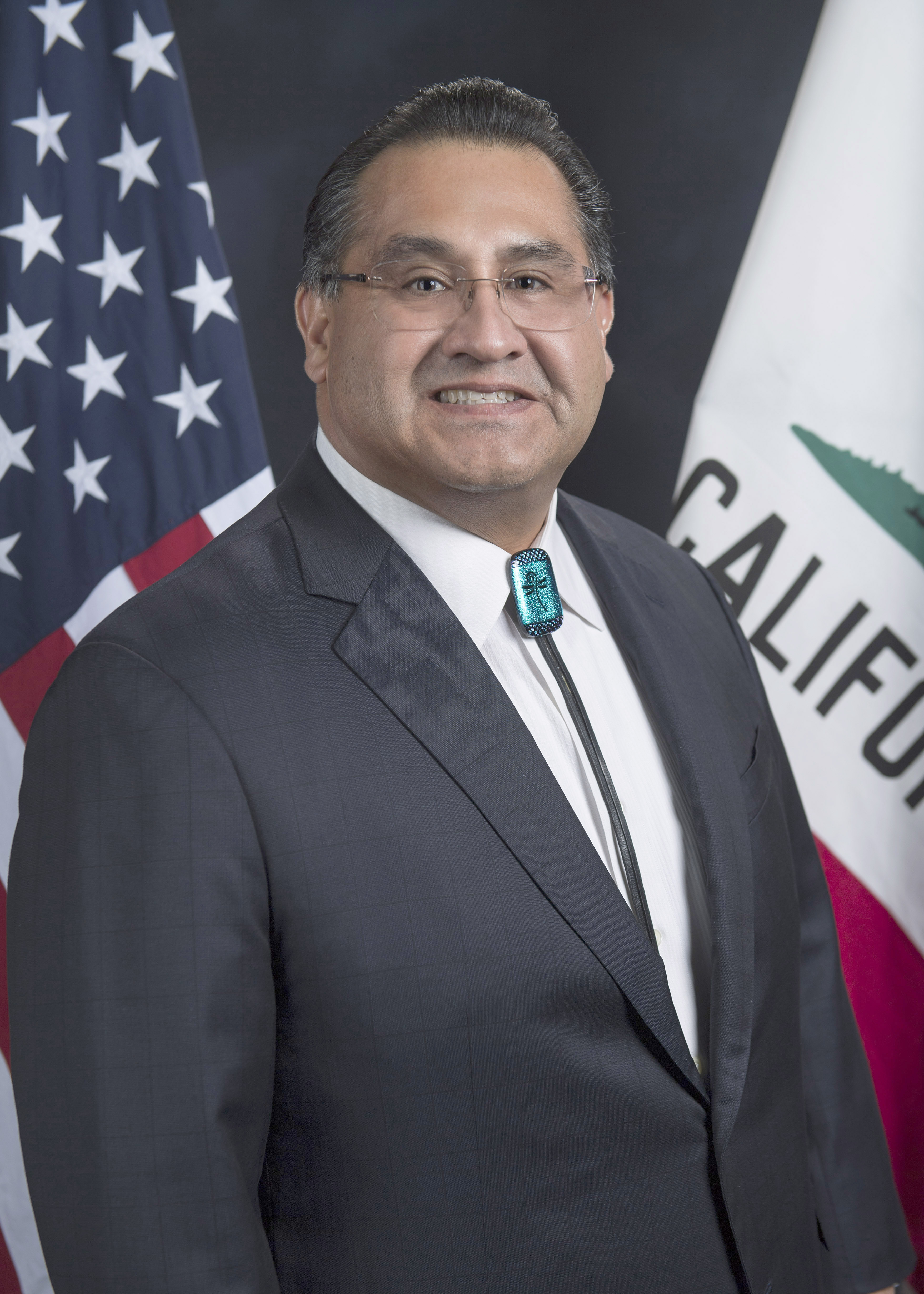
Photo of James Ramos
D California Assembly · District 45 On the 2026 ballot

Asm. James Ramos

Compare
Total votes
17,608
all sessions
Attendance
93%
1,027 missed
Near the chamber average
With party
99%
of cast votes
Near the chamber average
Bipartisan score
0%
crosses aisle rarely
Near the chamber average
Sponsored
1,475
bills & resolutions
Near the chamber average
Committees
8
assignments
1,475 bills and resolutions

Sponsored bills

Total
1,475
Primary
167
Co-sponsor
1,308
This page
1,475
matching current filters
Co-sponsor ACR 8
Signed into law · California Assembly · Co-sponsor
Relative to World Desert Day.

This measure would recognize the 2nd Saturday of January each year as World Desert Day in California, and would encourage local jurisdictions to partner with organizations, agencies, or community groups to host educational programs and community celebrations highlighting desert conservation.

Signed into law Feb 4, 2025 1 co-sponsor
Co-sponsor HR 6
Passed · California Assembly · Co-sponsor
Relative to school governance.

Maddy summaryThis bill is a House Resolution that formally recognizes the work of school board members across California by designating January 2025 as School Board Recognition Month. It directly affects local school districts and county offices of education by honoring the nearly 5,000 elected school board members who serve in these roles. The resolution expresses appreciation for their dedication to public education and encourages community members to support these local officials in their efforts to serve students. This is a commemorative measure rather than a policy change, as it does not alter laws or regulations but instead highlights the importance of school governance.

Passed Jan 30, 2025 1 co-sponsor
Co-sponsor ACA 1
In committee · California Assembly · Co-sponsor
A resolution to propose to the people of the State of California an amendment to the Constitution of the State, by amending Section 20 of Article XVI thereof, relating to public finance.

The California Constitution prohibits the total annual appropriations subject to limitation of the State and of each local government from exceeding the appropriations limit of the entity of government for the prior year adjusted for the change in the cost of living and the change in population. The California Constitution defines "appropriations subject to limitation" of the State for these purposes. The California Constitution establishes the Budget Stabilization Account and requires, for every fiscal year and based on the Budget Act for that fiscal year, the Controller to transfer from the General Fund to the Budget Stabilization Account, no later than October 1, a sum equal to 1.5% of the estimated amount of General Fund revenues for that fiscal year. The California Constitution requires other transfers between the General Fund and the Budget Stabilization Account, as specified. The California Constitution prohibits the amount transferred pursuant to these provisions for any fiscal year from exceeding an amount that would result in a balance in the account that, when the transfer is made, exceeds 10% of the amount of the General Fund proceeds of taxes for the fiscal year estimate, as specified. This measure would change the 1.5% required transfer to an undetermined percentage of the estimated amount of General Fund revenues for that fiscal year. The measure would change the 10% limit on the balance in the Budget Stabilization Account to 20% of the amount of the General Fund proceeds of taxes for the fiscal year estimate, as specified. The measure would specify that funds transferred under these provisions to the Budget Stabilization Account do not constitute appropriations subject to the above-described annual appropriations limit.

In committee Jan 29, 2025 1 co-sponsor
Co-sponsor SB 1277
Signed into law · California Senate · Co-sponsor
Pupil instruction: genocide education: the Holocaust.

Existing law requires the State Department of Education to incorporate age-appropriate materials relating to, among other things, genocide and the Holocaust into publications that provide examples of curriculum resources for teacher use, consistent with the subject frameworks on history and social science. Under existing law, the Legislature encourages the incorporation of survivor, rescuer, liberator, and witness oral testimony into the teaching of genocide and the Holocaust. This bill would establish the California Teachers Collaborative for Holocaust and Genocide Education, to be responsible for establishing a statewide teacher professional development program on genocide, including the Holocaust, for school district, county office of education, and charter school teachers. The bill would require the collaborative to consist of leading genocide and Holocaust education organizations and institutions, genocide survivors, educators, and community leaders. The bill would provide that the collaborative's mission is to ensure that genocide, including Holocaust, education is taught consistent with, among other things, the content standards, curriculum frameworks, and instructional materials adopted by the State Board of Education, in ways that are interdisciplinary and age-appropriate to pupils of different grade levels. The bill would prescribe the duties of the collaborative, including, among others, developing and providing curriculum resources on genocide and Holocaust education. The bill would authorize other duties of the collaborative, subject to available funding, including, among others, providing, as determined by the department, annual verbal or written reports to the department and the Legislature on the collaborative's achievement of its mission. The bill would make the implementation of these provisions contingent upon an appropriation.

Signed into law Sep 28, 2024 1 co-sponsor
Primary AB 2138
Vetoed · California Assembly · Lead sponsor
Peace officers: tribal police pilot project.

Existing law defines those persons who are peace officers in the state, grants certain authority to those individuals and their employing entities, and places certain requirements on those individuals and their employing entities. Existing law also grants specified limited arrest authority to certain other persons, including federal criminal investigators and park rangers and peace officers from adjoining jurisdictions. Existing federal law authorizes tribal governments to employ tribal police for the enforcement of tribal law on tribal lands. Existing federal law requires the State of California to exercise criminal jurisdiction on Indian lands. Existing state law deems a tribal police officer who has been deputized or appointed by a county sheriff as a reserve or auxiliary deputy to be a peace officer in the State of California. This bill would, from July 1, 2025, until July 1, 2028, establish a pilot program under the Department of Justice and the Commission on Peace Officer Standards and Training granting peace officer authority to certain tribal police officers on Indian lands and elsewhere in the state under specified circumstances. The bill would authorize the department to select 3 tribal entities to participate, would set certain minimum qualifications and certification and training requirements for a tribal officer to act pursuant to this authority, and would place certain requirements on the employing tribe, including a limited waiver of sovereign immunity, and the adoption of a tribal law or resolution authorizing that exercise of authority and providing for public access to certain records. The bill would require the Department of Justice to provide ongoing monitoring and evaluation and to prepare and submit reports to the Legislature, as specified. Existing law authorizes a county to establish an interagency domestic violence death review team to assist local agencies in identifying and reviewing domestic violence deaths, including homicides and suicides, and facilitating communication among various agencies involved in domestic violence cases. Under existing law, an oral or written communication or a document provided by a third party to a domestic violence review team is confidential and not subject to disclosure or discovery. This bill would authorize a tribe participating in this pilot program to establish a domestic violence death review team subject to the applicable provisions of this law. This bill would create the Tribal Police Pilot Fund in the State Treasury to, upon appropriation by the Legislature, assist program participants with the cost of information technology necessary for complying with reporting requirements for law enforcement agencies. This bill would provide for implementation of all of these provisions only upon an appropriation by the Legislature for these purposes.

Vetoed Sep 28, 2024 0 co-sponsors
Co-sponsor AB 2279
Vetoed · California Assembly · Co-sponsor
Missing and Murdered Indigenous Persons Justice Program.

Existing law establishes the Department of Justice, and makes the department responsible, in part, for overseeing statewide criminal justice programs. Existing law requires the Department of Justice to provide technical assistance to local law enforcement agencies and tribal governments relating to tribal issues, including providing guidance for law enforcement education and training on policing and criminal investigations on Indian lands, providing guidance on improving crime reporting, crime statistics, criminal procedures, and investigative tools, and facilitating and supporting improved communication between local law enforcement agencies and tribal governments. This bill would establish a Missing and Murdered Indigenous Persons Justice Program within and under the discretion of the Department of Justice, upon appropriation by the Legislature. The bill would impose specified responsibilities on the program, including acting as a liaison between tribal governments, families, and other law enforcement agencies. The bill, until January 1, 2029, if there are any remaining funds available after the use of funds for the establishment of the Missing and Murdered Indigenous Persons Justice Program, would require the department to submit an annual report to both houses of the Legislature containing data on the number of and facts about cases involving missing and murdered indigenous persons in California.

Vetoed Sep 28, 2024 1 co-sponsor
Primary AB 2711
Signed into law · California Assembly · Lead sponsor
Suspensions and expulsions: voluntary disclosures.

Existing law prohibits a pupil from being suspended from school or recommended for expulsion, unless the superintendent of the school district or the principal of the school in which the pupil is enrolled determines that the pupil has committed a specified act, including, among other acts, that the pupil (1) unlawfully possessed, used, sold, or otherwise furnished, or had been under the influence of, a controlled substance, an alcoholic beverage, or an intoxicant of any kind, or (2) possessed or used tobacco, or products containing tobacco or nicotine products, including, but not limited to, cigarettes, cigars, miniature cigars, clove cigarettes, smokeless tobacco, snuff, chew packets, and betel. This bill would prohibit the suspension of a pupil who voluntarily discloses, in order to seek help through services or supports, their use of a controlled substance, alcohol, intoxicants of any kind, or a tobacco product, solely for that disclosure. Existing law requires a petition to establish a charter school to include, among other things, a reasonably comprehensive description of the procedures by which pupils can be suspended or expelled from the charter school for disciplinary reasons or otherwise involuntarily removed from the charter school for any reason, as specified. This bill would prohibit the suspension of a pupil enrolled in a charter school in kindergarten or any of grades 1 to 12, inclusive, who voluntarily discloses, in order to seek help through services or supports, the pupil's use of a tobacco product, controlled substance, alcohol, or an intoxicant of any kind, solely for that disclosure.

Signed into law Sep 28, 2024 0 co-sponsors
Primary AB 1284
Signed into law · California Assembly · Lead sponsor
Tribal ancestral lands and waters: cogovernance and comanagement agreements.

(1) Existing law governs various interactions between the state and federally recognized Native American tribes within the state. Existing law encourages and authorizes all state agencies, as defined, to cooperate with federally recognized California Indian tribes on matters of economic development and improvement for the tribes. Existing law provides that the Legislature encourages the State of California and its agencies to consult on a government-to-government basis with federally recognized tribes and to consult with nonfederally recognized tribes and tribal organizations, as appropriate, in order to allow tribal officials the opportunity to provide meaningful and timely input in the development of policies, processes, programs, and projects that have tribal implications. Existing law provides that the Legislature encourages the state and its agencies to consult with a federally recognized tribe, at the tribe's request for a government-to-government consultation on a specified agency action, within 60 days of the request. This bill would provide that the Legislature encourages the Natural Resources Agency, and its departments, boards, conservancies, and commissions, to enter into cogovernance and comanagement agreements with federally recognized tribes. The bill would authorize the Secretary of the Natural Resources Agency or a delegate to enter into cogovernance and comanagement agreements with federally recognized tribes for the purposes of shared responsibility, decisionmaking, and partnership in resource management and conservation within a tribe's ancestral lands and waters, and would require the secretary or a delegate to be the signatory for these agreements. The bill would authorize the secretary or a delegate, as provided, and within 90 days of a federally recognized tribe's request, to begin government-to-government negotiations on cogovernance and comanagement agreements with the tribe. (2) Existing law provides that 2 or more public agencies, by agreement, may form a joint powers authority to exercise any power common to the contracting parties, as specified. For purposes of cogovernance and comanagement agreements entered into pursuant to the provisions described in paragraph (1) , this bill would deem powers exercisable by any public agency that is not a federally recognized tribe to be common to a contracting federally recognized tribe.

Signed into law Sep 27, 2024 0 co-sponsors
Primary AB 1821
Signed into law · California Assembly · Lead sponsor
Pupil instruction: course of study: social sciences: treatment of Native Americans.

Existing law requires the adopted course of study for grades 1 to 6, inclusive, and the adopted course of study for grades 7 to 12, inclusive, to include certain areas of study, including, among others, English, mathematics, social sciences, science, and visual and performing arts, as specified. Existing law requires the Instructional Quality Commission, when the history-social science curriculum framework is next revised, on or after January 1, 2024, to consider providing for inclusion, in that curriculum framework, related evaluation criteria, and accompanying instructional materials, of instruction, among other things, the historical, social, economic, and political contributions of Asian Americans, Native Hawaiians, and Pacific Islanders in the United States. This bill, with respect to the adopted course of study for grades 1 to 6, inclusive, for social sciences, would additionally require instruction that provides a foundation for understanding the Spanish colonization of California and the Gold Rush Era, including the treatment and perspectives of Native Americans during those periods. The bill, with respect to the adopted course of study for grades 7 to 12, inclusive, for social sciences, would require, to the extent instruction is provided on the Spanish colonization of California or the Gold Rush Era, instruction that provides a foundation for understanding the treatment and perspectives of Native Americans during those periods. The bill would require the commission, when the State Board of Education next revises the history-social science curriculum framework or adopts new instructional materials, on or after January 1, 2025, to consider including content on the treatment and perspectives of Native Americans during those periods in that curriculum framework or evaluation criteria for instructional materials. To the extent that this bill would create new duties for local educational agencies or local officials, it would constitute a state-mandated local program. This bill would incorporate additional changes to Section 51210 of the Education Code proposed by AB 2073 to be operative only if this bill and AB 2073 are enacted and this bill is enacted last. This bill would incorporate additional changes to Section 51220 of the Education Code proposed by AB 1871 to be operative only if this bill and AB 1871 are enacted and this bill is enacted last. This bill would incorporate additional changes to Section 51226.3 of the Education Code proposed by AB 1805 to be operative only if this bill and AB 1805 are enacted and this bill is enacted last. The California Constitution requires the state to reimburse local agencies and school districts for certain costs mandated by the state. Statutory provisions establish procedures for making that reimbursement. This bill would provide that, if the Commission on State Mandates determines that the bill contains costs mandated by the state, reimbursement for those costs shall be made pursuant to the statutory provisions noted above.

Signed into law Sep 27, 2024 0 co-sponsors
Primary AB 81
Signed into law · California Assembly · Lead sponsor
Indian children: child custody proceedings.

(1) Existing federal law, the Indian Child Welfare Act of 1978 (ICWA) , governs the proceedings for determining the placement of an Indian child when that child is removed from the custody of the child's parent or guardian. Existing law states findings and declarations of the Legislature regarding Indian children, including that the state is committed to protecting the essential tribal relations and best interest of an Indian child by promoting practices in accordance with the ICWA, and it is in the interest of an Indian child that the child's membership or citizenship in the child's Indian tribe and connection to the tribal community be encouraged and protected, and requires the court to consider those findings in all Indian child custody proceedings. This bill would add to those findings and declarations by stating that the State of California is committed to protecting essential tribal relations by recognizing a tribe's right to protect the health, safety, and welfare of its citizens. The bill would also declare that provisions of the Family Code, Health and Safety Code, Probate Code, and the Welfare and Institutions Code that apply to an Indian child, as defined, are to be collectively known as the California Indian Child Welfare Act. (2) Existing provisions of state law govern child custody proceedings, adoption proceedings, dependency proceedings, including termination of parental rights, the voluntary relinquishment of a child by a parent, and guardianship proceedings. Existing law provides various definitions for these purposes, including "Indian child," as provided in the ICWA. This bill would define various terms, including "Indian child," consistent with provisions of the ICWA. The bill would also make conforming changes and cross-references throughout various provisions. (3) Existing law establishes the jurisdiction of the juvenile court, which may adjudge children to be dependents of the court under certain circumstances, including when the child suffered or there is a substantial risk that the child will suffer serious physical harm, or a parent fails to provide the child with adequate food, clothing, shelter, or medical treatment. Existing law establishes the grounds for removal of a dependent child from the custody of the child's parents or guardian. Existing law also requires a court, if removing a child from the parent's, guardian's, or Indian custodian's physical custody, to determine whether the child's placement complies with specified placement preferences for Indian children. Existing law requires, for all youth in foster care, a county social worker to create a case plan within a specified timeframe after the child is introduced into the foster care system. Existing law requires certain assessments to be included within the case plan, including, preplacement assessment of service needs and requires documentation that reasonable efforts have been made to prevent out-of-home placement. This bill would make changes throughout various code sections regarding placement of children to require that any placement of an Indian child complies with specified placement preferences. The bill would require a case plan to include, in the case of an Indian child, that the county welfare agency made active efforts to provide remedial services and rehabilitative programs designed to prevent the breakup of the Indian family and would require the agency to make active efforts, as defined, to reunite an Indian child with their family. By imposing additional duties on county employees, this bill would impose a state-mandated local program. (4) Existing law imposes a duty to inquire whether a child for whom various juvenile petitions have been filed may be an Indian child beginning with the initial contact of the party reporting child abuse or neglect, as specified. This bill would specify that a county welfare department or county probation department has a duty to inquire whether the child is or may be an Indian child when first contacted regarding a child. The bill would require a court presiding over any juvenile proceeding that could result in placement of an Indian child with someone other than a parent or Indian custodian, to inquire at the first hearing on a petition whether the child is, or may be, an Indian child, as specified. (5) Existing law permits the participation of child's tribe for a child is who involved in a dependency proceeding, who would be an Indian child except that the child's Indian tribe is not federally recognized. This bill would authorize a tribe described in these provisions to appear remotely. (6) Existing law requires the State Department of Social Services, upon an Indian tribe's request, to enter into an agreement with any Indian tribe, tribal organization, or tribal consortium in this state regarding the care and custody of Indian children and jurisdiction over Indian child custody proceedings, as specified. The bill would authorize the State Department of Social Services to establish and administer programs designed to facilitate tribal participation in Indian child custody proceedings. (7) Existing law requires the State Department of Social Services to establish a full-time position to assist counties in complying with the ICWA, including by providing information and support regarding the requirements of laws, regulations, and rules of court in juvenile dependency cases involving a child who is subject to the ICWA. This bill would require the position within the department to assist the department and counties in compliance with the ICWA and would additionally require as part of support, the provision of technical assistance and support regarding state guidance applicable to Indian child custody proceeding and related matters. (8) Under existing law, in an Indian child custody proceeding, when it appears to the court that a parent or Indian custodian desires counsel but is unable to afford and hire counsel, the federal law and regulations authorizing the appointment of counsel applies, as specified. Federal law requires the appointment of counsel for the parent or Indian custodian in any removal, placement, or termination proceeding, in which the court determines the parent or Indian custodian is indigent. This bill would require the court to appoint counsel for the parent or Indian custodian when it appears to the court that a parent or Indian custodian in an Indian child custody proceeding cannot afford to hire counsel and desires to have counsel for the proceedings. (9) Existing law requires a county welfare department to take certain steps before making an emergency placement of a child, including conducting an in-home inspection to assess the safety of the home and ability of the relative or nonrelative extended family member to care for the child's needs. This bill would authorize a federally recognized tribe or tribal organization to approve homes for the purpose of emergency placement of an Indian child, as specified. (10) The California Constitution requires the state to reimburse local agencies and school districts for certain costs mandated by the state. Statutory provisions establish procedures for making that reimbursement. This bill would provide that, if the Commission on State Mandates determines that the bill contains costs mandated by the state, reimbursement for those costs shall be made pursuant to the statutory provisions noted above. (11) This bill would declare that it is to take effect immediately as an urgency statute.


Signed into law Sep 27, 2024 0 co-sponsors
Showing 341 to 350 of 1,475 bills
Previous 1 … 34 35 36 … 148 Next