

The existing federal Indian Gaming Regulatory Act of 1988 provides for the negotiation and execution of tribal-state gaming compacts for the purpose of authorizing certain types of gaming on Indian lands within a state. The California Constitution authorizes the Governor to negotiate and conclude tribal-state gaming compacts, subject to ratification by the Legislature. Existing law expressly ratifies a number of tribal-state gaming compacts between the State of California and specified Indian tribes. The California Environmental Quality Act (CEQA) requires a lead agency to prepare, or cause to be prepared, and certify the completion of, an environmental impact report on a project, as defined, that it proposes to carry out or approve that may have a significant effect on the environment, as defined, or to adopt a negative declaration if it finds that the project will not have that effect. This bill would ratify the tribal-state gaming compact entered into between the State of California and the Table Mountain Rancheria, executed on November 1, 2023. The bill would provide that, in deference to tribal sovereignty, certain actions related to this compact are not projects for purposes of CEQA. This bill would declare that it is to take effect immediately as an urgency statute.
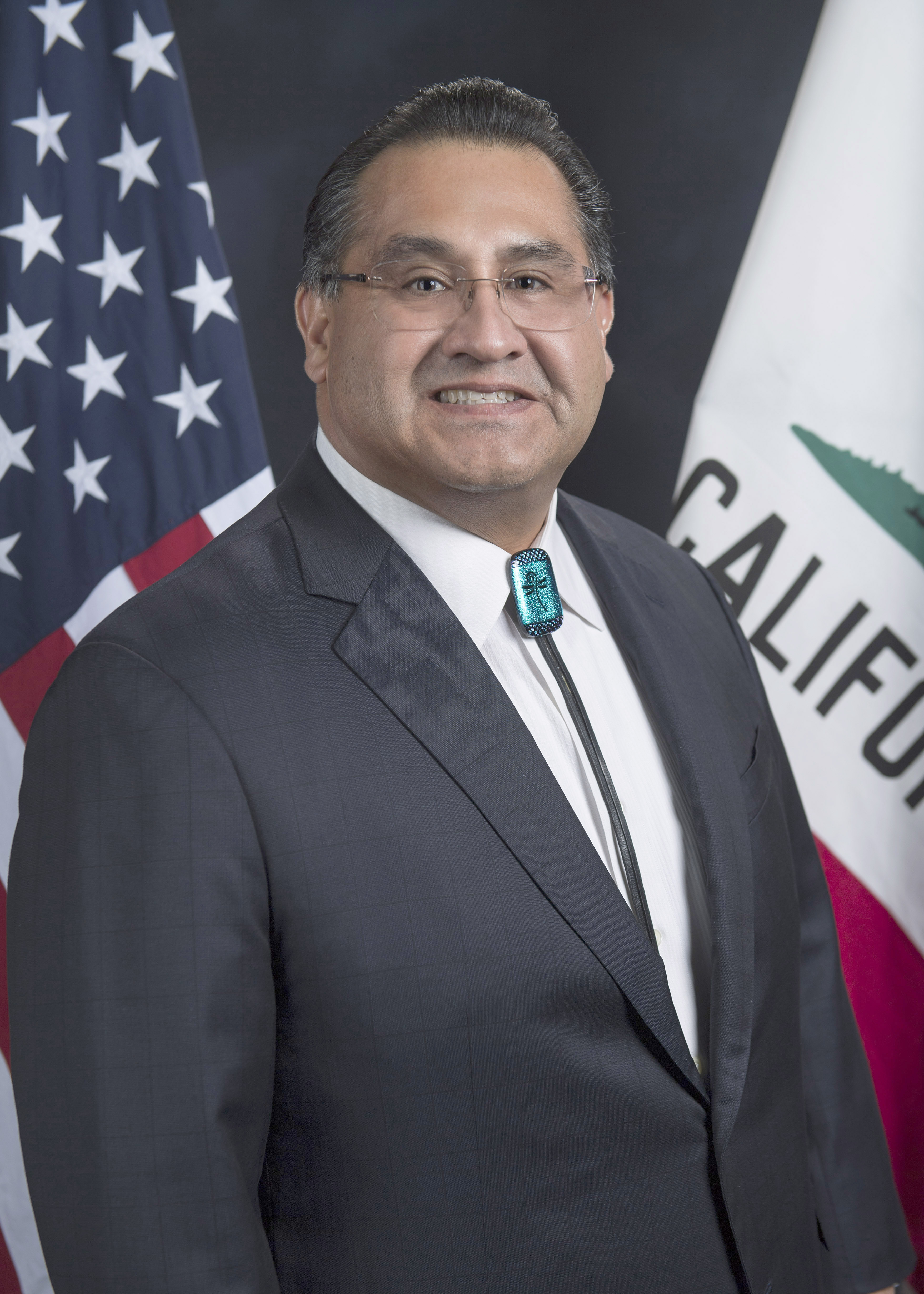
Asm. James Ramos
Sponsored bills
The existing federal Indian Gaming Regulatory Act provides for the negotiation and execution of tribal-state gaming compacts for the purpose of authorizing certain types of gaming on Indian lands within a state. The California Constitution authorizes the Governor to negotiate and conclude tribal-state gaming compacts, subject to ratification by the Legislature. Existing law expressly ratifies a number of tribal-state gaming compacts, and amendments of tribal-state gaming compacts, between the State of California and specified Indian tribes. The California Environmental Quality Act (CEQA) requires a lead agency to prepare, or cause to be prepared, and certify the completion of, an environmental impact report on a project, as defined, that it proposes to carry out or approve that may have a significant effect on the environment, as defined, or to adopt a negative declaration if it finds that the project will not have that effect. This bill would ratify the tribal-state gaming compact entered into between the State of California and the Tule River Indian Tribe of California, executed on June 25, 2024. The bill would provide that, in deference to tribal sovereignty, certain actions related to this compact are not projects for purposes of CEQA. This bill would declare that it is to take effect immediately as an urgency statute.
Existing law, the Alfred E. Alquist Hospital Facilities Seismic Safety Act of 1983, establishes, under the jurisdiction of the Department of Health Care Access and Information, a program of seismic safety building standards for certain hospitals constructed on and after March 7, 1973. Existing law requires that, by January 1, 2030, owners of these hospitals must either demolish, replace, or change to nonacute care use all hospital buildings that are not in compliance with these standards or seismically retrofit all acute care inpatient hospital buildings so they are in substantial compliance with these standards, unless subject to an abeyance. This bill would authorize a hospital owner or operator to submit an application, by specified dates, to the department for additional extensions to the compliance deadline. The bill would require the department to grant or deny an extension of the deadline for substantial compliance with seismic safety regulations or standards up to January 1, 2035. The bill would require the application to contain a seismic compliance plan, a specified evaluation report, a financial plan, and an attestation to the department that the appropriate governing board of that hospital is aware that the hospital building is required to be in substantial compliance with the seismic safety regulations or standards. By imposing the above-described attestation, this bill would expand the crime of perjury and impose a state-mandated local program. This bill would require the hospital and the department to identify specified milestones that are used for determining whether the hospital is making progress towards meeting the hospital's seismic compliance deadline. The bill would require the hospital to demonstrate efforts to comply with the seismic compliance deadline by providing the department with a plan outlining how seismic construction costs and other financial responsibilities will be met and what funding sources will be used if the hospital fails to meet an agreed-upon milestone due to circumstances that were within the hospital owner's or operator's control. The bill would require the owner or operator of that hospital to submit to the department an attestation that the appropriate governing board of that hospital is aware of the hospital's responsibility to comply with the associated construction costs to meet the seismic compliance deadlines. By requiring the owner or operator of a hospital to submit to the department an attestation, this bill would expand the crime of perjury and impose a state-mandated local program. This bill would require the department, before granting an extension past January 1, 2030, to provide public notice of a hospital's request for an extension, provide copies, upon request, of any publicly available material submitted by the hospital in support of their extension to interested parties, and allow the public to submit written comments on the extension proposal, as specified. The bill would require the department, beginning January 1, 2027, to post on the department's internet website specified information, including, among other things, its decision to grant or deny any extension. The bill would require the department to notify the county board of supervisors, the city council, and the Assembly and Senate representative in writing and electronically if a hospital within their district has been granted or denied an extension. This bill would require the department, on or before January 1, 2026, to adopt regulations and standards or revise regulations and standards, or both, to extend the deadlines for meeting the structural performance and nonstructural performance requirements. The bill would specify that regulatory submissions made by the department to the California Building Standards Commission are deemed to be emergency regulations and that the adoption of these regulations are to be deemed an emergency and necessary for the immediate preservation of the public peace, health and safety, and general welfare. Existing law requires, before January 1, 2024, the owner of an acute care inpatient hospital that includes a building that does not substantially comply with seismic safety regulations or standards to post in a lobby or waiting area generally accessible to patients or the public a notice provided by the department that the hospital is not in compliance with the seismic safety requirements the hospital is required to meet by January 1, 2030. Existing law requires, on or before January 1, 2024, and annually thereafter, the owner of an acute care inpatient hospital that includes a building that does not substantially comply with seismic safety regulations or standards to provide an annual status update on the Structural Performance Category ratings of the buildings and the services provided in each hospital building on the hospital campus to specified entities until each of the hospital buildings owned by that hospital building owner is compliant. This bill would require, before January 1, 2025, the owner or operator of an acute care inpatient hospital that includes a building that does not substantially comply with the seismic safety regulations or standards to post in any lobby or waiting area generally accessible to patients or the public the notice mentioned above. The bill would also require, on or before January 1, 2025, and annually thereafter, the owner or operator to provide an annual status update, as specified. This bill would specify that the provisions of this act are severable. The California Constitution requires the state to reimburse local agencies and school districts for certain costs mandated by the state. Statutory provisions establish procedures for making that reimbursement. This bill would provide that no reimbursement is required by this act for a specified reason.
Existing law, the California Workforce Innovation and Opportunity Act, makes programs and services available to individuals with employment barriers and establishes the California Workforce Development Board (board) to assist the Governor in the development, oversight, and continuous improvement of California's workforce investment system and the alignment of the education and workforce investment systems to the needs of the 21st century economy and workforce. Existing law requires the local chief elected officials in a local workforce development area to form, pursuant to specified guidelines, a local workforce development board to plan and oversee the workforce investment system and further requires the Governor to periodically certify one local board for each local area in the state. Existing law establishes the Breaking Barriers to Employment Initiative, which establishes a grant program administered by the board to support prescribed workforce preparation, education, and training programs. Existing law requires the grant to be awarded on a competitive basis and the board to develop criteria for the selection of grant recipients, as specified. Existing law requires an application for the grant to be submitted to the board to include, among other things, designation of a lead workforce development board or community-based organization with specified experience and the designation of a service area. Existing law requires that an application that proposes to serve clients across one or more workforce development areas to include a commitment to notify each workforce development board in the proposed service area. This bill would, instead, specify that the above-described designation is of a partner entity and would allow an exception to that designation requirement, if the lead applicant demonstrates, as prescribed, that securing a partner entity was not possible before the application deadline closed. The bill would prohibit more than 15 percent of all moneys appropriated for the above-described grants from being awarded to a lead applicant that receives the partner entity designation exception. The bill would also delete the above-described requirement to commit to notify each workforce development board in the proposed service area. Existing law requires the board to evaluate an application based on specified criteria, including, among other things, the ability of individuals to succeed in both the broader workforce and education system and in the labor market once they transition into the broader system. Existing law requires that this be measured by tracking these individuals utilizing the existing performance monitoring systems and metrics governing relevant programs and outcomes once they transition into the broader system. This bill would, instead, authorize, rather than require, the board to measure the above-described criteria by tracking individuals, as described above. Existing law requires applicants to provide necessary information to the board to facilitate grant performance evaluation. Existing law requires the board to issue an interim report and a final report on the program, as specified. Existing law requires the reports to include specified information, including, among other things, policy recommendations to provide guidance to the Legislature and the Governor in scaling a permanent program. This bill would additionally authorize grant applicants to provide the necessary information to the board's designee. The bill would remove the requirement that the board issue an interim report and would remove the requirement that the final report include the above-described recommendations. The bill would additionally require the final report to include demographic data and data on languages spoken by populations served by the grant. Existing law authorizes the board to develop necessary policies to ensure that grants awarded under the initiative are consistent with the initiative's intent. This bill would additionally authorize the board to provide technical assistance to grant recipients to carry out the initiative. The bill would authorize the board to provide the technical assistance by contract with a nonprofit organization, as defined, pursuant to prescribed requirements, including, among other things, evaluating proposals through a transparent and competitive process using criteria developed by the board.
Maddy summaryThis bill urges the President of the United States to designate the Sáttítla National Monument using the federal Antiquities Act of 1906. The proposal seeks to protect approximately 205,000 acres in northeastern California, which holds significant cultural, geological, and ecological value for multiple tribes and endangered species. The measure highlights the area's importance as a water source and spiritual center for the Pit River, Modoc, Shasta, Karuk, and Wintu peoples. By calling for this federal action, the legislation aims to align with state and national conservation goals to preserve the land for future generations.
This measure would urge the President of the United States to use the federal Antiquities Act of 1906 to establish the Chuckwalla National Monument, to establish a National Park Service-managed Joshua Tree National Monument adjacent to Joshua Tree National Park, and to establish the Kw'tsán National Monument.
This measure would, among other things, urge the United States Congress and President Joseph R. Biden to fully fund the United States Environmental Protection Agency's Comprehensive Infrastructure Solution for the Tijuana River due to the ongoing impacts to public health, the environment, and the local economy caused by cross-border pollution and would urge President Joseph R. Biden to declare a national emergency due to those ongoing impacts.
Maddy summaryAssembly Concurrent Resolution 120 designates January 2024 as Positive Parenting Awareness Month in California. This measure does not change laws or allocate funding but instead encourages state agencies, communities, and organizations to focus on the importance of positive parenting strategies. The resolution highlights how supportive family environments can improve children's health and well-being while acknowledging the diverse forms families take in the state. It serves as a formal acknowledgment of existing programs and resources rather than creating new mandates or policies.
This measure would proclaim September 20, 2024, and September 20 of each year thereafter, as California Youth Climate Action Day to honor and support the efforts of young people in their pursuit of environmental sustainability, climate justice, and the preservation of biodiversity.
Existing law requires all law enforcement agencies to maintain a use of force policy, as specified, and requires the Commission on Peace Officer Standards and Training (POST) to implement courses of instruction for the training of law enforcement officers in the use of force. This bill would require the commission, on or before July 1, 2026, to study and issue recommendations to the Legislature on the use of canines by law enforcement, as specified. Existing law requires each law enforcement agency to monthly provide a report of, among other things, all instances of a peace officer involved in a use of force against a civilian that results in serious bodily injury or death to the Department of Justice, and requires the department to yearly post a summary of those reports on the department's OpenJustice Web portal. This bill would require each law enforcement agency with a canine unit to annually publish a report of the use of canines, as specified, on its internet website. Because the bill would impose additional duties on local law enforcement agencies, the bill would impose a state-mandated local program. The California Constitution requires the state to reimburse local agencies and school districts for certain costs mandated by the state. Statutory provisions establish procedures for making that reimbursement. This bill would provide that, if the Commission on State Mandates determines that the bill contains costs mandated by the state, reimbursement for those costs shall be made pursuant to the statutory provisions noted above. This bill would make the operation of its provisions contingent upon the enactment of AB 2042 of the 2023–24 Regular Session.