This measure would proclaim the month of November 2019 as California Runaway and Homeless Youth Prevention Month to recognize the need for individuals, schools, communities, businesses, local governments, and the state to take action on behalf of runaway and homeless youth in California.
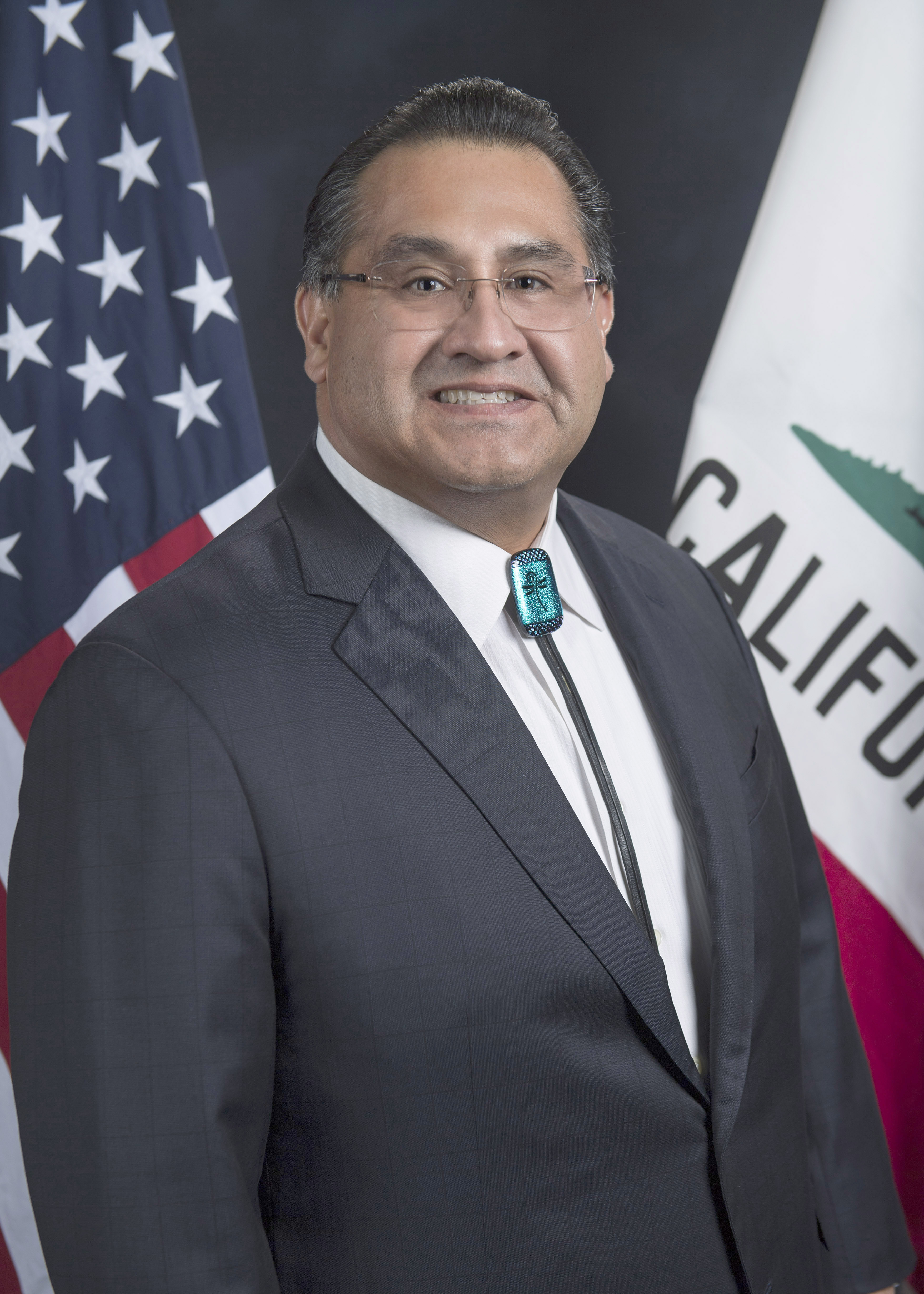
Asm. James Ramos
Sponsored bills
Existing law establishes the California State University, under the administration of the Trustees of the California State University, as one of the segments of public postsecondary education in this state. The California State University system comprises 23 institutions of higher education. Existing law authorizes the trustees to provide by rule for the government of their appointees and employees, as specified. This bill would require, after completion of the first year in a position and after each subsequent year, that each support staff employee of the California State University shall receive a merit salary intermediate step adjustment of 5% when the employee meets the standards for satisfactory performance in the position, as specified. The bill would provide that, on and after the date that the bill becomes operative, language that effectuates its provisions would automatically be incorporated into any pertinent memorandum of understanding or collective bargaining agreement entered into, or renewed, by the California State University. The bill would provide that any associated costs incurred shall be paid for using existing resources of the university. This bill would make these provisions inoperative on July 1, 2030, and would repeal them as of January 1, 2031.
(1) Existing law requires each law enforcement agency to annually furnish specified information to the Department of Justice regarding the use of force by a peace officer. Existing law requires the Department of Justice, once per year, to update a summary of information contained in the reports received on its internet website. Existing law requires a department or agency that employs peace officers or custodial officers to establish a procedure to investigate complaints by members of the public against those officers. This bill would, by no later than January 1, 2021, require each law enforcement agency to maintain a policy that provides guidelines on the use of force, utilizing deescalation techniques and other alternatives to force when feasible, specific guidelines for the application of deadly force, and factors for evaluating and reviewing all use of force incidents, among other things. The bill would require each agency to make their use of force policy accessible to the public. By imposing additional duties on local agencies, this bill would create a state-mandated local program. (2) Existing law establishes the Commission on Peace Officer Standards and Training in the Department of Justice and requires the commission to adopt rules establishing minimum standards regarding the recruitment of peace officers. Existing law requires the commission to develop guidelines and implement courses of instruction regarding racial profiling, domestic violence, hate crimes, vehicle pursuits, and human trafficking, among others. This bill would require the commission to implement a course or courses of instruction for the regular and periodic training of law enforcement officers in the use of force. The bill would require the commission to develop uniform, minimum guidelines for adoption and promulgation by California law enforcement agencies for the use of force, as specified. The bill would require law enforcement agencies to adopt and promulgate a use of force policy and would state the intent of the Legislature that each law enforcement agency adopt, promulgate, and require regular and periodic training consistent with the agency's policy that complies with the guidelines developed under this bill. This bill would make findings and declarations regarding the intent of the bill, as it pertains to law enforcement agencies' use of force polices, including that those policies may be introduced in legal proceedings and may be considered as a factor in determining the reasonableness of an officer's actions, but do not impose a legal duty on an officer to act in accordance with the policy. (3) The California Constitution requires the state to reimburse local agencies and school districts for certain costs mandated by the state. Statutory provisions establish procedures for making that reimbursement. This bill would provide that, if the Commission on State Mandates determines that the bill contains costs mandated by the state, reimbursement for those costs shall be made pursuant to the statutory provisions noted above. (4) This bill would also make its provisions operative contingent on the enactment of Assembly Bill 392 of the 2019–20 Regular Session.
The Safe Place to Learn Act requires the State Department of Education to assess whether local educational agencies have taken certain actions related to educational equity, including adopting a policy that prohibits discrimination, harassment, intimidation, and bullying based on specified characteristics, such as disability, gender, gender identity, gender expression, nationality, race or ethnicity, religion, sexual orientation, or association with a person or group with one or more of the specified characteristics. At the beginning of the first semester or quarter of the regular school term, existing law requires the governing board of a school district to notify the parent or guardian of a minor pupil regarding the right or responsibility of the parent or guardian under specified provisions. Existing law requires that notice to include, among other things, a copy of the school district's written sexual harassment policy, as it relates to pupils. This bill would, commencing with the 2020–21 academic year, require each local educational agency, as defined, to ensure that specified information on bullying and harassment prevention is readily accessible in a prominent location on the local educational agency's existing internet website in a manner that is easily accessible to parents or guardians and pupils. The bill would require local educational agencies to include specified State Department of Education policies and the policies adopted by a local educational agency relating to hate violence, bullying, harassment, discrimination, and suicide prevention and resources relating to these topics. The bill would, contingent upon the enactment of AB 1767 of the 2019–20 Regular Session, also require each local educational agency to ensure that the local educational agency's policy on pupil suicide prevention in kindergarten and grades 1 to 6, inclusive, is readily accessible on the local educational agency's existing internet website, as specified above. By requiring school districts, county offices of education, and charter schools to ensure specified information on bullying and harassment prevention is readily accessible in a prominent location on the local educational agency's existing internet website, the bill would impose a state-mandated local program. The California Constitution requires the state to reimburse local agencies and school districts for certain costs mandated by the state. Statutory provisions establish procedures for making that reimbursement. This bill would provide that, if the Commission on State Mandates determines that the bill contains costs mandated by the state, reimbursement for those costs shall be made pursuant to the statutory provisions noted above.

This measure would, among other things, designate the year 2019 as "State of California Year of Commemoration of the Anniversary of the Armenian Genocide of 1915–1923," would designate April 24, 2019, as "State of California Day of Commemoration of the 104th Anniversary of the Armenian Genocide of 1915–1923," and would call upon the President of the United States and the United States Congress to formally and consistently reaffirm the historical truth that the atrocities committed against the Armenian people constituted genocide.
This measure would request the Trustees of the California State University and the Regents of the University of California to conduct a study on the usefulness, effectiveness, and need for the SAT and ACT to determine student admissions, and would provide that the study should include evaluation of specified admissions eligibility and qualifications measures and testing issues. The measure would also provide that the study should include recommendations and, if determined necessary, a plan for phasing out the use of the SAT and ACT as a basis for admission.
This measure would request the President and the Congress of the United States to enact legislation that would strengthen the communication between federal, state, local, and tribal officials, and that would require the United States Department of Justice, United States Department of the Interior, and United States Department of Health and Human Services to seek recommendations from tribes in enhancing the safety of Native American women and girls. The measure would also request that the Attorney General of the State of California begin the collection of data as it relates to missing and murdered Native American women and girls.
The State Civil Service Act generally requires the workweek of state employees to be 40 hours, and the workday of state employees to be 8 hours. Under the act, it is the policy of the state to avoid the necessity for overtime work whenever possible. The Psychiatric Technicians Law provides for the licensure and regulation of psychiatric technicians (PTs) by the Board of Vocational Nursing and Psychiatric Technicians of the State of California. This bill would prohibit a PT or psychiatric technician assistant (PTA) employed by the State of California in a specified type of facility from being compelled to work in excess of the regularly scheduled workweek or work shift, except under certain circumstances. The bill would authorize a PT or PTA to volunteer or agree to work hours in addition to his or her regularly scheduled workweek or work shift, but the refusal to accept those additional hours would not constitute patient abandonment or neglect or be grounds for discrimination, dismissal, discharge, or any other penalty or employment decision adverse to the PT or PTA. The bill would require management and supervisors to consider employees in a specified order of priority in order to fulfill the additional staffing needs of a facility.