This measure would recognize August 15, 2019, as India's Independence Day, and urge all Californians to join in celebrating India's independence.
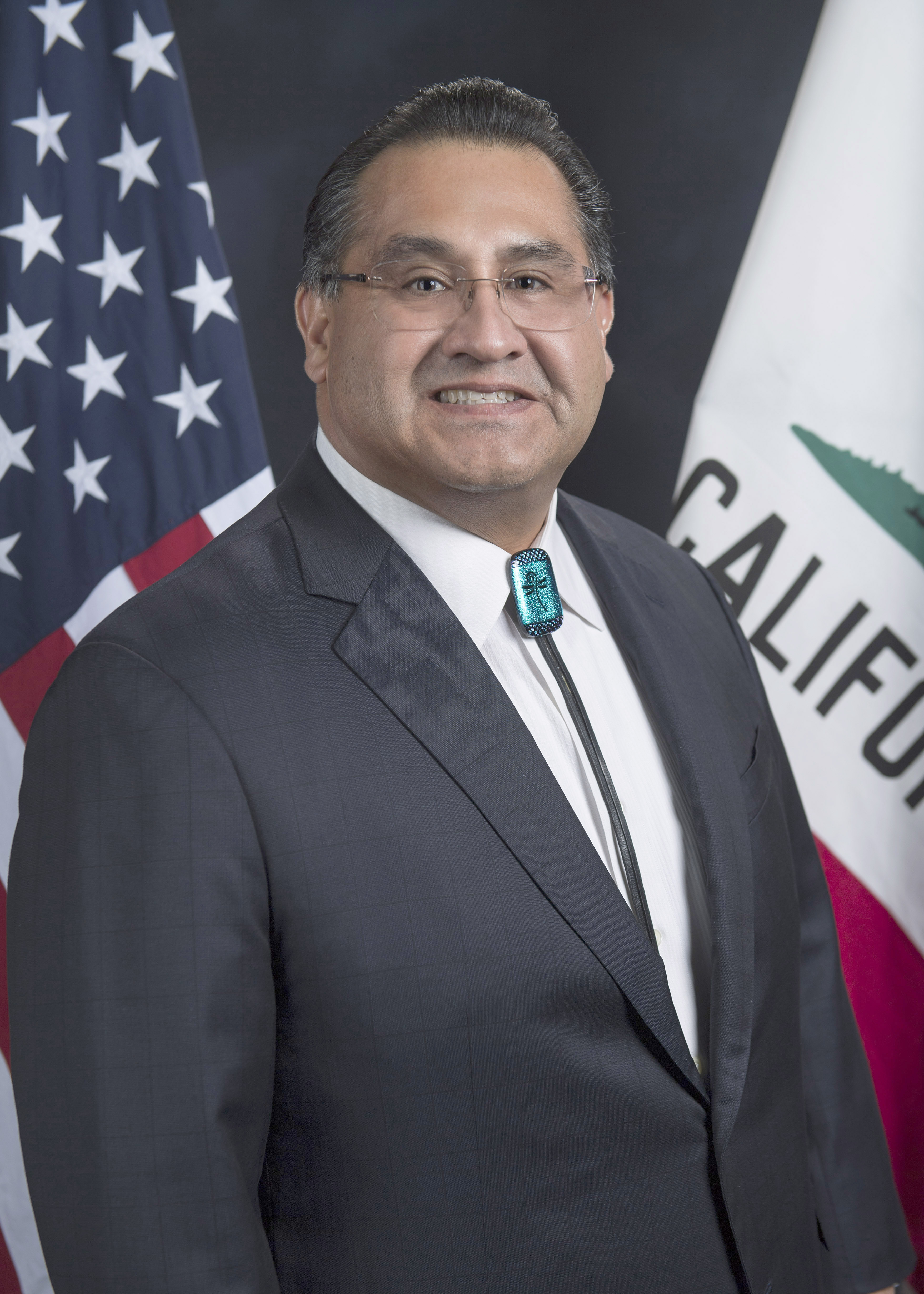
Asm. James Ramos
Sponsored bills
This measure would call for continued support and recognition of the many benefits provided by Special Olympics.
This measure would declare August 2019 as Valley Fever Awareness Month.
This measure would endorse activities in public schools that instruct pupils in upholding and sustaining American democracy, encourage, in the strongest terms, California schools to pursue certain recognized designations that reflect specified ethos and values, and encourage publicly elected officials to conduct themselves in ways that strengthen civic engagement and participation in civil society.
This measure would formally apologize for California's past complicity in enabling and furthering the practice of slavery and would urge the United States Congress and the President of the United States to enact House Resolution 40 to study the legacy of slavery and provide recommendations on redress for descendants of enslaved persons.
This measure would mark December 17, 2019, as the 76th anniversary of the repeal of the Chinese Exclusion Act to honor the contributions of all immigrants and refugees in our communities. The measure would also declare the opposition of the Legislature to executive orders and a presidential proclamation signed by President Trump relating to immigration, call upon the President to revoke those orders and that proclamation, condemn the expansion of deportations being undertaken under the current presidential administration, stand in firm opposition to the President's proposal for construction of a wall along the southern border with Mexico, and reaffirm that the state is open and welcoming to immigrants and refugees who are integral to life in our state.
Existing property tax law requires the county auditor, in each fiscal year, to allocate property tax revenue to local jurisdictions in accordance with specified formulas and procedures, and generally provides that each jurisdiction be allocated an amount equal to the total of the amount of revenue allocated to that jurisdiction in the prior fiscal year, subject to certain modifications, and that jurisdiction's portion of the annual tax increment, as defined. Existing property tax law also requires that, for purposes of determining property tax revenue allocations in each county for the 1992–93 and 1993–94 fiscal years, the amounts of property tax revenue deemed allocated in the prior fiscal year to the county, cities, and special districts be reduced in accordance with certain formulas. It requires that the revenues not allocated to the county, cities, and special districts as a result of these reductions be transferred to the Educational Revenue Augmentation Fund in that county for allocation to school districts, community college districts, and the county office of education. Beginning with the 2004–05 fiscal year and for each fiscal year thereafter, existing law requires that each city, county, and city and county receive additional property tax revenues in the form of a vehicle license fee adjustment amount, as defined, from a Vehicle License Fee Property Tax Compensation Fund that exists in each county treasury. Existing law requires that these additional allocations be funded from ad valorem property tax revenues otherwise required to be allocated to educational entities. Existing law, for the 2006–07 fiscal year, and for each fiscal year thereafter, requires the vehicle license fee adjustment amount to be the sum of the vehicle license fee adjustment amount for the prior fiscal year, if specified provisions did not apply, and the product of that sum and the percentage change from the prior fiscal year in the gross taxable valuation within the jurisdiction of the entity. Existing law establishes a separate vehicle license fee adjustment amount for a city that was incorporated after January 1, 2004, or on or before January 1, 2012. This bill, for the 2019–20 fiscal year, would instead require the vehicle license fee adjustment amount to be the sum of the vehicle license fee adjustment amount in the 2018–19 fiscal year, the product of that sum and the percentage change in gross taxable assessed valuation within the jurisdiction of that entity between the 2018–19 fiscal year to the 2018–19 fiscal year, and the product of the amount of specified motor vehicle license fee revenues that the Controller allocated to the applicable city in July 2010 and 1.17. This bill, for the 2020–21 fiscal year, and for each fiscal year thereafter, would require the vehicle license fee adjustment amount to be the sum of the vehicle license fee adjustment amount for the prior fiscal year and the product of the amount as so described and the percentage change from the prior fiscal year in gross taxable assessed valuation within the jurisdiction of the entity. By imposing additional duties upon local tax officials with respect to the allocation of ad valorem property tax revenues, this bill would impose a state-mandated local program. The California Constitution requires the state to reimburse local agencies and school districts for certain costs mandated by the state. Statutory provisions establish procedures for making that reimbursement. This bill would provide that, if the Commission on State Mandates determines that the bill contains costs mandated by the state, reimbursement for those costs shall be made pursuant to the statutory provisions noted above.

Existing law establishes the Homeless Coordinating and Financing Council and requires the council to set and measure progress toward goals to prevent and end homelessness among youth in California by setting specific, measurable goals aimed at preventing and ending homelessness among youth in the state and defining outcome measures and gathering data related to the goals. This bill would require the council to develop and administer a grant program to support young people experiencing homelessness and prevent and end homelessness. The program would be funded by a combination of funds provided to the council by the State Department of Health Care Services from the Youth Education, Prevention, Early Intervention and Treatment Account, funds appropriated by the Legislature, and gifts and donations made to the council for that purpose. The bill would specify the entities eligible to apply for grant funding and identify specific information to be included in the grant application. The bill would require preference for funding to be given to entities with certain characteristics, including those that participate in the development of a local, youth-centered, coordinated entry system. The bill would require grant funds to be used both to provide supportive services, as specified, and to establish or expand housing programs. The bill would require a grant recipient to submit data and annual progress reports to the council and agree to meet quality improvement goals, accept technical assistance, and submit to annual site monitoring visits by the council, as specified. The bill would require the council, by January 10, 2021, and each January 10 thereafter, to submit a report to the Legislature on the data received from grant recipients.
Existing law, the State Civil Service Act, prescribes a comprehensive civil service personnel system for the state and specifically provides certain preferences for veterans. Existing law requires a state agency to rank a veteran, widow or widower of a veteran, or spouse of a 100% disabled veteran in the top rank of an eligibility list for hiring when the person achieves a passing score on the examination. Other existing law authorizes various state entities to require fingerprint images and associated information from a prospective employee whose duties would include access to confidential information and cash, among other things. Existing law generally requires a state entity that is required to conduct criminal background checks to comply with applicable federal requirements. This bill would amend veterans' preference provisions to require the Department of Human Resources to collaborate with specified state entities to establish a veterans' preference to be applied to employment opportunities within the field of cybersecurity that require a background check. The bill would require a state agency, as defined, that hires for a position in cybersecurity that requires a background check to apply the veterans' preference and to establish a uniform hiring policy for veterans who have held a security clearance in the last year and have left the military in good standing or were honorably discharged. The bill would request the Regents of the University of California to enact for the University of California veterans' preference provisions that are equivalent to the veterans' preference provisions added by the bill.