

Existing law allows a court to revoke, modify, or change its order of suspension of imposition or execution of sentence at any time during a term of probation and, when the ends of justice will be subserved, and the good conduct and reform of the person held on probation warrants it, to terminate the period of probation and discharge the person. This bill would require that the prosecuting attorney be given 2 days' written notice prior to a hearing to terminate probation early. The bill would require the prosecuting attorney to notify the victim if the victim requested to be notified about the progress of the case, and to request a continuance of the hearing if the victim advises the prosecuting attorney that there is an outstanding restitution order or restitution fine. By imposing new duties on a prosecuting attorney, the bill would impose a state-mandated local program. The California Constitution requires the state to reimburse local agencies and school districts for certain costs mandated by the state. Statutory provisions establish procedures for making that reimbursement. This bill would provide that, if the Commission on State Mandates determines that the bill contains costs mandated by the state, reimbursement for those costs shall be made pursuant to the statutory provisions noted above.
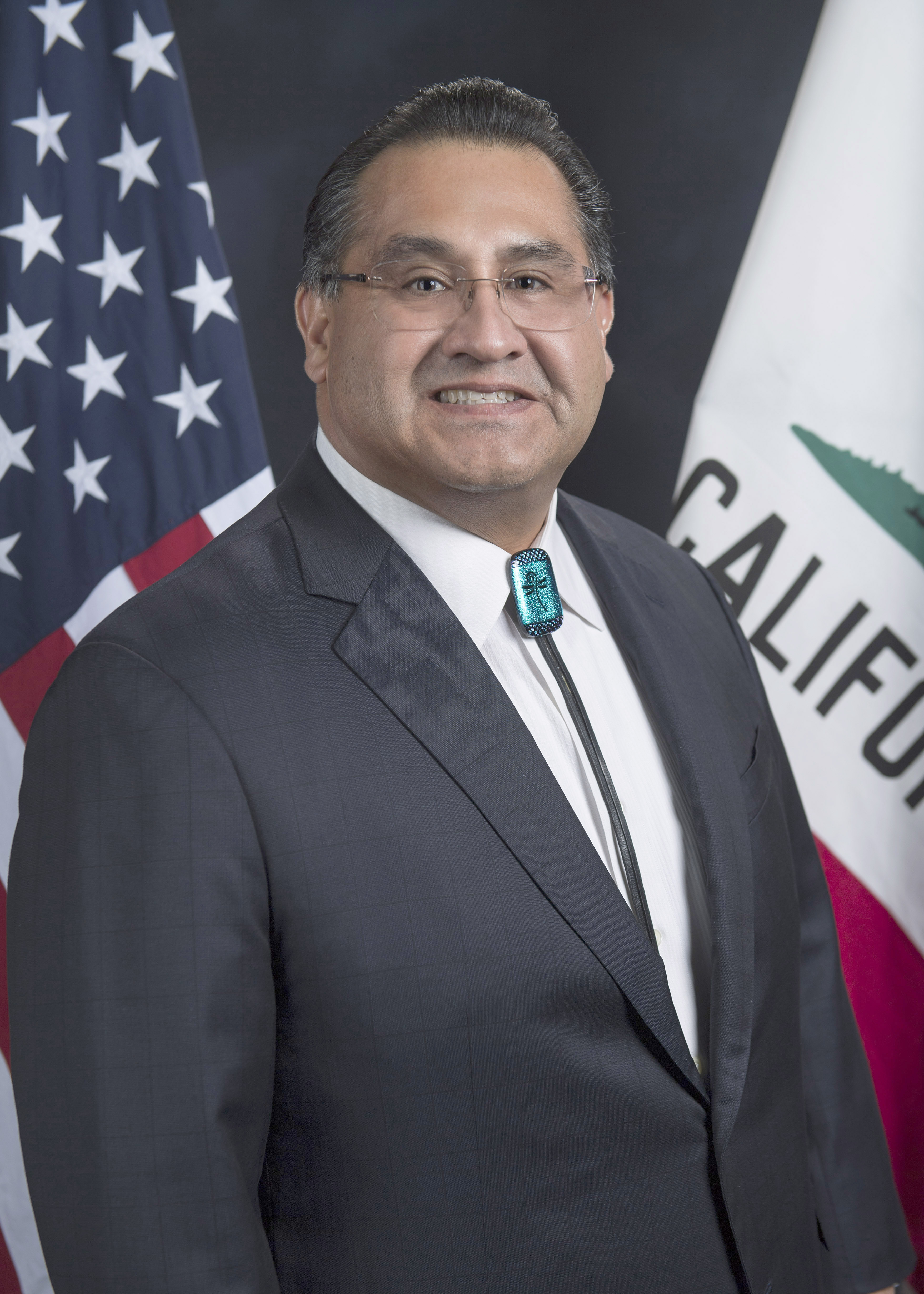
Asm. James Ramos
Sponsored bills
Existing federal law, the Indian Child Welfare Act of 1978 (ICWA) , governs the proceedings for determining the placement of an Indian child when that child is removed from the custody of the child's parent or guardian. Existing law specifies that the state is committed to protecting the essential tribal relations and best interest of an Indian child by promoting practices in accordance with ICWA. Existing law requires a court in all Indian child custody proceedings to, among other things, comply with ICWA. This bill would require the Judicial Council to establish a rule of court that would authorize the use of telephonic or other remote access by an Indian child's tribe in proceedings where ICWA apply. The bill would prohibit the charging of a fee for the telephonic or remote access. Existing law requires counties to implement the resource family approval process and authorizes a federally recognized tribe to approve a home for the purpose of foster or adoptive placement of an Indian child pursuant to ICWA. Existing law generally makes a resource family eligible to provide foster care for any child in out-of-home placement, but authorizes a county and foster family agency to approve a resource family to care for a specific child. This bill would require, when the tribe does not exercise its right to approve a home for a specific child, the county and foster family agency to apply prevailing social and cultural standards of the Indian community when approving a resource family for that child. The bill would require the State Department of Social Services to issue all-county letters or similar instruction to provide guidance regarding consistent implementation of this provision. The bill would also clarify that tribal home approvals that comply with specific requirements are not subject to resource family approval requirements. By requiring counties to provide a higher level of service when approving resource families, this bill would impose a state-mandated local program. This bill would incorporate additional changes to Section 1517 of the Health and Safety Code proposed by AB 819 to be operative only if this bill and AB 819 are enacted and this bill is enacted last. This bill would incorporate additional changes to Section 16519.5 of the Welfare and Institutions Code proposed by AB 819 and AB 865 to be operative only if this bill and AB 819, this bill and AB 865, or all 3 bills are enacted and this bill is enacted last. The California Constitution requires the state to reimburse local agencies and school districts for certain costs mandated by the state. Statutory provisions establish procedures for making that reimbursement. This bill would provide that no reimbursement is required by this act for a specified reason.
Under existing law, the California Emergency Services Act, the Governor is authorized to proclaim a state of emergency, as defined, under specified circumstances. The California Emergency Services Act also authorizes the governing body of a city, county, city and county, or an official designated by ordinance adopted by that governing body, to proclaim a local emergency, as defined. Existing law provides that a person has a privilege to refuse to disclose, and prevent another from disclosing, a confidential communication with specified persons, except in specified circumstances. This bill would enact the California Firefighter Peer Support and Crisis Referral Services Act. The bill would authorize the state or a local or regional public fire agency to establish a Peer Support and Crisis Referral Program to provide an agencywide network of peer representatives available to aid fellow employees on emotional or professional issues. The bill would, for purposes of the act, define a "peer support team" as a team composed of emergency service personnel, as defined, hospital staff, clergy, and educators who have completed a peer support training course, as specified. The bill would provide that an emergency service personnel, whether or not a party to an action, has a right to refuse to disclose, and to prevent another from disclosing, a confidential communication between the emergency service personnel and a peer support team member, crisis hotline staff member, or crisis referral service, except under limited circumstances, including, among others, when disclosure is reasonably believed to be necessary to prevent death, substantial bodily harm, or commission of a crime, or when disclosure is required as part of a mandated reporter obligation. The bill would also provide that, except for an action for medical malpractice, a peer support team member providing peer support services as a member of a peer support team and the public fire agency that employs them are not liable for damages, as specified, relating to an act, error, or omission in performing peer support services, unless the act, error, or omission constitutes gross negligence or intentional misconduct.
This measure would condemn regulations recently adopted by the Department of Homeland Security to prescribe how a determination of inadmissibility for a person who is not a citizen or national is made based on the likelihood that the person will become a public charge. This measure would also urge the federal government to repeal the new regulations.
This measure would state that the Legislature strongly and unequivocally supports the existing fuel economy and greenhouse gas emissions standards, the preservation of California's authority to enact stricter air pollution standards pursuant to its federal Clean Air Act waiver, and the enactment of a voluntary agreement between the State Air Resources Board and automobile manufacturers that preserves California's status as a leader in the fight for clean air; will consider any and all appropriate actions to maintain and enact vehicle emissions standards for the protection of public health, California residents, and the economy; supports any and all appropriate actions that enhance longstanding protections for the public's health, California residents, and the economy; and strongly urges the President and Vice President of the United States, the Secretary of the United States Department of Transportation, and the Administrator of the United States Environmental Protection Agency to reject the Safer Affordable Fuel-Efficient Vehicles Proposed Rule for Model Years 2021–2026.
This measure would recognize the need to pursue avenues to implement proposed reparations for the descendants of African slaves in the United States. The measure would further recognize August 2019 as marking 400 years since Africans were brought to Virginia.
This measure would proclaim September 29, 2019, as Gold Star Mothers' and Families' Day in California.
This measure would welcome refugees and declare its support for the resettlement of refugees in California, no matter their religion, race, nationality, sexual orientation, gender identity, or country of origin, and calls upon other local governments and communities to join them in supporting a stronger national effort to resettle the world's most vulnerable refugees. This measure would call on the federal government to resettle all 30,000 refugees that the United States has committed to resettle in the fiscal year 2019, and would call on Congress and the presidential administration to raise the Presidential Determination to at least 75,000 refugees for fiscal year 2020.
This measure would designate October 20, 2019, and each 20th day of October thereafter, as Leyte Landing Commemoration Day in recognition of the significance of the Leyte landing in liberating the Philippines from Japanese occupation and would also honor the significant contributions to California made by generations of Filipino Americans since that time.
Existing law requires the Governor to create the Homeless Coordinating and Financing Council to, among other things, identify mainstream resources, benefits, and services that can be accessed to prevent and end homelessness in California. Existing law requires the Governor to appoint up to 17 members of the council, including representatives from specified state agencies and departments, and state advocates or other members of the public or state agencies at the Governor's discretion. This bill would additionally require the Governor to appoint a representative from the State Department of Education to be a member of the council. This bill would incorporate additional changes to Section 8257 of the Welfare and Institutions Code proposed by SB 687 to be operative only if this bill and SB 687 are enacted and this bill is enacted last.