This measure would name the public street, circle, and plaza at 914 and 915 Capitol Mall in the City of Sacramento as the Willie L. Brown, Jr. Circle and Plaza. The measure would request the Department of General Services to determine the cost of erecting the appropriate signage commemorating this special designation and, upon receiving donations from nonstate sources, to cover that cost to erect that signage.
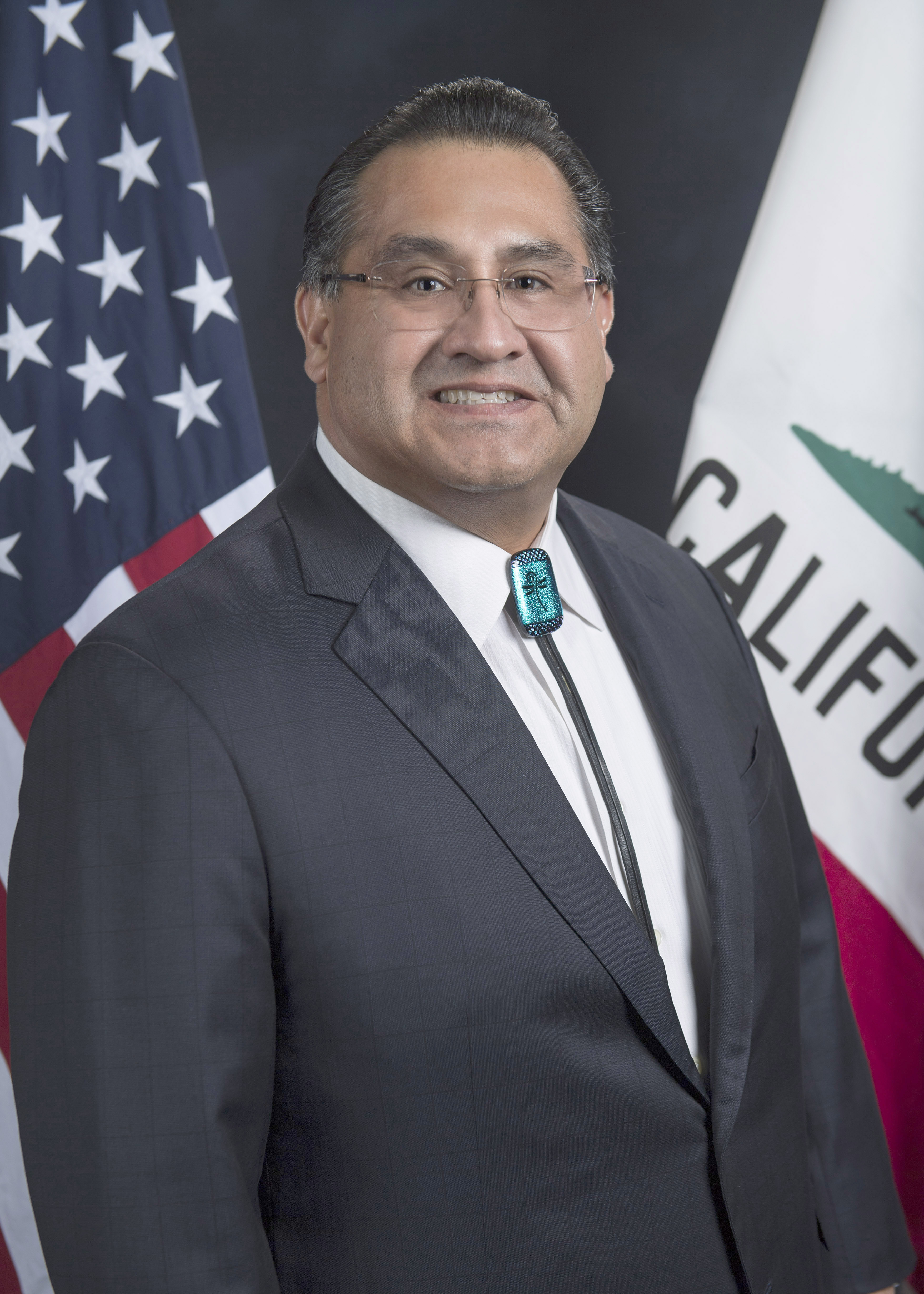
Asm. James Ramos
Sponsored bills
The Personal Income Tax Law allows various credits against the taxes imposed by those laws. This bill would allow a credit against that tax for each taxable year beginning on or after January 1, 2020, and before January 1, 2023, in an amount equal to the lesser of 3 percent of the purchase price of the qualified principal residence, as defined, or $5,000. The bill would also provide that the credit amount is $0 for each taxable year beginning on or after January 1, 2020, and before January 1, 2025, unless otherwise specified in a bill providing for appropriations related to the Budget Act. The bill would require the qualified first-time homebuyer, as defined, and seller of the qualified principal residence to jointly sign and submit to the Franchise Tax Board a certification under the penalty of perjury that they have entered into an enforceable contract for the purchase of the qualified principal residence. By expanding the scope of the crime of perjury, this bill would impose a state-mandated local program. The California Constitution requires the state to reimburse local agencies and school districts for certain costs mandated by the state. Statutory provisions establish procedures for making that reimbursement. This bill would provide that no reimbursement is required by this act for a specified reason. This bill would take effect immediately as a tax levy.
Existing law provides for the establishment of apprenticeship programs in various trades, to be approved by the Chief of the Division of Apprenticeship Standards within the Department of Industrial Relations in any trade in the state or in a city or trade area whenever the apprentice training needs justify the establishment. This bill would require a school district or school to notify each apprenticeship program in the same county as the school district or school of a career or college fair it is planning to hold, as specified. By imposing specified requirements on school districts and schools conducting career and college fairs, the bill would impose a state-mandated local program. The California Constitution requires the state to reimburse local agencies and school districts for certain costs mandated by the state. Statutory provisions establish procedures for making that reimbursement. This bill would provide that, if the Commission on State Mandates determines that the bill contains costs mandated by the state, reimbursement for those costs shall be made pursuant to the statutory provisions noted above.
Existing federal law, the McKinney-Vento Homeless Assistance Act, provides grants to states to carry out activities relating to the education of homeless children and youths, as defined, including, among others, providing services and activities to improve the identification of homeless children and youths and to enable them to enroll in, attend, and succeed in school. The act requires the state plans submitted for the receipt of the grant to include assurances that local educational agencies will designate an appropriate staff person to act as a local educational agency liaison for homeless children and youths and a description of how the state will ensure that local educational agencies and their liaisons will comply with specified requirements of the act, including the identification of homeless children and youths. Under existing state law, public schools, including charter schools, and county offices of education are required to immediately enroll a homeless child or youth seeking enrollment, except as specified, and a local educational agency liaison for homeless children and youths is required to ensure that public notice of the educational rights of homeless children and youths is disseminated in schools within the liaison's local educational agency that provide services pursuant to the act. This bill would require a local educational agency to ensure that each school within the local educational agency identifies all homeless children and youths enrolled at the school, and would also require the local educational agency to annually report to the State Department of Education the number of homeless children and youths enrolled. The bill would require that an intake form used to identify a child as homeless include a statement that a child will not be removed from the child's family solely because the child's family is experiencing homelessness. By imposing additional duties on local educational agencies, the bill would impose a state-mandated local program. The bill, upon appropriation by the Legislature for this purpose, would establish in the department 1.5 state coordinator positions, in addition to the state coordinator positions maintained in the department as of July 1, 2019, with duties including, at a minimum, those listed for the Coordinator for Education of Homeless Children and Youths pursuant to the federal act. The bill would require the department, upon appropriation by the Legislature, to allocate $500,000 each to 3 county offices of education in different regions throughout the state for the purpose of establishing technical assistance centers to foster relationships with community partners and other local educational agencies in each region, as provided. The bill would require the department to determine which county offices of education to allocate those funds to through a competitive process, as provided, and to take into account geographic diversity and concentrations of homeless children and youths. The bill would require a school district or county office of education to post on its internet website a list of the local educational agency liaisons for homeless children and youths in that school district or county, respectively, and the contact information for those liaisons. The bill would require a school to post on its internet website the contact information for the liaison, if available. The bill would also require, if a school has an employee or person under contract whose duties include assisting the liaison in completing the liaison's duties under the federal act, the school to post on its internet website the contact information for that employee or person under contract. The California Constitution requires the state to reimburse local agencies and school districts for certain costs mandated by the state. Statutory provisions establish procedures for making that reimbursement. This bill would provide that, if the Commission on State Mandates determines that the bill contains costs mandated by the state, reimbursement for those costs shall be made pursuant to the statutory provisions noted above.
This measure would recognize September 2020 as Sickle Cell Disease Awareness Month and encourage the Legislature to appropriate funds for research, treatment, and monitoring of sickle cell disease, and for related education and outreach.
Existing law imposes an annual minimum franchise tax of $800, except as provided, on every corporation incorporated in this state, qualified to transact intrastate business in this state, or doing business in this state, and an annual tax in an amount equal to the minimum franchise tax on every limited partnership, limited liability partnership, and limited liability company doing business in this state, as specified. This bill, for taxable years beginning on or after January 1, 2020, and before January 1, 2025, would reduce the minimum franchise tax, as provided, based on the gross receipts during the taxable year of the corporation, but would continue to impose the current amount of the annual tax on corporations described above whose gross receipts exceed $15,000,000 and on every limited partnership, limited liability partnership, and limited liability company doing business in this state. The bill would require the Franchise Tax Board to submit an annual report to the Legislature regarding the reduction of the minimum franchise tax, as provided. This bill would incorporate additional changes to Sections 17941 and 23153 of the Revenue and Taxation Code proposed by AB 308 to be operative only under specified circumstances, including that this bill is enacted last. This bill would take effect immediately as a tax levy.
This measure would urge specified state departments and the Attorney General to use their authority to ensure that health care service plans and health insurers subject to their authority comply with the federal Paul Wellstone and Pete Domenici Mental Health Parity and Addiction Equity Act of 2008.
(1) The California Financing Law (CFL) provides for the licensure and regulation of finance lenders and brokers by the Commissioner of Business Oversight. The CFL prohibits anyone from engaging in the business of a finance lender or broker without obtaining a license. A willful violation of the CFL is a crime, except as specified. Under existing law, a licensee who lends any sum of money is authorized to contract for and receive charges at a maximum rate that does not exceed specified sums on the unpaid principal balance per month, ranging from 2 12 % to 1%, based on the consumer loan amount, as specified. This provision, however, does not apply to any loan of a bona fide principal amount of $2,500 or more, as determined in accordance with a provision governing regulatory ceilings and evasion of the CFL. The CFL also authorizes a licensee, as an alternative to the above-described rate charges for consumer loan amounts, to instead contract for and receive charges at the greater of a rate not exceeding 1.6% per month on the unpaid principal balance or a rate not exceeding 5 56 of 1% per month, plus a specified percentage per month, as established by the Federal Reserve Bank of San Francisco, on advances to member banks under federal law, or if there is no single determinable rate, the closest counterpart of this rate. Under existing law, these provisions do not apply to a loan of a bona fide principal amount of $2,500 or more, as specified. The CFL further authorizes a licensee to contract for and receive an administrative fee of a specified amount that varies with the bona fide principal amount of the loan. This bill, entitled the Fair Access to Credit Act, would authorize a finance lender, with respect to a loan of a bona fide principal amount of $2,500 or more but less than $10,000, to contract for or receive charges at a rate not exceeding an annual simple interest rate of 36% plus the Federal Funds Rate. The bill would require finance lenders making loans subject to these provisions to, among other requirements, report each borrower's payment performance to at least one consumer reporting agency that compiles and maintains files on consumers on a nationwide basis and to also offer, at no cost to the borrower, a credit education program or seminar that has been previously reviewed and approved by the commissioner, in accordance with specific requirements. The bill would further specify that a licensee may contract for and receive an administrative fee, as described above, in addition to these charges. (2) Under the CFL, certain principles apply in determining whether a loan is a loan of a bona fide principal amount under specified provisions and whether the regulatory ceiling provision is used for purposes of evading the CFL. This bill would apply these principles to loans of a bona fide principal amount of $2,500 or more but less than $10,000. The bill would also apply these principles to any fees paid to a licensee for the privilege of participating in an open-end credit program. (3) Existing law prohibits licensees subject to the CFL from entering into a contract for a consumer loan that provides for a scheduled repayment of principal over more than the maximum terms set forth in relation to the respective size of the loan. Among other things, this provision prohibits a loan of at least $3,000 but less than $5,000 from exceeding a maximum term of 60 months and 15 days. This bill would increase the maximum principal loan amount under the above schedule to $10,000. The bill would also prohibit a licensee from entering into a contract for a consumer loan that is at least $2,500 but less than $10,000 that provides for a scheduled repayment of principal that is less than 12 months. The bill would also specify that the maximum loan term of 60 months and 15 days does not apply to a loan secured by real property of a bona fide principal amount of at least $5,000. The bill would also prohibit a licensee from charging, imposing, or receiving any penalty for the prepayment of a loan under the CFL, except as specified. (4) The CFL regulates a specific type of consumer loan known as an open-ended loan. The CFL prescribes the amount upon which charges authorized by the CFL may be based, the amount of a minimum monthly payment, the amount of fees, costs, and expenses a licensee may receive, and the amount to be delivered by the licensee at the time the open-ended loan is made. The CFL applies these provisions only to a loan of a bona fide principal amount not exceeding $5,000, as specified. This bill would apply those provisions to an open-ended loan in a bona fide principal amount not exceeding $10,000, as specified. The bill would make conforming and nonsubstantive changes. By expanding the application of the CFL to cover more loans, the bill would expand the scope of an existing crime, thereby imposing a state-mandated local program. The California Constitution requires the state to reimburse local agencies and school districts for certain costs mandated by the state. Statutory provisions establish procedures for making that reimbursement. This bill would provide that no reimbursement is required by this act for a specified reason.

Existing law requires the governing board or body of a local educational agency that serves pupils in grades 7 to 12, inclusive, to adopt a policy on pupil suicide prevention that specifically addresses the needs of high-risk groups. This bill would require the governing board or body of a local educational agency that serves pupils in kindergarten and grades 1 to 6, inclusive, to, before the beginning of the 2020–21 school year, adopt, and update as prescribed, a policy on pupil suicide prevention that specifically addresses the needs of high-risk groups. The bill would require this policy to be age appropriate and delivered and discussed in a manner that is sensitive to the needs of young pupils. The bill would also require this policy to be written to ensure proper coordination and consultation with the county mental health plan for a referral for mental health or related services made on behalf of a pupil who is a Medi-Cal beneficiary. The bill would require the policy to address any training on suicide awareness and prevention to be provided to teachers of pupils in all of the grades served by the local educational agency. By imposing additional duties on local educational agencies, the bill would impose a state-mandated local program. The California Constitution requires the state to reimburse local agencies and school districts for certain costs mandated by the state. Statutory provisions establish procedures for making that reimbursement. This bill would provide that, if the Commission on State Mandates determines that the bill contains costs mandated by the state, reimbursement for those costs shall be made pursuant to the statutory provisions noted above.