

Passed Feb 10, 2020
1 co-sponsor
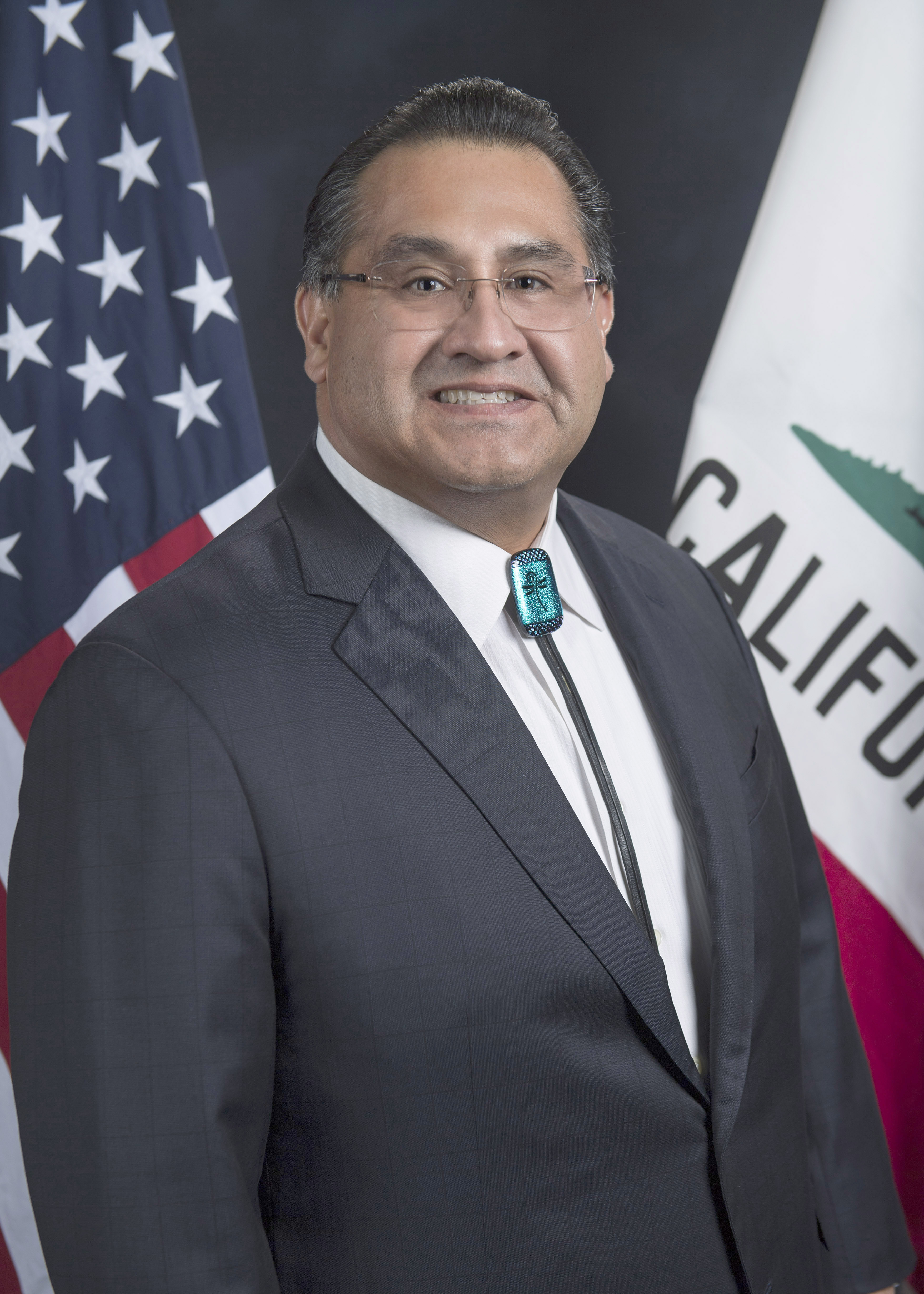
Asm. James Ramos
Total votes
17,608
all sessions
Attendance
93%
1,027 missed
Near the chamber average
With party
99%
of cast votes
Near the chamber average
Bipartisan score
0%
crosses aisle rarely
Near the chamber average
Sponsored
1,475
bills & resolutions
Near the chamber average
Committees
8
assignments
1,475 bills and resolutions
Sponsored bills
Total
1,475
Primary
167
Co-sponsor
1,308
This page
1,475
matching current filters
Mental Health Services Fund.
Existing law, the Mental Health Services Act, an initiative measure enacted by the voters as Proposition 63 at the November 2, 2004, statewide general election, funds a system of county mental health plans for the provision of mental health services, as specified. The act establishes the Mental Health Services Fund, which is continuously appropriated to, and administered by, the State Department of Health Care Services to fund specified county mental health programs. This bill would make technical, nonsubstantive changes to those provisions.
died Feb 3, 2020
0 co-sponsors
Elementary and secondary education: definitions: writing.
Existing law establishes the Education Code and sets forth general provisions, rules of construction, and definitions that govern its construction. For purposes of the code, existing law defines "writing" to include any form of recorded message capable of comprehension by ordinary visual means and requires a notice, report, statement, or record that is required or authorized by the code to be made in writing in the English language, unless it is expressly provided otherwise. This bill would make nonsubstantive changes to those provisions regarding the definition of "writing" and related requirements for purposes of the Education Code.
died Feb 3, 2020
0 co-sponsors
Public postsecondary education: University of California, Riverside School of Medicine: expansion.
The California Constitution provides that the University of California constitutes a public trust administered by the Regents of the University of California, a corporation in the form of a board, with full powers of organization and government, subject to legislative control only for specified purposes. The University of California system includes 10 campuses, which are located in Berkeley, Davis, Irvine, Los Angeles, Merced, Riverside, San Diego, San Francisco, Santa Barbara, and Santa Cruz. Existing law requires, on or before April 1 of each year, the University of California to provide progress reports and specified information consistent with the published mission and vision of the University of California, Riverside, School of Medicine to the relevant policy and fiscal committees of the Legislature pertaining to funding, recruitment, hiring, and outcomes for the University of California, Riverside, School of Medicine. This bill would appropriate to the regents $80,000,000 from the General Fund for the 2020–21 fiscal year to be expended solely on the construction of a new University of California, Riverside School of Medicine facility, and an additional $25,000,000 from the General Fund each fiscal year, commencing with the 2020–21 fiscal year, to be expended solely on ongoing operational support for the expansion of the University of California, Riverside School of Medicine. As a condition of receiving the additional annual $25,000,000 appropriation, the bill would require the University of California to comply with the annual reporting requirement under existing law pertaining to funding, recruitment, hiring, and outcomes for the University of California, Riverside, School of Medicine.
Failed Feb 3, 2020
1 co-sponsor
Medi-Cal: benefits: beneficiaries with special dental care needs.
Existing law establishes the Medi-Cal program, which is administered by the State Department of Health Care Services, under which qualified low-income individuals receive health care services. The Medi-Cal program is, in part, governed and funded by federal Medicaid program provisions. Existing law provides for a schedule of benefits under the Medi-Cal program, including certain dental services, and dental managed care plans. This bill would require the department to implement a special needs treatment and management benefit that would be provided for 4 visits in a 12-month period for a Medi-Cal dental program beneficiary with special dental care needs, as defined. The bill would require a Medi-Cal dental program provider to document specified information, including the need for additional time to treat a Medi-Cal dental program beneficiary with special dental care needs, for purposes of reimbursement. The bill would not limit the provision or scope of Medi-Cal benefits covered under existing law. The bill would require the department to seek any necessary approvals from the federal Centers for Medicare and Medicaid Services to implement the bill. The bill would authorize the department to implement these provisions, by various means, including plan or provider bulletins, without taking regulatory action, and would require the department, by July 1, 2022, to subsequently adopt regulations. The bill would require the department, commencing January 1, 2020, to provide the Legislature with semiannual status reports to the Legislature until regulations have been adopted.
Failed Feb 3, 2020
0 co-sponsors
Veterans: transition assistance.
Existing law establishes the transition assistance program, which provides veterans separating from the United States Armed Forces with California-specific information, as specified. Existing law requires the Department of Veterans Affairs to take steps to increase awareness of professional licensing benefits for veterans and their spouses. This bill would direct the department to identify veterans, at the time of separation from the service through the transition assistance program and afterwards as they seek services through the department, who have expertise in information technology, cybersecurity, and related information technology fields. The bill would require the department to use this information to provide veterans who wish to participate with information about training and other resources that will help in obtaining a civilian career in the information technology field.
Failed Feb 3, 2020
0 co-sponsors
Administrative Procedure Act: major regulations.
Existing law, the Administrative Procedure Act, in part, sets forth the requirements for the adoption, publication, review, and implementation of regulations by state agencies, and for review of those regulatory actions by the Office of Administrative Law. Existing law requires a state agency, prior to submitting a proposal to adopt, amend, or repeal an administrative regulation, to determine the economic impact of the regulation by preparing an economic impact assessment. Existing law requires a state agency proposing to adopt, amend, or repeal a major regulation to also prepare a standardized regulatory impact analysis, and defines a "major regulation" as a regulation that the state agency estimates will have an economic impact on California business enterprises and individuals in an amount exceeding $50,000,000. This bill would instead define "major regulation" to be a regulation that the state agency estimates will have an economic impact on California business enterprises and individuals in an amount exceeding $30,000,000.
Failed Feb 3, 2020
1 co-sponsor
Office of Emergency Services: behavioral health response.
The California Emergency Services Act establishes the Office of Emergency Services within the Governor's office under the supervision of the Director of Emergency Services and makes the office responsible for the state's emergency and disaster response services for natural, technological, or manmade disasters and emergencies. Existing law authorizes the Governor, or the director when the governor is inaccessible, to proclaim a state of emergency under specified circumstances. This bill would establish a behavioral health deputy director within the Office of Emergency Services to ensure individuals have access to necessary mental and behavioral health services and supports in the aftermath of a natural disaster or declaration of a state of emergency and would require the deputy director to collaborate with the Director of Health Care Services to coordinate the delivery of trauma-related support to individuals affected by a natural disaster or state of emergency. The bill would require the Director of Health Care Services, in collaboration with the Office of Emergency Services, to immediately request necessary federal waivers to ensure the provision of healthcare services, as specified, during a natural disaster or declared state of emergency.
Failed Feb 3, 2020
0 co-sponsors
California Flexible Housing Subsidy Pool Program.
Existing law establishes various programs, including, among others, the Emergency Housing and Assistance Program, to provide assistance to homeless persons. Existing law also establishes the Homeless Coordinating and Financing Council to, among other things, create a statewide data system or warehouse that collects local data through homeless management information systems, with the ultimate goal of matching data on homelessness programs to programs impacting homeless recipients of state programs, as specified. This bill would establish the California Flexible Housing Subsidy Pool Program within the Department of Housing and Community Development for the purpose of making grants available to applicants, defined to include a city, county, city and county, or continuum of care, for eligible activities including, among other things, rental assistance, operating subsidies in new and existing affordable or supportive housing units, and specified outreach services. The bill would continuously appropriate $450,000,000 from the General Fund every fiscal year to the department for purposes of the program, and set forth how these funds must be allocated. The bill would require the department to, on or before January 1, 2023, and every year thereafter, evaluate the outcomes of the program and report the outcomes to the Senate Committee on Housing and the Assembly Committee on Housing and Community Development. The bill would also require the Homeless Coordinating and Financing Council to work with the department to create a California Funder's Collaborative that would, among other things, establish a process for incorporating private contributions into state programs to create local innovations, establish pilot programs, or evaluate programs.
Failed Feb 3, 2020
1 co-sponsor
Passed Jan 27, 2020
1 co-sponsor
Ask Maddy
·
AI policy assistant
Ask Maddy about James Ramos
Scope: california
Hi! I can help you understand James Ramos's legislative record. What would you like to know?
Try one of these
i
Maddy answers using official bill text and legislative records. Always verify before sharing.
Sources cited inline