

Existing law establishes the Native American Heritage Commission and vests the commission with specified powers and duties. Existing law requires the commission to publish a document that lists the California Indian tribes as well as to consult in matters pertaining to repatriation under the act. The California Native American Graves Protection and Repatriation Act of 2001 requires all agencies and museums that receive state funding and have possession or control over collections of California Native American human remains and associated funerary objects to inventory those remains and objects for repatriation to the appropriate California Indian tribes, as specified. The act requires those entities to complete an inventory and summary of those objects, as specified, and to provide the inventories and summaries to the commission. The act provides a process by which a California Indian tribe can request the return of human remains and cultural items. The act defines various terms, including "California Indian tribe" and "museum." The act defines "California Indian tribe" as a tribe that either meets the federal definition of Indian tribe or that is indigenous to California and is not reorganized by the federal government, is listed on the Bureau of Indian Affairs Branch Acknowledgment and Research petitioner list, and is determined by the commission to be a tribe that is eligible to participate in the repatriation process under the act. The act defines "museum" as an entity, including a higher educational institution, excluding school districts, that receives state funds. This bill would revise various definitions, including, among others, the definition of "California Indian tribe" to include both a tribe that meets the federal definition of Indian tribe and a tribe that is not recognized by the federal government, but that is a native tribe located in California that is on the list maintained by the commission; the definition of "museum" to specify it receives state funds; the definition of "preponderance of the evidence" to specify that tribal traditional knowledge alone may be sufficient to meet this standard; and the definition of "reasonable" to specify that tribal traditional knowledge can and should be used to establish reasonable conclusions with respect to determining cultural affiliation and identifying cultural items. This bill would revise and recast the process of creating the inventories and summaries by, among other things, requiring consultation with California Indian tribes during the creation of the preliminary inventories and summaries and after submission to the commission. The bill also would revise and recast the process by which a direct lineal descendent or a California Indian tribe can request the return of human remains or cultural items. The bill would make technical, nonsubstantive changes. This bill would require every state agency, as defined, with significant interaction with tribal issues, peoples, or lands, and request the Regents of the University of California, to designate one or more liaisons for the purpose of engaging in consultation with California Native American tribes on the tribal contact list and educating the agency on topics relevant to the state's relationship with those tribes.
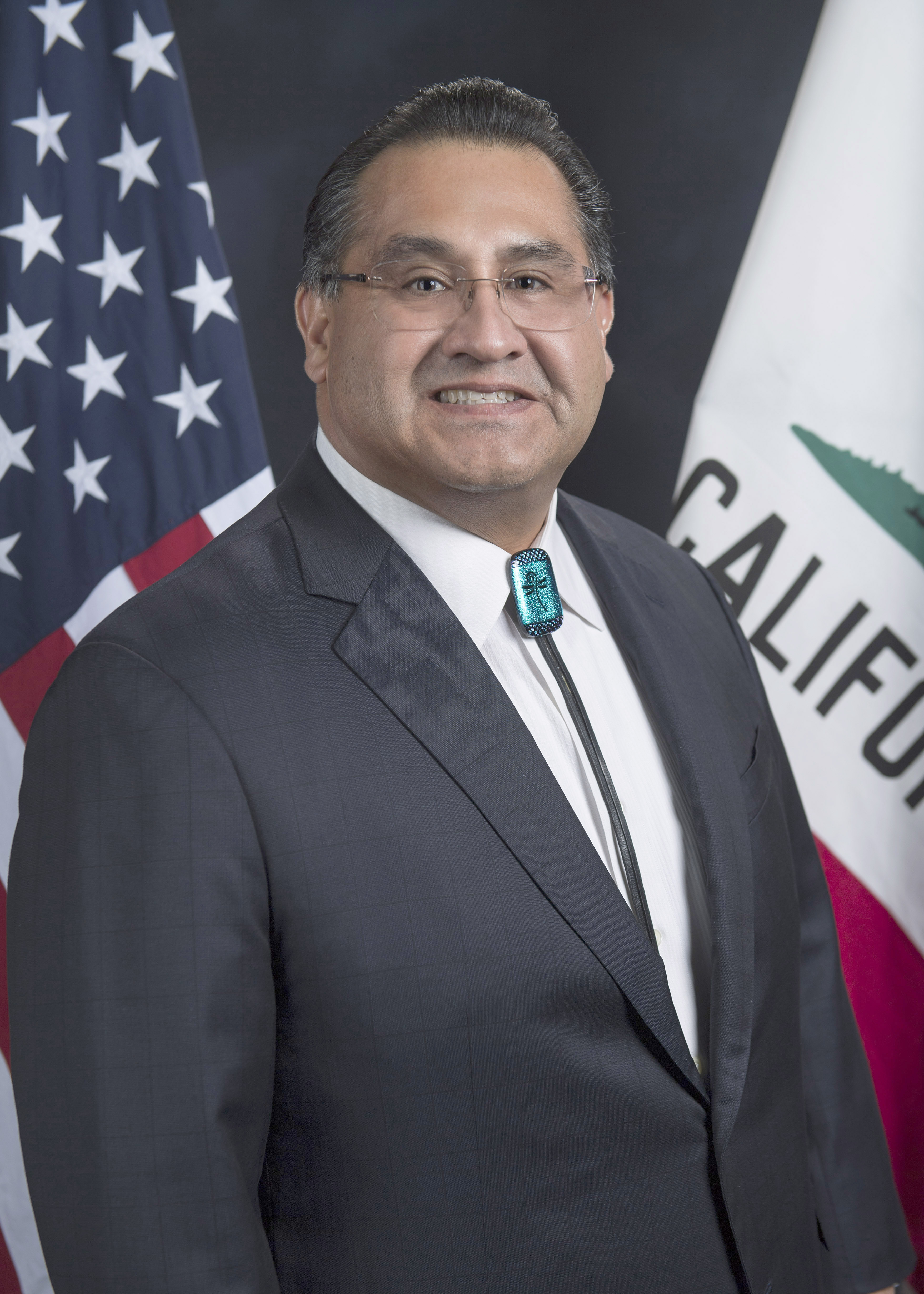
Asm. James Ramos
Sponsored bills
Existing law establishes the State Department of Public Health within the California Health and Human Services Agency. This bill would authorize the State Department of Public Health to establish the Office of Suicide Prevention within the department, would require the office to perform specified duties, including providing information and technical assistance to statewide and regional partners regarding best practices on suicide prevention policies and programs and reporting on progress to reduce rates of suicide, and authorize the office to apply for and use federal, state, and foundation grants. The bill would require the office to consult with the Mental Health Services Oversight and Accountability Commission to implement suicide prevention efforts. The bill would require that the duties and responsibilities of the office be accomplished with existing staff and resources. The bill would make these provisions operative subject to an appropriation for these purposes in the annual Budget Act or another statute.
Existing law establishes the Medi-Cal program, which is administered by the State Department of Health Care Services and under which qualified low-income persons receive health care benefits. The Medi-Cal program is, in part, governed and funded by federal Medicaid program provisions. Existing law establishes a schedule of benefits under the Medi-Cal program and provides for various services, including behavioral and mental health services that are rendered by Medi-Cal enrolled providers. This bill would require the department, by July 1, 2022, subject to any necessary federal waivers or approvals, to establish statewide requirements for counties or their representatives to use in developing certification programs for the certification of peer support specialists, who are individuals who self-identify as having lived experience with the process of recovery from mental illness, substance use disorder, or both. The bill would authorize a county, or an agency that represents a county, to develop a peer support specialist certification program and certification fee schedule, both of which would be subject to department approval. The bill would require the department to seek any federal waivers it deems necessary to establish a demonstration or pilot project for the provision of peer support services in a county that agrees to participate in and fund the project, as specified.
Existing law designates the Secretary of State as the chief elections officer of the state and requires the Secretary of State to make reasonable efforts to promote voter registration and encourage eligible voters to vote. This bill would require the Secretary of State to establish a Native American Voting Accessibility Advisory Committee. The committee would include the Secretary of State, the Secretary of State's designees, and additional members appointed by the Secretary of State who have demonstrated experience with voting rights or are county elections officials. The committee would serve in an advisory capacity to the Secretary of State and would make specified recommendations and take other actions to make voting more accessible to Native American voters.
(1) The Planning and Zoning Law requires a city or county to adopt a comprehensive, long-term general plan for the physical development of the city or county and specified lands outside its boundaries that includes, among other things, a housing element. That law requires the planning agency of a city or county to provide by April 1 of each year an annual report to the legislative body of the city or county, the Office of Planning and Research, and the Department of Housing and Community Development that includes, among other specified information, the status of the general plan and progress in its implementation. This bill would additionally require that this annual report include information on the progress of the city or county in adopting or amending its general plan or local open-space element in compliance with its obligations to consult with California Native American tribes, and to identify and protect, preserve, and mitigate impacts to specified places, features, and objects, pursuant to specified law. (2) Existing law, until January 1, 2026, authorizes a development proponent to submit an application for a multifamily housing development that is subject to a streamlined, ministerial approval process, as provided, and not subject to a conditional use permit, if the development satisfies specified objective planning standards. Under existing law, the objective planning standards include, among others, (A) a requirement that the development not be located on specified sites, including those within a coastal zone, very high fire hazard severity zone, delineated earthquake fault zone, or special flood hazard area, and sites designated as prime farmland, wetlands, or a habitat for a protected species, and (B) a requirement that the development be consistent with objective zoning standards, objective subdivision standards, and objective design review standards in effect at the time that the development is submitted to the local government. The California Environmental Quality Act (CEQA) requires a lead agency, as defined, to prepare, or cause to be prepared, and certify the completion of, an environmental impact report (EIR) on a project that it proposes to carry out or approve that may have a significant effect on the environment or to adopt a negative declaration if it finds that the project will not have that effect. Prior to the release of a negative declaration, mitigated negative declaration, or an EIR for a project, CEQA requires the lead agency to begin consultation with a California Native American tribe that is traditionally and culturally affiliated with the geographic area of the proposed project, as provided. Under existing law, a development subject to the streamlined, ministerial approval process described above is not subject to CEQA. This bill would require a development proponent, before submitting an application for streamlined approval described above, to submit notice of its intent to submit an application under these provisions, which must be in the form of a preliminary application, as described below. The bill would revise the above-described provisions to instead require the development to be consistent with objective zoning standards, objective subdivision standards, and objective design review standards in effect at the time that the development is submitted to the local government or at the time the notice of intent is submitted, whichever occurs earlier. The bill would require, after that notice is received by the local government, a local government to provide formal notice, as provided, to each California Native American tribe that is traditionally and culturally affiliated with the geographic area of the proposed development and to engage in a scoping consultation, as provided, regarding the potential effects the proposed development could have on a potential tribal cultural resource. The bill would exempt a scoping consultation conducted pursuant to its provisions from CEQA. This bill would deem a project ineligible for the streamlined, ministerial approval process described above, and thereby subject to CEQA, if (A) the site of the proposed development is a tribal cultural resource that is on a national, state, tribal, or local historic register list, (B) the local government and the California Native American tribe do not agree that no potential tribal cultural resource would be affected by the proposed development, or (C) the local government and California Native American tribe find that a potential tribal cultural resource could be affected by the proposed development and the parties do not document an enforceable agreement regarding the methods, measures, and conditions for treatment of those tribal cultural resources, as provided. If the proposed development is not eligible for streamlined, ministerial approval because the parties do not agree that a potential tribal cultural resource would be affected or do not document an enforceable agreement regarding methods, measures, and conditions for tribal cultural resource treatment, the bill would require the local government to provide written documentation of that fact to the development proponent and to any California Native American tribe that is a party to that scoping consultation, as provided. The bill would require a local government to notify a California Native American tribe if the development or environmental setting substantially changes after the completion of the scoping consultation, and would require the local government to engage in a subsequent scoping consultation if requested by the California Native American tribe. The bill would specify that its provisions do not apply to any project that is approved under the streamlined, ministerial approval process described above before the bill's effective date. (3) The Permit Streamlining Act, which is part of the Planning and Zoning Law, requires each state agency and each local agency to compile one or more lists that specify in detail the information that will be required from any applicant for a development project. That act, until January 1, 2025, provides that an applicant for a housing development project, as defined, is deemed to have submitted a preliminary application upon providing specified information about the proposed project to the city, county, or city and county from which approval for the project is sought. Under existing law, the Housing Accountability Act, a housing development may only be subject to the ordinances, policies, and standards adopted and in effect when a preliminary application was submitted, except as specified. This bill would provide that submission of a preliminary application pursuant to these provisions does not preclude the listing of a tribal cultural resource on a national, state, tribal, or local historic register list on or after the date that the preliminary application is submitted. For purposes of the Housing Accountability Act or any other law, the bill would provide that the listing of a tribal cultural site on a national, state, tribal, or local historic register on or after the preliminary application was submitted is not a change to the ordinances, policies, and standards adopted and in effect at the time that the preliminary application was submitted. (4) This bill would incorporate additional changes to Section 65400 of the Government Code proposed by AB 2345 and SB 1085 to be operative only if this bill and either or both AB 2345 and SB 1085 are enacted and this bill is enacted last. This bill would incorporate additional changes to Section 65913.4 of the Government Code proposed by AB 831 to be operative only if this bill and AB 831 are enacted and this bill is enacted last. (5) By imposing new requirements on local planning officials with respect to the annual report and the streamlined, ministerial approval process, as described above, the bill would impose a state-mandated local program. The California Constitution requires the state to reimburse local agencies and school districts for certain costs mandated by the state. Statutory provisions establish procedures for making that reimbursement. This bill would provide that no reimbursement is required by this act for a specified reason. (6) This bill would declare that it is to take effect immediately as an urgency statute.
This measure would designate a specified portion of State Route 50 in the County of El Dorado as the Deputy Sheriff Brian "Ish" Ishmael Memorial Highway. The measure would request that the Department of Transportation determine the cost of appropriate signs showing this special designation and, upon receiving donations from nonstate sources covering that cost, erect those signs.
Existing provisions of the California Constitution establish the University of California as a public trust under the administration of the Regents of the University of California. The California Constitution grants to the regents all the powers necessary or convenient for the effective administration of this public trust. Pursuant to the California Constitution, there are 7 ex officio members of the regents and 18 appointive members appointed by the Governor and approved by the Senate, a majority of the membership concurring. This measure would enact the University of California Equal Employment Opportunity Standards Act, which would, effective January 1, 2021, except as specified, require the regents to ensure that all contract workers, as defined, who are paid to perform support services for students, faculty, patients, or the general public at any campus, dining hall, medical center, clinic, research facility, laboratory, or other university location, are at all times subject to and afforded the same equal employment opportunity standards, as defined, as university employees performing similar services. The measure would authorize the regents, or any campus or other entity of the University of California, to contract for, or otherwise arrange to use, contract labor, as defined, to perform support services only under specified conditions, only if authorized to do so by statute, and only to the extent necessary to address one or more of prescribed needs. The measure would authorize the Legislature to enact statutes to further the purposes of, and to aid the enforcement of, this measure.
This measure would urge each bank with which the State of California has a business relationship to evaluate its commercial relationship with gun manufacturers and to consider the repercussions of that relationship, and urge all banks to discuss their lending practices with their shareholders and to adopt lending practices that mirror the people of California's values of protecting citizens before profit.
Existing law establishes a workers' compensation system, administered by the Administrative Director of the Division of Workers' Compensation, to compensate an employee for injuries sustained in the course of employment. Existing law creates a disputable presumption that specified injuries sustained in the course of employment of a specified member of law enforcement or a specified first responder arose out of and in the course of employment. Existing law allows for a claim to be presumed compensable if it has not been rejected within 90 days of filing, as specified. Existing law imposes a duty on an employer to provide certain safety materials and adopt safety practices as necessary. A failure to meet this duty, under specified circumstances, is a misdemeanor. This bill would, until July 1, 2024, define "injury," for certain state and local firefighting personnel, peace officers, certain correctional and law enforcement personnel, as described, certain health care employees who provide direct patient care at an acute care hospital, and certain fire and rescue services coordinators who work for the Office of Emergency Services to include illness or death resulting from COVID-19, that is diagnosed on or after January 1, 2020, if certain circumstances apply. The bill would create a disputable presumption, as specified, that the injury arose out of and in the course of the employment. The bill would require a claim to be presumed compensable, if not rejected within 30 days, as specified. This bill would explicitly add emergency equipment or personal protective equipment, as described, to those materials required to be provided by an employer. A failure to comply with this additional requirement would not constitute a misdemeanor. This bill would declare that it is to take effect immediately as an urgency statute.