

The Bergeson-Peace Infrastructure and Economic Development Bank Act establishes the California Infrastructure and Economic Development Bank (I-Bank) . Among other things, the act authorizes I-Bank to make loans, issue bonds, and provide financial assistance to economic development or public development facilities. Under existing law, the Disaster Assistance Fund is continuously appropriated, without regard to fiscal year, for purposes of the California Disaster Assistance Act. That act provides that when funds are available for purposes of the act, the Governor may allocate the funds, in connection with relief provided, in affected areas during the period of federal disaster relief, to the Small Business Expansion Fund for use by the California Infrastructure and Economic Development Bank (I-Bank) , to provide guarantees for low-interest interim loans to be made by lending institutions for the purpose of providing interim financing to enable small businesses that have suffered actual physical damage or significant economic losses, as a result of the disaster or state of emergency for which funding is made available. This bill would enact the California Manufacturing Emergency Preparedness Act of 2020, which would authorize I-Bank to establish the California Manufacturing Disaster Loan and Loan Guarantee Program for the purpose of attracting, retaining, retooling, establishing, and expanding manufacturing and logistics capacity in the state, and would require I-Bank to establish guidelines for the implementation and oversight of the program. The bill would prohibit I-Bank from commencing the program until it adopts a resolution finding that there is sufficient funding in the account to cover the costs of implementing the program and that the I-Bank has sufficient direction from the Director of the Office of Emergency Services, as provided. The bill would require I-Bank to provide for the development and administration of the program, as specified, and would require program applicants to demonstrate satisfaction of specified requirements. The bill would also require each applicant to pay a nonrefundable application fee, as provided. The bill would create the Manufacturing Program Account within the California Infrastructure and Economic Development Bank Fund. The bill would authorize the Governor to allocate disaster relief funds, including funds in the Disaster Assistance Fund, to the Manufacturing Program Account for use by I-Bank, to cover the costs of administering the program and to provide direct loans or guarantees, or both, made by lending institutions, and to forgive those loans in appropriate circumstances, for the purpose of providing financing to enable the manufacturing and logistics sectors to support the emergency needs of Californians. The bill would provide that the moneys in the account be made available to I-Bank, upon a transfer of funds by the Director of Finance pursuant to an allocation by the Governor under the California Disaster Assistance Act, for specified purposes. The bill would authorize moneys in the account to be allocated to a lending institution or financial company that will act as trustee of the funds, with the approval of the Department of Finance. The bill would authorize I-Bank to create subaccounts in the account for specified purposes. Because this bill would expand the purposes for which a continuously appropriated fund is expended and would deposit moneys and fees into a new, continuously appropriated account, the bill would make an appropriation. The bill would require I-Bank to annually report, commencing with January 1, 2022, to the Governor and the Legislature on program activity, as specified, in any fiscal year that the program receives funding or has active loans. The bill would further provide that the above described provisions will be implemented only to the extent that sufficient moneys are available to I-Bank to implement the California Manufacturing Disaster Loan and Loan Guarantee Program. The bill would permit these provisions to be used to respond to, and recover from, the conditions arising from the state of emergency declared by the Governor on March 4, 2020, related to the COVID-19 virus. The bill would prohibit I-Bank from entering into loans or loan guarantees pursuant to the bill's provisions on or after January 1, 2026. This bill would declare that it is to take effect immediately as an urgency statute.
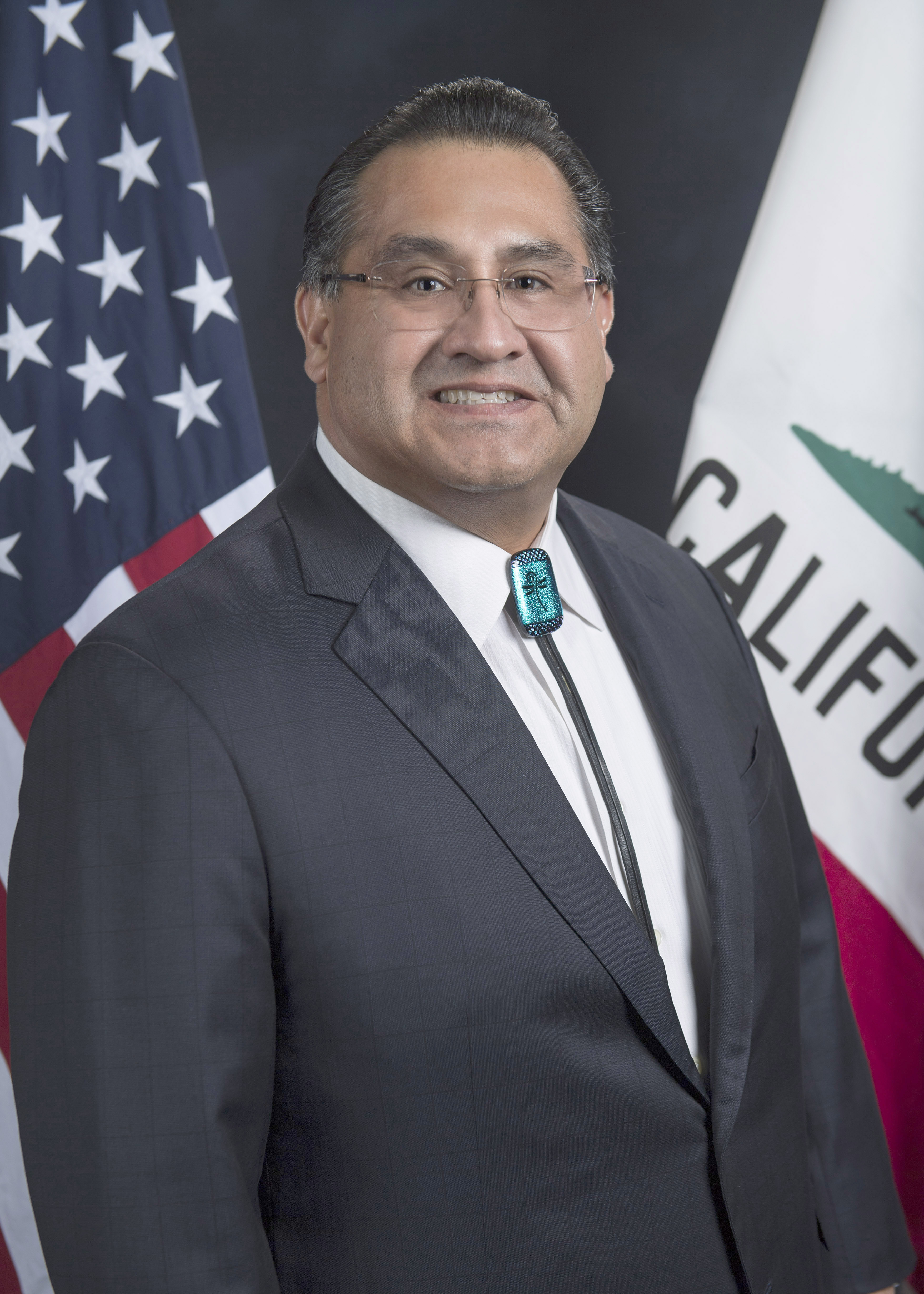
Asm. James Ramos
Sponsored bills
Existing law, the California Native American Graves Protection and Repatriation Act of 2001, requires all agencies and museums that receive state funding and have possession or control over collections of California Native American human remains and associated funerary objects to inventory those remains and objects for repatriation to the appropriate tribes, as specified. This bill would authorize the owner or operator of any public school, state or local park, library, or museum, or other state or local government building in this state to adopt a land acknowledgment process by which Native American tribes are properly recognized as traditional stewards of the land on which the public school, state or local park, library, or museum, or other state or local government building is located, as specified.
Existing law, the Economic Revitalization Act, establishes the Governor's Office of Business and Economic Development, also known as "GO-Biz," in state government within the Governor's office under the control of a director. The act requires GO-Biz to serve as the Governor's lead entity for economic strategy and the marketing of California on issues relating to business development, private sector investment, and economic growth. This bill would establish the Regions Rise Grant Program within the Governor's Office of Business and Economic Development for the purpose of supporting inclusive, cross-jurisdictional, and innovative processes that lead to inclusive strategies to address barriers and challenges confronting communities in creating economic prosperity for all. The bill would define "region" as a geographic area comprised of one or more counties and cities that form a functional economy. This bill would require the office to develop and implement a process for the awarding of competitive grants to eligible applicants. This bill would define an eligible applicant as a regional collective comprised of public and private stakeholders who organize themselves around one or more community challenges or priorities impacting a region and meet certain requirements established in the bill. The process for awarding grants would be required to meet certain minimum conditions, including, but not limited to, that the funds awarded be available for a period of 3 years, and that the application contain specified information. The bill would require the office, upon appropriation by the Legislature, to issue grants to qualified regional collectives as specified. The bill would also require the regional collective receiving funding to submit a copy of its annual and final report, as provided, to the office and each city and county within the areas identified in their application as the geographic boundary of their work.
(1) The Child Care and Development Services Act, administered by the State Department of Education, requires the Superintendent of Public Instruction to administer childcare and development programs that offer a full range of services to eligible children from infancy to 13 years of age, inclusive. The act requires that families meet specified requirements to be eligible for federal- and state-subsidized childcare and development services. This bill would extend eligibility to a family in which a member of that family has been certified as fully eligible to receive CalFresh or Medi-Cal benefits. The bill would require a parent to provide documentation of current enrollment in CalFresh or Medi-Cal, unless the contractor providing childcare and development services has, and elects to use, other means of obtaining verification of that enrollment. The bill would authorize a family to submit a self-certification of income that is signed by the parent for the purpose of prioritizing enrollment and calculating family fees. (2) Existing law requires the department to arrange intraagency adjustments between California state preschool contracts and general childcare contracts for the same agency and funding allocation, and to establish timelines for intraagency contract fund transfers. This bill would additionally require the department to allow and arrange for interagency adjustments between those contracts for the same agency or different agencies and the same funding allocation, and to establish timelines for those interagency contract fund transfers. (3) Existing law requires the Superintendent to implement a plan establishing assigned reimbursement rates, per unit of average daily enrollment, to be paid by the state to provider agencies for the provision of childcare and development services. Existing law provides for an adjustment factor to be applied to units of average daily enrollment if a provider agency serves children who meet specified criteria. Existing law sets the adjustment factor based on the age of the child served, among other criteria. This bill would require those adjustment factors to continue to apply irrespective of whether a child is served in a commingled classroom that serves children from 0 to 12 years of age. The bill, during the 2020–21 fiscal year, would authorize a contractor providing childcare and development services under the act to provide those services to children from 0 to 12 years of age in classrooms with children of varying ages. (4) Existing law requires the Superintendent to establish a fee schedule for families using preschool and childcare and development services, as specified, and requires family fees to be assessed at initial enrollment and reassessed at the update of certification or recertification. Existing law encourages child development contractors to develop and maintain a reserve within the child development fund in the county treasury, derived from earned but unexpended funds. Existing law authorizes reserve funds to be expended for specified purposes. Existing law requires that 10% of specified reserve funds to be used solely for the purpose of professional development for California state preschool program instructional staff. This bill would authorize a contractor to waive family fees for families who are enrolled but who receive services only through distance learning. The bill would provide that the cost of waiving family fees under the above-described provision is an allowable use of contract funds received for providing childcare and development services, and would authorize a contractor to use reserve funds to cover the costs of a waiver. The bill would also delete the requirement that 10% of the specified reserve funds be used for that professional development purpose.
Existing law establishes the Office of Small Business Advocate, within the Governor's Office of Business and Economic Development, and establishes the duties and functions of the Director of the Office of Small Business Advocate including, among other duties, representing the views and interests of small businesses before other state agencies whose policies and activities may affect small businesses. Existing law requires each state agency that significantly regulates small business or that significantly impacts small business to designate at least one person who is required to serve as a small business liaison. This bill would require a state agency to establish a policy, by January 1, 2022, that provides for the reduction or waiver of civil penalties for a violation of a regulatory or statutory requirement by a small business if the violation did not involve willful or criminal conduct and did not pose a serious health, safety, or environmental threat. The bill would require the policy to include various factors the state agency would be required to consider when making a determination as to whether to reduce or waive the civil penalty. The bill would authorize the state agency to update the policy to reflect current issues and conditions affecting small businesses and the state agency. This bill would require the state agency to post a current copy of the policy on the state agency's internet website and to annually post a utilization report that contains specified information about enforcement actions and penalty reductions and waivers. The bill would require a state agency to notify the Office of Small Business Advocate of certain events relating to its policy and annual report. This bill would make the bill's provisions operative only upon the Legislature making an appropriation to implement these provisions.
Existing law creates the Department of Insurance, headed by the Insurance Commissioner, and generally regulates the business of insurance in the state. Existing law authorizes the issuance of commercial insurance, which may cover, among other things, business interruption. Other existing law, the California Emergency Services Act, authorizes the Governor to declare a state of emergency during conditions of disaster or extreme peril to persons or property, including epidemics. Pursuant to this authority, on March 4, 2020, the Governor declared a state of emergency relating to the coronavirus 2019 (COVID-19) pandemic. This bill, with respect to a policy of commercial insurance that provides coverage for business interruption, would create specified rebuttable presumptions affecting the burden of proof in a case in which the insured alleges that the business interruption was due to the COVID-19 pandemic and occurred during the period of the state of emergency declared by the Governor due to the COVID-19 pandemic. Specifically, the bill would create certain rebuttable presumptions that COVID-19 was present on specified property and caused physical damage to that property which was the direct cause of the business interruption. Among other things, the bill would provide that with respect to coverage for business interruption due to an order of civil authority, a rebuttable presumption applies that COVID-19 was present on property located within the geographical location covered by the order of civil authority and caused physical damage to that property which was the direct cause of the insured's business. The bill would define "civil authority" for these purposes to include any federal, state, or local government, or the governing body or duly constituted agencies of any federally recognized Indian tribe, and their instrumentalities, divisions, political subdivisions, enterprise boards, and business entities. The bill would prohibit COVID-19 from being construed as a pollutant or contaminant for purposes of any exclusion within a commercial insurance policy unless viruses are expressly included in that exclusion policy language. The bill would provide that it applies retroactively to all commercial insurance policies that provide coverage for business interruption that were in full force and effect on and after March 4, 2020. This bill would declare that it is to take effect immediately as an urgency statute.
Existing law, the California Emergency Services Act, permits the Governor to proclaim a state of emergency during conditions of disaster or of extreme peril to the safety of persons and property, including epidemics. Existing law provides that the proclamation takes effect immediately, affords specified powers to the Governor, and terminates upon further proclamation by the Governor or by concurrent resolution of the Legislature. The Governor proclaimed a state of emergency March 4, 2020, related to the COVID-19 pandemic. Existing law generally provides that everyone is responsible, not only for the result of their willful acts, but also for an injury occasioned to another by that person's want of ordinary care or skill in the management of their property or person, except as specified. This bill would exempt a small business with 25 or fewer employees from liability for an injury or illness to a person due to coronavirus (COVID-19) based on a claim that the person contracted COVID-19 while at that small business, or due to the actions of that small business. The bill would require the small business, for this exemption to apply, to have implemented and abided by all applicable state and local health laws, regulations, and protocols. The bill would not permit this exemption to apply if the injury or illness resulted from a grossly negligent act or omission, willful or wanton misconduct, or unlawful discrimination by the business or an employee of the business. The bill would apply these provisions only during the timeframe in which the state of emergency related to the COVID-19 pandemic is effective. The bill would repeal these provisions on January 1, 2023. The bill would include related legislative findings. This bill would declare that it is to take effect immediately as an urgency statute.
This measure would proclaim March 2, 2020, to March 6, 2020, inclusive, as School Breakfast Week.
(1) Existing law, the California Self-Service Storage Facility Act, specifies remedies and procedures for self-service storage facility owners when occupants are delinquent in paying rent or other charges. Under existing law, if rent or other charges due from an occupant remain unpaid for 14 consecutive days, an owner may terminate the right of the occupant to the use of the storage space at a self-service storage facility by sending a preliminary lien notice by certified mail to the occupant's last known address, as defined to mean the address provided by the occupant, as specified. Existing law, until January 1, 2021, authorizes the notice to be sent by electronic mail subject to specified conditions. Existing law also allows an owner to demonstrate actual delivery and receipt of documents by, among other methods, the occupant acknowledging receipt of the electronic transmission of the notice by executing an electronic signature or by transmitting the notice to the occupant through an application on a personal electronic device, as provided. This bill would remove the January 1, 2021, date, thus authorizing the sending of the notice by electronic mail indefinitely. The bill would allow an owner to demonstrate actual delivery and receipt of documents by transmitting the document to the occupant through an application on an internet website, rather than an application on a personal electronic device, or by the occupant acknowledging receipt by replying to the electronic mail communication, and would make conforming changes. The bill would make the provision allowing an owner to demonstrate actual delivery and receipt of documents by email communication inoperative on January 1, 2024. (2) Existing law, until January 1, 2021, deems a lien to attach if the notice has been sent and the total sum due has not been paid by the specified termination date. Existing law requires the owner to send to the occupant's last known address a notice of lien sale and a blank declaration in opposition to the lien sale. This bill would remove the January 1, 2021, date.
This measure would declare the week of February 17 to February 21, 2020, inclusive, as California Fitness Week, and would encourage Californians to enrich their lives through proper nutrition and exercise.