

Passed Feb 4, 2021
1 co-sponsor
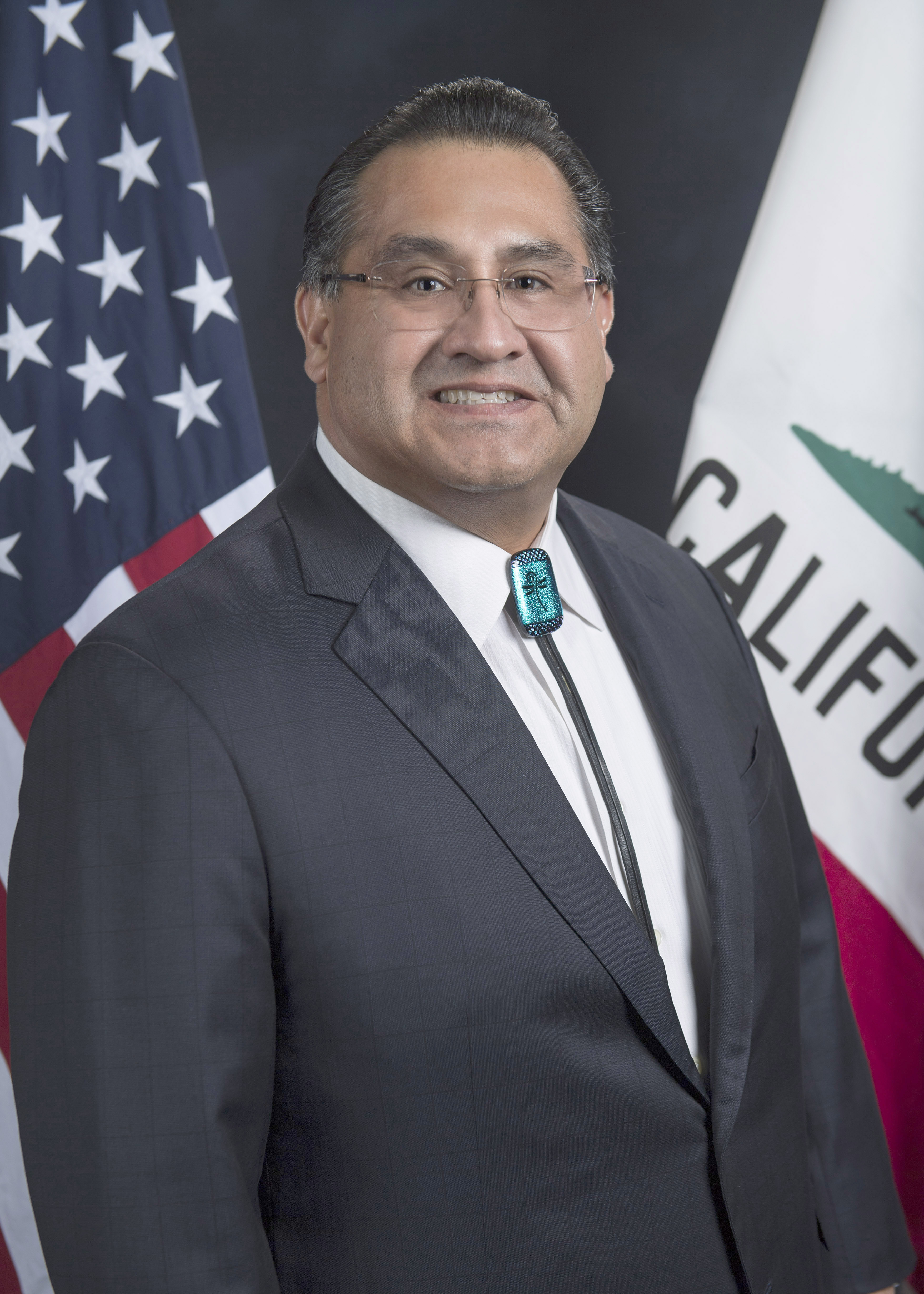
Asm. James Ramos
Total votes
17,608
all sessions
Attendance
93%
1,027 missed
Near the chamber average
With party
99%
of cast votes
Near the chamber average
Bipartisan score
0%
crosses aisle rarely
Near the chamber average
Sponsored
1,475
bills & resolutions
Near the chamber average
Committees
8
assignments
1,475 bills and resolutions
Sponsored bills
Total
1,475
Primary
167
Co-sponsor
1,308
This page
1,475
matching current filters
Passed Feb 4, 2021
1 co-sponsor
Passed Feb 1, 2021
1 co-sponsor
Passed Jan 25, 2021
1 co-sponsor
Relative to Reverend Dr. Martin Luther King, Jr.
This measure would, among other things, honor the late civil rights pioneer and icon Reverend Dr. Martin Luther King, Jr. and commemorate Dr. Martin Luther King, Jr. Day.
Passed Jan 19, 2021
1 co-sponsor
Passed Jan 15, 2021
1 co-sponsor
Passed Jan 11, 2021
1 co-sponsor
Pupil instruction: high school graduation requirements: ethnic studies.
(1) Existing law requires a pupil to complete designated coursework while in grades 9 to 12, inclusive, in order to receive a diploma of graduation from high school. These graduation requirements include, among others, the completion of 3 years of courses in English and 3 years of courses in social studies, including one-year courses in United States history and geography and world history, culture, and geography, a one-semester course in American government and civics, and a one-semester course in economics. Existing law requires the Instructional Quality Commission to develop, and the State Board of Education to adopt, modify, or revise, a model curriculum in ethnic studies. Existing law also encourages each school district and charter school that maintains any of grades 9 to 12, inclusive, and that does not otherwise offer a standards-based ethnic studies curriculum to offer, beginning in the school year following the adoption of the model curriculum, a course of study in ethnic studies based on the model curriculum. This bill would add the completion of a one-semester course in ethnic studies, meeting specified requirements, to the high school graduation requirements commencing with pupils graduating in the 2029–30 school year, including for pupils enrolled in a charter school. The bill would expressly authorize local educational agencies, including charter schools, to require a full-year course in ethnic studies at their discretion. The bill would require local educational agencies, including charter schools, to offer an ethnic studies course commencing with the 2025–26 school year, as specified. The bill would authorize, subject to the course offerings of a local educational agency, including a charter school, a pupil to satisfy the ethnic studies course requirement by completing either (A) a course based on the model curriculum in ethnic studies developed by the commission, (B) an existing ethnic studies course, (C) an ethnic studies course taught as part of a course that has been approved as meeting the A-G requirements of the University of California and the California State University, except as specified, or (D) a locally developed ethnic studies course approved by the governing board of the school district or the governing body of the charter school. The bill would require a pupil who completes a course described above to also accrue credit for coursework in the subject that the course is offered, including, if applicable, credit towards satisfying a course required for a diploma of graduation from high school. The amendments made by the bill, as described above, would become operative only upon an appropriation of funds by the Legislature for purposes of the amendments in the annual Budget Act or another statute. Because the bill would add new duties to local educational agencies, it would constitute a state-mandated local program. (2) The California Constitution requires the state to reimburse local agencies and school districts for certain costs mandated by the state. Statutory provisions establish procedures for making that reimbursement. This bill would provide that, if the Commission on State Mandates determines that the bill contains costs mandated by the state, reimbursement for those costs shall be made pursuant to the statutory provisions noted above.
Vetoed Sep 30, 2020
1 co-sponsor
Newspapers: state agency advertising: worker status: independent contractors.
(1) Existing law sets out the various responsibilities of the Department of General Services and state agencies in overseeing and implementing state contracting procedures and policies. Existing law also provides that whenever any official advertising, notice, resolution, order, or other matter of any nature whatsoever is required by law to be published in a newspaper, the publication is required to be made only in a newspaper of general circulation, as specified. This bill would require the department to publish, on the department's internet website, an annual report by July 1 of each year containing specified information relating to payments for placement of marketing or outreach advertising material by each state agency. The bill would provide that these provisions are not intended to amend any of the above-described provisions relating to required publications of official advertising, notices, resolutions, orders, or other matters. The bill would make these provisions inoperative on July 1, 2023. (2) Existing law, as established in the case of Dynamex Operations W. v. Superior Court (2018) 4 Cal.5th 903 (Dynamex) , creates a presumption that a worker who performs services for a hirer is an employee for purposes of claims for wages and benefits arising under wage orders issued by the Industrial Welfare Commission. Existing law requires a 3-part test, commonly known as the "ABC" test, to determine if workers are employees or independent contractors for those purposes. Existing law establishes that, for purposes of the Labor Code, the Unemployment Insurance Code, and the wage orders of the Industrial Welfare Commission, a person providing labor or services for remuneration is considered an employee rather than an independent contractor unless the hiring entity demonstrates that the person is free from the control and direction of the hiring entity in connection with the performance of the work, the person performs work that is outside the usual course of the hiring entity's business, and the person is customarily engaged in an independently established trade, occupation, or business. This test is commonly known as the "ABC" test, as described above. Existing law charges the Labor Commissioner with the enforcement of labor laws, including worker classification. Existing law exempts specified occupations and business relationships from the application of Dynamex and the provisions described above. These exemptions include a temporary exemption for newspaper distributors working under contract with a newspaper publisher, and newspaper carriers working under contract either with a newspaper publisher or newspaper distributor, as those terms are defined, until January 1, 2021. This bill would expand the exemption applicable to newspaper carriers by deleting the condition that a newspaper carrier work under contract either with a newspaper publisher or newspaper distributor. The bill would extend the exemption period to January 1, 2022. (3) This bill would incorporate the changes to Section 2750.3 of the Labor Code proposed by this bill to Section 2783 of the Labor Code, as proposed to be added by AB 2257, to be operative only if this bill and AB 2257 are enacted and this bill is enacted last.
Signed into law Sep 30, 2020
1 co-sponsor
Department of Justice: law enforcement assistance with tribal issues: study.
Existing law authorizes the Department of Justice to provide technical assistance to local law enforcement agencies, other state agencies, and federal agencies in the investigation of criminal matters, the detection of crimes, and the apprehension or prosecution of criminals. Existing law establishes a Rural Indian Crime Prevention Program to provide grants to local law enforcement agencies to provide training to officers and to provide specified services to Native American persons and communities. This bill would require the department, upon an appropriation of funds by the Legislature, to provide technical assistance to local law enforcement agencies, as specified, and tribal governments with Indian lands, relating to tribal issues, including providing guidance for law enforcement education and training on policing and criminal investigations on Indian lands, providing guidance on improving crime reporting, crime statistics, criminal procedures, and investigative tools, and facilitating and supporting improved communication between local law enforcement agencies and tribal governments. The bill would require the department, upon appropriation of funds by the Legislature, to conduct a study to determine how to increase state criminal justice protective and investigative resources for reporting and identifying missing Native Americans in California, particularly women and girls. The bill would require the department to submit a report to the Legislature upon completion of the study, as provided.
Signed into law Sep 25, 2020
0 co-sponsors
Ask Maddy
·
AI policy assistant
Ask Maddy about James Ramos
Scope: california
Hi! I can help you understand James Ramos's legislative record. What would you like to know?
Try one of these
i
Maddy answers using official bill text and legislative records. Always verify before sharing.
Sources cited inline