

The Wildlife Conservation Law of 1947 establishes the Wildlife Conservation Board in the Department of Fish and Wildlife and requires the board to determine the areas in the state that are most essential and suitable for certain wildlife-related purposes. Under that law, the board may authorize the department to acquire real property, rights in real property, water, or water rights for the benefit of wildlife. This bill would establish the California Desert Conservation Program under the administration of the board to: (1) protect, preserve, and restore the natural, cultural, and physical resources of the portions of the Mojave and Colorado Deserts region in California through the acquisition, restoration, and management of lands, (2) promote the protection and restoration of the biological diversity of the region, as specified, (3) provide for resilience in the region to climate change, as provided, (4) protect and improve air quality and water resources within the region, and (5) undertake efforts to enhance public use and enjoyment of lands owned by the public, as provided. The bill would establish the California Desert Conservation Program Fund Account in the State Treasury. Upon appropriation by the Legislature, the bill would authorize the board to expend moneys deposited in the account for the purposes of this program.
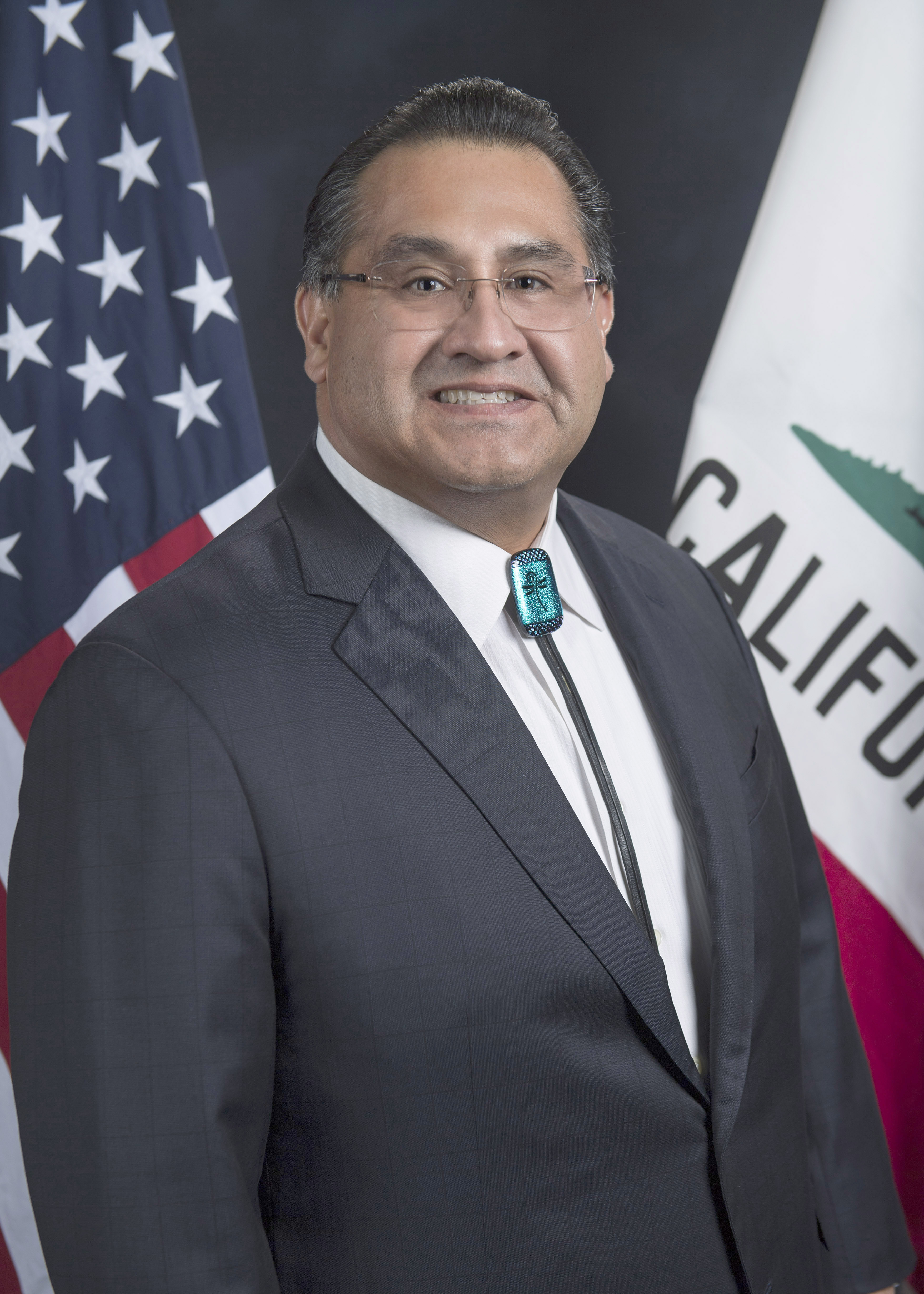
Asm. James Ramos
Sponsored bills
Existing law provides for the establishment of apprenticeship programs in various trades, to be approved by the Chief of the Division of Apprenticeship Standards within the Department of Industrial Relations in any trade in the state or in a city or trade area whenever the apprentice training needs justify the establishment. This bill would require a school district or school to notify each apprenticeship program in the same county as the school district or school of a career or college fair it is planning to hold, as specified. By imposing specified requirements on school districts and schools conducting career and college fairs, the bill would impose a state-mandated local program. The California Constitution requires the state to reimburse local agencies and school districts for certain costs mandated by the state. Statutory provisions establish procedures for making that reimbursement. This bill would provide that, if the Commission on State Mandates determines that the bill contains costs mandated by the state, reimbursement for those costs shall be made pursuant to the statutory provisions noted above.
Existing law designates state holidays, including, among others, the 4th Friday in September, known as "Native American Day," and the 2nd Monday in October, known as "Columbus Day." Existing law adopts those state holidays as judicial holidays, with certain exceptions, including Native American Day. This bill would remove Native American Day from the list of holidays that are excluded from designation as a judicial holiday. The bill would add Columbus Day to the list of excluded judicial holidays.
Existing law provides for various memorials and monuments on the grounds of the State Capitol. Existing law requires the Department of Finance, subject to the approval of the Capitol Building and Planning Commission, to acquire and do all acts necessary to erect and maintain a monument to Father Junípero Serra on the grounds of the State Capitol. Existing law requires the Department of General Services to maintain state buildings and grounds. This bill would delete the requirement relating to the monument to Father Junípero Serra. The bill would authorize tribal nations in the Sacramento, California, region, in consultation with the Department of General Services, to plan, construct, and maintain a monument to the California Native people of the Sacramento, California, region on the grounds of the State Capitol. The bill would require the tribal nations to submit the plan for the monument to the Joint Rules Committee for its review and approval. The bill would prohibit the tribal nations from beginning construction of the monument until the Joint Rules Committee approves and adopts the plan and the Joint Rules Committee and the Department of Finance determine that sufficient private funding is available to construct and maintain the monument. The bill would require the planning, construction, and maintenance of the monument to be funded exclusively through private funding from the tribal nations in the Sacramento, California, region.
(1) Existing law authorizes the commissioner to issue licenses for the operation of privately owned or operated ambulances used to respond to emergency calls, armored cars, fleet owner inspection and maintenance stations, and for the transportation of hazardous material. Existing law requires the department to inspect ambulances licensed by the department at least once per year. This bill would exempt ambulances owned or operated by a fire department of a federally recognized tribe or operators of those ambulances from the requirement to have a license and would prohibit the department from inspecting those ambulances. (2) Existing law requires an applicant for an ambulance driver certificate to satisfy prescribed requirements, including submitting an acceptable fingerprint card, and exempts specified persons operating ambulances in the line of duty, including salaried, regular, full-time police officers and members of a fire department of a public agency, from those requirements. This bill would extend that exemption to members of a fire department of a federally recognized tribe. (3) Under existing law, an authorized emergency vehicle is required to be equipped with at least one steady burning red warning lamp visible from at least 1,000 feet in front of the vehicle. Existing law defines an authorized emergency vehicle as, among other things, a vehicle owned or operated by any department or agency of the United States government when the vehicle used is responding to emergency, fire, ambulance, or lifesaving calls or is actively engaged in law enforcement work. This bill would also include in the definition of an emergency vehicle any vehicle owned or operated by a federally recognized Indian tribe used in responding to emergency, fire, ambulance, or lifesaving calls. The bill would state that a vehicle owned or operated by a federally recognized Indian tribe used in responding to emergency, fire, ambulance, or lifesaving calls is considered an authorized emergency vehicle, as specified.
(1) Existing law establishes a public school financing system that requires state funding for school districts, county superintendents of schools, and charter schools to be calculated pursuant to a local control funding formula, as specified. Existing law requires funding pursuant to the local control funding formula to include, in addition to a base grant, supplemental and concentration grant add-ons that are based on the percentage of pupils who are unduplicated pupils, which is defined to include English learners, foster youth, or pupils eligible for free or reduced-price meals, as specified, served by the local educational agency. Existing law defines a foster youth for these purposes to include a dependent child of the court of an Indian tribe, consortium of tribes, or tribal organization who is the subject of a petition filed in the tribal court pursuant to the tribal court's jurisdiction in accordance with the tribe's law, if the child would also meet specified state law standards describing when a child may be adjudged a dependent child of a juvenile court. This bill would delete the requirement that a dependent tribal child also meet specified state law standards for purposes of the definition of foster youth for purposes of the local control funding formula. The bill would add children who are subjects of voluntary placement agreements to the definition of foster youth for purposes of the local control funding formula. (2) Existing law provides specified rights and supports for pupils in foster care, including access to the same academic resources, services, and extracurricular and enrichment activities that are available to all pupils, the right to immediate enrollment and education in the least restrictive environment, the right to remain in the school of origin during specified proceedings, prompt academic record transfers, protections against grade reductions due to changes in residential placement or court-ordered activities, recognition of partial credit, the right to remain in school for a fifth year to complete the local educational agency's graduation requirements, fee waivers for certain exams, and procedural protections for disciplinary hearings. This bill would extend those educational rights and supports to dependent children in accordance with tribal law, as specified, and children who are the subject of voluntary placement agreements. (3) Existing law requires the State Department of Education and the State Department of Social Services to enter into a memorandum of understanding on or before February 1, 2014, that requires the State Department of Social Services, at least once per week, to share disaggregated information related to foster youth with the State Department of Education. Existing law exempts the State Department of Social Services from collecting or sharing specified information relating to a dependent child of a court of an Indian tribe, consortium of tribes, or tribal organization. This bill would prohibit local educational agencies from requiring an Indian tribe or tribal court representative to certify that a pupil is a dependent of an Indian tribe, consortium of tribes, or tribal organization, and would authorize tribal authorities to notify local educational agencies about a tribal pupil's status as a dependent child under the court of an Indian tribe, consortium of tribes, or tribal organization. (4) By imposing additional duties on local educational agencies related to certain foster youth, the bill would impose a state-mandated local program. (5) This bill would incorporate additional changes to Section 42238.01 of the Education Code proposed by SB 167 and AB 167 to be operative only if this bill and one or both of those bills are enacted and this bill is enacted last. (6) The California Constitution requires the state to reimburse local agencies and school districts for certain costs mandated by the state. Statutory provisions establish procedures for making that reimbursement. This bill would provide that, if the Commission on State Mandates determines that the bill contains costs mandated by the state, reimbursement for those costs shall be made pursuant to the statutory provisions noted above.
Existing law authorizes the State Department of Social Services to enter into an agreement with a tribe, consortium of tribes, or tribal organization regarding the care and custody of Indian children and jurisdiction over Indian child custody proceedings, under specified circumstances. Existing law requires an agreement entered into under these provisions, when the agreement is concerning the provision of child welfare services, to ensure that a tribe, consortium of tribes, or tribal organization meets current service delivery standards and provides for a specified tribal matching share of costs. This bill would instead require, upon a tribe's request, the department to enter into those agreements, and would eliminate tribal share of costs requirements for those agreements. The bill would require the agreement to ensure that a tribe, tribal organization, or tribal consortium claims and uses all eligible federal funding available under Title IV-E of the federal Social Security Act, and would require nonfederal costs under those agreements to be borne by the state, except as provided. Under existing law, upon the implementation date of one of the agreements described above, a county that otherwise would be responsible for providing the child welfare services or payments specified in the agreement as being provided by the tribe or other tribal entity, as specified, is no longer subject to that responsibility with respect to children served under the agreement. This bill would delete those provisions. To the extent that deleting the provisions would result in additional county responsibilities with respect to affected children, the bill would impose a state-mandated local program. The California Constitution requires the state to reimburse local agencies and school districts for certain costs mandated by the state. Statutory provisions establish procedures for making that reimbursement. This bill would provide that no reimbursement is required by this act for a specified reason.
Existing law authorizes a pupil to wear traditional tribal regalia or recognized objects of religious or cultural significance as an adornment at school graduation ceremonies. Existing law prohibits that authorization from limiting a local educational agency's discretion and authority to prohibit an item that is likely to cause a substantial disruption of, or material interference with, the ceremony. This bill would establish a 10-member task force, convened by the State Department of Education, to gather certain information and develop recommendations for best practices, protocols, proposed legislation, and other policies that will address how to comprehensively implement all aspects of existing law related to wearing traditional tribal regalia or recognized objects of religious or cultural significance as an adornment at school graduation ceremonies. The bill would require the task force, on or before April 1, 2023, to submit a report to the Legislature on that information and those recommendations. The bill would repeal these provisions on January 1, 2024.
This measure would proclaim November 3, 2021, as One Health Day, to celebrate and bring attention to the need for a One Health approach to address shared health threats at the human-animal-environmental interface.
This measure would designate the month of September 2021 as Leukemia, Lymphoma, and Myeloma Awareness Month and Blood Cancer Awareness Month and the first week of September 2021 as Blood Donation Week.