

Existing law, the California Emergency Services Act, permits the Governor to proclaim a state of emergency during conditions of disaster or of extreme peril to the safety of persons and property, including epidemics. Existing law provides that the proclamation takes effect immediately, affords specified powers to the Governor, and terminates upon further proclamation by the Governor or by concurrent resolution of the Legislature. The Governor proclaimed a state of emergency March 4, 2020, related to the COVID-19 pandemic. Existing law generally provides that everyone is responsible, not only for the result of their willful acts, but also for an injury occasioned to another by that person's want of ordinary care or skill in the management of their property or person, except as specified. This bill would exempt a small business or nonprofit organization with 100 or fewer employees from liability for an injury or illness to a consumer, as defined, due to coronavirus (COVID-19) based on a claim that the consumer contracted COVID-19 while at that small business or nonprofit organization, or due to the actions of that small business or nonprofit organization. The bill would require the small business or nonprofit organization, for this exemption to apply, to have implemented and substantially complied with all applicable state and local health laws, regulations, and protocols. Under the bill, this exemption would not apply if the injury or illness resulted from a grossly negligent act or omission, willful or wanton misconduct, or unlawful discrimination by the business or nonprofit organization or an employee of the business or nonprofit organization. The bill would apply these provisions only until the termination of the state of emergency related to the COVID-19 pandemic, regardless of when the claim is filed. The bill would repeal these provisions on January 1, 2023. The bill would include related legislative findings.
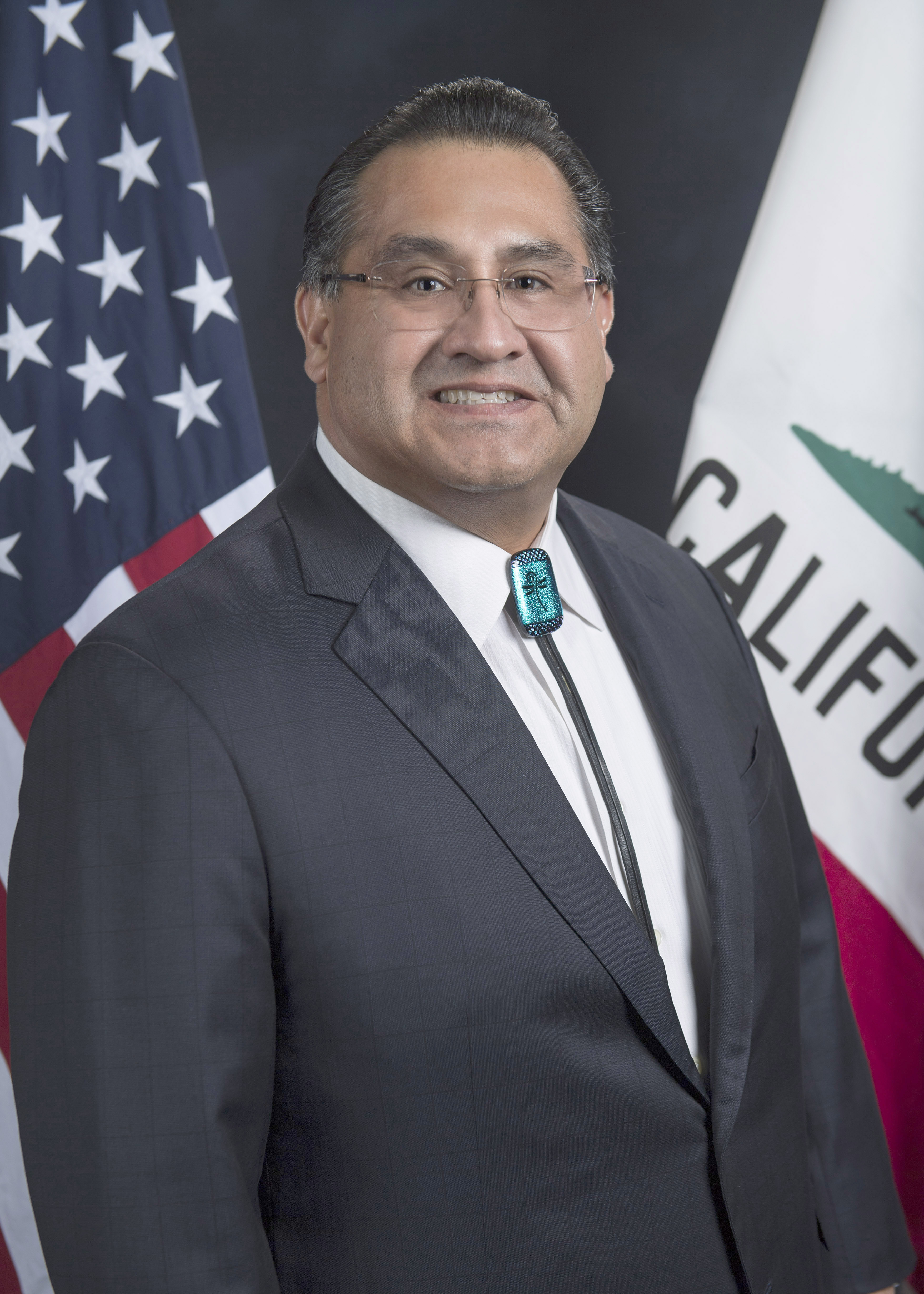
Asm. James Ramos
Sponsored bills
Existing law creates the Department of Insurance, headed by the Insurance Commissioner, and generally regulates the business of insurance in the state. Existing law authorizes the issuance of insurance, which may cover, among other things, business interruption. Other existing law, the California Emergency Services Act, authorizes the Governor to declare a state of emergency during conditions of disaster or extreme peril to persons or property, including epidemics. Pursuant to this authority, on March 4, 2020, the Governor declared a state of emergency relating to the coronavirus 2019 (COVID-19) pandemic. This bill, with respect to a policy of insurance that provides coverage for business interruption, would create specified rebuttable presumptions affecting the burden of proof in a case in which the insured alleges that the business interruption was due to the COVID-19 pandemic and occurred during the period of the state of emergency declared by the Governor due to the COVID-19 pandemic. Specifically, the bill would create certain rebuttable presumptions that COVID-19 was present on specified property and caused physical loss or damage to that property which was the direct cause of the business interruption. Among other things, the bill would provide that with respect to coverage for business interruption due to an order of civil authority, a rebuttable presumption applies that COVID-19 was present on property located within the geographical location covered by the order of civil authority and caused physical loss or damage to that property which was the direct cause of the insured's business. The bill would define "civil authority" for these purposes to include any federal, state, or local government, or the governing body or duly constituted agencies of any federally recognized Indian tribe, and their instrumentalities, divisions, political subdivisions, enterprise boards, and business entities. The bill would prohibit COVID-19 from being construed as a pollutant or contaminant for purposes of any exclusion within an insurance policy unless viruses are expressly included in that exclusion policy language. The bill would provide that it applies retroactively to all insurance policies that provide coverage for business interruption that were in full force and effect on and after March 4, 2020. This bill would declare that it is to take effect immediately as an urgency statute.
Under existing law, the Public Utilities Commission has regulatory authority over public utilities, including telephone corporations. Existing law requires the commission to develop, implement, and maintain a suitable, competitively neutral, and broad-based program to establish a fair and equitable local rate support structure aided by universal service rate support to telephone corporations serving areas where the cost of providing services exceeds rates charged by providers, which is known as the California High-Cost Fund-B Administrative Committee Fund program. Under existing law, the purpose of the program is to promote the goals of universal telephone service and to reduce any disparity in the rates charged by those companies. Existing law requires revenues collected through surcharges authorized by the commission to fund the program to be deposited in the California High-Cost Fund-B Administrative Committee Fund. This bill would revise the program to instead ensure universal service rate support to providers serving high-cost areas, and would revise the program's purpose to instead promote affordability and widespread availability of safe and reliable voice communications services and advanced services, including broadband internet access service. The bill would specify that the changes made by the bill do not authorize the levy of a charge or an increase in the amount collected pursuant to any existing charge, and do not authorize the expansion of the applicability of an existing charge to other ratepayers.
Existing law authorizes the State Department of Public Health to establish the Office of Suicide Prevention within the department, and requires the office to perform specified duties, including providing information and technical assistance to statewide and regional partners regarding best practices on suicide prevention policies and programs and reporting on progress to reduce rates of suicide, and authorize the office to apply for and use federal, state, and foundation grants. This bill would remove the limitation that, should the office be established, all duties and responsibilities of the office be carried out using existing staff and resources.
Existing law, the Children's Civil Commitment and Mental Health Treatment Act of 1988, authorizes a minor, if they are a danger to self or others, or they are gravely disabled, as a result of a mental health disorder, and authorization for voluntary treatment is not available, upon probable cause, to be taken into custody and placed in a facility designated by the county and approved by the State Department of Health Care Services as a facility for 72-hour treatment and evaluation of minors. Existing law, the Lanterman-Petris-Short Act, also authorizes the involuntary commitment and treatment of persons with specified mental health disorders. Under the act, if a person, as a result of a mental health disorder, is a danger to self or others, or is gravely disabled, the person may, upon probable cause, be taken into custody and placed in a facility designated by the county and approved by the State Department of Health Care Services for up to 72 hours for assessment, evaluation, and crisis intervention, or placement for evaluation and treatment. Existing law prohibits a person detained pursuant to the Lanterman-Petris-Short Act because the person is a danger to self or others, from owning, possessing, controlling, receiving, or purchasing, or attempting to own, possess, control, receive, or purchase, any firearm. In order for the Department of Justice to determine the eligibility of the person to own, possess, control, receive, or purchase a firearm, existing law requires each designated facility, within 24 hours of admitting an individual subject to that prohibition, to submit a report to the Department of Justice that contains specified information, including the identity of the person. This bill would require the Department of Justice to provide to the State Department of Health Care Services, in a secure format, a copy of reports submitted pursuant to those provisions. The bill would also require a designated facility to submit a quarterly report to the State Department of Health Care Services that identifies people admitted to the facility pursuant to the Lanterman-Petris-Short Act because the person is gravely disabled and minors admitted pursuant to the Children's Civil Commitment and Mental Health Treatment Act of 1988 who are younger than 13 years of age. The bill would require the designated facility to include in the report the same information required to be reported to the Department of Justice for individuals who are subject to the above-described firearms restrictions. The bill would authorize the State Department of Health Care Services, after the department consults with behavioral health stakeholders, to require a designated facility to include additional information in the quarterly report. The bill would require the State Department of Health Care Services to annually submit a publicly accessible report to the Legislature of deidentified and aggregated data received pursuant to these provisions, as specified. The bill would require the State Department of Health Care Services to implement these provisions no later than January 1, 2024, and would require the State Department of Health Care Services to, without taking regulatory action, issue guidance to implement these provisions in a manner that does not duplicate reporting requirements for designated facilities and local mental health directors.
The Personal Income Tax Law and the Corporation Tax Law, in modified conformity with federal law, generally define "gross income" as income from whatever source derived, except as specifically excluded, and provides various exclusions from gross income for purposes of computing tax liability. Existing law requires any bill authorizing a new tax expenditure to contain, among other things, specific goals, purposes, and objectives that the tax expenditure will achieve, detailed performance indicators, and data collection requirements. This bill, for taxable years beginning on or after January 1, 2021, and before January 1, 2026, would exclude, under both laws, from gross income the amount of a grant awarded pursuant to the California Small Business COVID-19 Relief Grant Program. This bill would take effect immediately as a tax levy.
Existing law establishes the Office of Small Business Advocate within the Governor's Office of Business and Economic Development for the purpose of advocating for the causes of small business and to provide small businesses with the information they need to survive in the marketplace. This bill, the Keep California Working Act, would establish the Keep California Working Grant Program. The act would require the Small Business Advocate to administer the program and award grants, as specified, to small businesses and nonprofit entities that meet specified criteria, including that the entity has experienced economic hardship resulting from the COVID-19 pandemic. The act would specify that grant money awarded pursuant to the program may be used only for specified purposes, including payroll costs, health care benefits, paid sick, medical, or family leave, and insurance premiums. The act would appropriate $2.6 billion dollars to the Office of Small Business Advocate for those purposes. The Personal Income Tax Law and the Corporation Tax Law, in conformity with federal income tax law, generally define "gross income" as income from whatever source derived, except as specifically excluded, and provide various exclusions from gross income. This bill would exclude from gross income, for state income tax purposes, the amount of a grant awarded pursuant to the Keep California Working Grant Program. Existing law requires a bill authorizing a new tax expenditure to contain, among other things, specific goals, purposes, and objectives that the tax expenditure will achieve, detailed performance indicators, and data collection requirements. The bill also would include additional information required for a bill authorizing a new tax expenditure. This bill would declare that it is to take effect immediately as an urgency statute.
The existing federal Indian Gaming Regulatory Act of 1988 provides for the negotiation and execution of tribal-state gaming compacts for the purpose of authorizing certain types of gaming on Indian lands within a state. The California Constitution authorizes the Governor to negotiate and conclude tribal-state gaming compacts, subject to ratification by the Legislature. Existing law expressly ratifies a number of tribal-state gaming compacts, and amendments of tribal-state gaming compacts, between the State of California and specified Indian tribes. The California Environmental Quality Act (CEQA) requires a lead agency to prepare, or cause to be prepared, and certify the completion of, an environmental impact report on a project, as defined, that it proposes to carry out or approve that may have a significant effect on the environment, as defined, or to adopt a negative declaration if it finds that the project will not have that effect. This bill would ratify the tribal-state gaming compact entered into between the State of California and the following tribes: the Cahto Tribe of the Laytonville Rancheria, the Resighini Rancheria, and the Sherwood Valley Rancheria of Pomo Indians of California. The bill would provide that, in deference to tribal sovereignty, certain actions related to this compact are not projects for purposes of CEQA.
(1) Existing law requires a pupil to complete designated coursework while in grades 9 to 12, inclusive, in order to receive a diploma of graduation from high school. These graduation requirements include, among others, the completion of 3 years of courses in English and 3 years of courses in social studies, including one-year courses in United States history and geography and world history, culture, and geography, a one-semester course in American government and civics, and a one-semester course in economics. Existing law requires the Instructional Quality Commission to develop, and the State Board of Education to adopt, modify, or revise, a model curriculum in ethnic studies. Existing law also encourages each school district and charter school that maintains any of grades 9 to 12, inclusive, and that does not otherwise offer a standards-based ethnic studies curriculum to offer, beginning in the school year following the adoption of the model curriculum, a course of study in ethnic studies based on the model curriculum. This bill would add the completion of a one-semester course in ethnic studies, meeting specified requirements, to the graduation requirements commencing with pupils graduating in the 2029–30 school year, including for pupils enrolled in a charter school. The bill would expressly authorize local educational agencies, including charter schools, to require a full-year course in ethnic studies at their discretion. The bill would require local educational agencies, including charter schools, to offer an ethnic studies course commencing with the 2025–26 school year, as specified. The bill would authorize, subject to the course offerings of a local educational agency, including a charter school, a pupil to satisfy the ethnic studies course requirement by completing either (A) a course based on the model curriculum in ethnic studies developed by the commission, (B) an existing ethnic studies course, (C) an ethnic studies course taught as part of a course that has been approved as meeting the A–G requirements of the University of California and the California State University, or (D) a locally developed ethnic studies course approved by the governing board of the school district or the governing body of the charter school. The bill would prohibit a course that does not use ethnic studies content as the primary content through which the subject is taught from being used to satisfy the ethnic studies course requirement. The bill would require a pupil who completes a course described above to also accrue credit for coursework in the subject that the course is offered, including, if applicable, credit towards satisfying a course required for a diploma of graduation from high school. These provisions would become operative only upon an appropriation of funds by the Legislature for these purposes in the annual Budget Act or another statute. Because the bill would add new duties to local educational agencies, it would constitute a state-mandated local program. (2) The California Constitution requires the state to reimburse local agencies and school districts for certain costs mandated by the state. Statutory provisions establish procedures for making that reimbursement. This bill would provide that, if the Commission on State Mandates determines that the bill contains costs mandated by the state, reimbursement for those costs shall be made pursuant to the statutory provisions noted above.