

Existing law makes it a crime to possess for sale or purchase for purpose of sale, transport, sell, furnish, administer, give away, manufacture, compound, convert, produce, derive, process, or prepare various controlled substances, including, among others, fentanyl, peyote, and various other opiates and narcotics. This bill would require a person who is convicted of, or who pleads guilty or no contest to, the above crimes to receive a written advisory of the danger of manufacturing or distribution of controlled substances and that, if a person dies as a result of that action, the manufacturer or distributor can be charged with voluntary manslaughter or murder. The bill would require that the fact the advisory was given be on the record and recorded on the abstract of conviction.
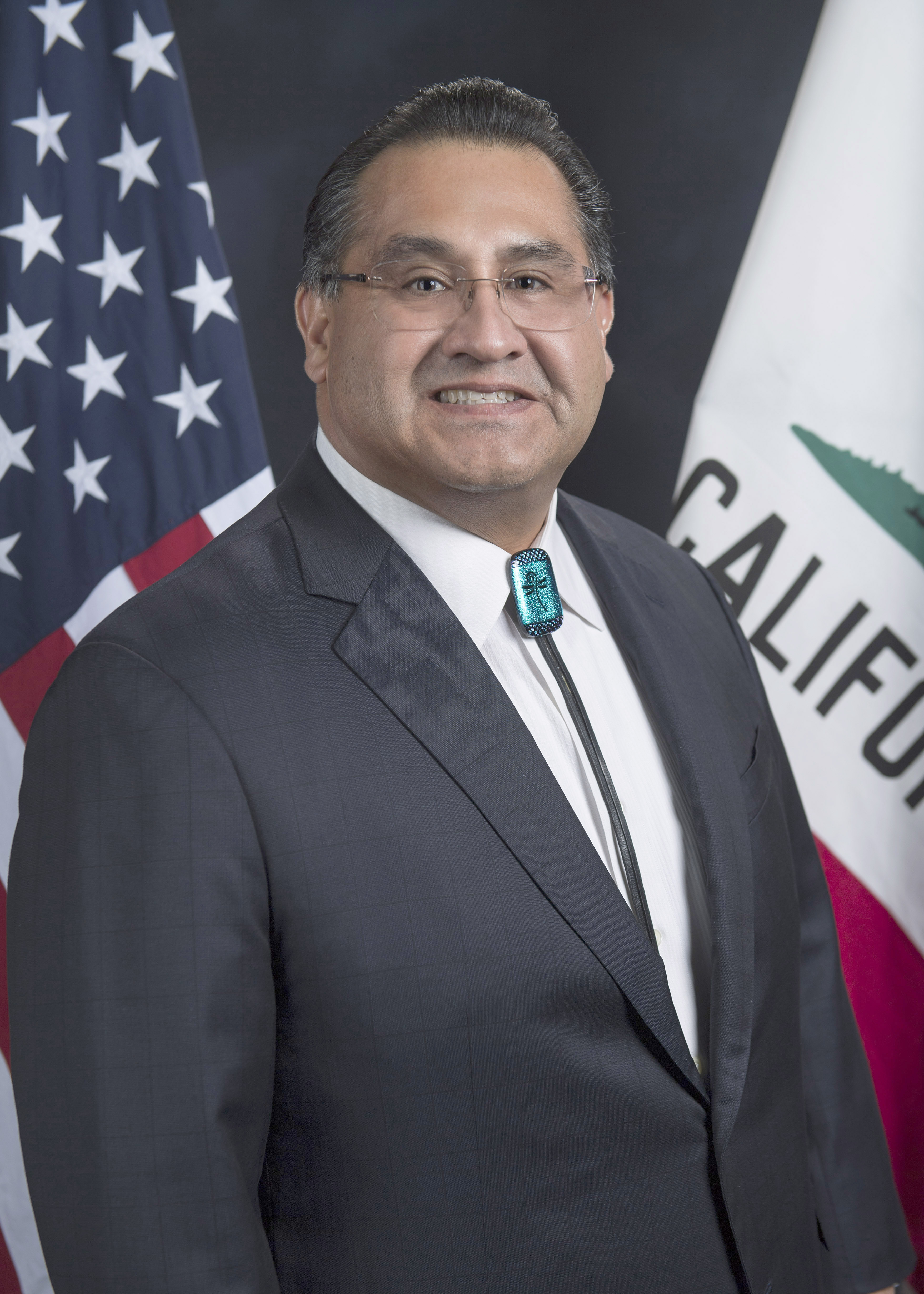
Asm. James Ramos
Sponsored bills
Existing law prohibits the manufacture, transport, sale, and delivery of specified controlled substances, including fentanyl. Existing law prescribes certain statutory rights of victims and witnesses of crimes. This bill would express the intent of the Legislature to enact legislation that extends the statutory rights of crime victims to the families of fentanyl overdose victims and ensures investigations to determine criminal liability for these overdoses.
Existing law establishes the Office of Small Business Advocate (CalOSBA) within the Governor's Office of Business and Economic Development, also known as GO-Biz, to advocate for causes of small business and to provide small businesses with the information they need to survive in the marketplace. Existing law authorizes counties, cities, and other local agencies to impose various taxes and fees in connection with activity or property within those jurisdictions. This bill would enact the California Small Business Rent Relief Act, which would authorize a county to establish a local small business rent forgiveness and tax relief program, as provided, for the purpose of providing credits to qualified taxpayers, as defined, to be used against any tax or fee owed to the county by the qualified taxpayer, and for which the county has authority to collect a credit in lieu of cash. The bill would authorize CalOSBA to establish the California Small Business Rent Forgiveness and Tax Relief Program, as provided, for the purpose of allocating credit authority to qualified counties, as defined, to implement a small business rent forgiveness and tax relief program. The bill would create the Small Business Rent Forgiveness and Tax Relief Account within the California Economic Development Fund, for the purpose of receiving moneys transferred to the account, and would require all moneys in the account to be available for expenditure, upon appropriation by the Legislature, for the purpose of implementing the California Small Business Rent Forgiveness and Tax Relief Program. The bill would require CalOSBA to submit a report to the Governor and the Legislature on program activities, as provided.
(1) Existing laws defines persons who are peace officers and the entities authorized to appoint them. Existing law requires certain minimum training requirements for peace officers including the completion of a basic training course, as specified. Existing law prescribes certain minimum standards for a person to be appointed as a peace officer, including moral character and physical and mental condition, and certain disqualifying factors for a person to be employed as a peace officer, including a felony conviction. This bill would disqualify a person from being employed as a peace officer if that person has been convicted of, or has been adjudicated by a military tribunal as having committed an offense that would have been a felony if committed in this state. The bill would also disqualify any person who has been certified as a peace officer by the Commission on Peace Officer Standards and Training and has had that certification revoked by the commission. (2) Existing law establishes the Commission on Peace Officer Standards and Training to set minimum standards for the recruitment and training of peace officers and to develop training courses and curriculum. Existing law authorizes the commission to establish a professional certificate program that awards basic, intermediate, advanced, supervisory, management, and executive certificates on the basis of a combination of training, education, experience, and other prerequisites, for the purpose of fostering the professionalization, education, and experience necessary to adequately accomplish the general police service duties performed by peace officers. Existing law authorizes the commission to cancel a certificate that was awarded in error or obtained through misrepresentation or fraud, but otherwise prohibits the commission from canceling a certificate that has properly been issued. This bill would require the commission to create a certification program for specified peace officers. The bill would make all records related to the revocation of a peace officer's certification public. This bill would require a peace officer's certificate to be suspended, revoked, or canceled when the person is ineligible to be a peace officer or when the person has been subject to a sustained termination for serious misconduct, as defined, on or after January 1, 2022. The bill would make each law enforcement agency responsible for investigation, findings, and actions by the agency on allegations of serious misconduct and would give the commission access to the agency files. The bill would require the commission to be notified of and to review a peace officer's file after 3 allegations of serious misconduct within 5 years. The bill would establish the Peace Officer Standards Accountability Advisory Board, as specified, to make recommendations on the decertification of peace officers to the commission. The bill would require every law enforcement agency to notify the commission when a peace officer employed by that agency separates from employment. When a peace officer resigns or retires with a pending complaint, charge, or investigation of serious misconduct, the bill would require the law enforcement agency to complete the investigation into the serious misconduct within 90 days and report to the commission whether the complaint of serious misconduct was sustained, not sustained, unfounded, frivolous, or exonerated. The bill would require the commission to refer the files of peace officers whose termination for serious misconduct was sustained to the board to make a recommendation regarding the status of the officer's certificate and would require the commission to accept that recommendation or set forth the analysis and reasons for reaching a different result in writing. (3) Existing law requires law enforcement agencies to consider specified best practices when establishing policies and procedures for downloading and storing data from body-worn cameras, including, among other things, prohibiting the unauthorized use, duplication, or distribution of the data, and establishing storage periods for evidentiary and nonevidentiary data, as defined. This bill would make those requirements applicable to data obtained from unmanned aircraft systems. By imposing new requirements on local agencies, this bill would impose a state-mandated local program. The California Constitution requires the state to reimburse local agencies and school districts for certain costs mandated by the state. Statutory provisions establish procedures for making that reimbursement. This bill would provide that, if the Commission on State Mandates determines that the bill contains costs mandated by the state, reimbursement for those costs shall be made pursuant to the statutory provisions noted above.
Existing law establishes a system of workers' compensation in which an employer is required to provide medical treatment and compensation, among other benefits, in the event an employee is injured as a result of their employment. Existing law prescribes the ways in which an employer, except the State, is require to secure compensation for their injured employees. This bill would clarify that an employer is not limited in its ability to insure against an act of domestic terrorism or to provide benefits in excess of those required by existing law following an act of terrorism. Existing law requires the employer to provide medical, surgical, chiropractic, acupuncture, and hospital treatment that is reasonably required to cure or relieve the injured worker from the effects of the injury. Existing law requires every employer to establish a utilization review process, and defines "utilization review" as utilization review or utilization management functions that prospectively, retrospectively, or concurrently review and approve, modify, delay, or deny, based in whole or in part on medical necessity to cure and relieve, treatment recommendations by physicians, prior to, retrospectively, or concurrent with providing medical treatment services. This bill would clarify that when an employer approves a request for medical treatment from a treatment provider, without modification, the employer has completed utilization review under the law. Existing law establishes the Workers' Compensation Appeals Board, which has jurisdiction to adjudicate claims relating to workers' compensation. Existing law creates the Administrative Director of the Division of Workers' Compensation, who has specified powers and duties relating to the workers' compensation trial process. Existing law requires the administrative director to establish a priority calendar for specified issues requiring an expedited hearing, such as entitlement to medical treatment, a medical treatment appointment or medical-legal examination, or entitlement to temporary disability indemnity payments. This bill would require that if a claim for injury resulting from a domestic terror attack is set for expedited hearing on the priority calendar, that claim be heard before any others. Existing law requires that a claim for workers' compensation be made within a year of the date of injury, the payment of indemnity, or the provision of medical treatment, whichever is later. This bill would exempt from that provision claims alleging injury from the December 2, 2015, attack on the Inland Regional Center in the City of San Bernardino, and instead allow claims based on that attack to be filed until January 1, 2025.
(1) Existing law, the Corporation Tax Law, imposes an annual minimum franchise tax of $800, except as provided, on every corporation incorporated in this state, qualified to transact intrastate business in this state, or doing business in this state, and an annual tax in an amount equal to the minimum franchise tax on every limited partnership, limited liability partnership, and limited liability company doing business in this state, as specified. Existing law requires a bill that would authorize a new tax expenditure under the Corporation Tax Law to identify specific goals, purposes, and objectives that the tax expenditure will achieve and detailed performance indicators and data collection requirements for determining whether the tax expenditure achieves these goals, purposes, and objectives. This bill, for taxable years beginning on or after January 1, 2022, and before January 1, 2027, would reduce the minimum franchise tax, as provided, based on the gross receipts during the taxable year of the corporation but would continue to impose the current amount of the annual tax on corporations described above whose gross receipts exceed $15,000,000 and on every limited partnership, limited liability partnership, and limited liability company doing business in this state. This bill would make findings specifying the goal, purpose, and objective of the tax expenditure provided by this bill and the performance indicator to be used and would require, on or before January 1, 2023, the Franchise Tax Board to submit an annual report to the Legislature on the effect of tax reduction on corporations that are small businesses in the state, as specified. (2) Existing law authorizes cities and counties to license any kind of business, not prohibited by law, transacted and carried on within the limits of its jurisdiction. Cities and counties, pursuant to certain restrictions, may impose a license fee on those businesses. Existing law also authorizes the state to impose various licensing fees on businesses, including alcoholic beverage licenses and cannabis licenses. This bill would state the intent of the Legislature to enact legislation that would provide small businesses economic relief from the effects of COVID-19 by waiving fees. (3) This bill would take effect immediately as a tax levy.
Existing law creates the American Indian Education Unit in the State Department of Education to provide technical support to, and proper administrative oversight of, American Indian education programs established by the state in order to ensure that American Indian pupils in California public schools are able to meet specified challenging academic standards. This bill would express the intent of the Legislature to enact future legislation that supports the academic growth and well-being of Native American pupils in California by expanding the American Indian Education Centers program to serve a greater number of Native American pupils in California, supporting and promoting meaningful and timely consultation between local educational agencies and appropriate officials and representatives of tribal governments regarding the education of Native American pupils, and ensuring an adequate level of staffing at the State Department of Education to support local educational agencies and tribes in implementing effective practices to serve Native American pupils and to meet requirements of state and federal law.
Existing law makes it a misdemeanor for an innkeeper or common carrier of passengers to refuse to receive or entertain any guest or to refuse to receive or carry any passenger without just cause or excuse. Existing law makes it a misdemeanor to deny admittance to accommodations to a blind, deaf, or disabled person and that person's specially trained guide dog, signal dog, or service dog. This bill would make it unlawful for an establishment serving the public to prohibit or otherwise restrict a peace officer from carrying a weapon on the establishment's premises that the peace officer is authorized to carry, regardless of whether the peace officer is engaged in the actual discharge of the officer's duties while carrying the weapon. The bill would make a first offense punishable as an infraction by a fine not exceeding $500, and as a misdemeanor for a 2nd or subsequent violation, punishable by imprisonment in a county jail not exceeding 6 months, by a fine not exceeding $1,000, or by both that fine and imprisonment. By creating a new crime, this bill would impose a state-mandated local program. The California Constitution requires the state to reimburse local agencies and school districts for certain costs mandated by the state. Statutory provisions establish procedures for making that reimbursement. This bill would provide that no reimbursement is required by this act for a specified reason.
Existing law, the Warren-911-Emergency Assistance Act, requires every local public agency, as defined, to have an emergency communication system and requires the digits "911" to be the primary emergency telephone number within the system. Existing law contains provisions governing the operation and financing of community mental health services for the mentally disordered in every county through locally administered and locally controlled community mental health programs. Existing law specifies that county mental health services should be organized to provide immediate response to individuals in precrisis and crisis and to members of the individual's support system, on a 24-hour, 7-day-a-week basis and authorizes provision of crisis services offsite as mobile services. Existing federal law, the National Suicide Hotline Designation Act, designated the three-digit telephone number "988" as the universal number within the United States for the purpose of the national suicide prevention and mental health crisis hotline system operating through the National Suicide Prevention Lifeline maintained by the Assistant Secretary for Mental Health and Substance Abuse and the Veterans Crisis Line maintained by the Secretary of Veterans Affairs. This bill would create the Core Behavioral Health Crisis Services System, using the digits "988" for the 988 Suicide Prevention and Behavioral Health Crisis Hotline, in compliance with existing federal law and standards governing the National Suicide Prevention Lifeline. The bill would require the department, as defined, to take specified actions to implement the hotline system. The bill would require the department to charge a fee on each resident of the state that is a subscriber of commercial mobile or IP-enabled voice services to pay for the costs of the program. The bill would create the 988 Fund, a new continuously appropriated fund, and would require the fees to be deposited along with other specified moneys into the 988 Fund. By creating a new continuously appropriated fund and establishing a fee as a new source of revenue for the continuously appropriated fund, the bill would make an appropriation. The bill would also require local jurisdictions, in collaboration with the department, to create Mobile Crisis Teams, as specified, to provide onsite response services to crisis calls made through the hotline. By imposing this new requirement on local jurisdictions, the bill would impose a state-mandated local program. The California Constitution requires the state to reimburse local agencies and school districts for certain costs mandated by the state. Statutory provisions establish procedures for making that reimbursement. This bill would provide that, if the Commission on State Mandates determines that the bill contains costs mandated by the state, reimbursement for those costs shall be made pursuant to the statutory provisions noted above. This bill would include a change in state statute that would result in a taxpayer paying a higher tax within the meaning of Section 3 of Article XIIIA of the California Constitution, and thus would require for passage the approval of 23 of the membership of each house of the Legislature.
Existing law, the California Suicide Prevention Act of 2000, allows the State Department of Health Care Services, contingent upon appropriation, to establish and implement a suicide prevention, education, and gatekeeper training program to reduce the severity, duration, and incidence of suicidal behaviors. Existing law authorizes the State Department of Public Health to establish the Office of Suicide Prevention to, among other things, convene experts and stakeholders, including, but not limited to, stakeholders representing populations with high rates of suicide, to encourage collaboration and coordination of resources for suicide prevention. This bill would require the department to establish an Ending Military Suicide Task Force to systematically reduce military suicides and to develop a plan to eliminate all military suicides in the state, as specified. Commencing June 1, 2023, the bill would require the task force to submit a specified report to the Governor and the Legislature on the state of veteran suicide prevention, as specified, including, among other things, an analysis of the plans, activities, strategies, and programs undertaken pursuant to the task force's recommendations and their effects on reducing military suicides in the state.