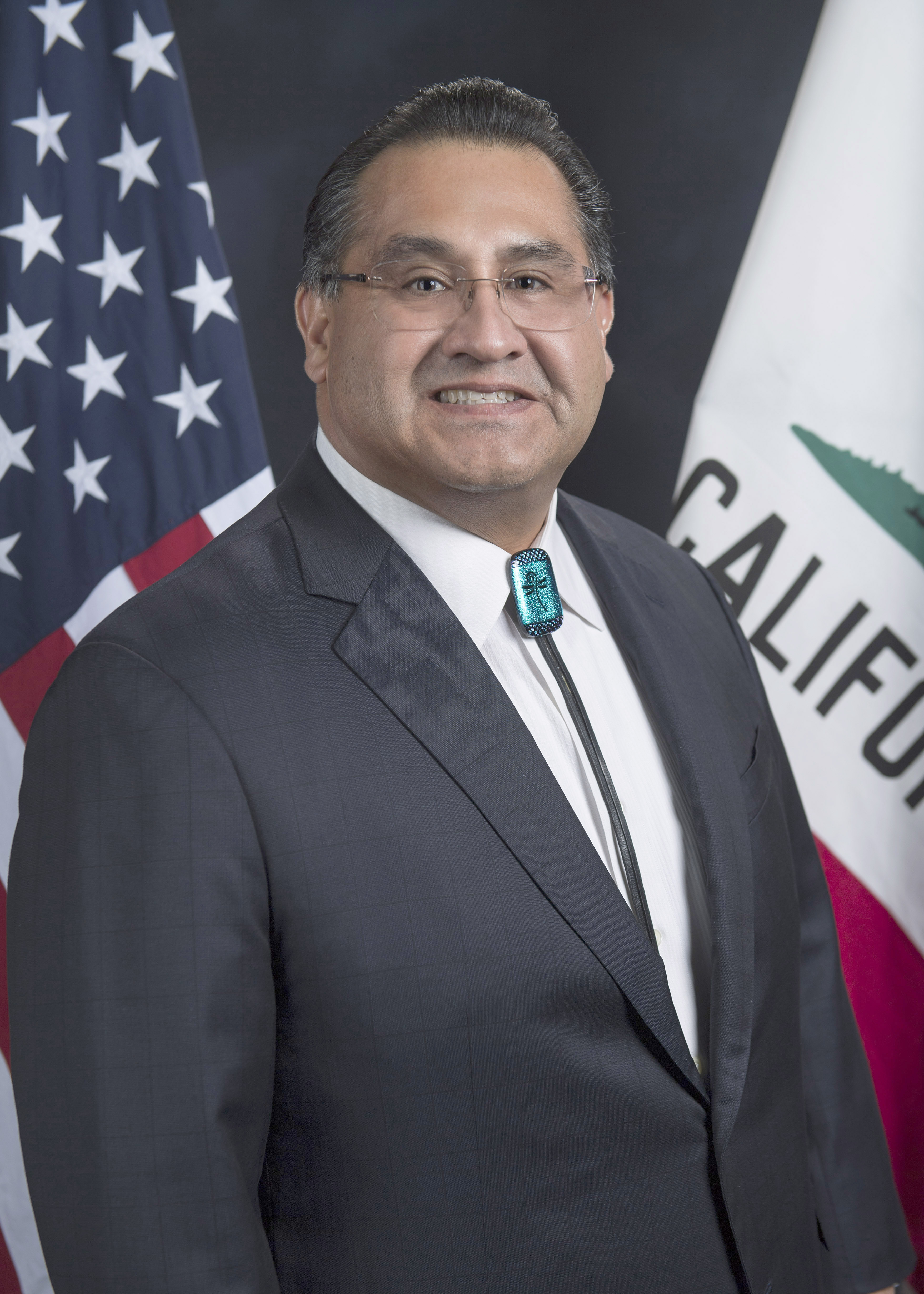
Photo of James Ramos
D California Assembly · District 45 On the 2026 ballot

Asm. James Ramos

Compare
Total votes
17,608
all sessions
Attendance
93%
1,027 missed
Near the chamber average
With party
99%
of cast votes
Near the chamber average
Bipartisan score
0%
crosses aisle rarely
Near the chamber average
Sponsored
1,475
bills & resolutions
Near the chamber average
Committees
8
assignments
1,475 bills and resolutions

Sponsored bills

Total
1,475
Primary
167
Co-sponsor
1,308
This page
1,475
matching current filters
Primary AB 1950
In committee · California Assembly · Lead sponsor
Child welfare: Indian children.

Existing federal law, the Indian Child Welfare Act of 1978 (ICWA) , governs the proceedings for determining the placement of an Indian child when that child is removed from the custody of the child's parent or guardian. Existing law states findings and declarations of the Legislature regarding Indian children, including that the state is committed to protecting the essential tribal relations and best interest of an Indian child by promoting practices in accordance with ICWA, and it is in the interest of an Indian child that the child's membership or citizenship in the child's Indian tribe and connection to the tribal community be encouraged and protected, and requires the court to consider those findings in all Indian child custody proceedings. Existing law authorizes the juvenile court to adjudge a child to be a dependent child of the court or a minor to be a ward of the court under specified circumstances, including, among others, if there is a substantial risk that the child will suffer serious physical harm inflicted nonaccidentally. Existing law requires the juvenile court in these proceedings to inquire whether a child is or may be an Indian child, and, if so, ICWA requires, among other things, the notification of the proceedings to the Indian child's tribe. Existing law requires the Judicial Council to adopt rules of court to allow for telephonic or other remote appearance options by an Indian child's tribe in these proceedings. Existing law prohibits telephonic or other computerized remote access for court appearances from being subject to fees. This bill would instead authorize an Indian child's tribe to participate by telephone or other remote appearance options in proceedings in which the ICWA may apply, and would authorize the method of appearance to be determined by the court, as specified. The bill would prohibit fees from being charged for telephonic or other computerized remote access for court appearances established under these provisions. This bill would establish the Cal-ICWA County Accountability System Evaluation (CASE) Program to be administered by the State Department of Social Services to measure a county's compliance with the ICWA and Cal-ICWA among their dependency cases involving an Indian child. The bill would require the department, on or before April 1, 2024, to convene a stakeholder workgroup, and in partnership with that workgroup and in consultation with Indian tribes, develop the case review system under the program, as specified. The bill would, commencing in the 2024–25 fiscal year, require the department to reimburse each county for its proportionate share of the available program funding based on the county's nonfederal share of the cost for out-of-home placement of Indian children, except when a county is determined to be substantially out of compliance with ICWA or Cal-ICWA for 2 consecutive years, as specified. The bill would require counties to report specified information to the department for these purposes, and would require the department to report to the appropriate fiscal and policy committees of the Legislature the data collected under the program and to issue a public report with specified information to be posted on its internet website. The bill would specify that implementation of the program is subject to an appropriation in the Budget Act for the program. By imposing duties on counties, this bill would impose a state-mandated local program. The California Constitution requires the state to reimburse local agencies and school districts for certain costs mandated by the state. Statutory provisions establish procedures for making that reimbursement. This bill would provide that no reimbursement is required by this act for a specified reason.


In committee Feb 18, 2022 0 co-sponsors
Primary AB 2533
In committee · California Assembly · Lead sponsor
Child welfare services: Indian tribes.

Existing law requires, upon an Indian tribe's request, the State Department of Social Services to enter into an agreement with a tribe, consortium of tribes, or tribal organization regarding the care and custody of Indian children and jurisdiction over Indian child custody proceedings. Under existing law, an Indian tribe, tribal organization, or tribal consortium that is party to an agreement under these provisions is eligible to receive allocations of child welfare service funds, as specified. This bill would make a technical, nonsubstantive change to these provisions.

In committee Feb 18, 2022 0 co-sponsors
Co-sponsor AB 616
Vetoed · California Assembly · Co-sponsor
Agricultural labor relations: labor representative elections: representation ballot card election.

Existing law, the Alatorre-Zenovich-Dunlap-Berman Agricultural Labor Relations Act of 1975, grants agricultural employees the right to form and join labor organizations and engage in collective bargaining with respect to wages, terms of employment, and other employment conditions, and authorizes employees to elect exclusive bargaining representatives for these purposes. Existing law requires the Agricultural Labor Relations Board to certify the results of an election conducted by secret ballot of employees in a collective bargaining unit to designate a collective bargaining representative, unless the board determines there are sufficient grounds to refuse to do so. Existing law further provides that if the board refuses to certify an election because of employer misconduct that would render slight the chances of a new election reflecting the free and fair choice of employees, the labor organization shall be certified as the bargaining representative for the bargaining unit. This bill would refer to the secret ballot election as a polling place election. This bill would also permit agricultural employees, as an alternative election procedure, to select their labor representatives through a representation ballot card election by submitting a petition to the board supported by representation ballot cards signed by a majority of employees in the bargaining unit. This bill would require the board to conduct an immediate investigation regarding the validity of the petition and the supporting representation ballot cards and, within 5 days after receiving a petition, to make an administrative decision as to whether the petition meets certain requirements and as to whether the labor organization submitted the requisite number of cards. The bill would require the board to certify the labor organization as the exclusive bargaining representative if the board determines that the labor organization has submitted the required number of representation ballot cards and the cards meet specified criteria. Existing law authorizes a person aggrieved by the final order of the board granting or denying in whole or in part the relief sought for an unfair labor practice, to obtain a review of the order in a specified court of appeal by filing in the court a written petition requesting that the order of the board be modified or set aside. This bill would require an employer who appeals or petitions for a writ of review of any order of the board involving make-whole, backpay, or other monetary awards to employees, to post an appeal bond in the amount of the entire economic value of the order, as specified, and would provide for the bond to be forfeited under specified conditions. This bill would state that its provisions are severable.

Vetoed Feb 3, 2022 1 co-sponsor
Primary AB 226
Vetoed · California Assembly · Lead sponsor
Children's crisis psychiatric residential treatment facilities.

Existing law, the California Community Care Facilities Act, provides for the licensing and regulation of community care facilities, including a children's crisis residential program, by the State Department of Social Services, and defines a children's crisis residential program to mean a facility licensed as a short-term residential therapeutic program and approved by the State Department of Health Care Services, or a county mental health plan, to operate a children's crisis residential mental health program to serve children experiencing mental health crises as an alternative to psychiatric hospitalization. Existing law provides for the Medi-Cal program, which is administered by the State Department of Health Care Services, under which qualified low-income individuals receive health care services, including specified mental health and substance use disorder services. The Medi-Cal program is, in part, governed and funded by federal Medicaid provisions. Existing federal Medicaid regulations provide for inpatient psychiatric services for individuals under 21 years of age in psychiatric facilities, as prescribed. This bill would reclassify children's crisis residential programs as children's crisis psychiatric residential treatment facilities, and would transfer responsibility for licensing these facilities to the State Department of Health Care Services, contingent upon an appropriation in the annual Budget Act for these purposes. The bill would define "children's crisis psychiatric residential treatment facility" to mean a licensed residential facility operated by a public agency or private organization that provides the psychiatric services, as prescribed under the Medicaid regulations, to individuals under 21 years of age, in an inpatient setting. The bill would require the department to establish regulations for the licensing of children's crisis psychiatric residential treatment facilities, and would require those facilities to obtain certification from the department. The bill would require the department's regulations and certifications to be consistent with applicable Medicaid regulations governing psychiatric residential treatment facilities, in order to maximize federal financial participation. The bill would include inpatient psychiatric services to individuals under 21 years of age provided in a licensed children's crisis psychiatric residential treatment facility as mental health services provided under the Medi-Cal program.

Vetoed Feb 3, 2022 0 co-sponsors
Co-sponsor AB 314
died · California Assembly · Co-sponsor
Collective bargaining: Legislature.

Existing law, the Ralph C. Dills Act (Dills Act) , governs collective bargaining between the state and recognized state public employee organizations. Existing law excludes certain employees from coverage under the Dills Act, including, among others, managerial employees, supervisory employees, and confidential employees, as defined. Existing law creates the Public Employment Relations Board and authorizes it, among other things, to determine appropriate state employee bargaining units, as specified. This bill would enact the Legislature Employer-Employee Relations Act, to provide employees of the Legislature, including some supervisory and managerial employees, the right to form, join, and participate in the activities of employee organizations of their own choosing for the purpose of representation on all matters of employer-employee relations. The bill would prescribe rights, duties, and prohibitions in this context that parallel those in the Dills Act. The bill would prohibit the Public Employment Relations Board from including employees of the Legislature in a bargaining unit that includes employees other than those of the Legislature. The bill would make it a misdemeanor for any person to willfully resist, prevent, impede, or interfere with any member of the board, or any of its agents, in the performance of duties pursuant to its provisions. By expanding the definition of a crime, this bill would impose a state-mandated local program. The bill would provide that the provisions of the Legislature Employer-Employee Relations Act are severable. The California Constitution requires the state to reimburse local agencies and school districts for certain costs mandated by the state. Statutory provisions establish procedures for making that reimbursement. This bill would provide that no reimbursement is required by this act for a specified reason.
died Feb 1, 2022 1 co-sponsor
Showing 1,051 to 1,060 of 1,475 bills