This measure would recognize the importance of California Native American Day, celebrated this year on September 26, 2025, and the annual California Indian Cultural Awareness Conference, to the enhancement of awareness of California Indian culture.
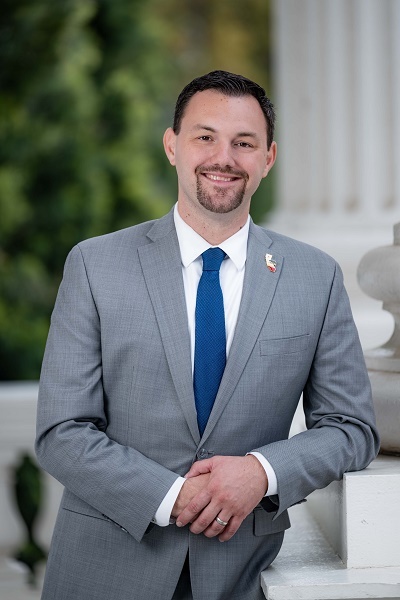
Asm. Nick Schultz
Sponsored bills
Existing law requires a mortgage servicer to comply with applicable federal guidance regarding borrower options following a forbearance relating to the COVID-19 emergency. This bill would authorize a borrower who is experiencing financial hardship that prevents the borrower from making timely payments on a specified residential mortgage loan due directly to the wildfire disaster described in the proclamation of a state of emergency issued by Governor Gavin Newsom on January 7, 2025, or the federally declared disaster, declared on January 8, 2025, related to the Eaton Wildfire, the Palisades Fire, and the Straight-line Winds, to request forbearance on their residential mortgage loan, as prescribed. The bill would limit eligibility for that forbearance to loans that are secured by residential real property improved by 4 or fewer residential units. The bill would require the borrower to affirm that they are experiencing a financial hardship due to the wildfire disaster. Because the bill would expand the crime of perjury, the bill would impose a state-mandated local program. This bill would, except as specified, require a mortgage servicer to offer mortgage payment forbearance of a period of up to an initial 90 days, which shall be extended at the request of the borrower in 90-day increments, up to a maximum forbearance period of 12 months. The bill would also prohibit a mortgage servicer from assessing any late fees to the borrower's account or charging a default rate of interest during the forbearance period. The bill would provide that the forbearance period includes any period of forbearance related to the wildfire disaster that a mortgage servicer has provided to a borrower before the effective date of these provisions. The bill would require a mortgage servicer to report the credit obligations of borrowers under a disaster-related forbearance plan in compliance with the federal Fair Credit Reporting Act. For accounts granted disaster-related mortgage payment relief, the bill would prohibit mortgage servicers from furnishing information during the forbearance period indicating that the payments are in forbearance and would require them to report the credit obligation or account as current or delinquent, as specified. The bill would prohibit a mortgage servicer from initiating any judicial or nonjudicial foreclosure process, moving for a foreclosure judgment or order of sale, or executing a foreclosure-related eviction or foreclosure during the period of forbearance. This bill would require the Department of Financial Protection and Innovation to post specified information on its website including links to the provisions of servicing guidelines pertaining to disaster-related forbearance relief for federally backed loans and a dedicated telephone number for borrowers seeking assistance. The California Constitution requires the state to reimburse local agencies and school districts for certain costs mandated by the state. Statutory provisions establish procedures for making that reimbursement. This bill would provide that no reimbursement is required by this act for a specified reason. This bill would declare that it is to take effect immediately as an urgency statute.
Existing law prohibits credibly impersonating a peace officer, firefighter, or employee of a public utility, state or local government agency, or search and rescue team, as specified. Existing law also prohibits willfully and credibly impersonating a peace officer, firefighter, or employee of a public utility, state or local government agency, or search and rescue team through or on an internet website, or by other electronic means, for the purposes of defrauding another. A violation of these prohibitions is punishable as a misdemeanor. This bill would revise and recast these provisions to prohibit impersonating a law enforcement officer, and would clarify that a law enforcement officer, for these purposes, includes a federal law enforcement officer. The bill would extend these offenses to include willfully and credibly impersonating any of those entities through any means for the purpose of defrauding another. By expanding the scope of a crime, this bill would impose a state-mandated local program. This bill would, on and after January 1, 2026, require a law enforcement officer operating in California that is not uniformed to visibly display identification that includes their agency and either a name or badge number to the public when performing their enforcement duties, except as specified. The bill would make a violation of these provisions a misdemeanor. The bill would define personnel of a law enforcement agency as any peace officer under California law and any federal law enforcement officer. By creating a new crime and imposing duties on local law enforcement, this bill would impose a state-mandated local program. The bill would require any law enforcement agency operating in California to, by January 1, 2026, maintain and publicly post a written policy on the visible identification of sworn personnel, including a purpose statement affirming the agency's commitment to specified principles including transparency, accountability, and public trust, and a requirement for sworn personnel to visibly display identification and for specified exceptions. The bill would exempt personnel of any agency from the crime for not displaying identification if an agency maintains a policy pursuant to these provisions. The bill would deem a policy consistent with that exception unless a member of the public, an oversight body, or a local governing authority challenges it. The bill would, if the agency does not address deficiencies within 90 days, authorize the complaining party to proceed to a court of competent jurisdiction for a judicial determination of the exemption, as specified. The bill would also authorize a peace officer, as defined, to request an alleged law enforcement officer to present identification when there is probable cause or reasonable suspicion to believe the alleged law enforcement officer has committed crime, including, but not limited to, impersonating a peace officer. Existing law, the Bail Fugitive Recovery Persons Act, regulates bail fugitive recovery agents, defined as a person given written authorization by the bail or depositor of bail and contracted to investigate, surveil, locate, and arrest a bail fugitive and any person employed to assist the bail or depositor of bail to investigate, surveil, locate, and arrest a bail fugitive. This bill would prohibit a person authorized to apprehend a bail fugitive from using that position for the purposes of immigration enforcement and would prohibit a person authorized to apprehend a bail fugitive from disclosing personally identifiable information of any bail fugitive that is requested for purposes of immigration enforcement, except as specified. This bill would declare these provisions are severable. The California Constitution requires the state to reimburse local agencies and school districts for certain costs mandated by the state. Statutory provisions establish procedures for making that reimbursement. This bill would provide that with regard to certain mandates no reimbursement is required by this act for a specified reason. With regard to any other mandates, this bill would provide that, if the Commission on State Mandates determines that the bill contains costs so mandated by the state, reimbursement for those costs shall be made pursuant to the statutory provisions noted above. This bill would declare that it is to take effect immediately as an urgency statute.

Existing law makes it a misdemeanor to wear a mask, false whiskers, or any personal disguise, as specified, with the purpose of evading or escaping discovery, recognition, or identification while committing a public offense, or for concealment, flight, evasion, or escape from arrest or conviction for any public offense. This bill would make it a crime for a law enforcement officer to wear a facial covering in the performance of their duties, except as specified. The bill would define law enforcement officer as anyone designated by California law as a peace officer who is employed by a city, county, or other local agency, and any officer or agent of a federal law enforcement agency or law enforcement agency of another state, or any person acting on behalf of a federal law enforcement agency or agency of another state. The bill would make a violation of these provisions punishable as an infraction or a misdemeanor, as specified. By creating a new crime, this bill would impose a state-mandated local program. The bill would require any law enforcement agency operating in California to, by July 1, 2026, maintain and publicly post a written policy limiting the use of facial coverings, as specified. The bill would exempt personnel of any agency from the crime of wearing a facial covering if an agency maintains a policy pursuant to this section no later than July 1, 2026. The bill would deem a policy consistent with these provisions for the purposes of that exception unless a member of the public, an oversight body, or a local governing authority challenges it. The bill would also impose a specified civil penalty against certain officers for tortious conduct, including, but not limited to, false imprisonment or false arrest of an individual while wearing a facial covering. The bill would, if the agency does not address deficiencies within 90 days, authorize the complaining party to proceed to a court of competent jurisdiction for a judicial determination of the exemption, as specified. The bill would define a law enforcement agency for these purposes as any entity of a city, county, or other local agency, that employs anyone designated by California law as a peace officer, any federal law enforcement agency, or any law enforcement agency of another state. By imposing additional duties on local law enforcement agencies, this bill would create a state-mandated local program. This bill would declare its provisions to be severable. This bill would make related findings and declarations. The California Constitution requires the state to reimburse local agencies and school districts for certain costs mandated by the state. Statutory provisions establish procedures for making that reimbursement. This bill would provide that with regard to certain mandates no reimbursement is required by this act for a specified reason. With regard to any other mandates, this bill would provide that, if the Commission on State Mandates determines that the bill contains costs so mandated by the state, reimbursement for those costs shall be made pursuant to the statutory provisions noted above.
This measure would declare the Legislature's opposition to the unlawful Executive Order No. 14160, entitled "Protecting the Meaning and Value of American Citizenship," ending birthright citizenship as enshrined in the United States Constitution and would affirm the Legislature's commitment to birthright citizenship, as specified.
This measure would declare the month of March to be March4Water Month in California and would encourage all Californians to participate in activities and programs during March4Water Month to promote awareness, education, and actions that prioritize water as a vital resource for the state's future.
Maddy summaryACR 95 designates June 21, 2025, as the International Day of Yoga in California. This ceremonial resolution formally recognizes the day for public awareness but has no legal effect or policy changes. It directly affects California residents by encouraging community observances of the international event. The measure is purely symbolic, with no funding, regulations, or new obligations for state agencies or individuals.
This measure would recognize March 21, 2025, as the United Nations International Day for the Elimination of Racial Discrimination and declare racism as a public health crisis.
This measure would state, among other things, the Legislature and the State of California's commitment to protecting, to the fullest extent of the law, all the data and information provided by students and their families to California's postsecondary education.
Maddy summaryACR 100 is a symbolic resolution recognizing August 15, 2025, as India's Independence Day in California. It urges all Californians to participate in celebrating India's independence on that date. This resolution does not create new laws or affect specific groups, but formally acknowledges the historical significance of India's independence day. It serves as a ceremonial gesture by the California legislature to honor this event.