

Existing law requires the Secretary of the Natural Resources Agency to take specified actions relating to the addition of rivers or segments of rivers to the state's wild and scenic rivers system if, among other things, the federal government enacts a statute that, upon enactment, would require the removal or delisting of any river or segment of a river in the state that was included in the national wild and scenic rivers system and not in the state wild and scenic rivers system. Existing law authorizes, only until December 31, 2025, the secretary to take action under these provisions to add a river or segment of a river to the state wild and scenic rivers system. Existing law requires those actions to remain in effect until December 31, 2025, except as otherwise provided. This bill would indefinitely extend the date by which the secretary is authorized to take the specified actions relating to the addition of rivers or segments of rivers to the state's wild and scenic rivers system, as described above. The bill would also indefinitely extend the date that these actions remain in effect, except as otherwise provided.
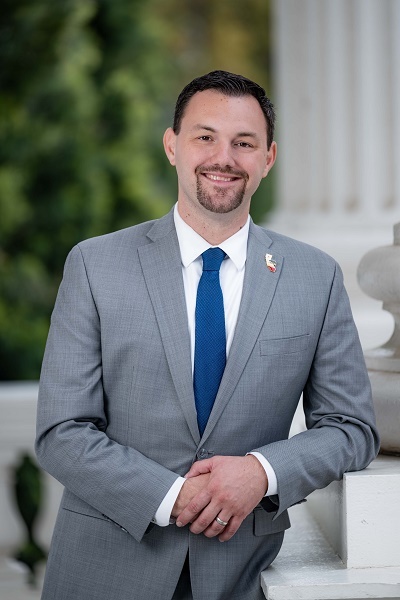
Asm. Nick Schultz
Sponsored bills
Existing law makes it a crime to knowingly and maliciously prevent or dissuade, or attempt to prevent or dissuade, a witness or victim from causing a complaint, indictment, information, or probation or parole violation to be sought and prosecuted, and assisting in the prosecution thereof. This bill would clarify that it is a violation of the offense described above to prevent or dissuade, or attempt to prevent or dissuade, a witness or victim from either causing a complaint, indictment, information, or probation or parole violation to be sought and prosecuted, or assisting in the prosecution thereof. By expanding the scope of a crime, this bill would impose a state-mandated local program. This bill would also make other technical, nonsubstantive changes. The California Constitution requires the state to reimburse local agencies and school districts for certain costs mandated by the state. Statutory provisions establish procedures for making that reimbursement. This bill would provide that no reimbursement is required by this act for a specified reason.
Existing law, the California Self-Service Storage Facility Act, establishes procedures governing the operation of self-service storage facilities, including specifying remedies for facility owners when occupants are delinquent in paying rent or other charges. This bill would, for rental agreements initially entered into on or after January 1, 2026, require a rental agreement to disclose, in a prescribed manner, certain items, including whether the rental fee is discounted or promotional, whether the rental fee is subject to change, and the maximum rental fee that the owner could charge during the first 12 months following the date of the rental agreement.
Existing law requires state agencies, boards, and commissions that collect demographic data as to the ancestry or ethnic origin of Californians to use separate collection categories and tabulations for each major Asian and Pacific Islander group and to include that data in every demographic report published on or after July 1, 2012, as specified. This bill would, commencing January 1, 2028, require state and local agencies, as defined, that collect demographic data as to the ancestry or ethnic origin of Californians to use separate collection categories and tabulations for major Middle Eastern or North African groups, as specified, and, with certain exceptions, to include that data in every demographic report published on or after January 1, 2029, and to make the aggregated data available to the public. Existing constitutional provisions require that a statute that limits the right of access to the meetings of public bodies or the writings of public officials and agencies be adopted with findings demonstrating the interest protected by the limitation and the need for protecting that interest. This bill would make legislative findings to that effect. The bill would include findings that changes proposed by this bill address a matter of statewide concern rather than a municipal affair and, therefore, apply to all cities, including charter cities. The California Constitution requires the state to reimburse local agencies and school districts for certain costs mandated by the state. Statutory provisions establish procedures for making that reimbursement. This bill would provide that, if the Commission on State Mandates determines that the bill contains costs mandated by the state, reimbursement for those costs shall be made pursuant to the statutory provisions noted above.
Existing law, the Political Reform Act of 1974, prohibits a public officer from expending, and a candidate from accepting, public moneys for the purpose of seeking elective office. This bill would remove prohibitions imposed on a public officer or candidate to expend or accept public funds, as defined, for the purpose of seeking elective office unless the funds are earmarked by a state or local entity for education, transportation, or public safety. The bill would require candidates to abide by specified expenditure limits and meet strict criteria, as defined, to qualify for public funds. The bill would prohibit public funds from being used to pay legal defense fees or fines or to repay personal loans to their campaign. The bill would permit a statute, ordinance, or charter to establish standards to increase the expenditure limits for each qualified, voluntarily participating candidate pursuant to a specified formula. The bill would provide that the Fair Political Practices Commission is not responsible for administering or enforcing a system of public funding of candidates established by a local governmental agency. Existing law prohibits a foreign government or foreign principal, as defined, from making a contribution, expenditure, or independent expenditure in connection with the qualification or support of, or opposition to, any state or local ballot measure or in connection with the election of a candidate to state or local office. Under existing law, a person who violates this prohibition is guilty of a misdemeanor and subject to a fine equal to the amount contributed or expended. This bill would instead require that a person guilty of that misdemeanor, in addition to other penalties, be fined an amount at least equal to the amount contributed or expended, but not exceeding a maximum amount of 3 times the amount contributed or expended. The Political Reform Act of 1974, an initiative measure, provides that the act may be amended by a statute that becomes effective upon approval of the voters. This bill would require the Secretary of State to submit the provisions of the bill, as specified, to the voters for approval at the November 3, 2026, statewide general election. This bill would incorporate additional changes to Section 85320 of the Government Code proposed by AB 953 to be operative pursuant to specified conditions.
Existing law authorizes airports to require rental companies to collect a customer facility charge or an alternative customer facility charge for purposes that include financing, designing, and constructing airport vehicle rental facilities and common-use transportation systems. Existing law requires the aggregate amount of charges collected to not exceed, among other things, the reasonable costs to finance, design, and construct those facilities. Existing law authorizes a rental company to collect a customer facility charge under specified circumstances, including that revenues collected from the fee do not exceed the reasonable costs of financing, designing, and constructing the facility. Existing law authorizes an airport to require rental companies to collect an alternative customer facility charge under specified conditions, including that the airport finds that the reasonable cost of the project requires the additional amount of revenue that would be generated by the proposed daily rate, and prohibits the daily rate of the alternative customer facility charge from exceeding $9 per day. Existing law limits use of proceeds of any bonds backed by alternative customer facility charges to construction and design of the consolidated rental vehicle facility, terminal modifications, and operating costs of the common-use transportation system. This bill would require that the aggregate amount of charges collected also not exceed the reasonable costs of performance of major maintenance on airport vehicle rental facilities, as provided. The bill would increase the daily maximum alternative customer facility charge an airport is authorized to require rental companies to collect to $12 per day. The bill would also authorize proceeds of any bonds backed by, or revenues from, alternative customer facility charges to be used for major maintenance of a consolidated rental vehicle facility and would remove the authorization for the proceeds of those bonds to be used for terminal modifications.
Existing law establishes a pilot program authorizing the Los Angeles Unified School District to use, before December 31, 2025, a best value procurement method for bid evaluation and selection for public projects that exceed $1,000,000. The pilot program establishes various requirements applicable to the use of the best value procurement method under the authorization. Existing law requires the school district to submit a report to the appropriate policy and fiscal committees of the Legislature on the use of the best value procurement method as provided and in accordance with a specified schedule. These provisions are repealed on January 1, 2026. This bill would delete the reporting requirement and repeal date, thereby extending these provisions concerning the Los Angeles Unified School District indefinitely, and make related conforming changes. This bill would additionally authorize the governing board of any school district, except for the Los Angeles Unified School District, to use, before December 31, 2030, a best value procurement method for bid evaluation and selection for public projects that exceed $1,000,000. The bill would establish various requirements applicable to the use of the best value procurement method under this authorization. The bill would require a school district to submit a report on the use of the best value procurement method, as specified, to the appropriate policy and fiscal committees of the Legislature, on or before January 1, 2030. The bill would repeal these provisions on January 1, 2031.
Under existing law, the Legislature finds and declares that the purpose of sentencing is public safety achieved through punishment, rehabilitation, and restorative justice, and that programs should be available for incarcerated persons, including educational, rehabilitative, and restorative justice programs that are designed to promote behavioral change and to prepare all incarcerated persons for successful reentry into the community. Existing law directs the Department of Corrections and Rehabilitation to maintain a mission statement consistent with these principles. This bill would make legislative findings and declarations relating to corrections and rehabilitation, including, among others, that the Legislature recognizes that life in prison can never be the same as life in a free society, and that active steps should be taken to make conditions in prison as close to normal life as possible, aside from loss of liberty, to ensure that this normalization does not lead to inhumane prison conditions. The bill would direct the department to maintain a mission statement consistent with the principles of normalization and dynamic security, and would require the department to facilitate access for community-based programs. Existing law provides that the primary objective of adult incarceration is to facilitate the successful reintegration of the individuals in the department's care back to their communities equipped with the tools to be drug-free, healthy, and employable members of society by providing education, treatment, and rehabilitative and restorative justice programs in a safe and humane environment. This bill would include that the primary objective of adult incarceration is to promote personal growth for all residents in the department's care. The bill would also provide that the department should develop training for all correctional staff on the principles of normalization and dynamic security in order to meaningfully effectuate these principles.
Existing law requires the State Energy Resources Conservation and Development Commission to prescribe, by regulation, lighting, insulation, climate control system, and other building design and construction standards, and energy and water conservation design standards, for new residential and new nonresidential buildings to reduce the wasteful, uneconomic, inefficient, or unnecessary consumption of energy, as specified. This bill would require the commission to evaluate the cost-effectiveness of passive house energy efficiency standards by California climate zone, using commission-adopted metrics such as long-term system cost. The bill would require the commission to evaluate the use of the 2 passive house energy models currently required for passive house certification in its analysis and the cost-effectiveness of passive house construction compared to existing construction, as specified. The bill would require the commission, on or before July 1, 2028, to submit a report to the Legislature documenting its findings and recommendations.
This measure would designate November 1, 2025, as Fernando Valenzuela Day, to highlight the positive impact his legacy created in the Latino and Hispanic community.