

Under existing law, an individual who solicits, or who agrees to engage in, or who engages in, any act of prostitution is guilty of disorderly conduct, a misdemeanor. This bill would require a person who commits prostitution with intent to receive compensation, money, or anything of value from another person to, for a first or 2nd violation of those provisions, be offered a diversion program pursuant to specified provisions. By imposing new duties on local officials, the bill would create a state-mandated local program. The California Constitution requires the state to reimburse local agencies and school districts for certain costs mandated by the state. Statutory provisions establish procedures for making that reimbursement. This bill would provide that, if the Commission on State Mandates determines that the bill contains costs mandated by the state, reimbursement for those costs shall be made pursuant to the statutory provisions noted above.
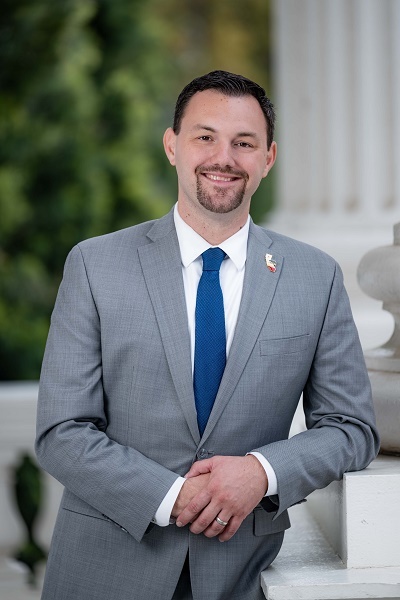
Asm. Nick Schultz
Sponsored bills
Existing law requires the Department of Forestry and Fire Protection to establish a local assistance grant program for fire prevention and home hardening education activities in California and extends eligibility for grants to specified entities, including local agencies. Existing law provides that eligible activities under the local assistance grant program include, among other things, technical assistance to local agencies to improve fire prevention and reduce fire hazards and projects to improve public safety, including, but not limited to, access to emergency equipment and improvements to public evacuation routes. Existing law makes funding for this program subject to an appropriation by the Legislature. This bill would expand eligible activities under the local assistance grant program to include projects undertaken by a local governmental entity involving the acquisition or installation of mobile rigid dip tanks or similar mobile and permanent infrastructure that is capable of providing helicopter-accessible water supplies for firefighting response or suppression purposes in very high fire and high fire hazard severity zones, as provided.
The Corporation Tax Law imposes on every corporation doing business in the state, as defined, a tax according to or measured by net income and, in the case of a corporation with income derived from or attributable to sources both within and without this state, apportions the income between this state and other states and foreign countries in accordance with a single sales formula based on the sales within and without this state, except that in the case of an apportioning trade or business that derives more than 50% of its gross business receipts from conducting one or more qualified business activities, as defined, business income is apportioned in accordance with a specified 3-factor formula. Existing federal law, for purposes of determining a taxpayer's gross income for federal income tax purposes, requires that a person who is a United States shareholder of any controlled foreign corporation, as defined, to include in their gross income the net CFC tested income, as provided. The Corporation Tax Law, for taxable years beginning on or after January 1, 2003, for purposes of determining income derived from or attributable to sources within this state, allows corporations to make a statutory election as to whether their income is determined on a "water's-edge" basis or on a worldwide unitary basis. Under existing law, the election to report income on a water's-edge basis remains in effect until terminated, and provides conditions for the termination of the election. This bill, for taxable years beginning on or after January 1, 2026, would require a taxpayer that files on a water's-edge basis to account for net CFC tested income within the water's-edge group, as provided. The bill would require a taxpayer that files on a water's-edge basis to include all income and apportionment factors of any corporation, other than a bank, whose sales factor, instead of the average of 3 factors, in the United States is at least 20%. The bill would also terminate all water's-edge elections for the first taxable year beginning on or after January 1, 2028, and would not allow a taxpayer to make a water's-edge election, or file on a water's-edge basis, for taxable years beginning on or after January 1, 2028. The bill would authorize any taxpayer that has made a water's-edge election to terminate that election without the consent of the Franchise Tax Board for taxable years beginning on or after January 1, 2026, and before January 1, 2028. This bill would include a change in state statute that would result in a taxpayer paying a higher tax within the meaning of Section 3 of Article XIIIA of the California Constitution, and thus would require for passage the approval of 23 of the membership of each house of the Legislature. This bill would take effect immediately as a tax levy.
Existing law establishes the Division of Labor Standards Enforcement within the Department of Industrial Relations to administer and enforce various laws relating to employment and working conditions. This bill would require an employer to provide a written notice to a worker that a workplace AI tool, as defined, was used to assist the employer in making employment-related decisions or to surveil workers in the workplace. The bill would require the notice to be given to a worker within a specified time and would require the notice to contain specified information, including the specific employment-related decisions likely to be affected by the use of the workplace AI tool. The bill would require an employer to maintain an updated list of all workplace AI tools currently in use and their impact on jobs, as specified, and to provide the list to workers annually. The bill would provide for enforcement by the Labor Commissioner or a public prosecutor, and alternatively would authorize any worker who has suffered damages, or their exclusive representative, to file a civil action for damages caused by the adverse action. The bill would establish remedies and penalties for violations, including a penalty of up to $500 for each violation. The bill would include findings that changes proposed by this bill address a matter of statewide concern rather than a municipal affair and, therefore, apply to all cities, including charter cities.
Existing law vests the Public Utilities Commission with regulatory authority over public utilities, including electrical corporations. Existing law authorizes the commission to fix the rates and charges for every public utility and requires that those rates and charges be just and reasonable. This bill would require the commission, on or before December 31, 2027, to develop a methodology for calculating a distribution grid utilization metric, as specified. The bill would require each large electrical corporation, in a manner, frequency, and geographic scope determined by the commission, to submit a publicly available report to the commission with the results of the large electrical corporation's distribution grid utilization metric calculations, as specified. The bill would require the commission to establish and periodically update, as appropriate, a distribution grid utilization standard for each large electrical corporation and to ensure the distribution grid utilization standard encourages, and does not inhibit, electrification. The bill would authorize the commission to direct each large electrical corporation to implement programs, rate designs, or other incentives, or to establish financial performance-based incentives or disincentives correlated with achieving the distribution grid utilization standard, as specified. Under existing law, a violation of the Public Utilities Act or any order, decision, rule, direction, demand, or requirement of the commission is a crime. Because the above-described provisions would be part of the act and a violation of a commission action implementing the bill's requirements would be a crime, this bill would impose a state-mandated local program. The California Constitution requires the state to reimburse local agencies and school districts for certain costs mandated by the state. Statutory provisions establish procedures for making that reimbursement. This bill would provide that no reimbursement is required by this act for a specified reason.
Maddy summaryThis bill designates the week of May 17 to May 24, 2026, as National Public Works Week throughout California to honor the contributions of public works professionals. It directly affects engineers, managers, and employees in government and the private sector who maintain essential infrastructure like transportation systems, water supplies, and public buildings. The resolution requests that the Governor issue a proclamation encouraging the public to observe the week with educational programs and activities that highlight the importance of these workers.
Existing law establishes a public school financing system that requires state funding for county superintendents of schools, school districts, and charter schools to be calculated pursuant to a local control funding formula, as specified. Existing law requires the local control funding formula, in part, to be based on average daily attendance, as defined. For purposes of the local control funding formula, existing law requires a school district's fiscal year average daily attendance to be computed using the 2nd principal apportionment regular average daily attendance for the greater of the current fiscal year, the prior fiscal year, or the average of the 3 most recent prior fiscal years, as specified. This bill, for purposes of the local control funding formula, would require a school district's fiscal year average daily attendance to be computed using the average of the 5 most recent prior fiscal years, if that average is greater than the 3 averages described above.
Existing law establishes the Division of Labor Standards Enforcement within the Department of Industrial Relations. Existing law authorizes the division, which is headed by the Labor Commissioner, to enforce the Labor Code and all labor laws of the state, the enforcement of which is not specifically vested in any other officer, board, or commission. This bill would prohibit an employer from using a worker's personal information, as defined, to train an artificial intelligence system to replicate, automate, or replace a worker's job, and would prohibit an employer from selling, disclosing, or otherwise providing access to a worker's personal information to a third party for the purpose of training an artificial intelligence system to replicate, automate, or replace a worker's job. The bill would prohibit a vendor providing services to an employer under a contract from providing access to the personal information of an employer's worker to a third party or using the personal information of an employer's worker to train artificial intelligence, as specified. The bill would require a contract between an employer and vendor to include a requirement that the vendor implement and maintain reasonable security procedures to protect the worker's personal information from, among other things, unauthorized or illegal access. The bill would define terms for these provisions, including "employer" and "personal information." The bill would require the Labor Commissioner and authorize a public prosecutor to enforce these provisions. The bill would authorize a worker, or their exclusive representative, who suffered a violation of these provisions to bring a civil action for damages, injunctive relief, punitive damages, and attorney's fees and costs. The bill would establish a statutory penalty for a violation of these provisions of up to $500 for each violation. The bill would include findings that changes proposed by this bill address a matter of statewide concern rather than a municipal affair and, therefore, apply to all cities, including charter cities.
Existing law designates all parks, public campgrounds, monument sites, landmark sites, and sites of historical interest established or acquired by the state, or that are under its control, as the state park system, except as specified. Under existing law, the Department of Parks and Recreation controls the state park system, which is made up of units. This bill would establish the California State Park Stewardship Act of 2026. The bill would require the department to conduct projects and programs addressing and mitigating climate change impacts in the state park system through stewardship, as provided. The bill would establish the Wildfire Safety and Climate Stewardship Fund, to be administered by the department, to support climate stewardship activities in the state park system, and would authorize the department to enter into an agreement with specified entities to accept funding for these purposes, as provided.
This measure would proclaim the week of April 20, 2026, to April 24, 2026, inclusive, as California Home Visiting Week, and would encourage all Californians to recognize and celebrate the contributions of home visiting programs and professionals and the families they serve.