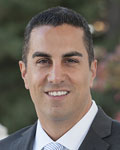
Photo of Mike Gatto
D California Assembly · District 43

Asm. Mike Gatto

Compare
Total votes
17,299
all sessions
Attendance
100%
10 missed
Near the chamber average
With party
96%
of cast votes
Lower than 99% of chamber peers
Bipartisan score
2%
crosses aisle rarely
Higher than 95% of chamber peers
Sponsored
852
bills & resolutions
Near the chamber average
Committees
0
assignments
852 bills and resolutions

Sponsored bills

Total
852
Primary
127
Co-sponsor
725
This page
852
matching current filters
Co-sponsor ACR 9
Signed into law · California Assembly · Co-sponsor
Relative to Pet Care Education Month.

This measure would declare the month of January 2016 as Pet Care Education Month and would request Californians to observe the month by ensuring that their companion animals receive the proper preventative care by establishing a financial plan for pet health emergencies and by contributing to charitable organizations that provide low-cost spay and neuter services and vaccinations or funds to help low-income individuals pay for veterinary care.

Signed into law Feb 10, 2016 1 co-sponsor
Co-sponsor SB 243
In committee · California Senate · Co-sponsor
Medi-Cal: reimbursement: provider rates.

(1) Existing law establishes the Medi-Cal program, administered by the State Department of Health Care Services, under which health care services are provided to qualified, low-income persons. The Medi-Cal program is, in part, governed and funded by federal Medicaid provisions. Existing law requires the department to develop and implement a Medi-Cal inpatient hospital reimbursement payment methodology based on diagnosis-related groups, subject to federal approval, that reflects the costs and staffing levels associated with quality of care for patients in all general acute care hospitals, as specified. Existing law generally requires the diagnosis-related group-based payments to apply to all claims. This bill would require claims for payments pursuant to the inpatient hospital reimbursement methodology described above to be increased by 16% for the 2015–16 fiscal year, and would require, commencing July 1, 2016, and annually thereafter, the department to increase each diagnosis-related group payment claim amount based, at a minimum, on increases in the medical component of the California Consumer Price Index. Commencing with the 2015–16 fiscal year, and annually thereafter, the bill would require managed care rates for Medi-Cal managed care health plans to be increased by a proportionately equal amount for increased payments for hospital services. (2) Existing law requires, except as otherwise provided, Medi-Cal provider payments to be reduced by 1% or 5%, and provider payments for specified non-Medi-Cal programs to be reduced by 1%, for dates of service on and after March 1, 2009, and until June 1, 2011. Existing law requires, except as otherwise provided, Medi-Cal provider payments and payments for specified non-Medi-Cal programs to be reduced by 10% for dates of service on and after June 1, 2011. This bill would, instead, prohibit the application of those reductions for payments to providers for dates of service on or after June 1, 2011. The bill would also require payments for managed care health plans for dates of service following the effective date of the bill to be determined without application of some of those reductions. The bill would require the Director of Health Care Services to implement this provision to the maximum extent permitted by federal law and for the maximum time period for which the director obtains federal approval for federal financial participation for those payments. (3) Prior law required, beginning January 1, 2013, through and including December 31, 2014, that payments for primary care services provided by specified physicians be no less than 100% of the payment rate that applies to those services and physicians as established by the Medicare program, for both fee-for-service and managed care plans. This bill, commencing January 1, 2016, would require payments for specified medical care services to not be less than 100% of the payment rate that applies to those services as established by the Medicare program for services rendered by fee-for-service providers, and would require rates paid to Medi-Cal managed care plans to be actuarially equivalent to payment rates established by the Medicare program. The bill, commencing January 1, 2016, would require rates paid to Denti-Cal providers for dental services provided to adults and children to be increased by the equivalent percentage as the percentage increase required for other fee-for-service Medi-Cal providers. The bill would require those provisions to be implemented only to the extent permitted by federal law and that federal financial participation is available. The bill would authorize the department to implement those provisions through provider bulletins without taking regulatory action until regulations are adopted, and would require the department to adopt those regulations by July 1, 2018. The bill would require, commencing July 1, 2016, the department to provide a status report to the Legislature on a semiannual basis until regulations have been adopted. (4) This bill would declare that it is to take effect immediately as an urgency statute.

In committee Feb 1, 2016 1 co-sponsor
Co-sponsor AB 1356
Failed · California Assembly · Co-sponsor
Vehicles: driving under the influence: drug testing.

Existing law provides that a person who drives a motor vehicle is deemed to have given his or her consent to chemical testing of his or her blood for the purpose of determining the drug content of his or her blood, if lawfully arrested for driving under the influence of alcohol or drugs. Existing law provides that if a blood test is unavailable, the person shall be deemed to have given his or her consent to chemical testing of his or her urine and shall submit to a urine test. Existing law authorizes an officer to use a preliminary alcohol screening test that indicates the presence or concentration of alcohol based on a breath sample as a further investigatory tool in order to establish reasonable cause to believe the person was driving a vehicle in violation of certain prohibitions against driving under the influence of alcohol or drugs. This bill would authorize an officer to use a preliminary oral fluid screening test that indicates the presence or concentration of a drug or controlled substance based on a sample as a further investigatory tool in order to establish reasonable cause to believe the person was driving a vehicle in violation of certain prohibitions against driving under the influence of drugs. The bill would authorize a local law enforcement agency to provide oral fluids testing for these purposes, and would specify that this provision does not require a local law enforcement agency to provide or make an oral fluids test available for these purposes or for purposes of any other law. The bill would prohibit a state law enforcement agency from providing or making an oral fluids test available for these purposes or for purposes of any other law.

Failed Feb 1, 2016 1 co-sponsor
Primary AB 1483
Failed · California Assembly · Lead sponsor
University of California: Science, Technology, Engineering, Arts, and Mathematics Campus.

Existing law establishes the University of California, under the administration of the Regents of the University of California, as one of the segments of public postsecondary education in this state. The University of California operates 10 campuses located in Berkeley, Davis, Irvine, Los Angeles, Merced, Riverside, San Diego, San Francisco, Santa Barbara, and Santa Cruz. This bill would require the Legislative Analyst's Office to conduct a study of, and report to the Legislature on, the feasibility of establishing a campus of the University of California devoted to science, technology, engineering, arts, and mathematics. The bill would require the report to be submitted on or before January 1, 2017. The bill would appropriate $50,000,000 from the General Fund to the Controller for allocation, as specified, to the regents for establishment of the campus.

Failed Feb 1, 2016 0 co-sponsors
Co-sponsor AB 1160
Failed · California Assembly · Co-sponsor
Vehicles: automated traffic enforcement systems.

Existing law authorizes the limit line, intersection, or other places where a driver is required to stop to be equipped with an automated traffic enforcement system, as defined, if the system meets certain requirements. Existing law authorizes a governmental agency to contract out the operation of the system under certain circumstances, except for specified activities, that include, among other things, establishing guidelines for selection of the location of the system. This bill would, beginning January 1, 2016, prohibit a governmental agency from installing an automated traffic enforcement system. The bill would authorize a governmental agency that is operating an automatic traffic enforcement system on that date to continue to do so after that date only if the agency begins conducting a traffic safety study on or before February 28, 2016, at each intersection where a system is in use to determine whether the use of the system resulted in a reduction in the number of traffic accidents involving failing to stop at a red light or failing to stop at a red light when making a right turn at that intersection. The bill would require the traffic safety study to be completed on or before January 1, 2017. The bill would require the governmental agency to terminate the use of an automated traffic enforcement system at an intersection no later than January 1, 2018, if the traffic safety study shows that the use of the system did not reduce the number of traffic accidents that occurred at that intersection by a statistically significant number.

Failed Feb 1, 2016 1 co-sponsor
Co-sponsor SB 41
died · California Senate · Co-sponsor
Public contracts: 2024 Olympic Games and Paralympic Games.

Existing law provides specified requirements in awarding certain public contracts. This bill would authorize the Governor to sign agreements required by the United States Olympic Committee as part of the bid process for the City of Los Angeles or the City and County of San Francisco to become the United States applicant city and candidate city for the 2024 Olympic Games and Paralympic Games. This bill would make legislative findings and declarations that, among other things, the endorsing municipality, as defined, has developed a self-sufficient bid for financing the games. This bill would authorize the Governor to enter into an agreement for the state to be jointly liable, not to exceed a specified amount, with the Organizing Committee for the Olympic Games (OCOG) , as specified, for obligations of the OCOG, and for any financial deficit relating to the games, as provided. This bill would declare that it is to take effect immediately as an urgency statute.

died Feb 1, 2016 1 co-sponsor
Co-sponsor AB 237
Failed · California Assembly · Co-sponsor
Local governments: parcel taxes: notice.

Existing law authorizes cities, counties, and special districts to impose a parcel tax or property-related fee for specified purposes. This bill would require, before the adoption of any new parcel tax, the legislative body of a local agency, as defined, to provide notice of the vote to enact the proposed parcel tax to the owner of each parcel affected by the tax within one week of the local agency voting to place the proposed parcel tax on the ballot. This bill would require the notice to include specified information and to be provided to the property owner in a specified manner. This bill would provide that the local agency may recover the reasonable costs of the notice from the proceeds of the parcel tax. By imposing new duties upon local county officials, this bill would impose a state-mandated local program. The California Constitution requires the state to reimburse local agencies and school districts for certain costs mandated by the state. Statutory provisions establish procedures for making that reimbursement. This bill would provide that with regard to certain mandates no reimbursement is required by this act for a specified reason. With regard to any other mandates, this bill would provide that, if the Commission on State Mandates determines that the bill contains costs so mandated by the state, reimbursement for those costs shall be made pursuant to the statutory provisions noted above.

Failed Feb 1, 2016 1 co-sponsor
Co-sponsor SCR 91
Signed into law · California Senate · Co-sponsor
Relative to India Republic Day.

This measure would proclaim January 26, 2016, as India Republic Day, and would urge all Californians to join in celebrating India Republic Day.

Signed into law Feb 1, 2016 1 co-sponsor
Primary AB 84
Failed · California Assembly · Lead sponsor
Forensic testing: DNA samples.

(1) Existing law, as amended by the DNA Fingerprint, Unsolved Crime and Innocence Protection Act, Proposition 69, approved by the voters at the November 2, 2004, general election (the DNA Act) requires that any adult person who is arrested or charged with any felony offense to provide buccal swab samples, right thumbprints, and a full palm print impression of each hand, and any blood specimens or other biological samples required for law enforcement identification analysis. Existing law requires that blood specimens and buccal swab samples be forwarded promptly to the Department of Justice for analysis. Existing case law, People v. Buza (2014) 231 Cal.App.4th 1446, review granted February 18, 2015, S223698, holds that the DNA Act, to the extent it requires felony arrestees to submit to a DNA sample for law enforcement analysis and inclusion in the state and federal DNA databases, without independent suspicion, a warrant, or a judicial or grand jury determination of probable cause, unreasonably intrudes on the arrestee's expectation of privacy and is invalid under the California Constitution. The DNA Act provides that it may be amended by a statute passed by each house of the Legislature that furthers the purpose of the measure. This bill would state that it is the intention of the Legislature to further the purposes of the DNA Act in light of the above-specified case law. The bill would, if the California Supreme Court rules to uphold People v. Buza, require that a blood specimen or buccal swab sample taken from a person arrested for the commission of a felony be forwarded to the department after a judicial determination of probable cause to believe the person has committed the offense for which he or she was arrested has been made. (2) Existing law, as amended by the DNA Act, requires a person who has been convicted of a felony offense to provide buccal swab samples, right thumbprints, and a full palm print impression of each hand, and any blood specimens or other biological samples required for law enforcement identification analysis. Existing law makes these provisions retroactive, regardless of when the crime charged or committed became a qualifying offense. This bill would require a person who has been convicted of specified misdemeanors to provide buccal swab samples, right thumbprints, and a full palm print impression of each hand, and any blood specimens or other biological samples required for law enforcement identification analysis. By imposing additional duties on local law enforcement agencies to collect and forward these samples, this bill would impose a state-mandated local program. (3) Existing law, as amended by the DNA Act, requires that a DNA specimen and sample be destroyed and that a searchable database profile be expunged from the databank program if the person from whom the specimen or sample was collected has no past or present offense or pending charge which qualifies that person for inclusion in the database and if that person submits an application, as specified. Existing law gives the court discretion to grant or deny the application. This bill would, if the California Supreme Court rules to uphold People v. Buza, require the DNA specimen and sample to be destroyed and the searchable database profile expunged from the database without the requirement of an application. (4) Existing law, as amended by the DNA Act, states that nothing in the act shall be construed to restrict the authority of local law enforcement to maintain their own DNA-related databases or databank. This bill would allow a law enforcement agency to use a publicly available database, excluding a law enforcement database that is not linked to the Combined DNA Index System (CODIS) , if the case being investigated involves a homicide or sexual assault involving force and the case is unsolved and all investigative leads have been exhausted, in which case the bill would require the law enforcement agency to review nonforensic information in order to identify additional evidence bearing on relatedness. (5) Existing law, as amended by the DNA Act, states that its provisions do not prohibit collection and analysis of specimens, samples, or print impressions as a condition of a plea for an offense that does not require the taking of samples and specimens. The bill would state that it is the intent of the Legislature to allow buccal swab samples to be taken for DNA analysis as a condition of a plea or reduction or dismissal of charges. The bill would permit a law enforcement agency to use any publicly available database to aid in the investigation of a crime. (6) The California Constitution requires the state to reimburse local agencies and school districts for certain costs mandated by the state. Statutory provisions establish procedures for making that reimbursement. This bill would provide that, if the Commission on State Mandates determines that the bill contains costs mandated by the state, reimbursement for those costs shall be made pursuant to these statutory provisions.

Failed Feb 1, 2016 0 co-sponsors
Primary AB 9
Failed · California Assembly · Lead sponsor
Gambling: Internet poker: unlawful gambling activity.

(1) Existing law, the Gambling Control Act, provides for the licensure of certain individuals and establishments that conduct controlled games, as defined, and for the regulation of these gambling activities by the California Gambling Control Commission. The Department of Justice has related investigatory and enforcement duties under the act. Any violation of these provisions is punishable as a misdemeanor, as specified. This bill, which would be known as the Internet Poker Consumer Protection Act of 2015, would establish a framework to authorize intrastate Internet poker, as specified. The bill would authorize eligible entities to apply to the commission for a 10-year nontransferable license to operate an intrastate Internet poker Web site offering the play of authorized Internet poker games to registered players within California, as specified. The bill would require that the license be automatically renewed every 10 years upon application, as specified. The bill would prohibit the offer or play of any gambling game provided over the Internet that is not an authorized Internet poker game permitted by the state pursuant to this bill. The bill would provide that it is unlawful for a person to aggregate computers or any other device with Internet access capabilities in a place of public accommodation within the state, including a public or private club or other association, in a public or private setting, that can accommodate multiple players to simultaneously play authorized games on the Internet, or to promote, facilitate, or market that activity. The bill would provide that any violation of the Internet Poker Consumer Protection Act of 2015 is punishable as a misdemeanor. By creating new crimes, the bill would impose a state-mandated local program. This bill would require the commission, and any other state agency with a duty pursuant to these provisions, to adopt regulations within 180 days after the operative date of this bill, in consultation with the department and federally recognized California Indian tribes, to implement these provisions, and to facilitate the operation of authorized poker Web sites and expedite the state's receipt of revenues. The bill would require an eligible entity, as defined, to pay an application processing fee sufficient to cover all reasonable costs associated with the issuance of the license, for deposit into the Internet Poker Fund, as created by the bill, to be continuously appropriated to the department and the commission in the amounts necessary to perform their duties pursuant to this bill. An operator license applicant that is a federally recognized Indian tribe also would be required to submit a limited waiver of its sovereign immunity. The bill would require a service provider to apply to the commission for a service provider license before providing goods or services to a licensed operator in connection with the operation of an authorized poker Web site and pay an application processing fee sufficient to cover the reasonable costs associated with the issuance of the license. The bill would require the department to review the suitability of a service provider applicant and would require the department, prior to issuing a service provider license, to issue a finding of suitability and conduct a full investigation of the service provider license applicant. The bill would require a marketing affiliate to apply to the commission for a marketing affiliate license or registration before providing marketing services to a licensed operator in connection with the operation of an authorized poker Web site and pay an application processing fee sufficient to cover the reasonable costs associated with the issuance of the license. Except as provided, the bill would require the department to review the suitability of a marketing affiliate license or registration applicant and would require the department, prior to issuing a license or registration, to issue a finding of suitability and conduct a full investigation of the marketing affiliate license or registration applicant. The bill would require employees of a licensed operator, a licensed service provider, or a licensed or registered marketing affiliate to obtain employee work permits, and owners, officers, and directors of a licensed operator to be subject to a suitability review and obtain employee work permits, and would authorize the commission to refuse to issue a license to, or suspend or revoke a license of, a licensed operator that fails to comply with these requirements. The bill would establish a tribal gaming regulatory authority process for the purpose of processing employee work permits, and authorize a tribe that is a licensed operator to elect to participate in the tribal gaming regulatory authority process. This bill would authorize the commission to revoke or suspend any license or work permit upon reaching a finding that the licensee or employee is in violation of the provisions described above, or any regulation adopted pursuant to these provisions. However, the bill would prohibit a tribal licensee from having its license suspended or revoked, or being fined or otherwise penalized for complying with any applicable federal law or regulation when operating an authorized poker Web site on Indian lands. The bill would specify that to the extent that any state requirement is more strict than any applicable federal law requirement, the tribal licensee is required to comply with the state requirement. This bill would require a registered player account to be established in person, and would also require that specified deposits into and withdrawals out of those accounts be made in person. In order to satisfy those in-person requirements, the bill would authorize a licensed operator to enter into an agreement for the operation of one or more satellite service centers, which would be authorized to act on behalf of, or in coordination with, the licensed operator in carrying out those in-person requirements. The bill would require a licensed operator to ensure, among other things, that the satellite service center is financially, logistically, and technologically capable of performing specified duties in accordance with the bill's provisions. The bill would provide that both the satellite service center and the licensed operator may be held liable for any violation of the bill's provisions arising out of an agreement between the satellite service center and the licensed operator to provide specified in-person services. The bill would also authorize the commission to promulgate regulations regarding satellite service centers for the protection of licensed operators, registered players, and intrastate Internet poker, or that otherwise serve the purposes of the bill. This bill would require the payment of an annual regulatory fee, for deposit into the Internet Poker Fund, to be continuously appropriated for the actual costs of license oversight, consumer protection, state regulation, and other purposes related to this bill. The bill would require each licensee to pay a one-time license deposit into the General Fund in the amount of $5,000,000. The license deposit would be credited against quarterly fees equivalent to 5% of the licensee's gross gaming revenue proceeds, as specified. The bill would require an applicant for an operator license to provide documentation establishing that the applicant is qualified to pay the one-time license deposit through its own net position or through credit directly to the applicant, as specified. This bill would establish the Unlawful Gambling Enforcement Fund within the General Fund for purposes of ensuring adequate resources for law enforcement charged with enforcing the prohibitions and protections of the provisions described above. The bill would authorize the Attorney General, and other public prosecutors, as specified, to bring a civil action to recover a civil penalty in an unspecified amount against a person who engages in those prohibited activities described above, or other specified unlawful gambling activities. The bill would provide for an unspecified percentage of revenues from civil penalties collected to be deposited into the fund and used for law enforcement activities pursuant to these provisions, upon appropriation by the Legislature. This bill would require the commission, in consultation with the department, the Treasurer, and the Franchise Tax Board, to issue a report to the Legislature describing the state's efforts to meet the policy goals articulated in this bill within one year of the operative date of this bill and, annually, thereafter. The bill would also require the Bureau of State Audits, at least 4 years after the issue date of any license by the state, but no later than 5 years after that date, to issue a report to the Legislature detailing the implementation of this bill, as specified. This bill would require the state to affirmatively elect to be subject to a federal Internet gambling law, and would prohibit the state from participating in any Internet gambling agreement between states or foreign jurisdictions without an affirmative legislative act. The bill would provide that if the state elects to be subject to a federal Internet gambling law or to participate in an Internet gambling agreement between states or foreign jurisdictions, an operator licensee shall not be required to pay the one-time license fee or the quarterly fees described above and would require the state to refund within 30 days all unused license fees paid to the state, as specified. The bill would authorize a licensee to enforce this provision in the superior court. The bill would provide that specified provisions are not severable. (2) Existing constitutional provisions require that a statute that limits the right of access to the meetings of public bodies or the writings of public officials and agencies be adopted with findings demonstrating the interest protected by the limitation and the need for protecting that interest. This bill would make legislative findings to that effect. (3) The California Constitution requires the state to reimburse local agencies and school districts for certain costs mandated by the state. Statutory provisions establish procedures for making that reimbursement. This bill would provide that no reimbursement is required by this act for a specified reason. (4) This bill would declare that it is to take effect immediately as an urgency statute.


Failed Feb 1, 2016 0 co-sponsors
Showing 181 to 190 of 852 bills
Previous 1 … 18 19 20 … 86 Next