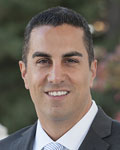
Photo of Mike Gatto
D California House · District 43

Rep. Mike Gatto

Compare
Total votes
17,299
all sessions
Attendance
82%
2,731 missed
Near the chamber average
With party
96%
of cast votes
Lower than 99% of chamber peers
Bipartisan score
2%
crosses aisle rarely
Higher than 95% of chamber peers
Sponsored
852
bills & resolutions
Near the chamber average
Committees
0
assignments
852 bills and resolutions

Sponsored bills

Total
852
Primary
127
Co-sponsor
725
This page
852
matching current filters
Co-sponsor AB 701
Signed into law · California House · Co-sponsor
Sex crimes: rape.

Existing law defines rape and spousal rape as an act of sexual intercourse accomplished under specified circumstances indicating a lack of consent, force, or duress, as specified. Existing law additionally makes various acts, including sodomy and oral copulation without consent or sexual intercourse with a minor, unlawful as sexual assault. This bill would state the findings of the Legislature that all forms of nonconsensual sexual assault may be considered rape for purposes of the gravity of the offense and the support of survivors and would state that this is declarative of existing law.

Signed into law Sep 30, 2016 1 co-sponsor
Primary AB 2724
Vetoed · California House · Lead sponsor
Unmanned aircraft.

Existing federal law, the FAA Modernization and Reform Act of 2012 (FMRA 2012) , provides for the integration of civil and public unmanned aircraft systems, commonly known as drones, into the national airspace system. Existing federal law imposes various operational safety requirements and aircraft certification requirements on aircraft, including unmanned aircraft. Existing federal law also generally requires an aircraft to be registered with the Federal Aviation Administration (FAA) , and except as provided, prohibits a person from operating a United States registered aircraft unless that aircraft displays specified nationality and registration marks or from placing on any aircraft a design, mark, or symbol that modifies or confuses those nationality and registration marks. Existing federal law establishes an online and paper-based registration process for specified types of unmanned aircraft systems. This bill would require a person who manufactures an unmanned aircraft for sale in this state to include with the unmanned aircraft a link to the FAA Internet Web site containing safety regulations or best practices applicable to unmanned aircraft and, if the unmanned aircraft is required to be registered with the FAA, a notification of that requirement and a link to the FAA registration Internet Web site. The bill would require an unmanned aircraft equipped with global positioning satellite mapping capabilities to also be equipped with geofencing technological capabilities that prohibit the unmanned aircraft from flying within any area prohibited by local, state, or federal law, as specified. The bill would require the owner of an unmanned aircraft to procure adequate protection against liability imposed by law on owners of unmanned aircraft, including the payment of damages for personal bodily injuries and death, and for property damage, resulting from the operation of the unmanned aircraft. The bill would require the Department of Insurance, in consultation with the Department of Transportation, to set the amount of liability protection that is adequate. The bill would make the provision requiring adequate protection against liability operative on January 1, 2020. The bill would exempt from its provisions an unmanned aircraft operated pursuant to a current exemption, or Certificates of Waiver or Authorization issued pursuant to FMRA 2012 or other commercial operator authorization granted by the FAA. The bill would provide that if any provision or its application is held invalid, that invalidity shall not affect other provisions or applications that can be given effect without the invalid provision or application.

Vetoed Sep 29, 2016 0 co-sponsors
Co-sponsor SB 438
Signed into law · California Senate · Co-sponsor
Earthquake safety: statewide earthquake early warning program and system.

(1) The California Emergency Services Act requires the Office of Emergency Services, among other things, to develop in collaboration with specified entities a comprehensive statewide earthquake early warning system in California through a public-private partnership, as specified. The act requires the office to identify funding for the system through single or multiple sources of revenue, and requires those sources to exclude the General Fund and to be limited to federal funds, funds from revenue bonds, local funds, and funds from private sources. Under the act, the requirement that the office develop the system is not operative until funding is identified, and is repealed if funding is not identified by July 1, 2016. The act establishes the California Earthquake Safety Fund in the State Treasury to be used, upon appropriation by the Legislature, for seismic safety and earthquake-related programs, including the statewide earthquake early warning system. This bill would discontinue the requirement that the funding sources for the system exclude the General Fund and be limited to federal funds, funds from revenue bonds, local funds, and funds from private sources. The bill would delete the provisions providing for the repeal and the contingent operation of the requirement that the office develop the system. This bill would establish, within the office, the California Earthquake Early Warning Program and the California Earthquake Early Warning Advisory Board to support the development of the statewide earthquake early warning system, as specified. The bill would require the board to include 7 voting members, as specified, and the Chancellor of the California State University, or his or her designee, who would serve as a nonvoting member. The bill would authorize the President of the University of California, or his or her designee, to serve as an additional nonvoting member of the board. The bill would require all members to serve without compensation, but would require reimbursement for actual and reasonable travel and meal expenses to attend board meetings. The bill would require the board to comply with existing state open meeting and public record disclosure laws and would prohibit the disclosure of any information in a public record that is a trade secret, as defined, of a private entity cooperating with the board or participating in the statewide earthquake early warning system or the program. The bill would make legislative findings in support of its provisions. (2) Existing constitutional provisions require that a statute that limits the right of access to the meetings of public bodies or the writings of public officials and agencies be adopted with findings demonstrating the interest protected by the limitation and the need for protecting that interest. This bill would make legislative findings to that effect.

Signed into law Sep 29, 2016 1 co-sponsor
Co-sponsor SB 1234
Signed into law · California Senate · Co-sponsor
Retirement savings plans.

Existing federal law provides for tax-qualified retirement plans and individual retirement accounts or individual retirement annuities by which private citizens may save money for retirement. Existing law, the California Secure Choice Retirement Savings Trust Act, establishes the California Secure Choice Retirement Savings Program, administered by the California Secure Choice Retirement Savings Investment Board, contingent on specified funding and interest criteria being met. Existing law prescribes the composition of the board and its duties and provides that it acts as trustee in entering contracts and accepting moneys, among other things. Existing law prohibits the board from permitting enrollment in the program until enactment of a statute expressing legislative approval of program implementation. The program requires specified eligible employers, as defined, to offer a payroll deposit retirement savings arrangement and requires eligible employees, as defined, who do not opt out of the program, to contribute a portion of their salary or wages to a retirement savings account in the program, as specified. Existing law requires contributions from the wages of employees participating in the program to be deposited in the California Secure Choice Retirement Savings Trust, which is continuously appropriated and administered by the board. Existing law authorizes the board to adjust the employee contribution amount between 2% and 4%, inclusive, of the employee's annual salary or wages, as specified. This bill would express legislative approval of the program and its implementation on January 1, 2017. The bill would require the board, prior to opening the program for enrollment, to make a report to the Governor and Legislature affirming that certain requirements have been met, including that the program is structured to meet a United States Department of Labor regulation, as specified. The bill would require the board to design and implement the program and would prescribe certain parameters that the board is to consider and utilize in establishing the design. The bill would require the board, for up to 3 years following implementation, to establish managed accounts invested in United States Treasury securities, in myRAs, as defined, or in similar investments and would make conforming changes in this connection in provisions related to mitigating risk in the investment portfolio and payment of the costs of administration. The bill would require the board, after this period, to annually prepare and adopt a written statement of investment policy containing specified elements. The bill would require the board to consider the statement and any changes in the investment policy at a public hearing. The bill would specify that funding and first year administrative costs may be appropriated in the annual budget from the General Fund and would require the board to repay the amount appropriated, plus interest, as specified. On and after 6 years from the date the program is implemented, the bill would prohibit expenditures for the purpose of paying operative costs and administering the trust from exceeding 1% of the total program fund. The bill would revise the purposes for which administrative and program funds may be expended. The bill would provide that investment policy decisions, including asset allocation and investment options, are entrusted to the board as a fiduciary, and would revise certain principles that the board is to consider in connection with investment policy. The bill would exempt the California Secure Choice Retirement Savings Trust from specified provisions regarding the qualification of securities for sale. The bill would make various changes to existing duties of the board, including those regarding dissemination of information and the entities with which the board is to collaborate and cooperate. The bill would require the Treasurer to appoint an executive director of the board, to serve at its pleasure, and to determine the duties of the office and its compensation. The bill would eliminate the duty of the board to ensure that insurance or some other mechanism is in place to protect the value of individual accounts and would eliminate the requirement to secure private underwriting and reinsurance, as specified. The bill would repeal the duty of the board to conduct an initial market analysis to determine if the condition for the implementation of the program can be met and associated provisions. The bill would eliminate the authority of the board to establish certain investment options. This bill would require eligible employers that do not offer specified retirement plans or accounts to have a payroll deposit retirement savings arrangement so that employees may participate in the program within specified time periods based on the number of eligible employees that the employer has, and the bill would authorize the board to extend these time periods. The bill would provide that employers retain the right at all times to set up and offer their own qualified retirement plans. The bill would define an employer of a provider of in-home supportive services as an employer if a specified determination and certification are made and would require the state or a county that makes a direct payment to a provider to assume obligations regarding retirement savings accounts, including payroll deposit IRA arrangements offered under the program. The bill would authorize the board to adjust the employee contribution amount described above up to 5% and would prescribe other limits on increasing employee contributions. The bill would authorize the board to make annual, automatic escalations of employee contributions subject to certain limitations, including that the employee may opt out, as specified. By authorizing the board to increase moneys that are deposited into the California Secure Choice Retirement Savings Trust, which is continuously appropriated, the bill would make an appropriation. The bill would authorize the board to adopt regulations to implement the program and would provide that the adoption, amendment, repeal, or readoption of a regulation authorized by this section is deemed to address an emergency. The bill would make various conforming changes.


Signed into law Sep 29, 2016 1 co-sponsor
Co-sponsor SB 1465
Signed into law · California Senate · Co-sponsor
Public contracts: 2024 Olympic Games and Paralympic Games.

Existing law provides specified requirements in awarding certain public contracts. This bill would authorize the Governor to execute games support contracts, not to exceed a specified amount, in connection with the site selection process for the City of Los Angeles to become the host for the 2024 Olympic Games and Paralympic Games, that accept financial liability to provide the state security for amounts owed by the Organizing Committee for the Olympic Games (OCOG) , as specified, and for any financial deficit accruing to the OCOG as a result of the hosting of the games by the endorsing municipality, as defined. This bill would make legislative findings and declarations that, among other things, the endorsing municipality has developed a self-sufficient bid for financing the games.

Signed into law Sep 29, 2016 1 co-sponsor
Co-sponsor AB 1751
Signed into law · California House · Co-sponsor
Secondhand goods.

Existing law regulates secondhand dealers and coin dealers, and makes it unlawful for a person to engage in the business of a secondhand dealer without a license issued by the chief of police, the sheriff, or, where appropriate, the police commission. Existing law also regulates pawnbrokers. Existing law requires a local law enforcement agency to issue a license to engage in the business of a secondhand dealer or pawnbroker to an applicant who has not been convicted of an offense involving stolen property. Existing law requires a secondhand dealer to report, as specified, to the chief of police or sheriff all secondhand "tangible personal property," as defined, purchased, taken in trade, taken in pawn, accepted for sale on consignment, or accepted for auctioning. Existing law requires the report to include, among other things, the identification of the intended seller or pledger of the property, verified by the person taking the information by specified methods. Existing law requires the reporting of this information to the Department of Justice through a single, statewide, uniform electronic reporting system. Existing law requires the Department of Justice to develop descriptive categories and secondhand dealers and coin dealers to use these categories in their reports. This bill would define "CAPSS" as the California Pawn and SecondhandDealer System, which is the single, statewide, uniform electronic reporting system operated by the Department of Justice. The bill would eliminate the requirement that a secondhand dealer send reports on paper forms. The bill would eliminate the requirements that the Department of Justice develop, and secondhand dealers and coin dealers use, descriptive categories in their reports of acquired tangible personal property. Instead, the bill would require the Department of Justice to accept the properly spelled and non-abbreviated plain text property descriptions commonly recognized and utilized by the pawn and secondhand dealer industries. The bill would require a secondhand dealer to provide a property description in an article field descriptor, as specified. This bill would prohibit the Department of Justice, chiefs of police, and sheriffs from requiring secondhand dealers to report any additional information other than that which is required by these provisions. The bill would require that a future change to the reporting requirements of CAPSS that substantively alters the reporting standards be implemented and operated in compliance with the Administrative Procedure Act and prohibit the Department of Justice from taking any action with respect to the implementation, operation, or maintenance of CAPSS by adoption of an emergency regulation. The bill would also require the Department of Justice to convene a meeting with the Department of Technology to discuss issues pertaining to any proposed changes or upgrades, and authorize the Department of Technology to provide technological assistance for ongoing improvements, updates, or changes, to CAPSS. Existing law provides an exception to the reporting requirement for the acquisition of the same property from the same customer within 12 months of a reported transfer, except when submission of the report is specifically requested in writing by the local authorities. This bill would expand the reporting requirement exception to all acquisitions of the same property from the same customer within 12 months of a reported transfer. This bill would declare that it is to take effect immediately as an urgency statute.

Signed into law Sep 29, 2016 1 co-sponsor
Co-sponsor SB 807
Signed into law · California Senate · Co-sponsor
Unmanned aircraft systems.

(1) Existing law provides certain individuals with immunity from civil liability under specific circumstances, including, among others, limiting the civil liability of a person who in good faith, and not for compensation, renders emergency medical or nonmedical care at the scene of an emergency, as specified. This bill would further limit the exposure to civil liability of an emergency responder, defined as a paid or an unpaid volunteer or private entity acting within the scope of authority implicitly or expressly provided by a local public entity or a public employee of a local public entity to provide emergency services, for damage to an unmanned aircraft or unmanned aircraft system, if the damage was caused while the emergency responder was performing specific emergency services and the unmanned aircraft or unmanned aircraft system was interfering with the provision of those emergency services. (2) The Government Claims Act sets forth the general procedure for the presentation of a claim as a prerequisite to the commencement of an action for money or damages against a "public entity," "local public entity," or a "public employee," and defines those terms for its purposes. The act prohibits liability against a public entity or public employee for, among other things, certain acts relating to the provision of fire protection and police and correctional activities, as specified. This bill would further limit the exposure to civil liability of a local public entity or public employee of a local public entity for damage to an unmanned aircraft or unmanned aircraft system, if the damage was caused while the local public entity or public employee of a local public entity was performing specific emergency services and the unmanned aircraft or unmanned aircraft system was interfering with the provision of those emergency services. The bill would specify that this immunity is in addition to any other immunity provided to a local public entity or public employee of a local public entity under law.

Signed into law Sep 29, 2016 1 co-sponsor
Co-sponsor SB 253
Vetoed · California Senate · Co-sponsor
Juveniles: psychotropic medication.

Existing law establishes the jurisdiction of the juvenile court, which may adjudge children to be dependents or wards of the court under certain circumstances. Existing law authorizes only a juvenile court judicial officer to make orders regarding the administration of psychotropic medications for a dependent or delinquent child who has been removed from the physical custody of his or her parent. Existing law requires that court authorization for the administration of psychotropic medication to a child be based on a request from a physician, indicating the reasons for the request, a description of the child's diagnosis and behavior, the expected results of the medication, and a description of any side effects of the medication. Existing law requires the Judicial Council to adopt rules of court and develop appropriate forms for the implementation of these provisions, as specified. This bill, commencing January 1, 2018, would require that an order authorizing the administration of psychotropic medications to a dependent child or a delinquent child in foster care be granted only upon the court's determination that the administration of the medication is in the best interest of the child and that specified requirements have been met, including a requirement that the prescribing physician confirms that all appropriate laboratory screenings or tests have been performed or ordered for the child, as specified. Under specified circumstances, the bill would prohibit the court from authorizing the administration of psychotropic medications to a child under those provisions, unless a preauthorization review is obtained from a child psychiatrist or behavioral pediatrician, as specified. The bill would impose additional requirements on the court to implement these provisions and to conduct review hearings, as specified. The bill would require the child's social worker to submit a report to the court prior to any review hearing, to include information from the child, the child's caregiver, the public health nurse, and the court-appointed special advocate. By increasing the duties of county social workers, the bill would impose a state-mandated local program. The bill would authorize psychotropic medication to be administered in an emergency without court authorization. The bill would require court authorization to be sought as soon as practical thereafter, but in no case more than 2 court days after emergency administration of the psychotropic medication. The bill would require the Judicial Council to adopt rules of court and develop appropriate forms to implement these provisions by January 1, 2018. This bill would also require the State Department of Health Care Services, in collaboration with the Judicial Council, to identify resources to assist courts in securing preauthorization reviews in those counties in which there are fewer than 10 practicing child and adolescent psychiatrists in order to avoid undue delays in the authorization of psychotropic medications. This bill would incorporate changes to Section 4064.5 of the Business and Professions Code proposed by both this bill and SB 999, which would become operative only if both bills are enacted and become effective on or before January 1, 2017, and this bill is chaptered last. The California Constitution requires the state to reimburse local agencies and school districts for certain costs mandated by the state. Statutory provisions establish procedures for making that reimbursement. This bill would provide that no reimbursement is required by this act for a specified reason.

Vetoed Sep 29, 2016 1 co-sponsor
Primary AB 2586
Vetoed · California House · Lead sponsor
Parking.

Existing law authorizes a local authority to prohibit or restrict the parking or standing of vehicles on designated streets or highways, or portions thereof, for the purposes of street sweeping, as specified. Existing law states the intent of the legislature that if a local authority prohibits or restricts the parking or standing of vehicles for that purpose that the local authority shall ensure that the designated street, highway, or portion thereof is promptly made available to motorists as soon as the street sweeping has concluded. This bill would also permit a local authority to prohibit or restrict the parking or standing of vehicles as described above for other maintenance activities. The bill would instead, by January 1, 2020, require a local authority that prohibits or restricts the parking or standing of vehicles for the purposes of street sweeping or other maintenance activities to ensure that the street, highway, or portion thereof that is restricted is made available to motorists as soon as the street sweeping or other maintenance activities have concluded. Existing law authorizes parking, for up to the posted time limit, in any parking space that is regulated by an inoperable parking meter or an inoperable parking payment center, as defined. Existing law prohibits, until January 1, 2017, a local authority from enacting an ordinance or resolution prohibiting or restricting the parking of vehicles under the above circumstances. This bill would instead authorize parking for up to two hours under the circumstances described above. The bill would provide that a violation of that conduct is subject to civil penalties and is neither an infraction nor a public offense. The bill would delete the January 1, 2017, date of repeal for the above provisions, and thus extend those provisions indefinitely. This bill would prohibit a local authority that contracts with a private entity to enforce parking regulations from providing any monetary or other incentive in connection with the issuance of violation notices.

Vetoed Sep 28, 2016 0 co-sponsors
Primary AB 2763
Signed into law · California House · Lead sponsor
Transportation network companies: personal vehicles.

The Passenger Charter-party Carriers' Act provides for the regulation of charter-party carriers of passengers by the Public Utilities Commission and includes specific requirements for liability insurance coverage for transportation network companies, which are defined as certain organizations that, using an online-enabled application or platform, connect passengers with drivers using a personal vehicle. This bill would define a personal vehicle as a vehicle that is used by a participating driver to provide prearranged transportation services for compensation, with a passenger capacity of eight persons or less, including the driver, that is owned, leased, rented for a term that does not exceed 30 days, as specified, or otherwise authorized for use by the participating driver, meets all inspection and other safety requirements imposed by the commission, and is not a taxicab or a limousine.

Signed into law Sep 28, 2016 0 co-sponsors
Showing 1 to 10 of 852 bills
1 2 3 86 Next