

Existing law requires the governing board of a school district to have general control of, and be responsible for, all aspects of the interscholastic athletic policies, programs, and activities in its school district, as provided, and requires the governing board of a school district to ensure that all interscholastic policies, programs, and activities in the school district comply with state and federal law. Existing law authorizes the governing board of a school district to enter into associations or consortia with other governing boards for purposes of governing regional or statewide interscholastic athletics, as provided. Existing law describes the California Interscholastic Federation (CIF) as a voluntary organization that consists of school and school-related personnel with responsibility for administering interscholastic athletic activities in secondary schools and states the intent of the Legislature that the CIF, in consultation with the State Department of Education, implement specified policies relating to interscholastic athletics. Existing law, the 1998 California High School Coaching Education and Training Program, declares the intent of the Legislature to establish a California High School Coaching Education and Training Program, to be administered by school districts with an emphasis on specific components, including, among other components, sports psychology. Existing law requires every high school sports coach to complete, at their own expense, a coaching education program that meets the guidelines established by the California High School Coaching Education and Training Program. This bill would add a component on mental health training, as specified, to the list of components to be emphasized by the 1998 California High School Coaching Education and Training Program. The bill, commencing with the 2027–28 school year, would require a person who serves as a coach in an interscholastic athletic program at a high school, including a private school, that is a member of the California Interscholastic Federation to complete an initial training, and a subsequent training every 2 years, on mental health, as provided. The bill, commencing with the 2027–28 school year, would also require a school district, county office of education, or charter school that elects to offer an athletic program, other than an interscholastic athletic program, to ensure that the athletic program's coaches complete an initial training, and a subsequent training every 2 years, that covers sudden cardiac arrest, as provided, and youth athletics behavioral and mental health training, as provided. This bill would incorporate additional changes to Section 35179.1 of the Education Code proposed by AB 1626 to be operative only if this bill and AB 1626 are enacted and this bill is enacted last. This bill would make the operation of its provisions contingent upon the enactment of AB 1626 of the 2025–26 Regular Session.
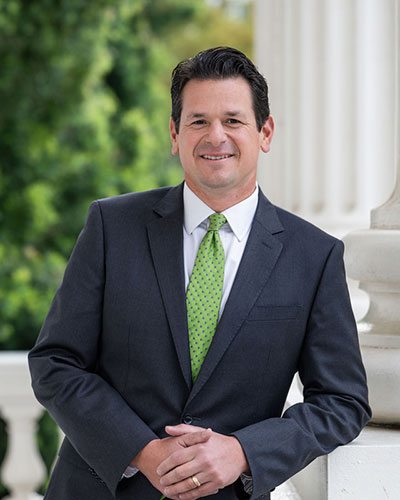
Rep. John Harabedian
Sponsored bills
Existing law authorizes a borrower to request forbearance on their residential mortgage loan for a period of 12 months if, among other things, the borrower affirms that they are experiencing financial hardship that prevents them from making timely payments on the loan due directly to the wildfire disaster described in the proclamation of a state of emergency issued by Governor Gavin Newsom on January 7, 2025, or the federally declared disaster, declared on January 8, 2025, related to the Eaton Wildfire, the Palisades Fire, and the Straight-line Winds. Existing law requires an applicant requesting forbearance on their residential mortgage loan to affirm that they are experiencing a financial hardship due to the wildfire disaster. Existing law requires that request to be made before the earlier of either 6 months after the date upon which the state of emergency is terminated or January 7, 2027. Existing law requires a borrower to be notified by the mortgage servicer within 10 business days whether their request for forbearance has been approved. Existing law prohibits any late fees from being assessed to the borrower's account during the period of forbearance, and the borrower from being charged a default rate of interest. This bill would extend the period of mortgage forbearance to 24 months and extend the latest possible deadline for a borrower's request for forbearance to January 7, 2029. The bill would require an applicant requesting forbearance on their residential mortgage loan to further affirm that the property securing the loan is uninhabitable due to the wildfire disaster. Because the bill would expand the crime of perjury, the bill would impose a state-mandated local program. If the borrower has requested an extension of a forbearance period that would result in a total forbearance period of more than 12 months, the bill would authorize a mortgage servicer to request certain related documentation from the borrower, as specified. The bill would extend the amount of time the mortgage servicer has to notify the borrower whether their request for forbearance has been approved to 21 days or longer, as specified. During the period in which the borrower is waiting to be notified, the bill would prohibit any late fees from being assessed to the borrower's account, and the borrower from being charged a default rate of interest. Existing law requires a mortgage servicer to disclose to a borrower to whom a forbearance has been granted that the forborne mortgage payments are required to be repaid. Existing law prohibits requiring a borrower who was current on the residential mortgage loan when they entered forbearance to make a lump sum payment. This bill would require a mortgage servicer to offer the borrower the option to defer repayment of forborne amounts to the end of the loan term, as specified. The California Constitution requires the state to reimburse local agencies and school districts for certain costs mandated by the state. Statutory provisions establish procedures for making that reimbursement. This bill would provide that no reimbursement is required by this act for a specified reason.
Existing law vests the State Energy Resources Conservation and Development Commission (Energy Commission) with the exclusive jurisdiction to certify thermal powerplants with a generating capacity of 50 megawatts or more. Existing law prohibits the Energy Commission from certifying a nuclear fission thermal powerplant, except for specified powerplants, and provides that a nuclear fission thermal powerplant, except those specified powerplants, is not a permitted land use in California unless certain conditions are met regarding the existence of technology for the construction and operation of nuclear fuel rod processing plants and of demonstrated technology or means for the disposal of high-level nuclear waste, as specified. Existing law, the 100 Percent Clean Energy Act of 2018, declares that it is the policy of the state to achieve 100% zero-carbon electricity by 2045. This bill would require the Energy Commission, on or before January 1, 2028, to prepare, as provided, a comprehensive assessment of the potential role for advanced nuclear technologies in supporting critical infrastructure in California, and of the potential for new, in-state nuclear powerplants to cost-effectively meet statewide needs for new electricity resources, and to meet the expressed policy of the state described above. The bill would authorize the Energy Commission to update the assessment as appropriate. The bill would authorize the Energy Commission, the Public Utilities Commission, the Independent System Operator, and other public agencies to evaluate the potential of nuclear energy to meet long-term resource needs.
Existing law, the Alcoholic Beverage Control Act, which is administered by the Department of Alcoholic Beverage Control, regulates the application, issuance, and suspension of alcoholic beverage licenses. Existing law, until December 31, 2026, authorizes the holder of an on-sale license for a bona fide public eating place that has off-sale privileges, or a licensed beer manufacturer, licensed wine manufacturer, or licensed craft distiller that operates a bona fide public eating place at its premises of production, to sell distilled spirits in manufacturer-prepackaged containers and alcoholic beverages other than beer that are not in manufacturer-prepackaged containers for off-sale consumption if specified conditions are met. This bill would extend those provisions until December 31, 2029. This bill would declare that it is to take effect immediately as an urgency statute.
This measure would urge the President of the United States and Congress of the United States to immediately restore full and consistent funding and staffing for the National Park Service.
Maddy summaryAJR 17 is a legislative resolution that expresses support for the immigration provisions originally established in the Immigration Act of 1929. It serves to state the legislative body's position regarding these historical immigration policies.
Maddy summaryCalifornia Assembly Resolution 140 designates August 2026 as Children's Get Offline and Get Outdoors Month to promote awareness of the benefits of screen-free play for child development. The resolution cites research linking excessive social media use and reduced free play time to increased rates of anxiety, depression, and other behavioral issues among teenagers. It encourages families and communities to support unstructured outdoor activities and highlights ongoing federal efforts to protect children's mental health through technology guardrails.
This measure would memorialize the Legislature's strong disagreement with the decision of the United States Supreme Court in Citizens United v. Federal Election Commission and encourage states to adopt policies to limit the powers of corporations to contribute to political campaigns, consistent with the United States Constitution.
This measure would urge President Donald J. Trump to avoid raising the cost of living for American consumers by rescinding the tariffs that he has imposed since taking office in January 2025 and refunding the American people for the costs passed on to them by his tariffs. The measure would also urge the United States Congress to enact a joint resolution to rescind President Trump's tariffs and to oppose all future unilateral and arbitrary tariff increases imposed by President Trump.
Existing law creates the Department of Insurance, headed by the Insurance Commissioner, and generally regulates classes of insurance, including fire and residential property insurance. Existing regulations prescribe specified deadlines by which an insurer is required to, among other things, respond to a notice of claim, accept or deny a claim, in whole or in part, and, upon acceptance of a claim in whole or in part, tender payment or otherwise take action to perform its obligation, as specified. This bill, with respect to a claim under a policy of residential property insurance, would codify specified provisions of the regulations prescribing the deadlines above. Existing law specifies the measure of indemnity under an open fire insurance policy that requires payment of actual cash value or replacement cost. Under existing law, the measure of the actual cash value recovery is the amount it would cost the insured to repair, rebuild, or replace the thing lost or injured less a fair and reasonable deduction for physical depreciation based upon its condition at the time of the injury or the policy limit, whichever is less. If an open policy requires the insured to repair, rebuild, or replace the damaged property to collect the full replacement cost, under existing law the insurer is required to pay the actual cash value of the damaged property until the damaged property is repaired, rebuilt, or replaced, at which time the insurer is required to pay the difference between the actual cash value payment made and the full replacement cost reasonably paid to replace the damaged property. If there is a total loss to the insured structure, this bill would require, except under specified circumstances, an insurer to pay the actual cash value associated with the primary structure and other insured structures within 30 calendar days from the date the property is determined to be a total loss. After this payment is made, and after the insurer has received adequate proof of loss and documentation reasonably sufficient to determine the amount payable, the bill would require an insurer to pay the undisputed amount of replacement cost associated with the primary structure and other insured structures, up to the limits in the policy, within 30 calendar days from the occurrence of a specified event. This bill would require interest to accrue if payments are not made within 30 calendar days, as specified. This bill would incorporate additional changes to Section 2051.5 of the Insurance Code proposed by SB 876 to be operative only if this bill and SB 876 are enacted and this bill is enacted last.