This resolution would state, among other things, that the Legislature supports the establishment of a Mexican Consulate in the County of Kern to strengthen the state's relationship with Mexico and empower immigrant communities.
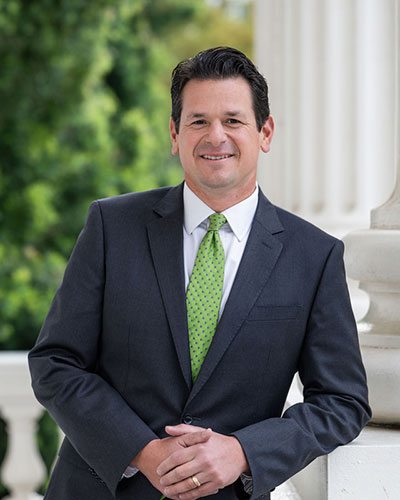
Asm. John Harabedian
Sponsored bills
This measure would express the intent of the Legislature to formalize a sister-state relationship between the State of Zacatecas in Mexico and the State of California, in recognition of their shared heritage, economic opportunities, and mutual commitment to prosperity, dignity, and understanding.
This measure would establish a formal sister state relationship between the State of California and Lagos State, Nigeria, to promote collaboration across key strategic areas.
Maddy summaryThis bill designates May 31, 2026, as World No Tobacco Day within the state. It serves as a formal proclamation to raise awareness about the dangers of tobacco use without imposing new laws or regulations. The measure does not change existing policies or affect specific individuals beyond encouraging public health awareness on this specific date.
This measure would recommit to formalizing the sister state relationship between the State of Jalisco in Mexico and the State of California, as specified.
Existing law establishes the Medi-Cal program, which is administered by the State Department of Health Care Services and under which qualified low-income individuals receive health care services. The Medi-Cal program is, in part, governed and funded by federal Medicaid program provisions. Existing law sets a schedule of benefits that are covered by the Medi-Cal program. The federal Medicaid program prohibits payment to a state for medical assistance furnished to an alien who is not lawfully admitted for permanent residence or otherwise permanently residing in the United States under color of law. Existing state law extends Medi-Cal eligibility for the full scope of Medi-Cal benefits to individuals who do not have satisfactory immigration status if they are otherwise eligible for those benefits, with the exception of specified dental benefits for individuals who are 19 years of age or older. Existing law makes an individual who is 19 years of age or older, who does not have satisfactory immigration status, and who applies for Medi-Cal on or after January 1, 2026, or loses eligibility for eligibility for full-scope Medi-Cal on or after January 1, 2026, eligible only for pregnancy-related services and emergency medical treatment. Existing law, beginning no sooner than July 1, 2027, as specified, requires individuals who do not have satisfactory immigration status, who are not pregnant, and who are 19 to 59 years of age, inclusive, to pay a monthly premium of $30, subject to certain exceptions. This bill would require the Director of the Department of Finance to determine and report to the Legislature and the Governor the cost of implementing eligibility for the full scope of Medi-Cal benefits for individuals who do not have satisfactory immigration status if they are otherwise eligible, and whether including those costs the General Fund would be in a deficit, as defined. The bill would then, on January 1 of the year following such a determination, end the above-described limitations on services for those who apply for Medi-Cal after January 1, 2026, or who lose eligibility for the full-scope of Medi-Cal benefits on or after January 1, 2026, thereby making an individual who is 19 years of age or older, who does not have satisfactory immigration status, eligible for the full scope of Medi-Cal benefits subject to certain limitations, such as the payment of premiums and certain dental benefits. The bill would require that the implementation of eligibility for the full-scope of Medi-Cal benefits be done by groups categorized by age, beginning with individuals over 49 years of age. Because counties are required to make Medi-Cal eligibility determinations and this bill would alter Medi-Cal eligibility, the bill would impose a state-mandated local program. The California Constitution requires the state to reimburse local agencies and school districts for certain costs mandated by the state. Statutory provisions establish procedures for making that reimbursement. This bill would provide that, if the Commission on State Mandates determines that the bill contains costs mandated by the state, reimbursement for those costs shall be made pursuant to the statutory provisions noted above.
Maddy summaryThis bill designates the month of May 2026 as National Stroke Awareness Month. The primary effect is to officially recognize this time period for public education and awareness campaigns regarding stroke prevention and treatment. It does not alter laws, allocate funding, or impose new requirements on individuals or organizations. The measure serves as a symbolic gesture to highlight the importance of stroke awareness during the specified month.
This measure would recognize the historical wrongdoing committed against California Native Americans and urge the federal government to work alongside tribal leaders to address historic injustices, uphold treaty obligations, and ensure equitable access to resources, healthcare, education, and environmental stewardship.
The Unruh Civil Rights Act requires persons within the jurisdiction of the state to be free and equal and, regardless of the person's sex, race, color, religion, ancestry, national origin, disability, medical condition, genetic information, marital status, sexual orientation, citizenship, primary language, or immigration status, to be entitled to the full and equal accommodations, advantages, facilities, privileges, or services in all business establishments, as prescribed, and makes a violation of the federal Americans with Disabilities Act of 1990 (ADA) a violation of the act. Existing law imposes liability upon a person who denies, aids, or incites a denial of, or makes any discrimination or distinction contrary to, rights afforded by law for actual damages suffered, exemplary damages, a civil penalty, and attorney's fees, as specified, to any person who was denied the specified rights. Existing law also imposes liability upon a person, firm, or corporation that denies or interferes with admittance to, or enjoyment of, public facilities or otherwise interferes with the rights of an individual with a disability, as specified, for damages and attorney's fees to a person who was denied those rights. This bill would grant to an entity an affirmative defense to a claim seeking statutory damages under the provisions described above on the basis of a specific accessibility barrier on the entity's internet website, as defined, if the entity provided evidence to the plaintiff demonstrating within 30 days of receiving a written prelawsuit demand from the plaintiff that either (1) the entity published a digital accessibility report on the accessibility page of its internet website disclosing the specific access barrier and updated that report to reflect remediation of the access barrier or (2) that various things were true regarding the entity's efforts to identify and remediate access barriers on its internet website, including the entity had a reasonable and good faith basis to believe that the internet website was accessible and conformed with the internet website accessibility standard, as specified. This bill would also prohibit a resource service provider from, in exchange for money or any other form of remuneration, negligently, recklessly, or knowingly constructing, licensing, distributing, or maintaining for online use a resource or part of an internet website that causes an entity's internet website to be inaccessible or not conformant with the internet website accessibility standard if the resource or part of the internet website is within the control of the resource service provider to remediate or from making a false representation that a resource or part of an internet website is accessible or conforms to the internet website accessibility standard. The bill would authorize a small business entity, as defined, and certain public attorneys, including the Attorney General, to bring a civil action to enforce that provision, as specified.

This measure would recognize the significance of Vesak Day to people of Buddhist faith and extend sincere best wishes to the state's Buddhist community in celebrating Vesak Day.