

Passed Jan 29, 2014
1 co-sponsor
Total votes
31,861
all sessions
Attendance
92%
1,849 missed
Near the chamber average
With party
99%
of cast votes
Near the chamber average
Bipartisan score
0%
crosses aisle rarely
Near the chamber average
Sponsored
2,051
bills & resolutions
Near the chamber average
Committees
0
assignments
2,051 bills and resolutions
Sponsored bills
Total
2,051
Primary
251
Co-sponsor
1,800
This page
2,051
matching current filters
Relative to Martin Luther King, Jr. Day.
This measure would designate that January 20, 2014, be observed as the official memorial of the late Dr. Martin Luther King, Jr.'s birth and commemorate Martin Luther King, Jr. Day and the work of Dr. Martin Luther King, Jr. and the Civil Rights Movement in changing public policy in California and in the United States of America. This measure would also recognize the anniversaries of the Emancipation Proclamation and the March on Washington in connection with the advancement of civil rights.
Signed into law Jan 28, 2014
1 co-sponsor
Personal income taxes: retirement plans: early distributions.
The Personal Income Tax Law, in modified conformity to federal income tax laws, imposes an additional tax upon early distributions from specified retirement plans, as provided. This bill would, for taxable years, beginning on or after January 1, 2014, and before January 1, 2017, exclude from that additional tax the first $6,000 distributed to an individual for the purpose of paying qualified costs, as defined, with respect to acquisition indebtedness for a principal residence, as provided. This bill would take effect immediately as a tax levy.
Failed Jan 21, 2014
0 co-sponsors
Hunting: nonlead ammunition.
(1) Existing law requires the Fish and Game Commission, by July 1, 2008, to establish by regulation a public process to certify centerfire rifle and pistol ammunition as nonlead ammunition, and to define by regulation nonlead ammunition as including only centerfire rifle and pistol ammunition in which there is no lead content. Existing law requires the commission to establish and annually update a list of certified centerfire rifle and pistol ammunition. Existing law requires that nonlead centerfire rifle and pistol ammunition, as determined by the commission, be used when taking big game with a rifle or pistol, as defined by the Department of Fish and Wildlife's hunting regulations, and when taking coyote, within specified deer hunting zones, but excluding specific counties and areas. A violation of these provisions is a crime. Existing law requires the commission to establish a process, to the extent that funding is available, that will provide hunters in these specified deer hunting zones with nonlead ammunition at no or reduced charge. This bill would instead require, as soon as is practicable, but by no later than July 1, 2019, the use of nonlead ammunition for the taking of all wildlife, including game mammals, game birds, nongame birds, and nongame mammals, with any firearm. The bill would require the commission to certify, by regulation, nonlead ammunition for these purposes. The bill would require that the list of certified ammunition include any federally approved nontoxic shotgun ammunition. The bill would make conforming changes. The bill would provide that these provisions do not apply to government officials or their agents when carrying out a statutory duty required by law. The bill would require the commission to promulgate regulations by July 1, 2015, that phase in the requirements of these provisions. The bill would require that these requirements be fully implemented statewide by no later than July 1, 2019. The bill would require the commission to implement any of these requirements that can be implemented practicably, in whole or in part, in advance of July 1, 2019. The bill would also require that the commission not reduce or eliminate any existing regulatory restrictions on the use of lead ammunition in California condor range, as described, unless or until the additional requirements for use of nonlead ammunition as required by these provisions are implemented. By expanding and changing the definition of a crime, the bill would impose a state-mandated local program. (2) Existing federal law restricts the importing, manufacturing, or sale of armor-piercing ammunition, as specified. This bill would temporarily suspend the required use of nonlead ammunition for a specific hunting season and caliber upon a finding by the Director of Fish and Wildlife that nonlead ammunition of a specific caliber is not commercially available from any manufacturer because of federal prohibitions relating to armor-piercing ammunition. The bill would require, notwithstanding a suspension, that nonlead ammunition be used when taking big game mammals, nongame birds, or nongame mammals in the California condor range. (3) The California Constitution requires the state to reimburse local agencies and school districts for certain costs mandated by the state. Statutory provisions establish procedures for making that reimbursement. This bill would provide that no reimbursement is required by this act for a specified reason.
Signed into law Oct 11, 2013
1 co-sponsor
Use taxes: exemption: Armed Forces: National Guard: transfer orders.
The Sales and Use Tax Law imposes use taxes on the storage, use, or other consumption in this state of tangible personal property purchased from a retailer for storage, use, or other consumption in this state, presumes tangible personal property purchased outside the state that is stored, used, or consumed in this state is purchased for use in this state, and excludes from use taxes, tangible personal property purchased and used outside this state for specified periods of time. Existing law excludes from use taxes the storage, use, or other consumption of a vehicle purchased by a service member prior to receipt of official orders transferring him or her to this state, as provided. This bill would, until January 1, 2019, exempt from use taxes the storage, use, or other consumption in this state of tangible personal property, other than a vehicle, vessel, or aircraft, purchased while outside this state by a qualified service member, as defined, or a qualified service member's spouse or registered domestic partner, prior to the report date on official orders transferring the qualified service member to this state. The Bradley-Burns Uniform Local Sales and Use Tax authorizes counties and cities to impose local sales and use taxes in conformity with the Sales and Use Tax Law, and existing law authorizes districts to impose transactions and use taxes in accordance with the Transactions and Use Tax Law which conforms to the Sales and Use Tax Law. Exemptions from state sales and use taxes are incorporated into these laws. Section 2230 of the Revenue and Taxation Code provides that the state will reimburse counties and cities for revenue losses caused by the enactment of sales and use tax exemptions. This bill would provide that, notwithstanding Section 2230 of the Revenue and Taxation Code, no appropriation is made and the state shall not reimburse local agencies for sales and use tax revenues lost by them pursuant to this bill. This bill would take effect immediately as a tax levy, but its operative date would depend on its effective date.
Signed into law Oct 10, 2013
0 co-sponsors
California Innovation Initiatives.
The Governor's Office of Business and Economic Development serves as the Governor's lead entity for economic strategy and the marketing of California on issues relating to business development, private sector investment, and economic growth. The office, among others, makes recommendations to the Governor and the Legislature regarding policies, programs, and actions to advance statewide economic goals. This bill would create the California Innovation Hub Program within the Governor's Office of Business and Economic Development. The bill would require the office to designate Innovation Hubs, as specified. The bill would require the office to issue a request for proposals for the California Innovation Hub Program, and would require the proposals to include specified information except as provided. The bill would require each designated iHub partnership to include, among other things, at least one major university or research center or institute. The bill would establish the Innovation Accelerator Account within the California Economic Development Fund and would make a continuous appropriation from that account to the office to be used for California Innovation Initiatives, as specified. The bill would require an iHub to annually post the information from these reports on its Internet Web site and notify the Governor and specified legislative committees that such information is available on its Internet Web site.
Signed into law Oct 4, 2013
0 co-sponsors
Outdoor advertising displays: arenas.
The Outdoor Advertising Act provides for the regulation by the Department of Transportation of advertising displays, as defined, within view of public highways. The act exempts from its provisions certain advertising displays that advertise the business conducted, services rendered, or goods produced or sold on the property upon which the display is placed, as specified. The act also exempts from its provisions specified advertising displays at an arena located on public land with a capacity of 5,000 seats or more that provides a permanent venue for professional sports, and that advertises products, goods, or services that are or will be sold on the premises of the arena on a regular basis pursuant to a specified agreement. This bill would recast the arena advertising exception to exempt from the act specified advertising displays authorized by local ordinance at the premises of an arena, defined as a venue with a capacity of 15,000 seats or more that is capable of providing a permanent venue for professional sports, or a contiguous development project or district encompassing or adjacent to the venue that extends not more than 1,000 feet from a structure connected to the venue, as specified. These advertising displays would be authorized to advertise any products, goods, or services sold within that area on a regular basis, or marketed or promoted in that area pursuant to a sponsorship marketing plan, as defined, except tobacco, firearms, or sexually explicit material, if specified conditions are met. The bill would additionally authorize, under similar conditions, up to 2 advertising displays that are not required to comply with the act, which the bill would require to be visible when approaching offramps from the interstate, primary, or state highways used to access the premises of an arena. The bill would require that certain conditions apply if the advertising display authorized by the bill is a message center display. The bill would require that if an advertising display is subject to a notice from the United States Department of Transportation, Federal Highway Administration, or other applicable federal agency to the state that the operation of that display will result in the reduction of federal funds, as provided, authorization of the display would cease 60 days after the state notifies the display owner of the receipt of the federal notice, and would require the display owner to remove all advertising copy within that time. The bill would provide for the imposition of a civil fine of $10,000 per day by the department on the owner for failure to remove advertising copy. The bill would require the local agency to have primary responsibility for enforcing its ordinance and these provisions, and to indemnify the state Department of Transportation for all costs incurred for failing to ensure that compliance, as specified. The bill would prohibit, among other things, the state Department of Transportation from assuming any liability in connection with cessation of operation or removal of an advertising display. In addition, the bill would require an advertising display lawfully erected on or before December 31, 2013, in conformity with the law relating to the exemption for advertising displays on arenas, as it existed on that date, to remain authorized, subject to the terms of that law.
Signed into law Oct 4, 2013
1 co-sponsor
Office of Small Business Advocate: small business financial development corporations: Internet Web site information.
Existing law creates the Office of Small Business Advocate within the Governor's Office of Business and Economic Development. Existing law establishes the duties and functions of the advocate, which include advisory participation in the consideration of all legislation and administrative regulations that affect small businesses. Existing law also requires the office to post specified information on its Internet Web site to assist an individual to start a nonprofit corporation in this state. This bill would require the office to post specified information on its Internet Web site regarding programs administered through the statewide network of small business financial development corporations.
Signed into law Oct 4, 2013
0 co-sponsors
Vehicle rental agreements: customer facility charge.
Existing law governs contracts between rental car companies and their customers. Existing law authorizes a company that rents passenger vehicles to the public to collect a customer facility charge, which means a fee that is required by an airport to be collected to finance, design, and construct airport car rental facilities, transportation systems, and terminal modifications, if specified circumstances apply. Existing law requires the aggregate amount collected from customer facility charges not exceed the reasonable costs, determined based on an independent audit, to finance, design, and construct those facilities. Existing law requires the audit to be conducted prior to the collection of the customer facility charge, prior to any increase of the charge, and every 3 years after the initial collection of the charge. This bill would provide guidelines regarding the scope of the audit, would require the audit to be posted on the airport's Internet Web site and to be reported to specified legislative committees, and would limit the requirement to conduct the audit every 3 years to those instances where the customer facility charge is used to either operate a common-use transportation system or acquire vehicles for that system.
Signed into law Oct 4, 2013
0 co-sponsors
School facilities: carbon monoxide devices.
Existing law, the Leroy F. Greene School Facilities Act of 1998, requires certain new school facilities construction projects that require the approval of the Department of General Services, as specified, to include an automatic fire detection, alarm, and sprinkler system. Existing law requires an owner of a dwelling unit intended for human occupancy to install a carbon monoxide device, as specified, in each existing dwelling unit having a fossil fuel burning heater or appliance, a fireplace, or an attached garage. Existing law, the California Building Standards Law, requires the California Building Standards Commission to approve or adopt proposed building standards that are submitted by state agencies during an 18-month code adoption cycle. This bill would require, by July 1, 2015, the State Fire Marshal to propose for adoption by the commission, appropriate standards for the installation of carbon monoxide devices in public and private school buildings that meet specified criteria.
Signed into law Oct 2, 2013
1 co-sponsor
Ask Maddy
·
AI policy assistant
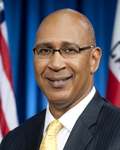
Ask Maddy about Chris Holden
Scope: california
Hi! I can help you understand Chris Holden's legislative record. What would you like to know?
Try one of these
i
Maddy answers using official bill text and legislative records. Always verify before sharing.
Sources cited inline