

Passed Jan 22, 2018
1 co-sponsor
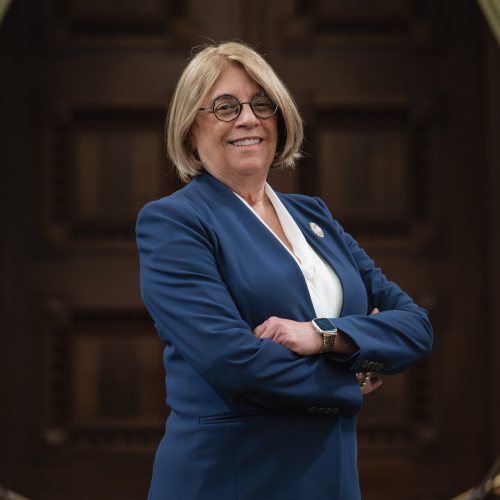
Asm. Cecilia Aguiar-Curry
Total votes
22,547
all sessions
Attendance
96%
805 missed
Near the chamber average
With party
99%
of cast votes
Near the chamber average
Bipartisan score
0%
crosses aisle rarely
Near the chamber average
Sponsored
2,169
bills & resolutions
Higher than 82% of chamber peers
Committees
13
assignments
2,169 bills and resolutions
Sponsored bills
Total
2,169
Primary
236
Co-sponsor
1,933
This page
2,169
matching current filters
Relative to the Voting Rights Act of 1965.
This measure would recognize August 6, 2017, as the 52nd anniversary of the signing of the federal Voting Rights Act of 1965.
Passed Jan 3, 2018
1 co-sponsor
Relative to Red Ribbon Week.
This measure would proclaim the period of October 23, 2017, to October 31, 2017, inclusive, as Red Ribbon Week and would encourage all Californians to help build drug-free communities and to participate in drug prevention activities.
Passed Jan 3, 2018
1 co-sponsor
Clear Lake.
Existing law establishes in state government the Ventura-Los Angeles Mountain and Coastal Study Commission. Existing law requires the commission to make a detailed study of all factors that may significantly affect or cause irreversible modification of the present and future status of the Ventura-Los Angeles Mountain and Coastal Zone and its relationship with the region, as provided. This bill would establish in the Natural Resources Agency, the Blue Ribbon Committee for the Rehabilitation of Clear Lake. The bill would require the committee to consist of specified persons, including the Secretary of the Natural Resources Agency, or his or her designee. The bill would require the committee to meet quarterly for the purposes of discussion, reviewing research, planning, and providing oversight regarding the health of Clear Lake. The bill would require the committee to hold 2 meetings per year in the County of Lake. The bill would require the committee to provide an annual report to the Governor and the Legislature, as provided. The bill would authorize the committee to receive assistance and funds from public and private sources and to expend funds and award grants to conduct research upon appropriation by the Legislature.
Signed into law Oct 15, 2017
0 co-sponsors
Higher Education Employer-Employee Relations Act: employees.
(1) Existing law, known as the Higher Education Employer-Employee Relations Act, contains provisions relating to employer-employee relations between the state and the employees of state institutions of higher education, including the University of California and the California State University, as well as the Hastings College of the Law. These provisions assign major responsibilities for implementation to the Public Employment Relations Board. Under the act, an "employee" or "higher education employee" is defined as any employee of the Regents of the University of California, the Directors of the Hastings College of the Law, or the Trustees of the California State University. The act authorizes the board to find student employees whose employment is contingent on their status as students are employees only if the services they provide are unrelated to their educational objectives, or that those educational objectives are subordinate to the services they perform and that coverage under this act would further the purposes of the act. This bill would make student employees, whose employment is contingent upon their status as students, "employees" and "higher education employees" for purposes of the act. (2) The act grants employees the right to form, join, and participate in the activities of employee organizations of their own choosing for the purpose of representation on all matters of employer-employee relations and for the purpose of meeting and conferring with their employer. Under the act, all matters not within the scope of representation are reserved to the employer and are not subject to meeting and conferring. The act excludes from the scope of representation, for purposes of the University of California only, among other things, conditions for the award of certificates and degrees to students. This bill would specify that, for purposes of the University of California only, the requirements for students to achieve satisfactory progress toward their degrees are also outside of the scope of representation.
Signed into law Oct 15, 2017
1 co-sponsor
Telecommunications: California Advanced Services Fund.
Under existing law, the Public Utilities Commission has regulatory authority over public utilities, including telephone corporations. Existing law establishes, among other funds related to telecommunications, the California Advanced Services Fund (CASF) in the State Treasury. Existing law requires the commission to develop, implement, and administer the CASF to encourage deployment of high-quality advanced communications services to all Californians that will promote economic growth, job creation, and the substantial social benefits of advanced information and communications technologies, as provided in specified decisions of the commission and in the CASF statute. Existing law requires the commission to give priority to projects that provide last-mile broadband access to households that are unserved by an existing facility-based broadband provider. Existing law establishes that the goal of the program is, no later than December 31, 2015, to approve funding for infrastructure projects that will provide broadband access to no less than 98% of California households. Existing law authorizes the commission to collect a surcharge for deposit into the CASF not to exceed $315,000,000 in total and authorizes the surcharge until 2020. Existing law establishes 4 accounts, the Broadband Infrastructure Grant Account, the Rural and Urban Regional Broadband Consortia Grant Account, the Broadband Infrastructure and Revolving Loan Account, and the Broadband Public Housing Account, within the CASF and specifies the amount of moneys to be deposited into each account. This bill would revise the goal of the program to provide that its goal is to approve funding by December 31, 2022, for infrastructure projects that will provide broadband access to no less than 98% of California households in each consortia region, as identified by the commission on or before January 1, 2017. The bill would eliminate the Broadband Infrastructure and Revolving Loan Account and would require the transfer of the remaining unencumbered moneys in that account as of January 1, 2018, and the deposit of moneys collected that would be owed to that account into the Broadband Infrastructure Grant Account. The bill would establish within the CASF the Broadband Adoption Account and would require specified amounts of moneys to be deposited into this new account, the Broadband Infrastructure Grant Account, and the Rural and Urban Regional Broadband Consortia Grant Account. The bill repeals the current authorization to collect up to $315,000,000 for deposit in the CASF at a rate of up to $25,000,000 per year through the 2020 calendar year, and instead would authorize the commission to collect $330,000,000 for deposit into the CASF beginning January 1, 2018, and continuing through the 2022 calendar year. The bill would revise the eligibility requirements for projects and project applicants for grants funded from the Broadband Infrastructure Grant Account. The bill would make moneys from the Rural and Urban Regional Broadband Consortia Grant Account available to facilitate the deployment of broadband infrastructure by assisting infrastructure grant applicants in the project development or grant application process. The bill would require recipients of those moneys to conduct an annual audit and to submit to the commission an annual report regarding activities funded by those moneys. The bill would make available moneys in the Broadband Adoption Account to specified entities for digital literacy training, public education, and outreach programs to increase broadband adoption by consumers. Existing law requires the commission to conduct and report to the Legislature, by April 1, 2021, a final financial audit and a final performance audit of the CASF. This bill would require the commission to conduct and report to the Legislature, by April 1, 2020, an interim financial audit and an interim performance audit. The bill would delay the date for the submission of the final audits to April 1, 2023. Existing law requires the commission to annually report specified information relative to the CASF to the Legislature. Existing law repeals these reporting requirements on January 1, 2022. This bill would revise the information specified for inclusion in the report. The bill would repeal these reporting requirements on January 1, 2024. The bill would require the commission to identify unserved areas and delineate the areas in the annual reports. The bill would require the commission to consult regional consortia, stakeholders, and consumers regarding priority areas and cost-effective strategies to achieve the broadband access goal through public workshops conducted at least annually no later than April 30 of each year. Under existing law, a violation of the Public Utilities Act or any order, decision, rule, direction, demand, or requirement of the commission is a crime. Because a violation of an order or decision of the commission implementing the bill's requirements would be a crime, this bill would impose a state-mandated local program by creating a new crime. The California Constitution requires the state to reimburse local agencies and school districts for certain costs mandated by the state. Statutory provisions establish procedures for making that reimbursement. This bill would provide that no reimbursement is required by this act for a specified reason. This bill would declare that it is to take effect immediately as an urgency statute.
Signed into law Oct 15, 2017
1 co-sponsor
Gender identity: female, male, or nonbinary.
(1) Existing law authorizes a person who was born in this state and who has undergone clinically appropriate treatment for the purpose of gender transition to obtain a new birth certificate from the State Registrar. This bill would enact the Gender Recognition Act. For purposes of obtaining a new birth certificate under the provisions above, the bill would delete the requirement that an applicant have undergone any treatment, and instead would authorize a person to submit to the State Registrar an application to change gender on the birth certificate and an affidavit attesting, under penalty of perjury, that the request for a change of gender is to conform the person's legal gender to the person's gender identity and not for any fraudulent purpose. By requiring the affidavit to be attested to under penalty of perjury, the bill would create a crime, thereby imposing a state-mandated local program. The bill would authorize the change of gender on a new birth certificate to be female, male, or nonbinary. (2) Existing law authorizes a person who has undergone clinically appropriate treatment for the purpose of gender transition to petition for a court judgment recognizing the change of gender, and to petition for a court order conforming the person's name to the person's gender identity. Existing law provides specific procedures to seek these orders and judgments, either separately or in combination. This bill, commencing on September 1, 2018, would delete the requirement that a person have undergone any treatment to seek a court judgment to recognize a change of gender and instead would authorize the petitioner to attest, under penalty of perjury, that the request is to conform the person's legal gender to the person's gender identity and not for any fraudulent purpose. By requiring the affidavit to be attested to under penalty of perjury, the bill would create a crime, thereby imposing a state-mandated local program. The bill would authorize a change of gender in the court judgment to female, male, or nonbinary. The bill would provide modified procedures to obtain a court order for a change of name to conform to the petitioner's gender identity and a court judgment to recognize a change in the petitioner's gender. The bill would provide a separate procedure for a person under 18 years of age to petition for a court judgment to recognize a change of gender to female, male, or nonbinary. (3) Existing law requires the Department of Motor Vehicles to issue a driver's license to an applicant when the department determines that the applicant is lawfully entitled to a license, and requires the license to contain, among other things, a brief description and engraved picture or photograph of the licensee for the purpose of identification. Existing law requires the application for an original driver's license or renewal of a driver's license to contain specified information, as provided by the applicant. Existing law also authorizes the department to issue identification cards and requires an identification card to adequately describe the applicant. Existing law requires the department, upon issuance of a new identification card or renewal of an identification card, to provide information regarding organ and tissue donation, including an enrollment form for the California Organ and Tissue Donor Registry that requires an applicant to mark his or her sex. This bill, on January 1, 2019, would require an applicant for an original driver's license or renewal of a driver's license to choose a gender category of female, male, or nonbinary, as specified, and would require the department to adopt regulations to provide a process for an amendment to a gender category under these provisions. The bill would also require the enrollment form for the California Organ and Tissue Donor Registry to instead require an applicant to mark his or her gender. This bill would make legislative findings and declarations in support of its provisions. (4) The California Constitution requires the state to reimburse local agencies and school districts for certain costs mandated by the state. Statutory provisions establish procedures for making that reimbursement. This bill would provide that no reimbursement is required by this act for a specified reason.
Signed into law Oct 15, 2017
1 co-sponsor
California Drought, Water, Parks, Climate, Coastal Protection, and Outdoor Access For All Act of 2018.
Under existing law, programs have been established pursuant to bond acts for, among other things, the development and enhancement of state and local parks and recreational facilities. Existing law, the Water Quality, Supply, and Infrastructure Improvement Act of 2014, approved by the voters as Proposition 1 at the November 4, 2014, statewide general election, authorizes the issuance of general obligation bonds in the amount of $7,545,000,000 to finance a water quality, supply, and infrastructure improvement program. Existing law, the Safe Drinking Water, Water Quality and Supply, Flood Control, River and Coastal Protection Bond Act of 2006, an initiative measure approved by the voters as Proposition 84 at the November 7, 2006, statewide general election, authorizes the issuance of bonds in the amount of $5,388,000,000 for the purposes of financing safe drinking water, water quality and supply, flood control, natural resource protection, and park improvements. Existing law, the California Clean Water, Clean Air, Safe Neighborhood Parks, and Coastal Protection Act of 2002, approved by the voters as Proposition 40 at the March 5, 2002, statewide primary election, authorizes the issuance of bonds in the amount of $2,600,000,000, for the purpose of financing a program for the acquisition, development, restoration, protection, rehabilitation, stabilization, reconstruction, preservation, and interpretation of park, coastal, agricultural land, air, and historical resources. This bill would enact the California Drought, Water, Parks, Climate, Coastal Protection, and Outdoor Access For All Act of 2018, which, if approved by the voters, would authorize the issuance of bonds in an amount of $4,000,000,000 pursuant to the State General Obligation Bond Law to finance a drought, water, parks, climate, coastal protection, and outdoor access for all program. The bill, upon voter approval, would reallocate $100,000,000 of the unissued bonds authorized for the purposes of Propositions 1, 40, and 84 to finance the purposes of a drought, water, parks, climate, coastal protection, and outdoor access for all program. The bill would provide for the submission of these provisions to the voters at the June 5, 2018, statewide primary direct election. This bill would declare that it is to take effect immediately as an urgency statute.
Signed into law Oct 15, 2017
1 co-sponsor
Horse racing: state-designated fairs: allocation of revenues: gross receipts for sales and use tax.
The Horse Racing Law provides that any unallocated balance from the total revenue received by the Department of Food and Agriculture pursuant to that law, except as specified, is hereby appropriated without regard to fiscal years for allocation by the Secretary of Food and Agriculture for capital outlay to California fairs, including state-designated fairs, for among other things, fair projects involving public health and safety, and projects that are required to protect fair property. That law also provides that a portion of these funds may be allocated to California fairs for general operational support. This bill would, beginning July 1, 2018, require a return filed with the California Department of Tax and Fee Administration (CDTFA) to report gross receipts for sales and use tax purposes to segregate the gross receipts of the seller and the sales price of the property on a line or a separate form as prescribed by the CDTFA when the place of sale in this state or for use in this state is on or within the real property of a state-designated fair, as defined, or any real property of a state-designated fair that is leased to another party. The bill would require the CDTFA to report the amount of the total gross receipts segregated on the returns filed pursuant to these provisions to the Department of Finance on or before November 1 of each year. The bill would require the CDTFA to estimate the total gross receipts segregated for the 2019–20 fiscal year by January 31, 2019, based on the 3rd quarter of 2018, and would require that an amount equal to 34 of 1% of this estimated amount be included in the Governor's revised budget in May 2019 for allocation to fairs pursuant to the provisions described above. The bill would require the CDTFA to reconcile this first-year estimate with actual return data from the full 2018–19 fiscal year, and to then adjust this figure as appropriate as the amount to be reported to the Department of Finance on November 1, 2019. The bill would require that an amount equal to 34 of 1% of the total amount of gross receipts reported to the Department of Finance be included in the next annual Governor's Budget for the Department of Food and Agriculture for allocation to fairs pursuant to the provisions described above. The bill would require, upon the enactment of the annual Budget Act, that this amount be transferred by the Controller to the Fair and Exposition Fund, which is continuously appropriated, and would allocate these moneys to state-designated fairs for specified fair projects and subject to certain conditions. The bill would require the CDTFA to be paid the actual cost for administering those provisions, as specified. By creating a new source of revenue to be deposited into a continuously appropriated fund, the bill would make an appropriation.
Signed into law Oct 14, 2017
1 co-sponsor
Pupil instruction: California State Summer School for Mathematics and Science: funding: tuition.
Existing law establishes the California State Summer School for Mathematics and Science to provide academic development to enable pupils with demonstrated academic excellence in mathematics and science to receive intensive educational enrichment in these subjects and an opportunity for pupils who wish to study mathematics or science or to pursue careers that require a high degree of skills in and knowledge of mathematics and science. Existing law requests the Regents of the University of California to operate the summer school. Existing law, until January 1, 2018, requests the regents to set a tuition fee for the summer school within a range that corresponds to actual program costs, up to but not exceeding $2,810 per session in the year 2012 and to increase this fee by an amount of up to 5% each year thereafter. Existing law, after January 1, 2018, requests the regents to set a tuition fee within a range that corresponds to actual program costs, up to but not exceeding $1,000 per session in the year 2000, and to increase this fee by an amount of up to 5% each year thereafter. This bill would no longer request the regents after January 1, 2018, to set a tuition fee within a range that corresponds to actual program costs, up to but not exceeding $1,000 per session in the year 2000, and to increase this fee by an amount of up to 5% each year thereafter. The bill would extend the current tuition fee provisions to January 1, 2023.
Signed into law Oct 14, 2017
0 co-sponsors
Ask Maddy
·
AI policy assistant
Ask Maddy about Cecilia Aguiar-Curry
Scope: california
Hi! I can help you understand Cecilia Aguiar-Curry's legislative record. What would you like to know?
Try one of these
i
Maddy answers using official bill text and legislative records. Always verify before sharing.
Sources cited inline