Maddy summaryCalifornia House Resolution 128 designates October 23, 2026, as Aromatic L-Amino Acid Decarboxylase (AADC) Deficiency Awareness Day. The resolution aims to increase public and medical community awareness of this ultrarare genetic condition, which prevents the body from producing dopamine and causes severe developmental delays. By highlighting the challenges faced by patients and their caregivers, the bill encourages Californians to learn more about the disease to support earlier diagnosis and continued research into treatments.
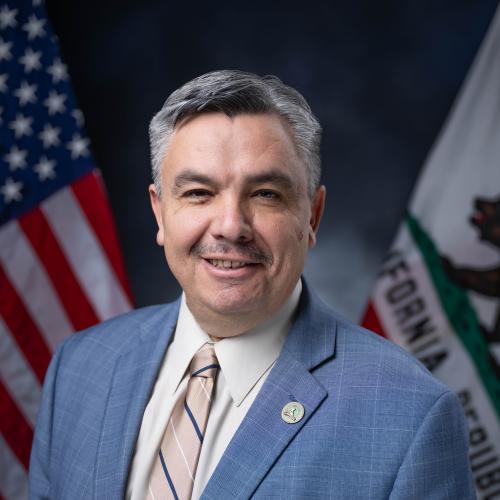
Rep. Juan Carrillo
Sponsored bills
Maddy summaryThis California House Resolution proclaims September 2026 as Young Women's Reproductive Health Awareness Month to highlight the importance of early diagnosis and education for adolescent girls. The resolution urges high schools, colleges, public health agencies, and medical providers to promote educational campaigns on topics such as menstrual health, HPV vaccination, and sexual health practices. It specifically aims to address disparities in care by encouraging outreach to communities that face systemic barriers or lack culturally appropriate resources.
Maddy summaryCalifornia Assembly Resolution 131 proclaims October 11 through 17, 2026, as Student Cancer Education, Detection, and Prevention Week. The resolution encourages middle schools, high schools, colleges, public health agencies, pediatricians, and community health providers to promote educational campaigns on cancer prevention and detection. These efforts aim to inform students about risk factors, warning signs, and the importance of timely screenings to support better health outcomes for young people in the state.
Existing law provides for the civil commitment of a person who is determined to be a sexually violent predator. Existing law establishes a procedure by which a person committed as a sexually violent predator may petition for conditional release and requires the court, if it makes a specified determination, to place the person on conditional release. This bill would require a court presiding over any proceeding held pursuant to the above-described provisions that is open to the public to provide the public with a remote access option that allows members of the public to remotely observe the proceeding. The bill would require a court to make the audio of a proceeding accessible to the public if a court is unable to provide a remote access option that includes video due to technological limitations, as defined, that are not reasonably within the control of the court. On and after January 1, 2028, the bill would require a court to provide a remote access option with a visual feed.
The California Constitution provides that the University of California constitutes a public trust, and requires the university to be administered by the Regents of the University of California, a corporation in the form of a board, with full powers of organization and government, subject to legislative control only for specified purposes. The California Constitution requires the board to consist of 7 ex officio members and 18 appointive members appointed by the Governor and approved by the Senate. The California Constitution authorizes the members of the board to appoint either a member of the faculty at a campus of the university or of another institution of higher education, or a person enrolled as a student at a campus of the university, or both, as members of the board serving for no less than one year with all rights of participation. Beginning on July 1, 2027, this measure would require, instead of authorize, the members of the board to appoint to the board for 2-year terms, 2 undergraduate students and 2 graduate students enrolled at a campus of the university for each regular academic term during their service as members of the board, as provided. The measure would require each student board member to serve as a nonvoting student regent-designate in the first year of their 2-year term, and would authorize a student member who graduates from the university on or after January 1 of the 2nd year of the student member's 2-year term to serve the remainder of their term.
Maddy summaryThis House Resolution officially designates September as Black Music Month to honor the significant contributions of Black artists to American culture. The measure recognizes a wide range of musical genres, including jazz, blues, gospel, and hip-hop, by highlighting their historical origins and influential figures. While the text celebrates these artistic achievements, it does not impose any new legal requirements or funding mandates.
The Permit Streamlining Act, among other things, requires public agencies to approve or disapprove of a development project within certain timeframes, as specified. The act requires public agencies to compile one or more lists that specify in detail the information that will be required from any applicant for a development project. The act requires a public agency, upon its determination that an application for a development project is incomplete, to include a list and a thorough description of the specific information needed to complete the application. This bill would provide that for the purposes of the Permit Streamlining Act, a housing development project or emergency shelter shall be deemed consistent, compliant, and in conformity with an applicable plan, program, policy, ordinance, standard, requirement, or other similar provision adopted or implemented by a public agency, as defined, if there is substantial evidence that would allow a reasonable person to conclude that the housing development project or emergency shelter is consistent, compliant, or in conformity, except as specified. By imposing additional duties on local agencies, this bill would impose a state-mandated local program. The bill would include findings that changes proposed by this bill address a matter of statewide concern rather than a municipal affair and, therefore, apply to all cities, including charter cities. The California Constitution requires the state to reimburse local agencies and school districts for certain costs mandated by the state. Statutory provisions establish procedures for making that reimbursement. This bill would provide that no reimbursement is required by this act for a specified reason.
Existing law requires law enforcement and state and local governments to interact with and report on federal action against individuals based on their perceived or actual immigration status in various specified manners. Under existing law, for example, a local governing body of any county, city, or city and county in which a local law enforcement agency has provided access to an individual during the last year by the federal Immigration and Customs Enforcement (ICE) is required to hold at least one community forum, as specified, to provide public information about ICE's access to individuals and to receive and consider public comment. This bill would establish within the Department of Justice on July 1, 2027, the Working Group on Civil Rights Accountability, consisting of 12 appointed members, to develop and maintain a statewide reporting dashboard with specific data fields to document and categorize alleged constitutional or civil rights violations arising from federal immigration enforcement activities within the state. The bill would require a nonprofit organization, if eligible as specified, to be authorized to submit reports to the dashboard. The bill would require the department to establish specific standards, protocols, and procedures for a nonprofit organization to submit reports to the dashboard, including establishing data verification procedures. The bill would require the working group, beginning January 1, 2028, and on each January 1 thereafter, to submit a report of specific information and policy recommendations to the Legislature and make that annual report publicly available. This bill would also exempt the reports required pursuant to the above-described provisions from the disclosure requirements of the California Public Records Act. The bill would make legislative findings and declarations in support of its provisions. Existing constitutional provisions require that a statute that limits the right of access to the meetings of public bodies or the writings of public officials and agencies be adopted with findings demonstrating the interest protected by the limitation and the need for protecting that interest. This bill would make legislative findings to that effect.
Existing law establishes the California Career Technical Education Incentive Grant Program, administered by the State Department of Education, with the purpose of encouraging, maintaining, and strengthening the delivery of high-quality career technical education programs. Existing law requires, for the 2021–22 fiscal year and each fiscal year thereafter, $300,000,000 to be available to the department, upon appropriation by the Legislature, for the program. Existing law requires a grant applicant to demonstrate a proportional dollar-for-dollar match and sets that amount at $2 for every $1 received from the program. Existing law prohibits an applicant from being awarded an amount higher than the amount that the allocation formula determines the applicant to be eligible to receive under the program. Existing law authorizes a grant recipient under the program to consist of one or more, or any combination, of school districts, county offices of education, charter schools, or regional occupational centers or programs operated by joint powers authorities or county offices of education, as provided. Existing law provides that an applicant receiving a grant from the program in a prior fiscal year is eligible to apply to receive a renewal grant if the applicant's career technical education program continues to meet specified requirements, as provided. This bill would delete the prohibition against an applicant being awarded more than the amount determined by the allocation formula and would instead provide that an applicant receiving a grant from the program in a prior fiscal year is required to receive a renewal grant for at least 3 additional years, as provided. The bill would require the Superintendent to cease distribution of funding and recover previously distributed funding if certain conditions occur, including, among others, that the grant recipient did not implement the program substantively as was initially proposed, as provided.
Existing law, the California Consumer Privacy Act of 2018 (CCPA) , grants a consumer various rights with respect to personal information, as defined, that is collected or sold by a business, as defined, including the right to direct a business that collects sensitive personal information about the consumer to limit its use, as prescribed. Existing law defines "sensitive personal information" to mean, among other things, personal information that reveals a consumer's precise geolocation. Existing law, the California Privacy Rights Act of 2020, approved by the voters as Proposition 24 at the November 3, 2020, statewide general election, amended, added to, and reenacted the CCPA. This bill would require a business that collects precise geolocation information to prominently display, when information is being collected, a notice to the consumer whose information is being collected that states certain information related to the collection of the information and its use by the business, including the goods or services requested by the consumer for which the business is collecting, processing, or disclosing the geolocation information and a description of how the business will process the geolocation information to carry out those purposes. This bill would prohibit a business that collects precise geolocation information from, among other things, retaining the information longer than necessary to provide the goods or services requested by the consumer or longer than one year after the consumer's last intentional interaction with the business, whichever is earlier. This bill would declare that its provisions further the purposes and intent of the California Privacy Rights Act of 2020.