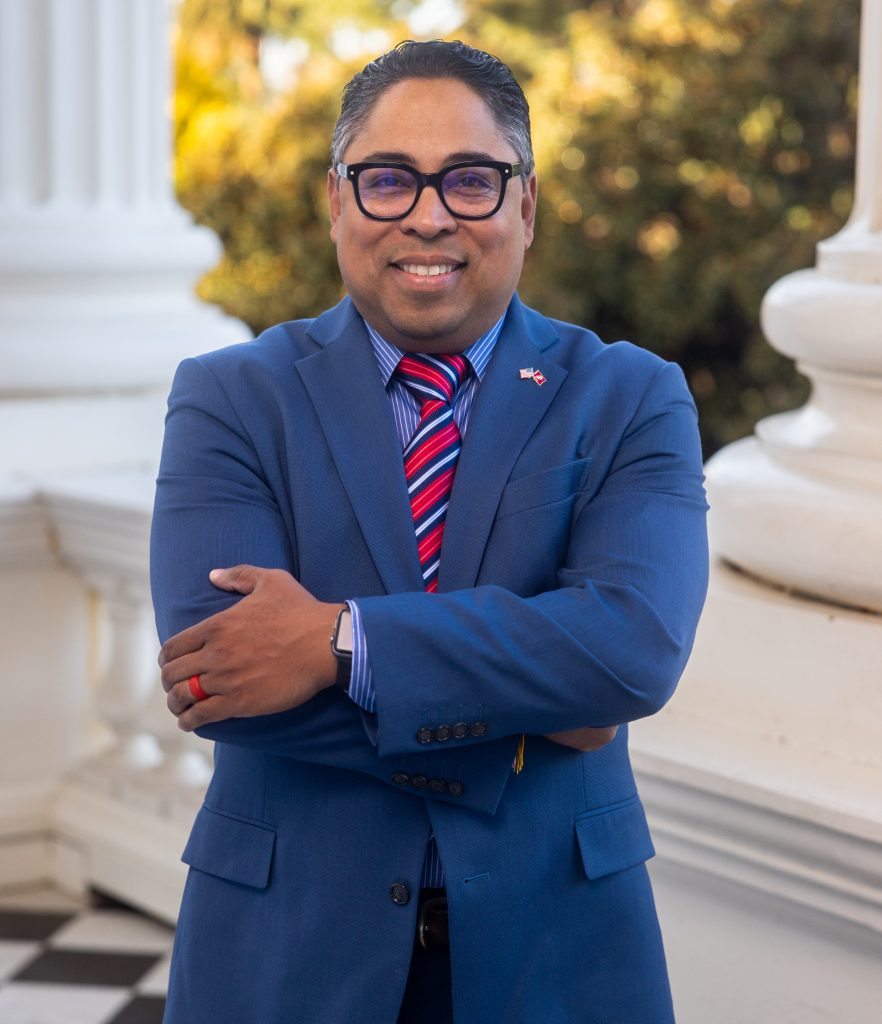
Photo of Jeff Gonzalez
R California House · District 36 On the 2026 ballot

Rep. Jeff Gonzalez

Compare
Total votes
4,343
all sessions
Attendance
89%
440 missed
Lower than 80% of chamber peers
With party
97%
of cast votes
Lower than 96% of chamber peers
Bipartisan score
2%
crosses aisle rarely
Higher than 91% of chamber peers
Sponsored
414
bills & resolutions
Near the chamber average
Committees
15
assignments
412 bills and resolutions

Sponsored bills

Total
412
Primary
43
Co-sponsor
369
This page
412
matching current filters
Co-sponsor ACR 213
Signed into law · California House · Co-sponsor
Relative to Childhood Cancer Awareness Month.

Maddy summaryThis bill designates September 2026 as Childhood Cancer Awareness Month. It directly affects state agencies and organizations by encouraging them to recognize this specific month for awareness activities. The measure does not change laws or allocate funding but serves as a formal commemorative resolution.

Signed into law Aug 27, 2026 1 co-sponsor
Primary AB 2055
Passed · California House · Lead sponsor
Vessels: operation: registration.

(1) Existing law prohibits a for-hire vessel from operating or navigating on the waters of this state, except as provided. A violation of this prohibition is a crime. Existing law defines "for-hire vessel" to include any vessel propelled by machinery carrying more than 3 passengers for hire, except as provided. This bill would instead define "for-hire vessel" to include any vessel propelled by machinery carrying one or more passengers for hire, except as provided. By expanding the scope of a crime, the bill would impose a state-mandated local program. (2) Under existing law, failure of an operator of a vessel involved in towing a skier to display or cause to be displayed a ski flag, as provided, is an infraction punishable by a fine not exceeding $15. This bill would additionally make a failure of an operator of a vessel to display or cause to be displayed a ski flag to indicate a swimmer in the vicinity of the vessel an infraction punishable by a fine not exceeding $15, as specified. By expanding the scope of an infraction, the bill would impose a state-mandated local program. (3) Existing law requires a vessel that is not required to have and does not have a valid marine document issued by a federal agency and that uses the waters or is on the waters of this state to be numbered in accordance with applicable state or federal law. A violation of this requirement is an infraction. Existing law requires the Department of Motor Vehicles to provide a number for a vessel upon registration. This bill would, from January 1, 2028, until January 1, 2034, and to the extent permissible under federal law, require every recreational vessel, as defined, using the waters or on the waters of this state to be registered with the department. The bill would require the owner of a vessel that is required to or that has a valid marine document issued by a federal agency to obtain a decal from the department if the vessel remains in California waters for more than 60 days, and to display it on the vessel if the vessel remains in California waters for more than 90 days, as specified. By expanding the scope of an infraction, the bill would impose a state-mandated local program. (4) In a case in which a person is charged with driving a vehicle under the influence of alcohol or drugs, existing law prohibits a court from either staying or suspending the proceedings for the purpose of allowing the accused person to attend or participate in, or entertaining dismissal of the proceedings because the accused person attends or participates in, education, training, or treatment programs, as provided. This bill would similarly prohibit a court from staying, suspending, or entertaining dismissal of the proceedings of a case in which a person is charged with operating a vessel under the influence of alcohol or drugs, as specified. (5) Existing law authorizes a peace officer to prepare a written notice to appear when the officer has reasonable cause to believe that a person involved in a traffic accident has violated a traffic law and that the violation was a factor in the occurrence of the traffic accident, as provided. This bill would similarly authorize a peace officer to prepare a written notice to appear when the officer has reasonable cause to believe that a person involved in a vessel accident has violated a boating law and that the violation was a factor in the occurrence of the vessel accident, as provided. (6) The California Constitution requires the state to reimburse local agencies and school districts for certain costs mandated by the state. Statutory provisions establish procedures for making that reimbursement. This bill would provide that no reimbursement is required by this act for a specified reason.

Passed Aug 27, 2026 0 co-sponsors
Co-sponsor AB 2219
Passed · California House · Co-sponsor
Veterans.

Existing law authorizes the board of supervisors of each county to appoint a county veterans service officer to perform duties relating to the administration of benefits to veterans. Existing law authorizes the board to prescribe the qualifications of a county veterans service officer and fix the compensation of that officer. Existing law requires the Department of Veterans Affairs (department) annually to prepare a report of the activities of county veterans service officers, including information on the number of veterans and their family members who have contacted or utilized the services of the county veterans service offices and the benefits received by veterans and their dependents as a result of the efforts of the county veterans service offices. This bill would require that a veterans service officer vacancy be filled within 12 months after the date of the vacancy and would require the appointee to obtain and maintain accreditation from the department, as specified, within 9 months after that appointment. The bill would additionally require the department to establish minimum training requirements for accreditation that would, among other things, improve public awareness of free disability claim resources and ensure proper data collection to track system improvements. The bill would also require the department, in consultation with the California Association of County Veterans Service Officers, by no later than January 1, 2029, to develop and implement a statewide work queue, as defined, for appointments, claims assistance, and other services provided to veterans. By increasing the duties on local officials, this bill would impose a state-mandated local program. Existing law requires the department to disburse funds, appropriated to the department for the purpose of supporting county veterans service officers pursuant to the annual Budget Act, on a pro rata basis to a county that complies with certain conditions. This bill would require the department, in consultation with the California Association of County Veterans Service Officers, to develop a service capacity and performance framework to inform funding allocations for county veterans service offices. The bill would require the department to prepare and submit a report to the Legislature describing the proposed framework and its anticipated fiscal and operational impact, as specified. The bill would additionally require the department, by no later than January 1, 2029, and every 3 years thereafter, to prepare a report analyzing data regarding the configuration, structure, and operations of each county veterans service office and transmit the report, as specified, to the Legislature, the Department of Finance, the State Department of Health Care Services, and the California Veterans Board. The bill would require the department, in consultation with the California Association of County Veterans Service Officers, to create a standardized statewide digital survey platform to collect feedback from veterans for services provided at service offices. The bill would authorize the department to review, adopt, amend, or repeal guidelines or terms, or both guidelines and terms to implement these provisions and would exempt that review, adoption, amendment, or repeal from the Administrative Procedure Act. The California Constitution requires the state to reimburse local agencies and school districts for certain costs mandated by the state. Statutory provisions establish procedures for making that reimbursement. This bill would provide that, if the Commission on State Mandates determines that the bill contains costs mandated by the state, reimbursement for those costs shall be made pursuant to the statutory provisions noted above.


Passed Aug 27, 2026 1 co-sponsor
Co-sponsor AB 1784
Passed · California House · Co-sponsor
Postsecondary education: nondiscrimination: pregnancy or pregnancy-related issues.

(1) The Equity in Higher Education Act states the policy of the state to afford all persons, regardless of their disability, gender, gender identity, gender expression, nationality, race or ethnicity, religion, sexual orientation, or any other specified characteristic, equal rights and opportunities in postsecondary educational institutions of the state. For purposes of the act, existing law defines "gender" as sex, including a person's gender identity and gender-related appearance and behavior, whether or not stereotypically associated with the person's assigned sex at birth. This bill would explicitly add ancestry, national origin, medical condition, marital status, familial status, citizenship, and primary language to the list of specified characteristics for purposes of that policy. The bill would also expand the definition of "gender" for purposes of the act to include pregnancy or pregnancy-related conditions. (2) The Equity in Higher Education Act prohibits a postsecondary educational institution from requiring a graduate student to take a leave of absence, withdraw from the graduate program, or limit their graduate studies solely due to pregnancy or pregnancy-related issues. The act requires a postsecondary educational institution to reasonably accommodate pregnant graduate students, as specified, so that they may complete their graduate courses of study and research, including by allowing graduate students to take a leave of absence, as specified. This bill would, commencing September 1, 2027, prohibit a postsecondary educational institution from discriminating against a student or applicant based on the actual or potential familial status or marital status of the student or applicant, or based on the student's or applicant's pregnancy or pregnancy-related conditions, including by prohibiting the institution from requiring a student to take a leave of absence or withdraw from an educational or extracurricular program or activity, and prohibiting the institution from limiting the student's undergraduate or graduate program. The bill would require a postsecondary educational institution to provide reasonable accommodations to an institutional program for a student, including an undergraduate student, experiencing pregnancy or a pregnancy-related condition to ensure the student's equal access to the institution's educational programs and activities, as provided. This bill would, commencing September 1, 2027, require a postsecondary educational institution to designate at least one employee to coordinate its efforts to comply with and carry out its responsibilities under these provisions, as specified, and require certain employees, upon being directly informed by a student of the student's pregnancy or pregnancy-related condition, to inform the student of their right to receive reasonable accommodations to maintain access to the educational program and provide the student with the contact information for the designated employee or employees. (3) The Equity in Higher Education Act allows a graduate student who is pregnant or has recently given birth to take a leave of absence for a period consistent with the policies of the postsecondary educational institution, or a period of 12 months, whichever is longer, and have an extension of at least 12 months toward normative time to degree while in candidacy for a graduate degree, unless a longer extension is medically necessary, as specified. The act also allows a graduate student who is not the birth parent to take a leave of absence for a period consistent with the policies of the postsecondary educational institution, or a period of one month, whichever is longer, and have an extension of at least one month toward normative time to degree while in candidacy for a graduate degree, unless a longer extension is medically necessary to care for the student's partner or child, as specified. This bill would, commencing September 1, 2027, also allow any undergraduate student who is pregnant or has recently given birth or who is not the birth parent to take the above-described leave of absence and have an extension toward normative time to degree or certificate, as specified. (4) The Equity in Higher Education Act requires a postsecondary educational institution to have a written policy for graduate students on pregnancy discrimination and procedures for addressing pregnancy discrimination complaints, as specified. Existing law requires a copy of the policy to be made available to all graduate students attending orientation sessions at a postsecondary educational institution. Existing law requires a public postsecondary institution to post on the institution's internet website, and to provide through on-campus medical centers, notice of protections provided under Title IX, as specified. This bill would, commencing September 1, 2027, require a postsecondary educational institution to revise that policy to include undergraduate students, and require a copy of the revised policy to be made available to all students attending orientation sessions. The bill would also require a postsecondary educational institution to post on the institution's internet website, and provide through on-campus medical centers, notice of the protections provided by these provisions. This bill would require the Board of Governors of the California Community Colleges, on or before July 1, 2027, to adopt regulations for a systemwide policy that include the requirements of these provisions and best practices for implementing those requirements. The bill would require the governing board of each community college district, on or before September 1, 2027, to adopt those regulations, as provided. (5) By imposing additional duties on community college districts, this bill would impose a state-mandated local program. The California Constitution requires the state to reimburse local agencies and school districts for certain costs mandated by the state. Statutory provisions establish procedures for making that reimbursement. This bill would provide that, if the Commission on State Mandates determines that the bill contains costs mandated by the state, reimbursement for those costs shall be made pursuant to the statutory provisions noted above.
Passed Aug 27, 2026 1 co-sponsor
Co-sponsor ACR 204
Signed into law · California House · Co-sponsor
Relative to behavioral health.

This measure would recognize and affirm the important role of artists, arts organizations, creative arts therapists, and arts for health initiatives in supporting behavioral health, promoting recovery, strengthening community resilience, and contributing to public safety. The measure would encourage and recognize exploration, support, and integration of arts and behavioral health within California's health care, behavioral health, and community-based systems.

Signed into law Aug 27, 2026 1 co-sponsor
Co-sponsor AB 2124
Passed · California House · Co-sponsor
Electricity and natural gas: legislation imposing mandated programs and requirements: third-party review.

Existing law vests the Public Utilities Commission with regulatory authority over public utilities, including electrical corporations and gas corporations. Existing law finds and declares that the California Council on Science and Technology (CCST) was organized as a nonprofit corporation at the request of the Legislature for the specific purpose of offering expert advice to the state government on public policy issues significantly related to science and technology. Existing law requests the CCST, every 3 years, to assess the infrastructure project types, scale, and pace necessary to achieve the state's energy, climate change, and air quality goals, as specified. This bill would require the CCST to establish, on or before March 1, 2027, upon appropriation by the Legislature, a program to, upon request of the Legislature, analyze legislation that would establish a mandated requirement or program, as defined, or otherwise affect electrical corporation or gas corporation ratepayers, as specified. The bill would require the analysis to include, among other things, whether the legislation will increase electricity or natural gas utility rates, and if so, would require an assessment of specified financial impacts. The bill would require the CCST to develop and implement conflict-of-interest provisions to prohibit a person from participating in an analysis for which the person knows or has reasons to know that the person has a material financial interest. The bill would repeal these provisions on January 1, 2032.

Passed Aug 27, 2026 1 co-sponsor
Co-sponsor AB 1711
Passed · California House · Co-sponsor
Fairs: funding.

Existing law appropriates certain unallocated moneys and other specified moneys deposited into the Fair and Exposition Fund, a continuously appropriated fund, to the Secretary of Food and Agriculture for capital outlay to California fairs for, among other things, fair projects involving public health and safety, fair projects involving major and deferred maintenance, and fair projects necessary due to any emergency, as specified. This bill would instead appropriate those moneys described above to the secretary for capital outlay to California fairs for fair projects involving public health, fire and life safety, and emergency services improvement projects at fairs, California Code of Regulations compliance projects, and maintenance projects at fairgrounds, as specified. By expanding the purposes for which those moneys may be used, the bill would make an appropriation. The bill would require moneys deposited into the fund after November 1 of each year to be allocated within 90 days of the receipt of the moneys, as provided. The bill would require all available moneys in the fund to be allocated to the network of California fairs pursuant to an approved expenditure plan no later than December 31 of each calendar year, except that beginning January 1, 2027, and every year thereafter, a reasonable amount may be retained from year to year as a prudent reserve for contingencies, as specified.

Passed Aug 27, 2026 1 co-sponsor
Co-sponsor AB 1731
Passed · California House · Co-sponsor
Office of Farm to Fork: Healthy Food for California Public Institutions Program.

Existing law creates the Office of Farm to Fork within the Department of Food and Agriculture, and requires the office, to the extent that resources are available, to work with various entities, including, among others, the agricultural industry and other organizations involved in promoting food access, to increase the amount of agricultural products available to underserved communities and schools in the state. This bill would require the office, upon appropriation by the Legislature, to establish the Healthy Food for California Public Institutions Program for the purpose of identifying vendors in California that have the capacity to provide healthy foods to California public institutions, as defined. The bill would require the office, to the extent that funding is available, to implement initiatives under the program, including, but not limited to, an initiative to develop a list of approved vendors that public institutions can use to procure food products that are whole or minimally processed and are grown or produced in California using climate-smart agriculture practices and climate-smart agriculture production systems.

Passed Aug 27, 2026 1 co-sponsor
Co-sponsor SB 993
Passed · California Senate · Co-sponsor
Board of Behavioral Sciences: licensees: notices.

Existing law establishes the Board of Behavioral Sciences and sets forth its powers and duties, including, but not limited to, the licensing, registration, and regulation of marriage and family therapists, educational psychologists, clinical social workers, and professional clinical counselors. Existing law requires these licensees and registrants to provide a client with a written notice stating that the board receives and responds to complaints regarding services provided by the licensee or registrant and containing specified information about the licensee or registrant and their license. This bill would authorize the licensee or registrant, in specified practice settings, to exercise discretion whether to disclose any or all of the information about the licensee or registrant and their license in the notice based on individual safety concerns if certain requirements are met.

Passed Aug 27, 2026 1 co-sponsor
Co-sponsor SB 1242
Passed · California Senate · Co-sponsor
Community Assistance, Recovery, and Empowerment (CARE) Court Program.

Existing law, the Community Assistance, Recovery, and Empowerment (CARE) Act, authorizes specified adult persons to petition a civil court to create a voluntary CARE agreement or a court-ordered CARE plan and implement services, to be provided by county behavioral health agencies, to provide behavioral health care, including stabilization medication, housing, and other enumerated services, to adults who are currently experiencing a severe mental illness and have a diagnosis identified in the disorder class schizophrenia and other psychotic disorders, and who meet other specified criteria. Existing law authorizes specified individuals to file a petition to commence the CARE process, including, but not limited to, a spouse, parent, sibling, child, grandparent, or an individual who stands in loco parentis to the respondent. Existing law requires the court to issue an order relieving the original petitioner if the petitioner is someone other than the director of a county behavioral health agency or their designee and appoint the director or their designee as the successor petitioner. Existing law requires the original petitioner to have specified rights to notice of proceedings if the petitioner is a parent or specified family member or the person with whom the respondent resides. Existing law authorizes the court to allow the original petitioner to participate in the respondent's CARE proceedings to the extent the respondent consents. This bill would authorize the original petitioner to provide specified information regarding the respondent, including the respondent's condition, treatment history, and housing status. The bill would require the CARE team to review specified parts of the provided information, including that relevant to the respondent's care and treatment, and would authorize the court to consider that information in evaluating the respondent's progress and compliance, among other things. The bill would specify that the respondent's consent is not required to receive this information from the original petitioner and that submission of this information does not confer party status on the original petitioner or create a right to direct treatment decisions, obtain discovery, access confidential records, receive protected health information, attend confidential proceedings, or otherwise participate in the proceedings without the respondent's consent, except as expressly provided by law.

Passed Aug 27, 2026 1 co-sponsor
Showing 21 to 30 of 412 bills
Previous 1 2 3 4 42 Next