

Existing law designates the State Air Resources Board as the state agency responsible for the preparation of the state implementation plan required by the federal Clean Air Act, and requires the state board to adopt standards, rules, and regulations that are consistent with the state goal of providing a decent home and suitable living environment for every Californian. Existing law, the Administrative Procedure Act, governs, among other things, the procedures for the adoption, amendment, or repeal of regulations by state agencies. Existing law requires a state agency proposing to adopt, amend, or repeal a regulation that is not a major regulation, as defined, to prepare an economic impact assessment, as provided. Existing law requires a state agency that is proposing to adopt, amend, or repeal a major regulation to prepare a standardized regulatory impact analysis, as provided. This bill would require the State Air Resources Board proposing to adopt, amend, or repeal a regulation to include in either the economic impact assessment, or the standardized regulatory impact assessment, a distributional analysis of the costs, benefits, and net impacts on personal income across income levels and an informative digest, as provided.
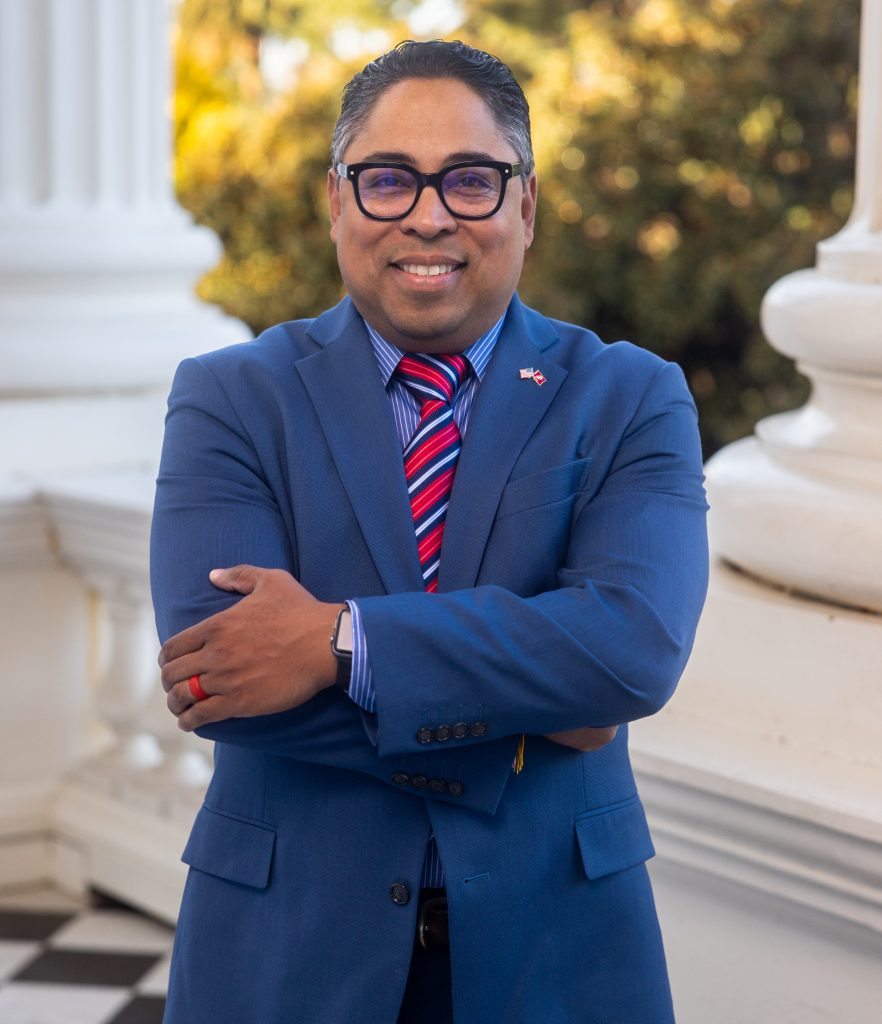
Asm. Jeff Gonzalez
Sponsored bills
Existing law establishes the California State University, under the administration of the Trustees of the California State University, as one of the segments of public postsecondary education in the state. Existing law requires the California State University to require each campus in its system to grant students the right to reenroll in their baccalaureate degree program after withdrawing or stopping out, if the student was in good academic standing with the university. This bill would establish the California State University Enrollment, Access, and Retention of Noncontinuous Students Program to increase the reenrollment rates of California State University students who have withdrawn from a campus before the conferral of a baccalaureate degree. The bill would require the Chancellor of the California State University to adopt a policy prioritizing enrollment funding for California State University campuses that meet enrollment figures and engage in outreach to reenroll former California State University students. The bill would require, on or before July 1, 2027, the trustees to adopt a policy related to evaluating transcripts of noncontinuous students who wish to reenroll in the California State University, as specified. The bill would require each campus to designate, on or before July 1, 2027, a noncontinuous student advisor, and, commencing July 1, 2027, provide priority registration to noncontinuous students returning to complete a degree. The bill would require, on or before September 1, 2028, the trustees to maintain an internet-accessible data dashboard that includes, among other things, the number of noncontinuous students who have reenrolled at a campus.
Existing law establishes the Department of Veterans Affairs. The department, among other services, provides veterans and their dependents and survivors with assistance in processing service-related disability claims, assistance in obtaining affordable housing, and information about health ailments associated with military service. This bill, upon appropriation by the Legislature, would require the department to establish a program to fund a study for nonnarcotic post-traumatic stress disorder treatments. The bill would require the department to submit a report that summarizes the findings and recommendations of the study to the Legislature no later than June 30, 2030, and would repeal these provisions on January 1, 2031.
Existing law establishes various food assistance programs, including, among others, the federal Supplemental Nutrition Assistance Program (SNAP) , known in California as CalFresh, under which supplemental nutrition assistance benefits allocated to the state by the federal government are distributed to eligible individuals by each county. Existing law declares that it is the established policy of the state that every human being has the right to access sufficient affordable and healthy food. Existing law defines "food insecurity" to mean the occasional or constant lack of access to the food one needs to live a healthy life and the uncertainty of being able to acquire enough food to meet the needs of an individual or household due to insufficient money or other resources. This bill would require the State Department of Social Services to annually conduct a statewide survey to assess food insecurity in the state, modeled after a specified federal survey. The bill would require the first statewide food insecurity survey to be completed on or before July 1, 2028. The bill would require the department, on or before October 1, 2028, and annually thereafter, to make the results of the statewide food insecurity survey publicly available on its internet website. The bill would authorize the department to collaborate or contract with a public research institution or other external vendor to implement these provisions. The bill would prohibit the department from conducting a statewide food insecurity survey during a year in which a federal food security survey is conducted, as specified.
Maddy summaryThis bill designates April 2026 as Second Chance Month in California to raise awareness about opportunities for individuals reentering society after incarceration. The measure is a ceremonial proclamation that does not alter laws, allocate funding, or change government operations. Its primary purpose is to encourage public recognition of the challenges faced by formerly incarcerated people and to highlight available support resources during that specific month.
This measure would proclaim the week of April 20, 2026, to April 24, 2026, inclusive, as California Home Visiting Week, and would encourage all Californians to recognize and celebrate the contributions of home visiting programs and professionals and the families they serve.
Maddy summaryThis bill designates the week of April 19 to April 25, 2026, as Mosquito Awareness Week. The measure is a commemorative resolution that officially recognizes this specific time period to highlight mosquito-related issues. It does not create new laws, impose regulations, or allocate funding, but rather serves to raise public awareness through official designation.
Maddy summaryThis bill designates April 2026 as Parkinson's Disease Awareness Month in California. It requires state officials to issue a formal proclamation highlighting the importance of raising public awareness about the condition. The measure does not change laws or allocate funding but serves to recognize the month dedicated to this health issue.
This measure would proclaim March 2026 as American Red Cross Month, dedicate it to all those who continue to advance the noble legacy of the organization's founder, and encourage all Californians to reach out, support the organization's humanitarian mission, and join in their commitment to care for people in need.
Maddy summaryThis bill designates April 14 of every year as Sylvia Mendez Day to honor the civil rights activist who challenged school segregation in California. The measure is a commemorative resolution that does not change laws, allocate funding, or alter government operations. By establishing this annual observance, the state recognizes Mendez's historical contributions to education and civil rights.