

Existing law, the California Uniform Controlled Substances Act, classifies controlled substances into 5 designated schedules, with the most restrictive limitations generally placed on controlled substances classified in Schedule I, and the least restrictive limitations generally placed on controlled substances in Schedule V. Existing law creates the Research Advisory Panel, as specified, to conduct hearings on, and in other ways study, research projects concerning controlled substances. Existing law authorizes the panel to approve research projects that have been registered with the Attorney General concerning the nature and effects of cannabis or hallucinogenic drugs and the treatment of abuse of controlled substances. Existing law authorizes a person who, under federal law, is entitled to use controlled substances for the purpose of research, instruction, or analysis to lawfully obtain and use those controlled substances upon approval by the panel, as specified. This bill, the California Veterans' Right to Try Act, would, until January 1, 2032, authorize the Research Advisory Panel to submit an investigational new drug application to the United States Food and Drug Administration requesting approval for a clinical trial of Schedule I or Schedule II controlled substances to study the administration and efficacy of those compounds among a patient pool comprised exclusively of veteran subjects with comorbidities that commonly overlap with the incidence of suicidality among veterans. This bill would make technical changes and would make related findings and declarations.
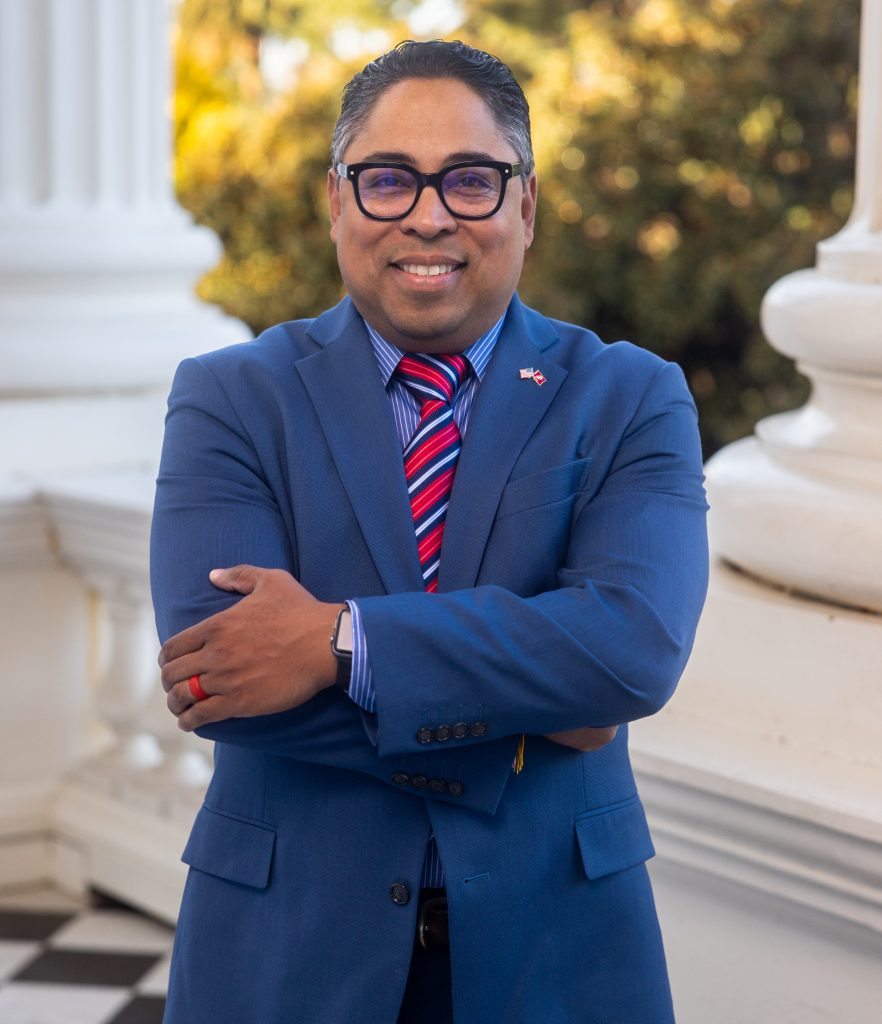
Asm. Jeff Gonzalez
Sponsored bills
Existing law establishes the State Department of Social Services in the California Health and Human Services Agency. Existing law authorizes the public guardian, a county position, to apply for appointment as guardian or conservator of the person, estate, or both, of any person domiciled in the county requiring a guardian or conservator if there is no one else who is qualified and willing to act and whose appointment would be in the best interest of the person, or if there is an imminent threat to a person's health or safety or the person's estate. The public guardian is required to apply for appointment if ordered by the court. This bill would require, upon appropriation by the Legislature, the State Department of Social Services to establish the position of the State Public Guardian to assist counties with performing their duties as a public guardian or public conservator. The bill would require the State Public Guardian to perform specified duties, including, among other things, providing guidance and technical assistance to local public guardians and public conservators to ensure compliance with applicable state and federal laws and promoting access to training materials necessary to perform the duties of a public guardian or public conservator, including materials required for compliance with continuing education requirements. The bill would limit the duties of the State Public Guardian to support of public guardianships and public conservatorships under the Probate Code and, to the extent possible, not those conservatorships for persons with a grave disability pursuant to the Lanterman-Petris-Short Act. The bill would make related findings and declarations.
The Corporation Tax Law imposes on every corporation doing business in the state, as defined, a tax according to or measured by net income and, in the case of a corporation with income derived from or attributable to sources both within and without this state, apportions the income between this state and other states and foreign countries in accordance with a single sales formula based on the sales within and without this state, except that in the case of an apportioning trade or business that derives more than 50% of its gross business receipts from conducting one or more qualified business activities, as defined, business income is apportioned in accordance with a specified 3-factor formula. Existing federal law, for purposes of determining a taxpayer's gross income for federal income tax purposes, requires that a person who is a United States shareholder of any controlled foreign corporation, as defined, to include in their gross income the net CFC tested income, as provided. The Corporation Tax Law, for taxable years beginning on or after January 1, 2003, for purposes of determining income derived from or attributable to sources within this state, allows corporations to make a statutory election as to whether their income is determined on a "water's-edge" basis or on a worldwide unitary basis. Under existing law, the election to report income on a water's-edge basis remains in effect until terminated, and provides conditions for the termination of the election. This bill, for taxable years beginning on or after January 1, 2026, would require a taxpayer that files on a water's-edge basis to account for net CFC tested income within the water's-edge group, as provided. The bill would require a taxpayer that files on a water's-edge basis to include all income and apportionment factors of any corporation, other than a bank, whose sales factor, instead of the average of 3 factors, in the United States is at least 20%. The bill would also terminate all water's-edge elections for the first taxable year beginning on or after January 1, 2028, and would not allow a taxpayer to make a water's-edge election, or file on a water's-edge basis, for taxable years beginning on or after January 1, 2028. The bill would authorize any taxpayer that has made a water's-edge election to terminate that election without the consent of the Franchise Tax Board for taxable years beginning on or after January 1, 2026, and before January 1, 2028. This bill would include a change in state statute that would result in a taxpayer paying a higher tax within the meaning of Section 3 of Article XIIIA of the California Constitution, and thus would require for passage the approval of 23 of the membership of each house of the Legislature. This bill would take effect immediately as a tax levy.
(1) Existing federal law establishes the federal Sentinel Landscapes Partnership, as part of which the United States Secretary of Defense, in coordination with the United States Secretary of Agriculture, the United States Secretary of the Interior, and the heads of other federal departments and agencies that elect to become full partners in the program, are authorized to establish and carry out a program to preserve and restore sentinel landscapes. Existing federal law authorizes federal departments and agencies to give to any eligible owner or manager of land within a designated sentinel landscape priority consideration for participation in any easement, grant, or assistance program and to coordinate actions between their departments and agencies and with other federal, state, interstate, and local agencies, Indian tribes, and private entities. Existing federal law defines "sentinel landscape" as a landscape-scale area encompassing one or more military installations or state-owned National Guard installations and the publicly and privately owned lands that serve to protect and support the rural economy, the natural environment, outdoor recreation, and the national defense missions of a military installation or state-owned National Guard installation. This bill would enact the California Sentinel Landscapes Act and would require the Natural Resources Agency to designate a Sentinel Landscapes Program Manager to coordinate state participation in the federal Sentinel Landscapes Partnership, as prescribed. The bill would require state agencies that have conservation grant or easement authority, to the extent feasible and consistent with their existing statutory authority, to cooperate with the Sentinel Landscapes Program Manager. This bill would authorize the Wildlife Conservation Board to provide grants for habitat protection, restoration, and enhancement projects that are located within a federally designated sentinel landscape, as prescribed. The bill would create the California Sentinel Landscapes Fund, into which the Wildlife Conservation Board is authorized to deposit federal funds, grants, and gifts and donations, including interest earned, that are designated and required by the donor to be used exclusively for purposes of these projects. The bill would continuously appropriate to the Wildlife Conservation Board moneys in the fund to implement these projects, thereby making an appropriation. This bill would authorize the Department of Conservation and the Strategic Growth Council, in evaluating applications for grants pursuant to the Sustainable Agricultural Lands Conservation Program, the State Coastal Conservancy, and Sierra Nevada Conservancy, in evaluating applications for grants, to give priority consideration to projects within a federally designated sentinel landscape, as prescribed. This bill would require the Natural Resources Agency, in collaboration with the Office of Land Use and Climate Innovation, Department of Conservation, Wildlife Conservation Board, State Coastal Conservancy, Sierra Nevada Conservancy, Department of Fish and Wildlife, and other relevant state entities, to regularly consult on how to align conservation opportunities with state and federal landscape protection goals. The bill would provide that implementation of the California Sentinel Landscapes Act is contingent upon the availability of federal funds, grants, gifts, donations, or other non-General Fund resources for its purposes. (2) Existing law establishes the California Farmland Conservancy Program Act, to be administered generally by the Department of Conservation. The act creates the California Farmland Conservancy Program Fund and requires moneys in the fund from federal grants, gifts, and donations, as specified, which are continuously appropriated to the department, and other moneys in the fund, upon appropriation, to be used for the purposes of the California Farmland Conservancy Program. The act authorizes the program to offer financial assistance for projects and activities on agricultural lands that support agricultural conservation and sustainable land management, including, among others, acquisition of agricultural conservation easements or fee title to protect the land's agricultural use or capacity that meets certain requirements. This bill would authorize the department to give priority consideration to applications for projects that are located within federally designated sentinel landscapes. To the extent the bill would expand the purposes for which those continuously appropriated moneys may be used, the bill would make an appropriation.
Existing state sales and use tax laws impose a tax on retailers measured by the gross receipts from the sale of tangible personal property sold at retail in this state, or on the storage, use, or other consumption in this state of tangible personal property purchased from a retailer for storage, use, or other consumption in this state. The Sales and Use Tax Law provides various exemptions from those taxes. This bill, the Fairground Act for Investment and Revitalization, on and after January 1, 2027, and before January 1, 2032, would exempt the gross receipts from the sale in this state of, and the storage, use, or other consumption in this state of, tangible personal property for use in the construction, development, or ongoing operation of a qualified project, defined to mean a new development project, or new phase of an existing project, that is located on the land of a fairground, undertaken pursuant to a written agreement and approved by a governing body of a fairground, as provided. The bill would require a governing body of a fairground to approve a project. By requiring additional duties be performed by the governing body of a fairground, this bill would impose a state-mandated local program. Existing law requires any bill authorizing a new tax expenditure to contain, among other things, specific goals, purposes, and objectives that the tax expenditure will achieve, detailed performance indicators, and data collection requirements. This bill also would include additional information required for any bill authorizing a new tax expenditure. The Bradley-Burns Uniform Local Sales and Use Tax Law authorizes counties and cities to impose local sales and use taxes in conformity with the Sales and Use Tax Law, and existing laws authorize districts, as specified, to impose transactions and use taxes in accordance with the Transactions and Use Tax Law, which generally conforms to the Sales and Use Tax Law. Amendments to the Sales and Use Tax Law are automatically incorporated into the local tax laws. This bill would provide that the exemption created by the bill does not apply to local sales and use taxes or transactions and use taxes. Existing law imposes or dedicates certain state sales and use tax rates for local funding, including through the Local Revenue Fund 2011. This bill would provide that the exemption created by the bill does not apply to those state sales and use tax rates imposed or dedicated for local government funding, including those rates for which revenues are deposited into the Local Revenue Fund 2011. The California Constitution requires the state to reimburse local agencies and school districts for certain costs mandated by the state. Statutory provisions establish procedures for making that reimbursement. This bill would provide that, if the Commission on State Mandates determines that the bill contains costs mandated by the state, reimbursement for those costs shall be made pursuant to the statutory provisions noted above. This bill would take effect immediately as a tax levy.
Existing law requires the State Department of Public Health to develop a coordinated state strategy for addressing the health-related needs of women, as specified. This bill, the Rural Farmworker Women's Health Act of 2026, would require the department to, beginning January 1, 2028, and upon appropriation by the Legislature for this purpose, establish a program to work with local nonprofit organizations who have a history of serving farmworker communities to provide free menstrual products in rural or agricultural communities. The bill would require the department to prioritize those communities with the highest rates of poverty.
Existing law requires that each death be registered with the local registrar of births and deaths in the district in which the death was officially pronounced or the body was found. Existing law establishes the required contents of the death certificate, including, but not limited to, the decedent's name, sex, race, and the disease or conditions leading directly to death and antecedent causes, among other relevant identifying and medical information. When the facts are incorrectly stated in a certificate of death, including a typographical error, existing law authorizes a person to make an affidavit under oath stating the changes necessary to make the record correct. Existing law requires that specified information be filed with the state or local registrar, and if the amendments are accepted, the State Registrar is required to transmit copies of the amendment to the county recorder in whose offices the copies of the original record and information are on file. Existing law requires the amendment to be filed with and become a part of the record to which it pertains. This bill would authorize a family member of the deceased, when a judicial determination is made on the manner of a deceased person's death, to submit a written request to the State Registrar for a new death certificate reflecting the newly determined manner of death. This bill would require the request to be supported by a certified copy of the plea, verdict, statement of decision, or a judgment showing that the manner of death was determined by a finder of fact to be different than stated on the existing certificate. The bill would require the State Registrar to review the request and issue a new death certificate if specified conditions are met, including, but not limited to, that the request identifies the determination of manner of death in the certified court record. The bill would require the State Registrar to transmit copies of the new death certificate and the new certificate will supplant any previously issued certificate for the deceased person. The bill would require the local registrar to transmit any copies of the previously issued death certificate to the State Registrar if it is practical to do so and if it is not practical to do so, seal a cover over the copy, as specified. The bill would specify that a plea, verdict, statement of decision, or judgment reflects a judicial determination that the manner of death was homicide if it shows criminal responsibility or civil liability for the death of the deceased person. The bill would authorize a family member of the deceased to include additional certified court records with their request to permit the State Registrar to determine the manner of death. The bill would require a determination by the State Registrar to be based solely on the request and the submitted certified court documents. By imposing new duties on local registrars, this bill would impose a state-mandated program. The California Constitution requires the state to reimburse local agencies and school districts for certain costs mandated by the state. Statutory provisions establish procedures for making that reimbursement. This bill would provide that, if the Commission on State Mandates determines that the bill contains costs mandated by the state, reimbursement for those costs shall be made pursuant to the statutory provisions noted above.
Maddy summaryThis bill designates the week of May 17 to May 24, 2026, as National Public Works Week throughout California to honor the contributions of public works professionals. It directly affects engineers, managers, and employees in government and the private sector who maintain essential infrastructure like transportation systems, water supplies, and public buildings. The resolution requests that the Governor issue a proclamation encouraging the public to observe the week with educational programs and activities that highlight the importance of these workers.
The Personal Income Tax Law allows various credits against the tax imposed by that law. Existing law requires any bill authorizing a new tax credit to contain, among other things, specific goals, purposes, and objectives that the tax credit will achieve, detailed performance indicators, and data collection requirements. This bill would allow credits against the tax imposed by the Personal Income Tax Law for taxable years beginning on or after January 1, 2027, and before January 1, 2032, to a qualified taxpayer for qualified costs relating to qualified home hardening, as defined, and for qualified costs relating to qualified vegetation management, as defined, in specified amounts, not to exceed an aggregate amount of $50,000,000 per taxable year. This bill would require a qualified taxpayer to reserve a credit for qualified costs relating to qualified home hardening or qualified vegetation management to be eligible for the above-described credits and provide all necessary information for this purpose, as specified. This bill also would include additional information required for any bill authorizing a new income tax credit and would require the Legislative Analyst's Office to prepare a written report regarding the credits, as provided. This bill would take effect immediately as a tax levy.
Existing law requires the Department of Veterans Affairs, in voluntary cooperation with specified local entities, to design, develop, and construct a state-owned and state-operated Northern and Southern California Veterans Cemetery and California Central Coast Veterans Cemetery. Existing law requires the department to oversee and coordinate the design, development, and construction of these cemeteries. Existing law requires the department to adopt regulations to specify the eligibility requirements for interment in one of these cemeteries. This bill would require the department to establish and administer a state and local matching funds program for veterans cemetery maintenance funds by requiring that for $1 contributed locally by individuals, veterans' service organizations, local governments, or private donors, the state would contribute $1 in matching funds, up to $250,000 per veterans cemetery per fiscal year. The bill would require a veterans cemetery to apply to the department to be part of the program, and would require the department to, among other things, review the applications annually. The bill would establish the Veterans Cemetery Maintenance-Endowment Account in the General Fund that would be administered by the department. The bill would require moneys in the account to be allocated, upon appropriation by the Legislature, to the department for distribution to a veterans cemetery. The bill would require the department to provide to the Legislature a report summarizing all participating veterans cemeteries, total state matches, and fund performance.