

Passed Jan 27, 2020
1 co-sponsor
Total votes
27,218
all sessions
Attendance
91%
2,152 missed
Lower than 95% of chamber peers
With party
97%
of cast votes
Near the chamber average
Bipartisan score
1%
crosses aisle rarely
Near the chamber average
Sponsored
2,638
bills & resolutions
Near the chamber average
Committees
11
assignments
2,638 bills and resolutions
Sponsored bills
Total
2,638
Primary
235
Co-sponsor
2,403
This page
2,638
matching current filters
Communications: universal service programs: Public Utilities Commission reimbursement fees.
Under existing law, the Public Utilities Commission has regulatory authority over public utilities, including telephone corporations. Existing law establishes the California High-Cost Fund-A Administrative Committee Fund, the California High-Cost Fund-B Administrative Committee Fund, the Universal Lifeline Telephone Service Trust Administrative Committee Fund, the Deaf and Disabled Telecommunications Program Administrative Committee Fund, the Payphone Service Providers Committee Fund, the California Teleconnect Fund Administrative Committee Fund, and the California Advanced Services Fund (CASF) in the State Treasury and provides that moneys in the funds are held in trust and may be expended only to accomplish specified telecommunications universal service programs, upon appropriation in the annual Budget Act or upon supplemental appropriation. This bill would prohibit the commission from collecting, for deposit into any universal service fund, any revenues derived from charges upon the provision of a communications service that the Federal Communications Commission has determined is an information service, as specified. Existing law establishes the Public Utilities Commission Utilities Reimbursement Account and authorizes the commission to annually determine a utility reimbursement fee to be paid by every public utility providing service directly to customers or subscribers and subject to the jurisdiction of the commission, except for a railroad corporation. The commission is required to establish the fee, with the approval of the Department of Finance, to produce a total amount equal to that amount established in the authorized commission budget for the same year, and an appropriate reserve to regulate public utilities, less specified sources of funding. This bill would prohibit the commission from imposing a utility reimbursement fee that is applicable to the provision of a communications service that the Federal Communications Commission has determined is an information service, as specified.
Failed Jan 27, 2020
1 co-sponsor
Relative to the Willie L. Brown, Jr. Circle and Plaza.
This measure would name the public street, circle, and plaza at 914 and 915 Capitol Mall in the City of Sacramento as the Willie L. Brown, Jr. Circle and Plaza. The measure would request the Department of General Services to determine the cost of erecting the appropriate signage commemorating this special designation and, upon receiving donations from nonstate sources, to cover that cost to erect that signage.
Signed into law Jan 24, 2020
1 co-sponsor
Peace Officer Peer Support Labor Management Committee.
Existing law establishes the Department of Corrections and Rehabilitation and charges it with certain duties and powers, including, among other things, the operation of prisons and other specified institutions. This bill would require the department to establish a Peace Officer Peer Support Labor Management Committee tasked with crafting, updating, and monitoring the implementation of a standardized statewide peace officer policy for the department's peer support program to provide substantive assistance to the peace officers employed by the department. The bill would require the committee to be composed of an equal number of representatives of the employer and peace officer employees, and would require the members of the committee to be selected and hold their first meeting on or before July 1, 2020. The bill would require the policy to address, among other things, the selection process and training for peer support team members, and guidelines for the types of communication that would remain confidential within the peer support program. The bill would require the policy to be fully implemented by January 1, 2022. The bill would require the department to submit, beginning July 1, 2020, an annual report to the Legislature that contains data pertaining to the utilization rates of the peace officer peer support program statewide.
Vetoed Jan 21, 2020
1 co-sponsor
High-speed rail: Metrolink commuter rail system.
The California High-Speed Rail Act creates the High-Speed Rail Authority to develop and implement a high-speed rail system in the state. The Safe, Reliable High-Speed Passenger Train Bond Act for the 21st Century, approved by the voters as Proposition 1A at the November 4, 2008, general election, provides for the issuance of $9,000,000,000 in general obligation bonds for high-speed rail purposes and $950,000,000 for other related rail purposes. This bill would appropriate $4,000,000,000 of those bond revenues to the Southern California Regional Rail Authority to fund improvements to the Metrolink commuter rail system. The bill would require those improvements to support blended operation with high-speed trainsets upon completion of specified phases of the high-speed rail system, and would require that infrastructure upgrades funded by this appropriation make the corridor or usable segment thereof suitable and ready for high-speed train operation.
In committee Jan 17, 2020
0 co-sponsors
Sickle Cell Disease Awareness Month.
This measure would recognize September 2020 as Sickle Cell Disease Awareness Month and encourage the Legislature to appropriate funds for research, treatment, and monitoring of sickle cell disease, and for related education and outreach.
Passed Jan 15, 2020
1 co-sponsor
Animal blood donors.
Existing law prohibits any person from collecting blood from animals, or preparing, testing, processing, storing, or distributing blood or blood component products, as defined, from animals, for retail sale and distribution except in a commercial blood bank for animals that is licensed by the Secretary of Food and Agriculture. Existing law requires a commercial blood bank for animals, as a condition of licensing, to document how the animal donor was acquired and to have a written protocol for, among other things, ongoing veterinary care for animals held in blood donor facilities. Existing law exempts all records held by the Department of Food and Agriculture pursuant to these provisions from disclosure pursuant to the California Public Records Act. This bill would modify the definition of a commercial blood bank for animals to include establishments that collect blood not only from "captive closed-colony" animals that are kept, housed, or maintained for the purpose of collecting blood, but also "community-sourced" animals, as defined, that are brought by their owners to the commercial blood bank for animals to have their blood collected. The bill would define "indirect supervision" to have the same meaning as in specified regulations. The bill would require a commercial blood bank for animals to include in its written protocol, which would be required to be consistent with current standards of care and practice for the field of veterinary transfusion medicine, bloodborne pathogen testing for all canine and feline blood donors, as specified, and ongoing veterinary care, including an annual physical exam and vaccination schedule for animals held in a captive closed-colony. The bill would prohibit a commercial blood bank for animals from providing payment to a person who brings a community-sourced animal to the commercial blood bank for the purpose of donating that animal's blood or blood component products, and would impose specified requirements on a commercial blood bank for animals that accepts a donation from a community-sourced animal. The bill would require commercial blood banks for animals to annually submit a specified report to the department. The bill would require the department to submit a specified report to the Legislature on or before January 1, 2025. The bill would delete the above-described exemption from the California Public Records Act, except for identifying personal information, as defined, of owners of animal donors, as provided. The bill, for purposes of liability, would declare the production and use of whole blood, plasma, blood products, and blood derivatives for the purpose of injecting or transfusing the same, or any of them, into an animal to be construed to be, and would declare to be, the rendition of a service by each and every person, firm, or corporation participating, and would prohibit from being construed, and would be declared not to be, a sale of that whole blood, plasma, blood products, or blood derivatives. Existing constitutional provisions require that a statute that limits the right of access to the meetings of public bodies or the writings of public officials and agencies be adopted with findings demonstrating the interest protected by the limitation and the need for protecting that interest. This bill would make legislative findings to that effect. Under existing law, a violation of certain provisions of the Food and Agricultural Code relating to animals is a crime. Because a violation of some of the above provisions would be a crime, this bill would impose a state-mandated local program. The California Constitution requires the state to reimburse local agencies and school districts for certain costs mandated by the state. Statutory provisions establish procedures for making that reimbursement. This bill would provide that no reimbursement is required by this act for a specified reason.
Vetoed Jan 13, 2020
1 co-sponsor
Relative to mental health and substance use treatment.
This measure would urge specified state departments and the Attorney General to use their authority to ensure that health care service plans and health insurers subject to their authority comply with the federal Paul Wellstone and Pete Domenici Mental Health Parity and Addiction Equity Act of 2008.
Passed Jan 9, 2020
1 co-sponsor
Damages: childhood sexual assault: statute of limitations.
Existing law requires that an action for recovery of damages suffered as a result of childhood sexual abuse, as defined, be commenced within 8 years of the date the plaintiff attains the age of majority or within 3 years of the date the plaintiff discovers or reasonably should have discovered that the psychological injury or illness occurring after the age of majority was caused by sexual abuse, whichever occurs later, and provides that certain of those actions may not be commenced on or after the plaintiff's 26th birthday. Existing law also prohibits confidentiality provisions within a settlement agreement arising from a claim of childhood sexual abuse. This bill would expand the definition of childhood sexual abuse, which would instead be referred to as childhood sexual assault. This bill would increase the time limit for commencing an action for recovery of damages suffered as a result of childhood sexual assault to 22 years from the date the plaintiff attains the age of majority or within 5 years of the date the plaintiff discovers or reasonably should have discovered that the psychological injury or illness occurring after the age of majority was caused by sexual assault, whichever is later. This bill would also provide for the recovery of up to treble damages against certain defendants in these actions, and would revive time-lapsed claims in certain circumstances. Existing law, the Government Claims Act, generally requires the presentation of all claims for money or damages against local public entities. The Government Claims Act excludes from this requirement claims made for the recovery of damages suffered as a result of childhood sexual abuse, as defined, arising from conduct that occurred on or after January 1, 2009. This bill would change that reference from childhood sexual abuse to childhood sexual assault, as defined, and it would remove the requirement that the conduct occurred on or after that specified date. The bill would also make a conforming change to the provision governing confidentiality provisions in childhood sexual abuse claims.
Signed into law Oct 13, 2019
1 co-sponsor
Medi-Cal: home- and community-based services: military.
Existing law establishes the Medi-Cal program, which is administered by the State Department of Health Care Services and under which qualified low-income persons receive health care services. The Medi-Cal program is, in part, governed and funded by federal Medicaid program provisions. Existing federal law provides for various home- and community-based services (HCBS) , as part of a waiver or a state plan amendment under the Medicaid program, to promote coverage and services that enable an individual who would otherwise be institutionalized to live at home or in the community. This bill would require the retention of placement on the waiting list for, or the reenrollment in, specified HCBS waiver programs for an individual who is a dependent child or spouse of an active duty military service member and who transfers out of state with the military service member on official military orders, if the individual subsequently reestablishes residence in this state and meets other specified procedural requirements. The bill would authorize an individual applying for one of those specified waiver programs who is a dependent child or spouse of an active duty military service member and is residing out of state to submit the individual's application to enroll in that waiver program as soon as the military service member receives official military orders to transfer to this state and before moving to this state, as specified. The bill would condition the implementation of these provisions on receipt of any necessary federal approvals and the availability of federal financial participation, and would authorize the department to seek amendments to the waiver programs, or take other action, as necessary to implement these provisions. The bill would authorize the department to implement these provisions by means of letters or other similar instructions, without taking regulatory action.
Signed into law Oct 12, 2019
1 co-sponsor
Ask Maddy
·
AI policy assistant
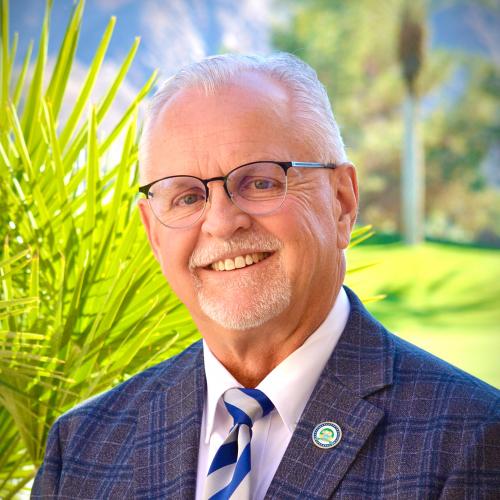
Ask Maddy about Tom Lackey
Scope: CA
Hi! I can help you understand Tom Lackey's legislative record. What would you like to know?
Try one of these
i
Maddy answers using official bill text and legislative records. Always verify before sharing.
Sources cited inline