

Existing law establishes the State Department of Public Health, headed by the State Public Health Officer, and sets forth its powers and duties, including the administration of provisions relating to the prevention and control of communicable diseases. Existing law authorizes the department to take necessary measures to ascertain the nature and prevent the spread of communicable diseases. Existing law prohibits the governing authority of a school or other institution from unconditionally admitting or advancing to the 7th grade level any person as a pupil of any public or private elementary or secondary school, childcare center, day nursery, nursery school, family daycare home, or development center, unless, prior to their admission or advancement to that institution, they have been fully immunized against various communicable diseases, as provided, subject to any specific age criteria. Existing law requires the governing authority of a school or other institution, on at least an annual basis, to file a written report on the immunization status of new entrants to the school or institution under their jurisdiction with the department and the local health department at times and on forms prescribed by the department. This bill, the Informed Parents, Healthy Schools Act, would require the department to establish, and update as needed, levels of immunization rates needed to prevent the spread of specified communicable diseases. The bill would require the department to establish notification procedures designed to annually inform designated parties, including schools, daycare centers, and county departments of public health, when an immunization rate is determined to fall below the rate established by the department, among other things. The bill would require that the notification be translated into any language, in addition to English, that is spoken by 15% or more of enrolled children. The bill would require the department to apply existing data de-identification standards and methodologies to protect individual privacy, consistent with applicable state and federal law, in implementing these provisions. The bill would require a school or institution, as defined, to distribute the above-described notification to parents or guardians of enrolled children within 10 business days of receiving the notification from the department. The bill would authorize the school or institution to determine the manner of distribution for the notification, consistent with specified requirements. The bill would require the governing authority of the school or institution to cooperate with the department in carrying out these provisions. By requiring school districts to comply with these requirements, this bill would impose a state-mandated local program. The California Constitution requires the state to reimburse local agencies and school districts for certain costs mandated by the state. Statutory provisions establish procedures for making that reimbursement. This bill would provide that, if the Commission on State Mandates determines that the bill contains costs mandated by the state, reimbursement for those costs shall be made pursuant to the statutory provisions noted above.
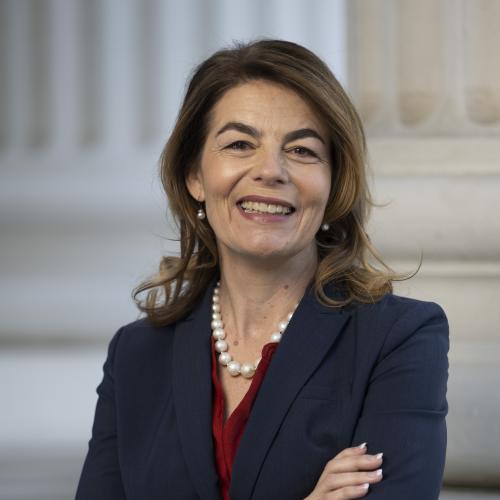
Rep. Dawn Addis
Sponsored bills
Existing law establishes the Department of Fish and Wildlife and sets forth the duties of that department, which include administering various programs for the protection and conservation of fish and wildlife. Existing law authorizes the department to take feasible actions to conserve monarch butterflies and the unique habitats they depend upon for successful migration. Existing law, the California Coastal Act of 1976, among other things, establishes the California Coastal Commission and provides for planning and regulation of development in the coastal zone, as defined. This bill would require, on or before July 1, 2028, the department, in coordination with the commission, to identify known monarch butterfly overwintering habitat sites in the coastal zone and current local government monarch butterfly overwintering habitat management plans or policies. The bill would also require, on or before July 1, 2029, the department, in coordination with the commission, to develop and provide guidance on model policies to be used by a local government for the protection of monarch butterfly overwintering habitat, including habitat restoration and enhancement. The bill would require, after the above-described guidance on model policies is finalized, a local government with a monarch butterfly overwintering habitat site located within its jurisdiction and the coastal zone, as described, to, on or before July 1, 2031, develop and implement enforceable monarch butterfly overwintering habitat site protection policies, as provided. By imposing additional duties on a local government, the bill would impose a state-mandated local program. The California Constitution requires the state to reimburse local agencies and school districts for certain costs mandated by the state. Statutory provisions establish procedures for making that reimbursement. This bill would provide that, if the Commission on State Mandates determines that the bill contains costs mandated by the state, reimbursement for those costs shall be made pursuant to the statutory provisions noted above.
Existing law, the Community Assistance, Recovery, and Empowerment (CARE) Act (CARE Act) , authorizes specified persons, including a person with whom the respondent resides, family members, and first responders, among others, to petition a civil court to create a voluntary CARE agreement or a court-ordered CARE plan and implement services, to be provided by county behavioral health agencies, to provide behavioral health care, including stabilization medication, housing, and other enumerated services, to adults who are currently experiencing a severe mental illness and have a diagnosis identified in the disorder class schizophrenia and other psychotic disorders, or bipolar I disorder with psychotic features, and who meet other specified criteria. Existing law requires the Judicial Council to develop a mandatory form for use to file a CARE process petition with the court and any other forms necessary for the CARE process, to be signed under the penalty of perjury, and requires the form to contain certain information, including either a specified affidavit of a licensed behavioral health professional or evidence the respondent was detained for a minimum of two intensive treatments pursuant to specified provisions of law. Existing law, the Lanterman-Petris-Short Act (LPS Act) , generally provides for the evaluation, treatment, and civil commitment of persons with mental health disorders and other specified persons. Existing law authorizes, under a superior court order, an evaluation of a person alleged, as a result of mental disorder, to be a danger to themselves or others or to be gravely disabled, and provides the forms to use for these evaluations. The CARE Act authorizes a court to terminate a respondent's participation in the CARE process if the court determines that the respondent is not participating in the CARE process or is not adhering to their CARE plan, as specified, and authorizes the court to order the court-ordered evaluation under the LPS Act. If the court finds the petitioner has made a prima facie showing that the respondent is, or may be, a person eligible for the CARE program, the court is required to order the county behavioral health agency, or their designee, as specified, to submit a written report to the court with specified information, including, but not limited to, a determination whether the respondent meets, or is likely to meet, the criteria for the CARE process and conclusions and recommendations about the respondent's ability to voluntarily engage in services. Existing law requires the court to, within 5 days of receiving the report, take one of several actions, including dismissing the petition if the court determines that voluntary engagement with the respondent is effective and the individual has enrolled, or is likely to enroll, in behavioral health treatment. This bill would require the written report to include conclusions about whether the respondent is likely to need a higher level of care than is available under the CARE Act and, if so, recommendations about the appropriate level of care and the necessary steps to obtain that level of care for the respondent and remove the authorization for a court to dismiss the petition if the respondent is only likely to enroll in behavioral health treatment. If the court intends to dismiss a petition because the respondent needs a higher level of services, the bill would authorize the court to order the county to conduct a prepetition screening and hold the CARE petition open until the screening is complete. The bill would also make other technical and conforming changes. By requiring a higher level of service on the county, this bill would impose a state-mandated local program. Existing law requires all hearings regarding these provisions to occur in person unless the court, in its discretion, allows a party or witness to appear remotely. This bill would require the court to allow the hearings to be held remotely, unless otherwise ordered by the court or demanded by the respondent. The California Constitution requires the state to reimburse local agencies and school districts for certain costs mandated by the state. Statutory provisions establish procedures for making that reimbursement. This bill would provide that with regard to certain mandates no reimbursement is required by this act for a specified reason. With regard to any other mandates, this bill would provide that, if the Commission on State Mandates determines that the bill contains costs so mandated by the state, reimbursement for those costs shall be made pursuant to the statutory provisions noted above.
Existing law requires the operator of a private detention facility, as defined, to comply with, and adhere to, the detention standards of care and confinement agreed upon in the facility's contract for operations, as specified. Existing law requires a private detention facility operator to comply with, and adhere to, all local and state public health orders and occupational safety and health regulations. This bill, the Masuma Khan Justice Act, would authorize the State Department of Public Health to inspect an involuntary residential facility, defined as a facility that houses more than 50 individuals overnight, restricts residents' ability to enter or leave, as specified, and provides specified onsite services, for the limited purpose of ensuring sanitary, hygienic, and safe conditions, using standards and inspection protocols consistent with those applied to licensed residential health facilities. The bill would authorize unnoticed inspections under specified conditions. The bill would require the department, within 30 days of completing an inspection, to submit a report to the Legislature. The bill would require the operator of a facility to provide access to the department for an inspection described above, to maintain all records necessary to demonstrate compliance with the above-described standards, and to correct any violation identified by the department, as specified. The bill would make a violation of the above-described requirements by an operator of a facility, after appropriate notice and an opportunity for a hearing, subject to an administrative penalty, as specified, per violation per day. If an operator fails to correct a violation within the time specified in the citation, the bill would authorize the department to issue a safety warning that identifies the uncorrected condition and requires prompt corrective action by the operator. The bill would authorize the department to refer violations to the Attorney General, and would authorize the Attorney General to bring a civil action for declaratory or injunctive relief. The bill would require the department to adopt rules and regulations to ensure that all involuntary residential facilities comply with measurable standards for sanitary, hygienic, and safe conditions and would require the department to consult with specified organizations in the development of these standards. The bill would require the department to implement the above-described provisions in a manner that avoids unnecessary duplication of existing state or local health and safety oversight, as specified. The bill would declare that its provisions are severable. The bill would make related findings and declarations. The bill would declare that it is to take effect immediately as an urgency statute.
Maddy summaryThis bill serves as a commemorative resolution to mark the 50th anniversary of the Surface Mining and Reclamation Act of 1975. It does not create new laws or alter existing regulations but instead formally acknowledges the milestone achievement of the original legislation. The measure is intended to honor the history of mining and land reclamation efforts established by the 1975 act.
This measure would acknowledge and celebrate 50 years of coastal protection and affirm the state's longstanding commitment to protecting its coastal waters, as specified.
Maddy summaryThis bill designates June 2026 as Men's Mental Health Month to raise awareness about mental health issues affecting men. The measure is a formal proclamation that does not change laws or allocate funding, but rather encourages public recognition of the topic. Once passed, it serves as an official declaration without imposing new requirements on individuals or organizations.
This measure would declare the month of June 2026 as Alzheimer's Disease and Brain Awareness Month, and would urge all Californians to commemorate the month of June 2026 as Alzheimer's Disease and Brain Awareness Month.
Maddy summaryThis bill designates June 23, 2026, as Social Media Harms Victim Remembrance Day in California. The measure requires the state to officially proclaim this date, creating a specific day for remembrance. It does not change laws or impose new requirements on individuals or organizations. The primary effect is to establish a formal date for commemoration within the state.
This measure would recognize June 19, 2026, as Juneteenth and would urge the people of California to join in celebrating Juneteenth as a day to honor and reflect on the significant role that African Americans have played in the history of the United States and how they have enriched society through their steadfast commitment to promoting unity and equality.