

The Donahoe Higher Education Act sets forth, among other things, the missions and functions of California's public and independent segments of higher education and their respective institutions of higher education. A provision of the act applies to the University of California only to the extent that the Regents of the University of California, by appropriate resolution, act to make the provision applicable. A portion of the Donahoe Higher Education Act, known as the Equity in Higher Education Act, provides, among other things, that all students have the right to participate fully in the educational process, free from discrimination and harassment, and that California's postsecondary educational institutions have an affirmative obligation to combat racism, sexism, and other forms of bias, and a responsibility to provide equal educational opportunity. This bill would state that the Trustees of the California State University and the Regents of the University of California have the primary responsibility to prevent and address conduct that either creates a hostile environment for students on campus or results in differential treatment of students on campus, as specified. The bill would require the trustees to, among other things, adopt rules and procedures, as specified, to prohibit violent, harassing, intimidating, or discriminatory conduct that creates a hostile environment on campus, to prohibit conduct that limits or denies a person's ability to participate in or benefit from the free exchange of ideas or the educational mission of the California State University, and to establish, and require each campus to publish on campus internet websites, reasonable content-neutral time, place, and manner restrictions and, if applicable, any advance permitting requirements for protests on campus. The bill would require the trustees to develop mandatory training programs to educate students on what constitutes violent, harassing, intimidating, or discriminatory conduct that creates a hostile environment on campus, the procedures for investigating violations of the student code of conduct, when and where protests and gatherings may be held, as specified, and on how to exchange views in an atmosphere of mutual respect and civility. The bill would require the trustees to submit a report, on or before January 2, 2025, and annually thereafter, to the Legislature on the implementation and administration of the bill. The bill would request the University of California to comply with these provisions. The bill would make its provisions severable.
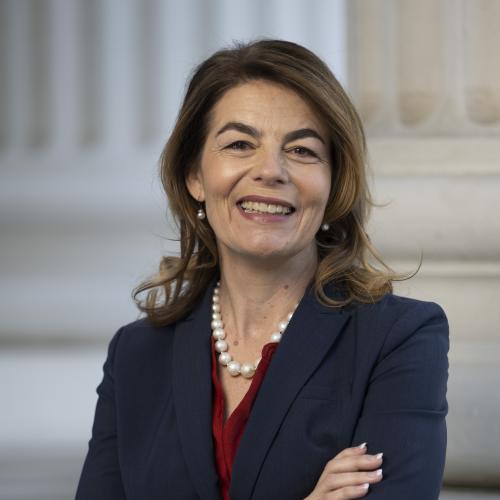
Asm. Dawn Addis
Sponsored bills
Existing law establishes various educational benefits for dependents of veterans who were killed during military service or are totally disabled, as specified. Existing law defines "dependent of a veteran" to include the spouse of a totally disabled veteran. Existing law prohibits a dependent of a veteran from receiving these educational benefits during the time the dependent is entitled to receive specified federal educational benefits or duplicate assistance from any other government source. This bill would repeal that prohibition.
(1) Existing law provides that a child may be adjudged to be a dependent of the juvenile court because of abuse or neglect and generally provides for the placement of dependent children in various foster care placement settings. Existing law requires the court to review the status of every dependent child in foster care no less frequently than once every 6 months and requires the county social worker to file a supplemental report as part of that review. This bill would additionally require the court, in conducting the periodic status review for a child or nonminor dependent who is not residing with their relatives, nonrelative extended family members, or in the case of an Indian child, their extended family members, or an Indian custodian, to determine whether the social worker has continued efforts, and in the case of an Indian child, the active efforts, to locate any relatives, extended family members, or nonrelative extended family members who could provide family support or possible placement of the child and the names of those relatives, extended family members, or nonrelative extended family members. The bill would also require the supplemental report for a child or nonminor dependent who does not reside with their relatives, nonrelative extended family members, or in the case of an Indian child, their extended family members, or an Indian custodian to additionally include the efforts, and in the case of an Indian child, the active efforts, and findings that the social worker has made to locate any relative, extended family members, or nonrelative extended family members who could provide family support or possible placement of the child or nonminor dependent and the name of those relatives, extended family members, or nonrelative extended family members. By imposing additional duties on county officials, the bill would impose a state-mandated local program. (2) Existing law requires the court to place a foster child in the home of a relative, if possible, unless the placement would not be in the best interest of the child. Existing law requires the court to take into consideration other specified factors in making a determination of the placement of a foster child. This bill would make a nonsubstantive change to correct an erroneous cross reference in that provision. (3) The California Constitution requires the state to reimburse local agencies and school districts for certain costs mandated by the state. Statutory provisions establish procedures for making that reimbursement. This bill would provide that no reimbursement is required by this act for a specified reason.
Existing law requires the adopted course of study for grades 1 to 6, inclusive, and the adopted course of study for grades 7 to 12, inclusive, to include certain areas of study, including, among others, English, mathematics, social sciences, science, and visual and performing arts, as specified. Existing law requires the Instructional Quality Commission, when the history-social science curriculum framework is next revised, on or after January 1, 2024, to consider providing for inclusion, in that curriculum framework, related evaluation criteria, and accompanying instructional materials, of instruction, among other things, the historical, social, economic, and political contributions of Asian Americans, Native Hawaiians, and Pacific Islanders in the United States. This bill, with respect to the adopted course of study for grades 1 to 6, inclusive, for social sciences, would additionally require instruction that provides a foundation for understanding the Spanish colonization of California and the Gold Rush Era, including the treatment and perspectives of Native Americans during those periods. The bill, with respect to the adopted course of study for grades 7 to 12, inclusive, for social sciences, would require, to the extent instruction is provided on the Spanish colonization of California or the Gold Rush Era, instruction that provides a foundation for understanding the treatment and perspectives of Native Americans during those periods. The bill would require the commission, when the State Board of Education next revises the history-social science curriculum framework or adopts new instructional materials, on or after January 1, 2025, to consider including content on the treatment and perspectives of Native Americans during those periods in that curriculum framework or evaluation criteria for instructional materials. To the extent that this bill would create new duties for local educational agencies or local officials, it would constitute a state-mandated local program. This bill would incorporate additional changes to Section 51210 of the Education Code proposed by AB 2073 to be operative only if this bill and AB 2073 are enacted and this bill is enacted last. This bill would incorporate additional changes to Section 51220 of the Education Code proposed by AB 1871 to be operative only if this bill and AB 1871 are enacted and this bill is enacted last. This bill would incorporate additional changes to Section 51226.3 of the Education Code proposed by AB 1805 to be operative only if this bill and AB 1805 are enacted and this bill is enacted last. The California Constitution requires the state to reimburse local agencies and school districts for certain costs mandated by the state. Statutory provisions establish procedures for making that reimbursement. This bill would provide that, if the Commission on State Mandates determines that the bill contains costs mandated by the state, reimbursement for those costs shall be made pursuant to the statutory provisions noted above.
(1) Existing federal law, the Victims of Crime Act of 1984, creates the Crime Victims Fund and authorizes federal financial assistance to states for the purpose of supporting eligible crime victim assistance programs. Existing law creates various programs under the Office of Emergency Services related to crime prevention and education, including, among other things, programs concerning family violence prevention and domestic violence prevention. This bill, the California Victims of Crime Act, would establish the California Crime Victims Fund in the State Treasury and would require that moneys deposited in the fund be continuously appropriated to the Office of Emergency Services to support crime victims services. The bill would require the Office of Emergency Services to seek advisement from the Victims of Crime Act Steering Committee on priorities for utilizing the funds and would require the Treasurer to provide an annual report to the Legislature on the amounts deposited into the fund. By continuously appropriating moneys to the Office of Emergency Services for the support of crime victim services, the bill would make an appropriation. (2) Existing law establishes the aggravated white-collar crime enhancement which imposes enhanced penalties against a person who commits 2 or more related felonies, a material element of which is fraud or embezzlement, that involve a pattern of related felony conduct, and the pattern of related felony conduct involves the taking or loss of more than $100,000, as specified. This bill would authorize a court to impose an additional fine, known as the corporate white collar criminal enhancement, against a corporation that is convicted of a misdemeanor or felony. The bill would authorize the court to determine the amount of the fine, but would set specified limits. The bill would require the court to consider certain factors when determining the amount of the fine, including, among other things, the nature and seriousness of the offense and the corporation's assets, liabilities, and net worth, as specified. The bill would require that any moneys collected under this provision be deposited into the California Crime Victims Fund. (3) The California Constitution entitles the victim of a crime to restitution. Existing law requires the court in each criminal case to order a convicted defendant to pay full restitution to the victim and a separate restitution fine, as specified. This bill would, if a corporation is convicted of a misdemeanor or felony offense, require the court to impose a separate and additional restitution fine, as specified. The bill would authorize the court to determine the amount of the restitution fine, but would impose specified maximums. The bill would require any moneys collected under this provision to be distributed to the California Crime Victims Fund and the prosecuting agency that brought the criminal prosecution, as specified.
Existing law, the California Community Care Facilities Act, provides for the licensing and regulation of community care facilities, including short-term residential therapeutic programs, by the State Department of Social Services. The act defines a short-term residential therapeutic program as a residential facility licensed by the department and operated by any public agency or private organization that provides an integrated program of specialized and intensive care and supervision, services and supports, treatment, and short-term, 24-hour care and supervision to children that is trauma-informed. Existing law requires specified facilities, including community care facilities, to conduct a clinical and quality review for each episode of the use of seclusion or behavioral restraints, as defined. Existing law requires the facility to conduct a debriefing regarding the incident with the person, and other specified individuals upon the person's request, to discuss how to avoid a similar incident in the future. Under existing law, the person's participation in the debriefing is voluntary. This bill, The Accountability in Children's Treatment Act, would require, in the case of an incident involving the use of seclusion or behavioral restraints in a short-term residential therapeutic program, the facility to notify any foster child who has been subject to seclusion or behavioral restraints of their personal rights by no later than the day following the incident and to provide, within 7 days, a description of the incident, in both oral and written forms, to the person subject to the seclusion or behavioral restraints and, as applicable, to the person's parent, foster parent, guardian, Indian custodian, or other authorized representative, and attorney, if any, and for Indian children, the tribal representative. The bill would require that the description contain certain information, including the actions taken during the incident and its duration, the rationale for the actions, and the personnel approving and implementing the actions. The bill would require the facility to provide a copy of the written description to the department, also within 7 days. The bill would require the department to review all reported incidents involving the use of seclusion or behavioral restraints and to investigate any incidents that indicate a potential health and safety concern or licensing violation. As part of the assessment to determine if an investigation is required, the bill would require the department to determine whether the use of seclusion or behavioral restraints potentially violated any licensing laws and regulations or violated the licensee's approved emergency intervention plan. If the department determines that an incident should be investigated, the bill would require the department to provide the Office of the State Foster Care Ombudsperson with a copy of the incident report and require the ombudsperson to exercise their discretion in determining whether to investigate the incident, as specified. Existing law requires the Secretary of California Health and Human Services or their designee to take steps to establish a system of mandatory, consistent, timely, and publicly accessible data collection regarding the use of seclusion and behavioral restraints in specified facilities, including community care facilities, that utilize seclusion and behavioral restraints. Existing law requires that data collected include, among other information, the number of incidents, the duration of time spent per incident, and the number of serious injuries or deaths occurring while the person is in seclusion or subject to behavioral restraints. Existing law requires the secretary to develop a mechanism for making this information, as it becomes available, publicly available on the internet. Existing law requires the State Department of Social Services and other specified departments to annually provide information to the Legislature about the progress made in implementing the above-described provisions on data collection, clinical and quality review, and debriefing. This bill would require the State Department of Social Services, by January 1, 2026, to display, on its internet website, data that is specific to short-term residential therapeutic programs. The bill would require the dashboard to display the above-described data on seclusion or behavioral restraints as applicable to those programs, the above-described written descriptions of the incidents, and the numbers and types of licensing and administrative actions taken for the improper use of seclusion or behavioral restraints by the short-term residential therapeutic program or an associated individual for the improper use of seclusion or behavioral restraints. The bill would require the department to update the information biannually. Under the bill, this data would exclude any personally identifiable information, as specified, and the provisions of the bill would be implemented to the extent not in conflict with any applicable federal or state privacy laws.
Existing law requires each participating community college to provide a Student Success Completion Grant award to a student attending a community college if the student receives a Cal Grant B or C award, makes satisfactory academic progress, and is a California resident or is exempt from paying nonresident tuition. Existing law awards $1,298 per semester, or the quarterly equivalent, for eligible students who enroll in 12, 13, or 14 units per semester, or the quarterly equivalent number of units, awards $4,000 per semester, or the quarterly equivalent, for eligible students who enroll in 15 units per semester, or the quarterly equivalent number of units, and, commencing with the 2023–24 academic year, awards $5,250 per semester, or the quarterly equivalent, to eligible students who are current or former foster youth who enroll in 12 or more units per semester, or the quarterly equivalent number of units. This bill would require each participating community college to also award $1,298 per semester, or the quarterly equivalent, to eligible students who enroll in 9 or more units per semester, or the quarterly equivalent number of units, who are considered full-time as part of a disabled student programs and services Academic Accommodation Plan, as described.
Existing law authorizes the operation of an autonomous vehicle on public roads for testing purposes by a driver who possesses the proper class of license for the type of vehicle operated if specified requirements are satisfied. Existing law prohibits the operation of an autonomous vehicle on public roads until the manufacturer submits an application to the Department of Motor Vehicles, as specified, and that application is approved. This bill would require a manufacturer of an autonomous vehicle to report to the department a collision on a public road that involved one of its autonomous vehicles with a gross vehicle weight of 10,001 pounds or more that is operating under a testing or deployment permit that resulted in damage of property, bodily injury, or death within 10 days of the collision. The bill would require a manufacturer of an autonomous vehicle to annually submit to the department specified information regarding the deactivation of the autonomous mode for its autonomous vehicles with a gross vehicle weight of 10,001 pounds or more that were operating under a testing or deployment permit that authorized the vehicle to operate on public roads. The bill would prohibit the operation of an autonomous vehicle with a gross vehicle weight of 10,001 pounds or more on public roads for testing purposes, transporting goods, or transporting passengers without a human safety operator physically present in the autonomous vehicle at the time of operation. The bill would require the Department of Motor Vehicles, by January 1, 2030, or 5 years after commencement of testing, whichever occurs later, and upon appropriation by the Legislature, to submit a report to the appropriate policy and fiscal committees of the Legislature evaluating the performance of autonomous vehicle technology and its impact on public safety and employment in the transportation sector for autonomous vehicles with a gross vehicle weight of 10,001 pounds or more. The bill would require the Department of the California Highway Patrol, the Labor and Workforce Development Agency, the Department of Transportation, the State Air Resources Board, and other relevant state agencies to provide additional information needed to research the report.
Existing law establishes the state flag and the state's emblems, including, among other things, the golden poppy as the official state flower, the California redwood as the official state tree, and the California gray whale as the official state marine mammal. This bill would establish the Dungeness crab (Metacarcinus magister) as the official state crustacean. The bill would also make related findings and declarations.
Existing law establishes the state flag and the state's emblems, including, among other things, the golden poppy as the official state flower, the California redwood as the official state tree, and the California gray whale as the official state marine mammal. This bill would establish the shell of the black abalone (Haliotis cracherodii) as the official state seashell.