

Existing law, the Knox-Keene Health Care Service Plan Act of 1975, provides for the licensure and regulation of health care service plans by the Department of Managed Health Care and makes a willful violation of the act a crime. Existing law provides for the regulation of health insurers by the Department of Insurance. Existing law requires a victim of sexual assault who seeks a medical evidentiary examination to be provided with one, as specified. Existing law prohibits costs incurred by a qualified health care professional, hospital, clinic, sexual assault forensic examination team, or other emergency medical facility for the medical evidentiary examination portion of the examination of the victim of a sexual assault, as described in a specified protocol, when the examination is performed as specified, from being charged directly or indirectly to the victim of the assault. This bill would require a health care service plan or health insurance policy that is issued, amended, renewed, or delivered on or after July 1, 2025, to provide coverage without cost sharing for emergency room medical care and followup health care treatment for an enrollee or insured who is treated following a rape or sexual assault for the first 9 months after the enrollee initiates treatment, as specified. The bill would prohibit a health care service plan or health insurer from requiring, as a condition of providing coverage, (1) an enrollee or insured to file a police report, (2) charges to be brought against an assailant, (3) or an assailant to be convicted of rape or sexual assault. Because a violation of the bill by a health care service plan would be a crime, the bill would impose a state-mandated local program. The California Constitution requires the state to reimburse local agencies and school districts for certain costs mandated by the state. Statutory provisions establish procedures for making that reimbursement. This bill would provide that no reimbursement is required by this act for a specified reason.
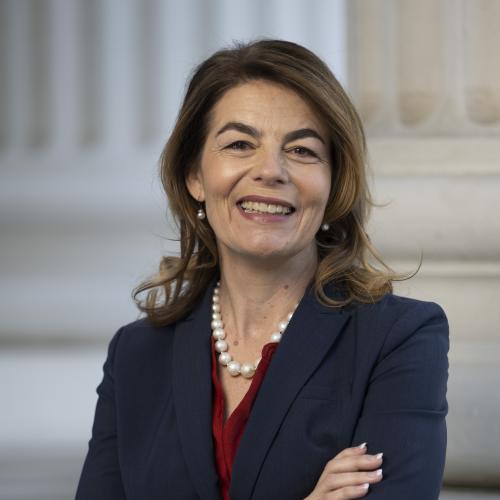
Asm. Dawn Addis
Sponsored bills
Existing law, the Lanterman Developmental Disabilities Services Act (act) , requires the State Department of Developmental Services to contract with regional centers to provide services and supports to individuals with developmental disabilities and their families. Under existing law, the regional centers purchase needed services and supports for individuals with developmental disabilities through approved service providers, or arrange for their provision through other publicly funded agencies. The services and supports to be provided to a regional center consumer are contained in an individual program plan (IPP) , which is developed by the planning team according to specified procedures. Existing law requires the department to establish and implement a statewide Self-Determination Program to provide participants and their families, within an individual budget, increased flexibility and choice, and greater control over decisions, resources, and needed and desired services and supports to implement their IPP, in accordance with prescribed requirements. Existing law declares the intent of the Legislature to provide more statewide uniformity and consistency and promote equity in the administrative practices and services of regional centers, consistent with the act. This bill, the Advancing Equity and Access in the Self-Determination Program Act, would require the department, by January 1, 2026, to establish statewide standardized processes and procedures for the Self-Determination Program, as specified, and to ensure that those processes and procedures are applied consistently by regional centers and that they make measurable improvements towards achieving equitable enrollment by race, ethnicity, and regional center. The bill would require deviation from the standardized processes and procedures to be approved by the department. Existing law provides participants with a choice of financial management services providers who assist the participant to manage and direct the distribution of funds contained in the individual budget, and ensure that the participant has the financial resources to implement their IPP throughout the year. This bill would, subject to eligibility for federal funding, require regional centers to ensure that participant choice of providers is respected and that the full cost of the participant's provider is included in the participant's spending plan, as specified. This bill would incorporate additional changes to Section 4685.8 of the Welfare and Institutions Code proposed by SB 1463 to be operative only if this bill and SB 1463 are enacted and this bill is enacted last.
The Control, Regulate and Tax Adult Use of Marijuana Act (AUMA) , an initiative measure approved as Proposition 64 at the November 8, 2016, statewide general election, authorizes a person who obtains a state license under AUMA to engage in commercial adult-use cannabis activity pursuant to that license and applicable local ordinances. The Medicinal and Adult-Use Cannabis Regulation and Safety Act (MAUCRSA) , among other things, consolidates the licensure and regulation of commercial medicinal and adult-use cannabis activities and requires the Department of Cannabis Control to administer its provisions. Under MAUCRSA, the Department of Cannabis Control has sole authority to license and regulate commercial cannabis activity, which MAUCRSA defines to include, among other activities, the sale of cannabis and cannabis products. MAUCRSA authorizes the issuance of a state temporary event license to a licensee authorizing onsite cannabis sales to, and consumption by, persons 21 years of age or older at certain venues expressly approved by a local jurisdiction, as specified. MAUCRSA requires a licensee who submits an application for a state temporary event license to provide to the department a list of all licensees that will be providing onsite sales of cannabis or cannabis products at the event. This bill would require the department, no later than January 1, 2026, to issue small producer event sales licenses that authorize the licenseholder to sell cannabis or cannabis products, containing cannabis cultivated by that licensee, at state temporary events licensed under the act, and would require the department to charge each small producer event sales licensee a licensing fee, as specified. The bill would authorize a licensee who holds a valid annual state cultivation license and a valid license, permit, or other authorization for cannabis cultivation issued by a local jurisdiction, and who meets specified other requirements, to apply for a small producer event sales license. The bill would require a small producer event sales licensee to comply with all requirements imposed on licensees selling cannabis or cannabis products at a state temporary event, unless otherwise specified. The bill would prohibit the retail sales of cannabis and cannabis products made by a small producer event sales licensee at state temporary events from exceeding $175,000 in gross revenue per year, and would authorize the department, beginning July 1, 2027, to increase this cap by regulation after reevaluating the cap, as provided. The bill would provide that a cannabis event organizer licensee who submits an application for a state temporary event is required to provide to the department a list of all small producer event sales licensees providing onsite sales of cannabis or cannabis products at the event. The bill would authorize the department to take disciplinary action against a small producer event sales license, or any other licenses held by a small producer cannabis event sales licensee, for any violation of the requirements applicable to state temporary events. The bill would authorize a small producer event sales licensee, upon completion or cessation of the temporary event, to reconcile unsold inventory of cannabis or cannabis products and return it to a licensed distributor, as specified. The bill would require retail sales of cannabis or cannabis products by a small producer event sales licensee at a state temporary event to be subject to the cannabis excise tax, as specified. AUMA authorizes the Legislature to amend its provisions with a 23 vote of both houses to further its purposes and intent. This bill would state that the bill furthers the purposes and intent of AUMA.
Existing law establishes a public library system, including school libraries, unified school district and union high school district public libraries, municipal libraries, county free libraries, the California State Library, and library districts. Under existing law, the Legislature declares that the public library is, among other things, a source of information and inspiration to persons of all ages, cultural backgrounds, and economic statuses. This bill would require every public library jurisdiction, as defined, that directly receives any state funding to establish, adopt, and maintain a written and publicly accessible collection development policy for its libraries by January 1, 2026, as specified. The bill would require the collection development policy to, among other things, (1) guide the selection and deselection of library materials, as defined, and (2) establish a process for community members to share their concerns regarding library materials and request materials be reconsidered for inclusion in the library's collection. The bill would require the adopted policy to be sent to the State Librarian, and would authorize the State Librarian or their designee to provide technical assistance to public libraries in developing their collection development policy. The bill would prohibit the governing board or body of a public library, or any body or commission designated to review the procurement, retention, or circulation of, or access to, library materials, from (1) proscribing the circulation or procurement of, or access to, library materials in a public library because of the topic addressed by the library materials or because of the views, ideas, or opinions contained in materials or (2) creating policies or procedures that limit or restrict access to library materials offered by the public library, except as provided. The bill would also prohibit library materials in a public library from being excluded, and access to library materials from being limited, solely on the bases of (1) specified protected characteristics of a subject of the library materials, an author of the materials, the sources of the library materials, or the perceived or intended audience for the library materials, (2) that the materials contain inclusive and diverse perspectives, or (3) that the materials may include sexual content, except as provided. The bill would provide that a person's right to use a public library and its resources shall not be denied or abridged solely because of personal characteristics, age, background, or views. The bill would prohibit a librarian, library media specialist, other employee, or contractor at a public library from being subject to termination, demotion, discipline, or retaliation for (1) refusing to remove a library material before it has been reviewed in accordance with the public library's process for reconsideration of library materials or (2) making displays, acquisitions, or programming decisions that the employee believes, in good faith, are in accordance with the bill's provisions. The bill would provide that these provisions apply to a public library, as defined, including any public library operated on a contractual basis, or operated by a city, including a general law or charter city, county, special district, or joint powers authority, except that these provisions do not apply to any school library, as defined, or any library operated by the governing board of a school district, a county board of education, or the governing body of a charter school. To the extent these provisions impose additional duties on public libraries, the bill would create a state-mandated local program. The bill would include findings that changes proposed by this bill address a matter of statewide concern rather than a municipal affair and, therefore, apply to all cities, including charter cities. The California Constitution requires the state to reimburse local agencies and school districts for certain costs mandated by the state. Statutory provisions establish procedures for making that reimbursement. This bill would provide that, if the Commission on State Mandates determines that the bill contains costs mandated by the state, reimbursement for those costs shall be made pursuant to the statutory provisions noted above.
Existing law establishes the Instructional Quality Commission and requires the commission to, among other things, recommend curriculum frameworks and the adoption of instructional materials to the State Board of Education. Existing law requires the commission to consider incorporating the Model Library Standards into the next revision of the English language arts/English language development (ELA/ELD) curriculum framework after January 1, 2024, and to also consider incorporating media literacy content at each grade level. Existing law also requires the commission to consider incorporating media literacy content into the mathematics, science, and history-social science curriculum frameworks when those frameworks are next revised after January 1, 2024. Existing law defines media literacy, for that purpose, as the ability to access, analyze, evaluate, and use media and information and encompasses the foundational skills that lead to digital citizenship. This bill would require the commission to consider including the Model Library Standards, including media literacy content, in its criteria for evaluating instructional materials when the state board next adopts ELA/ELD instructional materials, as provided. The bill would require the commission to consider including media literacy content in its criteria for evaluating instructional materials when the state board next adopts mathematics, science, and history-social science instructional materials, as provided. The bill would also require the commission to consider incorporating Artificial Intelligence (AI) literacy content into the mathematics, science, and history-social science curriculum frameworks when those frameworks are next revised after January 1, 2025, and would require the commission to consider including AI literacy in its criteria for evaluating instructional materials when the state board next adopts mathematics, science, and history-social science instructional materials, as provided. The bill would define "AI literacy" for these purposes as the knowledge, skills, and attitudes associated with how artificial intelligence works, including its principles, concepts, and applications, as well as how to use artificial intelligence, including its limitations, implications, and ethical considerations.
Existing law requires the State Department of Education, in consultation with the Office of Child Abuse Prevention in the State Department of Social Services, to, among other things, (1) develop and disseminate information to all school districts, county offices of education, state special schools and diagnostic centers operated by the State Department of Education, and charter schools, and their school personnel in California, regarding the detection and reporting of child abuse, (2) establish best practices for school personnel to prevent abuse, including sexual abuse, of children on school grounds, by school personnel, or in school-sponsored programs, as provided, and (3) develop appropriate means of instructing school personnel in the detection of child abuse and neglect and the proper action that school personnel should take in suspected cases of child abuse and neglect, including, but not limited to, an online training module to be provided by the State Department of Social Services. This bill would revise and recast these provisions by, among other things, requiring the department to (1) additionally develop and disseminate information to all school districts, county offices of education, state special schools and diagnostic centers operated by the State Department of Education, and charter schools, and their school personnel in California, regarding the prevention of abuse, including sexual abuse, of children on school grounds, by school personnel, or in school-sponsored programs, and (2) additionally develop appropriate means of instructing school personnel in the prevention of abuse, including sexual abuse, of children on school grounds, by school personnel, or in school-sponsored programs, as provided. The bill would delete the above-described requirement that the State Department of Education establish best practices for school personnel to prevent abuse, and would, commencing July 1, 2025, delete the existing requirement that the department develop appropriate means of instructing school personnel in the detection of child abuse and neglect and the proper action that school personnel should take in suspected cases of child abuse and neglect, as provided. Existing law requires school districts, county offices of education, state special schools and diagnostic centers operated by the State Department of Education, and charter schools to provide annual training, using the online training module provided by the State Department of Social Services or an alternative training, to their employees and persons working on their behalf who are mandated reporters, as defined, on the mandated reporting requirements related to child abuse, as provided. Existing law also requires those entities to develop a process for all persons required to receive that training to provide proof of completing the training within the first 6 weeks of each school year or within the first 6 weeks of that person's employment. Existing law encourages those entities to participate in training on the prevention of abuse, including sexual abuse, of children on school grounds, by school personnel, or in school-sponsored programs, and also encourages those entities to provide all school employees with that training at least once every 3 years. Commencing July 1, 2025, this bill would additionally require school districts, county offices of education, state special schools and diagnostic centers operated by the State Department of Education, and charter schools to, among other things, provide annual training to their employees on the prevention of abuse, including sexual abuse, of children on school grounds, by school personnel, or in school-sponsored programs, as provided, and would apply the above-described proof of training requirements to this training. By imposing new duties on local educational agencies, the bill would impose a state-mandated local program. The California Constitution requires the state to reimburse local agencies and school districts for certain costs mandated by the state. Statutory provisions establish procedures for making that reimbursement. This bill would provide that, if the Commission on State Mandates determines that the bill contains costs mandated by the state, reimbursement for those costs shall be made pursuant to the statutory provisions noted above.
The Lanterman Developmental Disabilities Services Act makes the State Department of Developmental Services responsible for providing various services and supports to individuals with developmental disabilities, and for ensuring the appropriateness and quality of those services and supports. Pursuant to that law, the department contracts with regional centers to provide services and supports to persons with developmental disabilities. This bill would enact the Disability Equity, Transparency, and Accountability Act of 2024, which would make various changes to the act for purposes including providing increased oversight of regional center operations and performance. The bill would prohibit a regional center employee from accepting gifts over $15 per year from specified entities and would require each regional center to establish a policy prohibiting regional center senior staff from hiring relatives, as specified. The bill also would, beginning on January 1, 2026, make regional centers subject to requirements of the California Public Records Act. Notwithstanding any other law, the bill would require access to records regarding an applicant for, or recipient of, services to be provided, upon request, to the applicant, recipient, or their authorized representative, as specified, unless expressly prohibited by law. The bill would make related findings and declarations and state the legislative intent related to these provisions.
Existing unemployment compensation disability law requires workers to pay contribution rates based on, among other things, wages received in employment and benefit disbursement, for payment into the Unemployment Compensation Disability Fund, for purposes of compensating in part for the wage loss sustained by any individual who is unable to work due to the employee's own sickness or injury, among other reasons. Existing law sets forth standards for eligibility to receive unemployment compensation disability benefits. Existing law establishes, within the above state disability insurance program, a family temporary disability insurance program, also known as the paid family leave program, for the provision of wage replacement benefits for up to 8 weeks to workers who take time off work for prescribed purposes, including to care for a seriously ill family member. Existing law requires, for purposes of unemployment compensation disability benefits, the Employment Development Department to issue the initial payment for unemployment compensation disability benefits to a monetarily eligible claimant who is otherwise determined eligible by the department within 14 days of receipt of the claimant's properly completed first disability claim. Existing law provides for purposes of the paid family leave program that eligible workers shall receive benefits generally in accordance with unemployment and disability compensation law. This bill would instead require, for purposes of unemployment compensation disability benefits, the issuance of the initial payment for those benefits within 14 days of receipt of the claimant's properly completed first disability claim or as soon as eligibility begins, whichever is later. The bill would apply the same initial payment issuance schedule applicable to unemployment compensation disability benefits to the paid family leave program and repeal the requirement that eligible workers receive benefits generally in accordance with unemployment and disability compensation law. The bill would make these changes operative when these changes are incorporated in the Employment Development Department's integrated claims management system as part of the EDDNext project. Under the state disability insurance and paid family leave programs, a first claim is required to be filed not later than the 41st consecutive day following the first compensable day with respect to which the claim is made for benefits, as specified. This bill would authorize an individual to initiate the claims process up to 30 days in advance of the anticipated first compensable day. The bill would make these changes operative when the changes are incorporated in the Employment Development Department's integrated claims management system as part of the EDDNext project.
Existing law generally requires that the prosecution of a felony sex offense be commenced within 10 years after the commission of the offense. Existing law requires specified sex offenses that are committed when the victim is under 18 years of age and under certain circumstances, such as rape of a person with a mental disorder or disability or sodomy with force or fear, to be commenced by the victim's 40th birthday. This bill would clarify that if the conditions authorizing prosecution for these crimes are not met, the prosecuting agency may nevertheless provide victim assistance to the person, including support with pursuing restorative justice.
Existing law establishes the California Community Colleges, under the administration of the Board of Governors of the California Community Colleges, the California State University, under the administration of the Trustees of the California State University, and the University of California, under the administration of the Regents of the University of California as the 3 segments of public postsecondary education in the state. Existing law establishes the College of the Law, San Francisco, under the governance of the Board of Directors of the College of the Law, San Francisco, within the University of California. This bill would require public postsecondary educational institutions, as defined, as a condition of receiving state financial assistance, to adopt a written policy containing certain provisions, including, among other provisions, a provision prohibiting a supervisor or administrator from providing an official letter of recommendation if the employee is the respondent in a sexual harassment complaint and the employee (1) is determined in a final administrative decision, as defined, to have committed sexual harassment, (2) resigns from their current position before a final administrative decision is made, or (3) enters into a settlement with the public postsecondary educational institution, as specified. The bill would require public postsecondary educational institutions, as a condition of receiving state financial assistance, to adopt a written policy on settlements and informal resolutions of complaints of sexual harassment in cases where the respondent is an employee of the public postsecondary educational institution and would require the written policy to include, among other things, a provision that requires specified approvals for sexual harassment settlement pffers and informal resolutions. By imposing new duties on community college districts, the bill would impose a state-mandated local program. The California Constitution requires the state to reimburse local agencies and school districts for certain costs mandated by the state. Statutory provisions establish procedures for making that reimbursement. This bill would provide that, if the Commission on State Mandates determines that the bill contains costs mandated by the state, reimbursement for those costs shall be made pursuant to the statutory provisions noted above.