

(1) Existing law states the policy of the State of California is to afford all persons in public schools, regardless of their disability, gender, gender identity, gender expression, nationality, race or ethnicity, religion, sexual orientation, or any other specified characteristic, equal rights and opportunities in the educational institutions of the state. Existing law prohibits the governing board of a school district, a county board of education, or the governing body of a charter school from adopting or approving the use of any textbook, instructional material, supplemental instructional material, or curriculum if its use would subject a pupil to unlawful discrimination, as specified. This bill would additionally prohibit the adoption or approval of the use of any professional development materials if the use of the material would subject a pupil to unlawful discrimination, as specified. The bill would similarly prohibit the adoption or approval of the use of professional development materials or services that promote, endorse, or otherwise support actions or the use of textbooks, instructional materials, supplemental instructional materials, or curriculum that would subject a pupil to unlawful discrimination, as specified. If the governing board of a school district, a county board of education, or the governing body of a charter school knows or has reason to know that materials were used in a classroom or an action occurred that resulted in unlawful discrimination, or knows or has reason to know that professional development materials or services were used that resulted in unlawful discrimination, the bill would require investigation and remediation of the action, as provided. This bill would establish the Office of Civil Rights, under the administration of the Government Operations Agency, with the purpose of working directly with local educational agencies to prevent and address discrimination and bias, as specified. The bill would require the Director of the Office of Civil Rights to be appointed by the Governor and confirmed by the Senate. The bill would require the Office of Civil Rights, in consultation with the State Department of Education and under the supervision of the Government Operations Agency, to, among other things, (A) provide education and educational resources to identify and prevent antisemitism and other forms of discrimination and bias, (B) share relevant laws and regulations with educational state agencies, school districts, county offices of education, charter schools, and community stakeholders, and (C) annually submit a report to the Government Operations Agency, the Superintendent of Public Instruction, the executive director of the State Board of Education, and the Legislature on the state of discrimination and bias in all local educational agencies, as specified. The bill would also require the Office of Civil Rights to employ the Antisemitism Prevention Coordinator to be appointed by the Governor and confirmed by the Senate. The bill would require the Antisemitism Prevention Coordinator to, among other things, develop, consult, and provide antisemitism education to school personnel to identify and proactively prevent antisemitism and to make recommendations, in coordination with the executive director of the state board, to the Legislature on legislation necessary for the prevention of antisemitism in educational settings. (2) Existing law authorizes a party to a written complaint of prohibited discrimination to appeal the action taken by the governing board of a school district to the State Department of Education. This bill would authorize a party to a written complaint of prohibited discrimination to appeal to the department based on the governing board of a school district's failure to issue an investigation report within a certain timeline. Existing law authorizes a person to file a complaint of an alleged violation with the local educational agency using the uniform complaint process or directly with the Superintendent as provided. If the Superintendent determines that a local educational agency has violated that prohibition and has not taken corrective action within 60 days, existing law authorizes the department to use any means authorized to effect compliance. This bill would authorize the department to require local educational agencies to take specified corrective actions, including obtaining technical assistance from the Office of Civil Rights and requiring the local educational agency to engage in regular reporting to the Office of Civil Rights and to use alternative instructional materials. The bill would prohibit instructional materials found to have resulted in unlawful discrimination, as provided, to be used in any current course offerings or any subsequent course offerings. If the unlawful discrimination involves antisemitism, the bill would require an improvement plan to be created in consultation with the Antisemitism Prevention Coordinator. If a determination is made that an organization has contracted to provide any textbook, instructional material, professional development material, supplemental instructional material, or curriculum that violates specified laws that prohibit subjecting a pupil to unlawful discrimination, the bill would require a local educational agency or the Superintendent to notify the organization that it must take corrective action, as provided, and would require the organization found to be in violation to, among other things, reimburse all funds received for their services from the local educational agency. (3) Existing law prohibits instruction or school-sponsored activities that promote a discriminatory bias on the basis of race or ethnicity, gender, religion, disability, nationality, sexual orientation, or other characteristics, as provided. This bill would establish that discriminatory bias in instruction and school-sponsored activities does not require a showing of direct harm to members of a protected group and would not require members of a protected group to be present while the discriminatory bias is occurring for the act to be considered discriminatory bias. If the governing board or body of the local educational agency finds that instruction or school-sponsored activities are discriminatory, as provided, the bill would require corrective action to be taken, as provided. (4) Existing law requires the governing board of a school district to annually notify parents or guardians of minor pupils of specified rights and responsibilities of the parent or guardian and of specified school district policies and procedures. This bill would require the notification to additionally advise the parent or guardian of the protections, requirements, and responsibilities prescribed in this bill. (5) This bill would require the department, by October 1 of each year, to issue a management bulletin to all local educational agencies describing the protections, requirements, and responsibilities prescribed in certain laws. The bill would require the Superintendent, in consultation with the executive director of the state board and the Antisemitism Prevention Coordinator, to develop and maintain a distinct internet web page containing resources and information specific to antisemitism on its internet website. (6) This bill would make the operation of its provisions contingent upon the enactment of SB 48 of the 2025–26 Regular Session. (7) By imposing additional duties on local educational agencies, this bill would impose a state-mandated local program. The California Constitution requires the state to reimburse local agencies and school districts for certain costs mandated by the state. Statutory provisions establish procedures for making that reimbursement. This bill would provide that, if the Commission on State Mandates determines that the bill contains costs mandated by the state, reimbursement for those costs shall be made pursuant to the statutory provisions noted above.
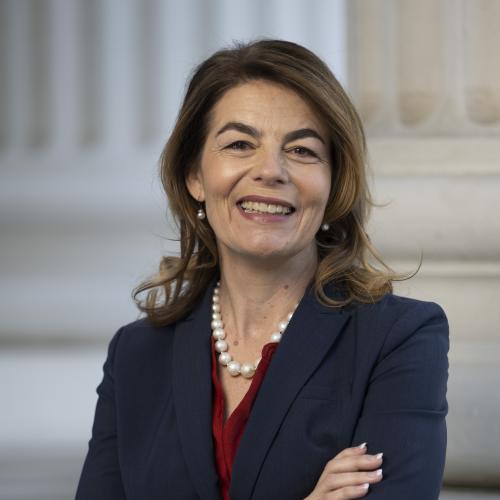
Asm. Dawn Addis
Sponsored bills
(1) The Political Reform Act of 1974 authorizes specified campaign disclosure reports and statements of financial interest to be filed by fax, provided that the required originals or paper copies are sent by first-class mail or by any other personal delivery within 24 hours of the applicable deadline. The act generally authorizes other reports filed by candidates for elective office, committees formed primarily to support or oppose a candidate for public office or a ballot measure, and other entities to be filed by various means, including personal delivery, guaranteed overnight delivery, facsimile transmission, and online transmission. This bill would eliminate the option to file various statements and reports by facsimile transmission and would authorize certain reports to be filed by email. (2) Existing law defines "campaign statement" for purposes of the act to mean an itemized report that is prepared on a form or in a manner prescribed by the Fair Political Practices Commission and that provides specified information. The act requires specified committees to file a statement of organization online or electronically with the Secretary of State. This bill would replace the term "campaign statement" with "campaign report" and the term "statement of organization" with "registration" throughout the act. The bill would further define "campaign report" to mean an itemized report that is prepared in a manner prescribed by the commission. (3) Under the act, if a committee is required to file a campaign statement or report disclosing an independent expenditure, a verification statement must accompany the campaign statement or report, as specified. The bill would clarify that this provision applies to both semiannual and preelection statements disclosing an independent expenditure. (4) Existing law requires the commission to provide a short form for filing reports for candidates and officeholders who receive contributions of less than $2,000, and who make expenditures of less than $2,000, in a calendar year. This bill would repeal that provision. (5) Existing law prohibits a candidate for elective state, county, or city office from personally loaning to the candidate's campaign an amount for which the outstanding balance exceeds $100,000. The act prohibits a candidate from charging interest on any such loan. This bill would remove the $100,000 cap on the outstanding balance of a candidate's personal loan to their campaign. (6) The act requires the Fair Political Practices Commission to annually publish a booklet by March 1 that sets forth the provisions of the act and includes other information that the commission deems pertinent to the interpretation and enforcement of the act. This bill would instead require the commission to annually publish the provisions of the act by that date. (7) The act requires the Secretary of State, in consultation with the Fair Political Practices Commission, to develop online and electronic filing processes for persons and entities that are required to file statements and reports with the Secretary of State's office. Before making the system available for public use, the act requires the Secretary of State to certify that the system meets all statutory requirements. Once all requirements have been met, the act requires the Secretary of State to make public their availability to accept reports online or electronically and authorizes any filer to voluntarily file specified reports and statements with the Secretary of State. This bill would delete the provision regarding the voluntary filing of reports and it would require persons who, and entities that, are required to file online or electronically to file all subsequent reports online or electronically. The bill would make other conforming changes in anticipation of reports being filed online or electronically using the new system. A violation of the Political Reform Act of 1974 is punishable as a misdemeanor. By imposing new requirements on persons and entities filing reports with the new electronic filing system, the bill would expand the scope of a crime and impose a state-mandated local program. (8) This bill would incorporate additional changes to Section 84224 of the Government Code proposed by SB 760, to be operative only if this bill and SB 760 are enacted and this bill is enacted last. This bill would incorporate additional changes to Section 89517.5 of the Government Code proposed by AB 789, to be operative only if this bill and AB 789 are enacted and this bill is enacted last. (9) This bill would make its provisions contingent upon the Secretary of State certifying the above-described online electronic filing system for public use. (10) The Political Reform Act of 1974, an initiative measure, provides that the Legislature may amend the act to further the act's purposes upon a 23 vote of each house of the Legislature and compliance with specified procedural requirements. This bill would declare that it furthers the purposes of the act. (11) The California Constitution requires the state to reimburse local agencies and school districts for certain costs mandated by the state. Statutory provisions establish procedures for making that reimbursement. This bill would provide that no reimbursement is required by this act for a specified reason.
The Cigarette and Tobacco Products Licensing Act of 2003 requires the California Department of Tax and Fee Administration to administer a statewide program to license manufacturers, distributers, and retailers of cigarettes and tobacco products. The act requires a retailer to have in place and maintain a license to engage in the sale of cigarettes or tobacco products. The act requires a $265 fee to be submitted with the application for the license. Existing law requires every retailer to file an application for renewal of the license accompanied by a $265 fee per retail location. This bill would make conforming changes to the provisions describing the application process for the license described above and recast that license as a retailer license. The bill would require each application for a retailer license filed on or after July 1, 2026, to be accompanied by a fee of $450 per retail location. The bill would increase the fee for renewal of a retailer license to $450 for renewal applications filed on or after July 1, 2026. The bill would authorize the department to adjust application and renewal fees applicable after July 1, 2026, to an amount not exceeding $600 per retail location to maintain the Cigarette and Tobacco Products Compliance Fund at a level that is no more than necessary to cover the reasonable costs of the department to administer the act. The act requires a retailer who sells tobacco products that are exempt from taxation under the Cigarette and Tobacco Products Tax Law to pay a fee of $265 for the issuance or renewal of a license. This bill would recast that license as a retailer license and make other conforming changes. The bill would require each application for a retailer license filed on or after July 1, 2026, to be accompanied by a fee of $450 per retail location. The bill would increase the fee for renewal of a retailer license to $450 for renewal applications filed on or after July 1, 2026. The bill would authorize the department to adjust application and renewal fees applicable after July 1, 2026, to an amount not exceeding $600 per retail location to maintain the Cigarette and Tobacco Products Compliance Fund at a level that is no more than necessary to cover the reasonable costs of the department to administer the act. This bill would require the Legislative Analyst, on or before December 1, 2027, and again on or before December 1, 2029, to prepare and submit reports to the Legislature on the tobacco retailer enforcement landscape, including enforcement of California's flavor, youth access, taxation, and licensing laws. The bill would require specified state agencies to cooperate with the Legislative Analyst in the preparation and production of the report. The bill would repeal those reporting requirements on January 1, 2034. Chapter 849 of the Statutes of 2024 (AB 3218) revised the Cigarette and Tobacco Products Licensing Act of 2003 by, among other things, authorizing the department or a law enforcement agency to seize illegal flavored tobacco products or tobacco product flavor enhancers that a wholesaler or retailer possesses, stores, owns, or sold, as specified. Existing law further requires the department to impose on the wholesaler or retailer a specified civil penalty per individual package of flavored tobacco product or tobacco product flavor enhancer. Existing law defines "package" for purposes of the penalty provision applicable to retailers. This bill would define "flavored tobacco product" and "tobacco product flavor enhancer" for these purposes and would add the same definition of "package" for purposes of the penalty provision applicable to wholesalers. Chapter 462 of the Statutes of 2024 (SB 1230) , among other things, added a provision to the Cigarette and Tobacco Products Licensing Act of 2003 similar to the above-described provision relating to the seizure of a retailer's products added by AB 3218. Specifically, SB 1230 authorizes the department to seize illegal flavored tobacco products or tobacco product flavor enhancers if the department discovers that a retailer sells, offers for sale, or possesses with the intent to sell or offer for sale, those products, and deems the seized products as forfeited. This bill would repeal the above-described provision added by SB 1230. Existing constitutional provisions require that a statute that limits the right of access to the meetings of public bodies or the writings of public officials and agencies be adopted with findings demonstrating the interest protected by the limitation and the need for protecting that interest. This bill would make legislative findings to that effect.
Existing law provides for the certification of registered environmental health specialists by the State Department of Public Health and establishes application, examination, and renewal fees for this certification. Existing law prescribes educational requirements for the registration of an environmental health specialist and requires all basic science coursework to be equal to what is acceptable in an approved environmental health degree program. Existing law provides that only a person who meets those educational and experience requirements is eligible for admission to the environmental health specialist examination. Existing law prohibits an applicant who fails to pass the written examination twice from taking the examination additional times unless specified time periods have elapsed. Existing law prohibits a person from taking the examination more than once in a 2-year period. Existing law requires the department to maintain a current registry of all registered environmental health specialists and environmental health specialist trainees in the state. Existing law defines the scope of practice for a registered environmental health professional to include, but not be limited to, the prevention of environmental health hazards and the promotion and protection of the public health and the environment in specified areas, including, among others, food protection, housing, and hazardous materials management. Existing law authorizes a local health department to employ a registered environmental health specialist to enforce public health laws, as specified. Existing law authorizes an environmental health specialist trainee to work under the supervision of a registered environmental health specialist for a period not to exceed 3 years. Existing law defines "environmental health specialist trainee" as a person who possesses a bachelor's degree, as specified, and who is engaged in an approved environmental health training plan. Existing law requires an environmental health training plan to include specified elements. This bill would instead prohibit an applicant from being reexamined for 90 days after failing to pass the written examination. The bill would revise the educational requirements for the registration of an environmental health specialist, as specified, and would delete the requirement that basic science coursework be equal to what is acceptable in an approved environmental health degree program. This bill would extend the period of required supervision to instead not exceed 5 years. The bill would include body art and medical waste in the scope of practice of registered environmental health specialists and would revise the environmental health training plan elements, as specified. The bill would require the department to make its registry of registered specialists and trainees publicly available on its internet website within 90 days of the administration of an exam. Existing law requires an Environmental Health Specialist Registration Committee to be appointed to advise and to make recommendations to the department. Existing law prescribes the membership of the committee, including 2 members with experience as local directors of environmental health, as specified, 2 members from environmental health faculty from California universities and colleges, 2 public members who have not been engaged in the field of environmental health in the 5 years preceding their appointment, and the Chief of the Environmental Planning and Local Health Services Branch, who serves as executive officer in a nonvoting role. Existing law prohibits a committee member from serving no more than 2 successive terms and requires a committee member to serve until the appointment and qualification of their successor or until one year after their term has expired, whichever occurs first. This bill would instead make the State Environmental Health Director serve as the executive officer of the committee and would revise the committee membership, as specified. The bill would delete the prohibition on a committee member serving more than 2 consecutive terms. The bill would delete the requirement that a committee member serve until one year after the expiration of their term. The bill would make clarifying technical changes to the terminology used in those and related provisions to distinguish local directors of environmental health from the State Environmental Health Director. Existing law requires the committee to meet at least twice annually and defines a quorum for these purposes as 6 members of the committee. Existing law requires the committee to keep a record of its proceedings. This bill would require the committee to meet at least quarterly, in person or virtually, and would redefine a quorum of the committee to mean a simple majority of the filled committee seats. The bill would authorize the chairperson to cancel a committee meeting, as specified. The bill would also require the committee to keep a record of its meetings.
Existing law declares the public policy of the state regarding labor organization, including, among other things, that it is necessary for a worker to have full freedom of association, self-organization, and designation of representatives of their own choosing, to negotiate the terms and conditions of their employment, and to be free from the interference, restraint, or coercion of employers of labor, or their agents, in the designation of such representatives or in self-organization or in other concerted activities for the purpose of collective bargaining or other mutual aid or protection. Existing law establishes the Public Employment Relations Board (PERB) in state government as a means of resolving disputes and enforcing the statutory duties and rights of specified public employers and employees under various acts regulating collective bargaining. Under existing law, PERB has the power and duty to investigate an unfair practice charge and to determine whether the charge is justified and the appropriate remedy for the unfair practice. Existing law, the federal National Labor Relations Act (NLRA) , establishes a comprehensive statutory scheme regulating unfair labor practices on the part of employers and labor organizations in industries affecting interstate commerce, and vests in the National Labor Relations Board (NLRB) the power to conduct elections to determine employee representatives and to prevent unfair labor practices affecting commerce. Existing law, the California Public Records Act, requires that public records, as defined, be available to the public for inspection and made promptly available to any person. This bill would expand PERB's jurisdiction by authorizing a worker, to petition PERB to protect and enforce prescribed rights under specified circumstances, including if the worker is employed in a position subject to the NLRA but the NLRB has expressly or impliedly ceded jurisdiction. The bill would authorize PERB to, among other things, decide unfair labor practice cases pursuant to a specified timeline and order all appropriate relief for a violation, including civil penalties, as prescribed. In order to pursue relief from PERB, the bill would require a covered worker or their representative to file an unfair practice charge or petition that includes specified information, including, where applicable, the original charge or petition filed with the NLRB. The bill would require PERB to hold the supporting documentation and evidence confidential and maintain it as part of its investigatory file and would exempt this documentation and evidence from the California Public Records Act. If PERB determines, among other things, it has insufficient resources to process certain cases or doing so would prevent it from meeting specified statutory deadlines, the bill would require PERB to process and prioritize charges, as specified. The bill would also establish the Public Employment Relations Board Enforcement Fund (fund) in the State Treasury, would require the above-described civil penalties to be deposited into the fund, and would make moneys in the fund available upon appropriation by the Legislature to PERB for the purpose of administering the above-specified provisions. The bill would authorize PERB to rely on its own decisions and precedent under the NLRA and would authorize review of its decisions by a state appellate court, as specified. Existing law, the Alatorre-Zenovich-Dunlap-Berman Agricultural Labor Relations Act of 1975, grants agricultural employees the right to form and join labor organizations and engage in collective bargaining, as specified, and prohibits agricultural employers and labor organizations from engaging in unfair labor practices. Those provisions establish the Agricultural Labor Relations Board (ALRB) and empower the ALRB to prevent any person from engaging in those practices. Existing law establishes various definitions for these purposes. Existing law requires the ALRB to follow applicable precedents of the NLRA. This bill would specify that the ALRB has exclusive jurisdiction in all phases of the administration of the act, and to determine whether any person or entity meets one or more of those definitions. The bill would instead authorize the board to follow applicable precedents of the NLRA, but would not obligate the board to follow precedents where the ALRB deems it inappropriate to do so. This bill would make related findings and declarations and would make its provisions severable. Existing constitutional provisions require that a statute that limits the right of access to the meetings of public bodies or the writings of public officials and agencies be adopted with findings demonstrating the interest protected by the limitation and the need for protecting that interest. This bill would make legislative findings to that effect.
This measure would designate November 1, 2025, as Fernando Valenzuela Day, to highlight the positive impact his legacy created in the Latino and Hispanic community.
This measure would recognize the importance of California Native American Day, celebrated this year on September 26, 2025, and the annual California Indian Cultural Awareness Conference, to the enhancement of awareness of California Indian culture.
(1) Under existing law, each school district and county office of education is responsible for the overall development, as specified, of a comprehensive school safety plan for each of its schools operating kindergarten or any of grades 1 to 12, inclusive. Existing law requires a comprehensive school safety plan to, among other things, identify appropriate strategies and programs that will provide or maintain a high level of school safety and address the school's procedures for complying with existing laws related to school safety. This bill would additionally require, until January 1, 2031, when a comprehensive school safety plan is next reviewed and updated, or by no later than March 1, 2026, those plans to include procedures specifically designed to notify parents and guardians of pupils, teachers, administrators, and school personnel when the school confirms the presence of immigration enforcement, as defined, on the schoolsite. Existing law prohibits a chartering authority from denying a petition for the establishment of a charter school unless it makes written factual findings supporting at least one of specified bases for denial. One of those bases for denying a petition is if the petition does not contain a reasonably comprehensive description of the development of a school safety plan that includes the same safety topics required in the comprehensive school safety plan of a school district or county office of education. This bill would authorize, until January 1, 2031, a chartering authority to deny a charter school petition that does not include in its proposed development of a school safety plan the same provisions on procedures and policies relating to notifying parents and guardians of pupils, teachers, administrators, and charter school personnel when the charter school confirms the presence of immigration enforcement, as defined, on the schoolsite as are required by the bill in a school district or county office of education comprehensive school safety plan. The bill also would make conforming changes. To the extent that this bill would impose new duties on local educational agencies, the bill would impose a state-mandated local program. (2) Existing law establishes the California State University, under the administration of the Trustees of the California State University, the University of California, under the administration of the Regents of the University of California, the California Community Colleges, under the administration of the Board of Governors of the California Community Colleges, and independent institutions of higher education as 4 segments of postsecondary education in the state. Existing law requires the Trustees of the California State University, the governing boards of community college districts, and independent institutions of higher education that are qualifying institutions for purposes of the Cal Grant Program, and requests the Regents of the University of California, to the fullest extent consistent with state and federal law, to implement various precautionary measures when federal immigration enforcement activities are undertaken on campuses of those segments, as specified, including, among others, that those postsecondary entities advise all students, faculty, and staff to notify the office of the chancellor or president, or their designee, as soon as possible, if they are advised that an immigration officer is expected to enter, will enter, or has entered the campus to execute a federal immigration order. This bill would require, until January 1, 2031, those postsecondary educational entities, and each campus of those postsecondary educational entities, to notify, as specified, all students, faculty, staff, and other campus community members who work on campus when the presence of immigration enforcement, as defined, is confirmed on campus. To the extent that the bill would impose new duties on community college districts, the bill would impose a state-mandated local program. The California Constitution requires the state to reimburse local agencies and school districts for certain costs mandated by the state. Statutory provisions establish procedures for making that reimbursement. This bill would provide that, if the Commission on State Mandates determines that the bill contains costs mandated by the state, reimbursement for those costs shall be made pursuant to the statutory provisions noted above. This bill would declare that it is to take effect immediately as an urgency statute.
(1) Existing law prohibits, except as required by state or federal law or as required to administer a state or federally supported educational program, school officials and employees of a school district, county office of education, or charter school from collecting information or documents regarding citizenship or immigration status of pupils or their family members. Existing law requires the superintendent of a school district, the superintendent of a county office of education, and the principal of a charter school, as applicable, to report to the respective governing board or body of the local educational agency in a timely manner any requests for information or access to a schoolsite by an officer or employee of a law enforcement agency for the purpose of enforcing the immigration laws in a manner that ensures the confidentiality and privacy of any potentially identifying information. This bill would prohibit school officials and employees of a local educational agency from allowing an officer or employee of an agency conducting immigration enforcement to enter a nonpublic area of a schoolsite, as defined, for any purpose without being presented with a valid judicial warrant, judicial subpoena, or a court order. The bill would require school officials and employees of a local educational agency, to the extent practicable, to request valid identification of any officer or employee of an agency conducting immigration enforcement seeking to enter a nonpublic area of a schoolsite. The bill would also prohibit a local educational agency and its personnel from disclosing or providing, in writing, verbally, or in any other manner, the education records of or any information about a pupil or a pupil's family and household without the pupil's parents' or guardians' written consent, a school employee, or a teacher to an officer or employee of an agency conducting immigration enforcement without a valid judicial warrant or judicial subpoena, or court order directing the local educational agency or its personnel to do so. By imposing additional duties on local educational agencies, the bill would impose a state-mandated local program. (2) Existing law requires the Attorney General, by April 1, 2018, in consultation with the appropriate stakeholders, to publish model policies limiting assistance with immigration enforcement at public schools, to the fullest extent possible consistent with federal and state law, and ensuring that public schools remain safe and accessible to all California residents, regardless of immigration status, as provided. Existing law requires local educational agencies, by July 1, 2018, to adopt those model policies developed by the Attorney General or equivalent policies. This bill would require the Attorney General, by December 1, 2025, to update those model policies to ensure that the policies align with the above-described prohibitions on school officials and employees of local educational agencies allowing an officer or employee of an agency conducting immigration enforcement to enter a nonpublic area of a schoolsite without a valid judicial warrant or judicial subpoena, or a court order and from disclosing or providing certain information to those officers or employees, as provided. The bill also would require a local educational agency to update its model policy by March 1, 2026, and to make the policy available to the State Department of Education upon request. By imposing additional duties on local educational agencies, the bill would impose a state-mandated local program. (3) This bill would make these provisions severable. (4) The California Constitution requires the state to reimburse local agencies and school districts for certain costs mandated by the state. Statutory provisions establish procedures for making that reimbursement. This bill would provide that, if the Commission on State Mandates determines that the bill contains costs mandated by the state, reimbursement for those costs shall be made pursuant to the statutory provisions noted above. (5) This bill would declare that it is to take effect immediately as an urgency statute.
This measure would declare the Legislature's opposition to the unlawful Executive Order No. 14160, entitled "Protecting the Meaning and Value of American Citizenship," ending birthright citizenship as enshrined in the United States Constitution and would affirm the Legislature's commitment to birthright citizenship, as specified.