

Existing law establishes a workers' compensation system to compensate employees for injuries sustained in the course of their employment. Existing law creates a disputable presumption that specified injuries sustained in the course of employment of a specified member of law enforcement or a specified first responder arose out of and in the course of employment. Existing law authorizes the Department of Industrial Relations to expend moneys that have been appropriated for the administration and enforcement of laws under its jurisdiction, as well as for the maintenance of any commission or office of the department, as specified. Existing law establishes the Workers' Compensation Administration Revolving Fund within the State Treasury. Existing law requires the director to levy a surcharge upon employers in order to fund, among other things, the Workers' Compensation Administration Revolving Fund. Upon appropriation by the Legislature, existing law authorizes funds to be expended for, among other things, the Return-to-Work Program and the enforcement of the insurance coverage program. Existing law establishes a Workers' Compensation Appeals Board and sets forth various proceedings that are required to be brought forth before the board. Existing law provides that the appeals board is vested with full power, authority, and jurisdiction to try and determine finally all the matters specified in those proceedings subject only to the review by the courts, as specified. This bill would, until January 1, 2031, create a disputable presumption that a heat-related injury that develops within a specified timeframe after working outdoors for an employer in the agriculture industry that fails to comply with heat illness prevention standards, as defined, arose out of and came in the course of employment. The bill would require the appeals board to find in favor of the employee if the employer fails to rebut the presumption. The bill would specify that compensation awarded for heat-related injury to farmworkers is to include, among other things, medical treatment and disability. The bill would prohibit a determination by the appeals board from having any effect in certain investigations and would prohibit that determination from being admissible in proceedings before the Occupational Safety and Health Appeals Board. The bill would establish the Farmworker Climate Change Heat Injury and Death Fund that would consist of a one-time transfer of $5,000,000 derived from nongeneral funds of the Workers' Compensation Administration Revolving Fund for the purpose of administrative costs associated with this presumption. The bill would make related findings and declarations.
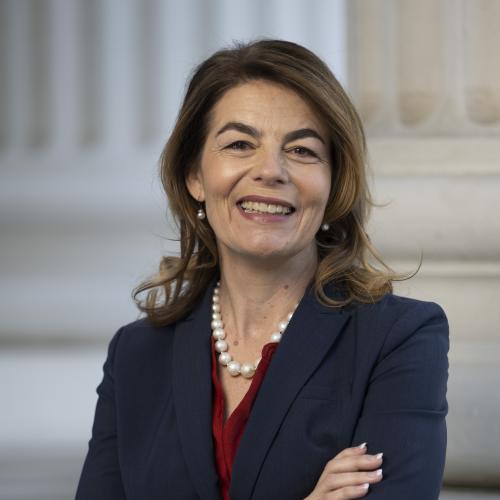
Asm. Dawn Addis
Sponsored bills
(1) Existing federal law, the Stephen Beck, Jr., Achieving a Better Life Experience Act of 2014 (ABLE Act) , encourages and assists individuals and families to save private funds for the purpose of supporting eligible individuals with disabilities to maintain their health, independence, and quality of life by excluding from gross income distributions used for qualified disability expenses by a beneficiary of a Qualified ABLE Program established and maintained by a state, as specified. Existing law establishes the Qualified ABLE Program for purposes of implementing the federal ABLE Act in this state, and creates the California ABLE Program Trust with the purposes, powers, and duties of the trust to be vested in and exercised by the California ABLE Act Board. Existing law requires the board to segregate the moneys coming into the ABLE program trust into 2 funds: the program fund, which is continuously appropriated, for specified purposes of the act, and the administrative fund, which is available upon appropriation by the Legislature for administration of the act. Existing law requires all moneys paid by designated beneficiaries or eligible individuals in connection with ABLE accounts to be deposited, as received, into the program fund, promptly invested, and accounted for separately. Existing law grants the board the power to accept grants, gifts, appropriations, and other moneys from any unit of federal, state, or local government, among other specified entities, for deposit to specified funds. This bill would authorize the California ABLE Act Board to additionally accept grants, gifts, legislative appropriations, and other moneys from a philanthropic entity, and would specify that the program can receive legislative appropriations. The bill would authorize the board to target specific subgroups of eligible individuals, as specified, and would authorize the board to use those moneys received to encourage eligible individuals to create an ABLE account or maximize account participation by engaging public awareness about the program. By authorizing new uses of moneys in a continuously appropriated fund, the bill would make an appropriation. (2) Existing law requires the Franchise Tax Board to include, on a taxpayer's form instructions for filing a return, information about the ability of a taxpayer to directly deposit a portion of their refund into the Golden State Scholarshare College Savings Trust, as specified. This bill would additionally require the Franchise Tax Board to include, on a taxpayer's form instructions for filing a return, information about the ability of a taxpayer to directly deposit a portion of their refund into the California ABLE Program Trust.
Existing law authorizes various local governmental entities, subject to certain limitations and approval requirements, to levy a transactions and use tax for general or specific purposes, in accordance with the procedures and requirements set forth in the Transactions and Use Tax Law, including a requirement that the combined rate of all taxes that may be imposed in accordance with that law in any county not exceed 2%. This bill would authorize the San Luis Obispo Council of Governments, by an ordinance adopted by the council, to levy a tax pursuant to the Transactions and Use Tax Law at a rate not to exceed 1%, for general and special purposes, subject to voter approval on or after January 1, 2026, and before January 1, 2032. The bill would authorize the board to exceed the 2% limit described above to impose the retail transactions and use tax. This bill would make legislative findings and declarations as to the necessity of a special statute for the County of San Luis Obispo.
Under existing law, a prisoner can reduce their term of imprisonment by earning credit for, among other things, continuous incarceration, good behavior, and participation in approved rehabilitative programming. Existing law makes an inmate of a county jail or state prison who has completed training for assignment to a conservation camp, state or county facility, or a correctional institution as an inmate firefighter, or who is assigned to a state or county facility or a correctional institution as an inmate firefighter, and who is eligible to earn one day of credit for every one day of incarceration, instead eligible to earn 2 days of credit for every one day served in that assignment or after completing that training. Existing law authorizes a juvenile court to order placement of a ward at the Pine Grove Youth Conservation Camp if specified criteria are met, including if the county has entered into a contract with the Department of Corrections and Rehabilitation and the department has found the ward amenable. Existing law authorizes the department to enter into contracts with counties to operate the Pine Grove Youth Conservation Camp through a state-local partnership, or other management arrangement, to train justice-involved youth, as specified, in wildland firefighting skills. This bill would require an incarcerated individual hand crew member, in addition to receiving credits, and a ward or youth hand crew member placed at the Pine Grove Youth Conservation Camp to be paid an hourly wage equal to $7.25 while assigned to an active fire incident. The bill would require that wage rate to be reviewed annually. The bill would require the Department of Corrections and Rehabilitation and counties to maintain regulations regarding an administrative adjudication and remedy process for any disputes over sums owned pursuant to these provisions. This bill would declare that it is to take effect immediately as an urgency statute.
Existing law establishes the Transgender, Gender Nonconforming, and Intersex Wellness and Equity Fund under the administration of the State Department of Public Health, for purposes of funding grants, upon appropriation by the Legislature, to create programs, or funding existing programs, focused on coordinating trans-inclusive health care for individuals who identify as transgender, gender nonconforming, or intersex (TGI) . Existing law makes the grants available to TGI-serving organizations, as specified. Existing law defines terms, including "health care" and "gender nonconforming," for purposes of these provisions. This bill would rename the fund as the Two-Spirit, Transgender, Gender Nonconforming, and Intersex (2TGI) Wellness and Equity Fund and would make a conforming change to a related provision. The bill would expand the availability of grant funds to 2TGI-serving organizations, as defined, for purposes of providing workforce development training for 2TGI individuals, resettlement and social integration programs for 2TGI asylees and immigrants, and diversion programs for, and outreach to, transitional-age 2TGI youth. Under the bill, an organization that serves tribal populations would also be eligible for a grant for any of the specified purposes if that organization applies in partnership with a 2TGI-serving organization. The bill would revise the definition of "health care" to include mental health services and would define "Two-Spirit" and "transitional-age 2TGI youth" for purposes of these provisions. The bill would make related legislative findings.
Existing law creates the Monterey-Salinas Transit District to include all of the County of Monterey, with specified powers and duties related to public transit service. Existing law prohibits the district from imposing sales or special taxes, but authorizes the district, with the concurrence of a majority of the member jurisdictions represented on the board of directors, to submit a ballot measure for the imposition of those taxes to voters of the district. This bill would prohibit the submission of a measure for the imposition of a sales or special tax to the voters of the district under this authority on or after January 1, 2026. Existing law authorizes various local governmental entities, subject to certain limitations and approval requirements, to levy a transactions and use tax, in accordance with the procedures and requirements set forth in the Transactions and Use Tax Law, including a requirement that the combined rate of all taxes that may be imposed in accordance with that law in the county not exceed 2%. This bill would authorize the Monterey-Salinas Transit District, upon the affirmative vote of at least 23 of the board of directors, to submit to the voters of the district a measure proposing a retail transactions and use tax ordinance in accordance with the Transactions and Use Tax Law. The bill would also separately authorize the district to impose a transactions and use tax for the support of its transportation services at a rate of no more than 0.25% that would, in combination with other transactions and use taxes, exceed the above-described combined rate limit of 2%, if the ordinance proposing the tax is approved by the voters before January 1, 2035, subject to applicable voter approval requirements, as specified. The bill would prohibit a transactions and use tax rate imposed pursuant to this authority from being considered for purposes of that combined rate limit described above.
(1) Under existing law, a caregiver who is 18 years of age or older and signs a caregiver's authorization affidavit under penalty of perjury for a minor who lives in their home is authorized to enroll the minor in school and consent to school-related medical care on behalf of the minor. Under existing law, a caregiver who is 18 years of age or older, signs the caregiver's authorization affidavit under penalty of perjury, and who is a certain type of relative of the minor who lives in their home, has the same rights to authorize medical care and dental care for the minor that are given to guardians, as specified. Under existing law, a person who acts in good faith reliance on a completed caregiver's authorization affidavit to provide medical or dental care, without actual knowledge of facts contrary to those stated on the affidavit, is not subject to criminal or civil liability or professional disciplinary action for that reliance, but is not relieved from liability for violations of other provisions of law. This bill, the Family Preparedness Plan Act of 2025, would revise the definition of relative to expand the type of relative who is authorized to execute a caregiver's authorization affidavit and grant them the same rights to authorize school-related medical care, as defined, for the minor that are given to guardians, as specified. By expanding who is authorized to sign a caregiver's authorization affidavit for these purposes under penalty of perjury, this bill would expand the crime of perjury, thereby imposing a state-mandated local program. This bill would amend the statutory form for a caregiver's authorization affidavit. (2) Existing law generally provides for the establishment and administration of guardianships. Existing law authorizes a court to appoint joint guardians of a person, an estate, or a person and an estate. Existing law requires a nomination of a guardian to become effective when made, and remain effective, unless stated otherwise in writing, as specified. This bill would authorize a court, in its discretion, to appoint a custodial parent and a person nominated by the custodial parent as joint guardians of the person of the minor, if the custodial parent will be temporarily unavailable due to specified circumstances, including, among other things, an immigration-related administrative action, as specified. The bill would make all records, petitions, orders, and documents related to these proceedings confidential, as specified. The bill would provide that absence is a basis for a delayed effectiveness of a guardianship and that such circumstances would not be a basis for subsequent legal incapacity for the nomination. (3) Existing law prohibits, except as required by state or federal law or as required to administer a state or federally supported educational program, school officials and employees of a local educational agency, as defined, from collecting information or documents regarding citizenship or immigration status of pupils or their family members. Existing law requires the governing board or body of a local educational agency to perform specified actions relating to pupils and immigration status, including, among others, providing information to parents and guardians, as appropriate, regarding their child's right to a free public education, regardless of immigration status or religious beliefs. Existing law requires the Attorney General, by April 1, 2018, in consultation with the appropriate stakeholders, to publish model policies limiting assistance with immigration enforcement at public schools, to the fullest extent possible consistent with federal and state law, as specified. Existing law requires all local educational agencies to adopt the model policies developed by the Attorney General, or equivalent policies, by July 1, 2018. This bill would revise the information disclosure requirements to require the governing board or body of a local educational agency to provide information related to specified guidance on immigration enforcement issued by the Attorney General and would require that information to be revised as necessary to be consistent with any revisions or updates to the Attorney General's guidance. This bill would also require local educational agencies to revise their model policies as necessary to be consistent with any revisions or updates to the model policies developed by the Attorney General, as specified. By imposing additional duties on local educational agencies, the bill would impose a state-mandated local program. (4) Existing law, the California Child Day Care Facilities Act, provides for the licensure and regulation of child daycare facilities, including daycare centers and daycare homes, by the State Department of Social Services. The act exempts certain types of facilities from licensure under its provisions, including California state preschool programs that meet certain requirements, including, among other things, that the programs are operated by local educational agencies in a school building. Similar to the provisions related to local educational agencies described above, this bill would prohibit licensed child daycare facilities, as defined, employees of licensed child daycare facilities, and license-exempt California state preschool program facilities from collecting information or documents regarding citizenship or immigration status of children or their family members, except as required by state or federal law or as required to administer a state or federally supported educational program. The bill would require the licensee or administrator of a licensed child day care facility, as applicable, to report to the department and the Attorney General any requests for information or access to the facility by an officer or employee of a law enforcement agency. The bill would authorize license-exempt California state preschool program facilities to make that report to the State Department of Education and the Attorney General. The bill would require the State Department of Social Services to provide any information on California state preschool programs collected pursuant to those provisions to the Superintendent of Public Instruction. The bill would require a licensed child daycare facility and a license-exempt California state preschool program facility to first exhaust any parental instruction relating to the child's care found in the child's emergency contact information if an employee of the facility is aware that a child's parent or authorized representative is not available to care for the child. The bill would require licensees or administrators of those facilities to request that parents or authorized representatives update their emergency contact information. The bill would require the Attorney General, by April 1, 2026, in consultation with the appropriate stakeholders, to publish model policies limiting assistance with immigration enforcement at child daycare facilities and license-exempt California state preschool program facilities similar to the model policies developed for local educational agencies described above. The bill would require the State Department of Social Services to inform licensed daycare facilities, and the State Department of Education to inform license-exempt California state preschool program facilities, of the model policies. The bill would require all California state preschool programs to adopt the model policies developed by the Attorney General, or equivalent policies, as soon as possible, but in no event later than July 1, 2026. The bill would require California state preschool programs to update these policies to conform with any revisions or updates to the model policies developed by the Attorney General. The bill would require a licensed child daycare facility and license-exempt California state preschool program facilities to provide the parent or authorized representative with information about how to access those model policies. The bill would require the State Department of Social Services to inform licensed child day care facilities, and the State Department of Education to inform license-exempt California state preschool program facilities, of any revisions or updates to the model policies and require any information, policies, or guidance provided by facilities to parents or authorized representatives to be updated to include any revisions or updates to the model policies issued by the Attorney General. The bill would authorize the State Department of Social Services to administer these provisions by interim licensing standards until regulations are adopted. (5) This bill would provide that its provisions are severable. (6) Existing constitutional provisions require a statute that limits the right of access to the meetings of public bodies or the writings of public officials and agencies to be adopted with findings demonstrating the interest protected by the limitation and the need for protecting that interest. This bill would make legislative findings to that effect. (7) The California Constitution requires the state to reimburse local agencies and school districts for certain costs mandated by the state. Statutory provisions establish procedures for making that reimbursement. This bill would provide that with regard to certain mandates no reimbursement is required by this act for a specified reason. With regard to any other mandates, this bill would provide that, if the Commission on State Mandates determines that the bill contains costs so mandated by the state, reimbursement for those costs shall be made pursuant to the statutory provisions noted above. This bill would incorporate additional changes to Section 234.7 of the Education Code proposed by AB 49, AB 419, or both, to be operative only if this bill and AB 49, AB 419, or both, are enacted and this bill is enacted last.
Existing law establishes various healing arts boards within the Department of Consumer Affairs that license and regulate various healing arts licensees. Existing laws, including, among others, the Medical Practice Act and the Dental Practice Act, make it a crime for a person who is not licensed as a specified health care professional to use certain words, letters, and phrases or any other terms that imply that they are authorized to practice that profession. Existing law requires, with certain exemptions, a health facility, clinic, physician's office, or office of a group practice that uses generative artificial intelligence, as defined, to generate written or verbal patient communications pertaining to patient clinical information, as defined, to ensure that those communications include both (1) a disclaimer that indicates to the patient that a communication was generated by generative artificial intelligence, as specified, and (2) clear instructions describing how a patient may contact a human health care provider, employee, or other appropriate person. Existing law provides that a violation of these provisions by a physician shall be subject to the jurisdiction of the Medical Board of California or the Osteopathic Medical Board of California, as appropriate. This bill would make provisions of law that prohibit the use of specified terms, letters, or phrases to falsely indicate or imply possession of a license or certificate to practice a health care profession, as defined, enforceable against an entity who develops or deploys artificial intelligence (AI) or generative artificial intelligence (GenAI) technology that uses one or more of those terms, letters, or phrases in its advertising or functionality. The bill would prohibit the use by AI or GenAI technology of certain terms, letters, or phrases that indicate or imply that the advice, care, reports, or assessments being provided through AI or GenAI is being provided by a natural person with the appropriated health care license or certificate. This bill would make a violation of these provisions subject to the jurisdiction of the appropriate health care profession board, and would make each use of a prohibited term, letter, or phrase punishable as a separate violation. By expanding the scope of existing crimes, this bill would impose a state-mandated local program. The California Constitution requires the state to reimburse local agencies and school districts for certain costs mandated by the state. Statutory provisions establish procedures for making that reimbursement. This bill would provide that no reimbursement is required by this act for a specified reason.
Existing law, the Knox-Keene Health Care Service Plan Act of 1975, provides for the licensure and regulation of health care service plans by the Department of Managed Health Care and makes a willful violation of the act's requirements a crime. Existing law provides for the regulation of disability and health insurers by the Department of Insurance. This bill would require every full service health care service plan or health insurer, or its delegate, to subscribe to and use the Council for Affordable Quality Healthcare credentialing form on and after January 1, 2028, except as specified. Existing law requires a health care service plan or disability insurer that provides coverage for mental health and substance use disorders and that credentials health care providers of those services for its networks to assess and verify the qualifications of a health care provider within 60 days after receiving a completed provider credentialing application. This bill would, except as provided above and within one year of the bill's operative date, require every health care service plan or health insurer, or its delegate, that credentials health care providers for its networks to make a determination regarding the credentials of a provider within 90 days after receiving a completed provider credentialing application. The bill would require every health care service plan or health insurer to activate the provider upon successful approval and notify the applicant of the activation, as specified. If the health care service plan or health insurer, or its delegate, does not meet the 90-day requirement, the bill would require the applicant's credentials to be provisionally approved for 120 days unless specified circumstances apply, including that the applicant is subject to discipline by the licensing entity for that applicant. The bill would exclude Medi-Cal managed care plans from these provisions. Because a willful violation of these provisions by a health care service plan would be a crime, this bill would impose a state-mandated local program. The California Constitution requires the state to reimburse local agencies and school districts for certain costs mandated by the state. Statutory provisions establish procedures for making that reimbursement. This bill would provide that no reimbursement is required by this act for a specified reason.
Existing law requires the Department of Health Care Access and Information, formerly known as the Office of Statewide Health Planning and Development, to establish a program to contract with programs that train certified nurse-midwives and programs that train licensed midwives in accordance with the global standards for midwifery education and the international definition of "midwife" as established by the International Confederation of Midwives in order to increase the number of students receiving quality education and training as a certified nurse-midwife or as a licensed midwife. Existing law requires these provisions to be implemented only upon an appropriation by the Legislature for these purposes in the annual Budget Act or another act. This bill would require the Department of Health Care Access and Information, upon appropriation from the Legislature for this purpose, to administer funding for a statewide study on midwifery education. The bill would require the study to be conducted by an outside consultant familiar with the health care and midwifery landscapes and workforce in California that would, among other things, identify viable education programs that can serve both rural and urban geographic areas. The bill would require the department to submit a report from the study's findings to the Legislature, to post the report on the department's internet website, and to notify all persons in the department's reproductive health and maternity care electronic mailing list, as specified. The bill would define "reproductive health care professionals" as, among others, medical doctors and licensed midwives.