Maddy summaryThis bill designates the month of May 2026 as National Stroke Awareness Month. The primary effect is to officially recognize this time period for public education and awareness campaigns regarding stroke prevention and treatment. It does not alter laws, allocate funding, or impose new requirements on individuals or organizations. The measure serves as a symbolic gesture to highlight the importance of stroke awareness during the specified month.
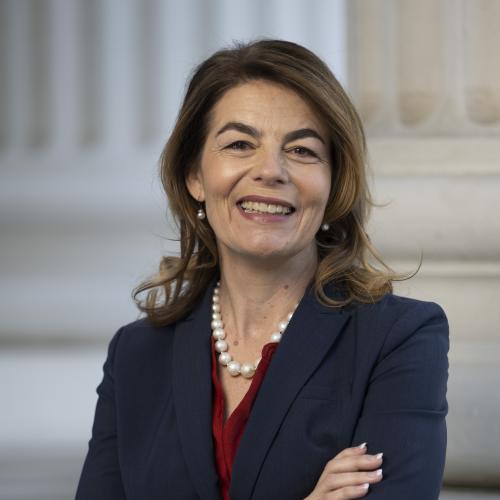
Asm. Dawn Addis
Sponsored bills
This measure would recognize the historical wrongdoing committed against California Native Americans and urge the federal government to work alongside tribal leaders to address historic injustices, uphold treaty obligations, and ensure equitable access to resources, healthcare, education, and environmental stewardship.
(1) Existing law states the policy of the State of California is to afford all persons in public schools, regardless of their disability, gender, gender identity, gender expression, nationality, race or ethnicity, religion, sexual orientation, or any other specified characteristic, equal rights and opportunities in the educational institutions of the state. Existing law requires teacher instruction and instructional materials, including materials adopted by the State Board of Education and any governing body, to be factually accurate, align with the adopted curriculum and standards, and be consistent with accepted standards of professional responsibility, rather than advocacy, personal opinion, bias, or partisanship. This bill would revise and recast the above-described requirement on teacher instruction and instructional materials by, among other things, deleting the requirement that teacher instruction and instructional materials be consistent with accepted standards of professional responsibility. (2) Existing law authorizes a person to file a complaint of unlawful discrimination with a local educational agency using the uniform complaint process or directly with the Superintendent of Public Instruction, as provided. Existing law requires a person who files a complaint with an educational institution, as defined, to be advised by that institution that civil law remedies may also be available, as specified. Existing law authorizes a party to a written complaint of prohibited discrimination to appeal the action taken by the governing board of a school district to the State Department of Education. Existing law authorizes a party to a written complaint of prohibited discrimination to appeal to the department based on the governing board of a school district's failure to issue an investigation report within a certain timeline. Prior to direct intervention by the Superintendent regarding an appeal to the department based on a failure to issue an investigation report within a specified timeline, existing law requires the department to attempt to work with the local educational agency to issue a local educational agency report, within a specified timeline, to the Superintendent. This bill would instead, prior to direct intervention by the Superintendent, require the department to notify the local educational agency, in writing, to issue a local educational agency investigation report to the complainant and the department within 20 days of the notification. The bill also would instead require a person who files a complaint with a local educational agency to be advised by that local educational agency that civil law remedies may also be available, as specified. (3) If instructional materials are found to have resulted in unlawful discrimination, existing law requires those materials to be immediately and permanently omitted from the course materials and prohibits those materials from being used in any current course offerings or any subsequent course offerings. This bill would require the Superintendent to ensure that local educational agencies omit all portions of the instructional materials found to have resulted in unlawful discrimination.
(1) Existing state and federal law provides for the enforcement of laws related to elections. This bill would prohibit a peace officer from interfering with the administration of an election, as specified. This bill would authorize certain persons to enforce those prohibitions by filing a civil action, as specified. This bill would also prohibit any individual from permitting an agent of a law enforcement agency, as specified, to access, disrupt, modify, or take possession of rosters, combined rosters, or voter lists unless authorized by a court order or to investigate certain types of voting fraud. The bill would additionally require the Attorney General to provide guidance and information regarding how to respond to requests by law enforcement, as defined, to access areas where ballots are present. (2) Existing law requires an elections official, upon receiving a vote by mail ballot, to compare the signature on the identification envelope with the voter's prior signatures, and it also provides a mechanism by which a voter can verify their signature and cure this defect. Existing law provides that the processing of vote by mail ballots is open to the public and permits specified persons and organizations to observe this processing. This bill would prohibit a vote by mail observer from challenging a signature on a vote by mail ballot that has been verified by the voter. (3) Under existing law, it is a crime for a person in possession of a firearm, a uniformed peace officer, private guard, or security personnel, or any person wearing the uniform of a peace officer, guard, or security personnel, to be stationed in the immediate vicinity of, or posted at, a polling place without authorization from the appropriate elections official. It is also a crime for a person to hire or arrange for such a person to be stationed in the immediate vicinity of, or posted at, a polling place without authorization from the elections official. This bill would authorize the Secretary of State or Attorney General to object to authorization provided by the appropriate elections official, in which case the person stationed or posted at the polling place, or the person who hired or arranged for such a person to be stationed or posted at the polling place, is guilty of a crime. By expanding the scope of these crimes, the bill would create a state-mandated local program. (4) Existing law authorizes the Secretary of State, Attorney General, and any local elections official in the county in which the act occurs, to bring a civil action against an individual, business, or other legal entity that commits any specified act of tampering with a voting system or voting equipment before, during, or after an election. This bill would additionally authorize the Secretary of State, Attorney General, and the appropriate local elections official to bring a civil action against a person, business, or entity that takes a package containing ballots from the custody of an elections official. (5) Existing law makes it a crime for an individual to undertake a number of enumerated actions that would result in interference with an election, including displaying a container for the purpose of collecting ballots with the intent to deceive a voter into casting a ballot in an unofficial ballot box. This bill would also make it a crime to take a package containing voted ballots out of the custody of an elections official. By expanding the scope of this crime, the bill would impose a state-mandated local program. (6) Existing law requires the elections official of any county or city using a voting system to inspect the machines or devices at least once every 2 years. This bill would prohibit an individual from permitting an agent of a law enforcement agency, as defined, to access, disrupt, modify, or take possession of certified voting technology unless authorized by a court order. To the extent this bill would establish new procedures for the conduct of elections, it would create a state-mandated local program. (7) The California Constitution requires the state to reimburse local agencies and school districts for certain costs mandated by the state. Statutory provisions establish procedures for making that reimbursement. This bill would provide that with regard to certain mandates no reimbursement is required by this act for a specified reason. With regard to any other mandates, this bill would provide that, if the Commission on State Mandates determines that the bill contains costs so mandated by the state, reimbursement for those costs shall be made pursuant to the statutory provisions noted above. (8) This bill would declare that it is to take effect immediately as an urgency statute.

Maddy summaryThis bill designates May 2026 as Maternal Mental Health Awareness Month to highlight the importance of mental health support for mothers. It serves as a symbolic proclamation rather than a law that changes regulations or imposes new requirements. The measure directly affects state officials who will recognize the month and may encourage public awareness campaigns during that time.
Maddy summaryThis bill designates Monday, May 4, 2026, as California Peace Officers' Memorial Day to honor law enforcement officers. It does not create new laws or change existing policies but serves as a formal proclamation to recognize the date. The measure affects the state by establishing an official day of remembrance for peace officers.
Existing law establishes the Medi-Cal program, which is administered by the State Department of Health Care Services and under which qualified low-income individuals receive health care services. The Medi-Cal program is in part governed by, and funded pursuant to, federal Medicaid program provisions. Existing federal law, Public Law 119-21, enacted on July 4, 2025, sets forth various changes to different health care programs, including certain requirements for Medicaid eligibility with regard to work or community engagement reporting, redeterminations, and cost sharing, among other factors, for certain Medicaid populations pursuant to a specified implementation timeline. Existing law, the federal Patient Protection and Affordable Care Act, imposes a certain assessment on an applicable large employer, as defined, that offers full-time employees and their dependents the opportunity to enroll in minimum essential coverage, and for whom one or more full-time employees have been certified as having enrolled in a qualified health plan for which a premium tax credit or cost-sharing reduction is allowed or paid. This bill would create the Employer Responsibility for Medi-Cal Trust Fund to consist of new taxes and deposits, including employer penalties specified in the Budget Act of 2026. The bill would continuously appropriate moneys in the fund to the department to fund the costs of administering the Medi-Cal program in a manner necessary to prevent loss of or to restore health care coverage, benefits, or access to care following the passage of Public Law 119-21 and subsequent state budget actions. The bill would state that these provisions would become operative only if the Medicaid provisions of Public Law 119-21 are not repealed prior to January 1, 2027. By creating a continuously appropriated fund, the bill would make an appropriation. This bill would declare that it is to take effect immediately as an urgency statute.

This measure would recognize the significance of Vesak Day to people of Buddhist faith and extend sincere best wishes to the state's Buddhist community in celebrating Vesak Day.
Maddy summaryThis House Resolution recognizes May 17, 2026, as the International Day Against Homophobia, Biphobia, Interphobia, and Transphobia within the California Legislature. The measure formally acknowledges the ongoing discrimination faced by LGBTQ+ individuals globally and reaffirms the state's commitment to equality and civil rights. By adopting this resolution, the Assembly encourages all Californians to support inclusive practices and stand against hate toward the LGBTQ+ community.
Existing law, the Trial Jury Selection and Management Act, governs the selection of jurors and formation of trial juries for civil and criminal cases in all trial courts of the state. Existing law requires the judge in a criminal action or proceeding alleging a violent felony, prior to discharging the jury, to provide specified information to trial jurors regarding mental health awareness, including information about stress relief and symptoms that may be experienced following exposure to trauma. This bill would authorize the County of Santa Cruz and two other counties, selected by the Judicial Council, to conduct a pilot program for the provision of no-cost mental health services to jurors and alternate jurors following the receipt of a verdict in a criminal action or proceeding alleging a violent felony, as defined. The bill would require the Judicial Council to enter into a memorandum of understanding with the behavioral health directors of the participating counties for the purposes of providing the above-described mental health services, and would require the memorandum of understanding to include, among other things, the number of no-cost mental health sessions available to jurors. The bill would require the participating counties to terminate the pilot program no later than January 1, 2034, and would require the counties to report specified information regarding the pilot program to the Judicial Council. The bill would require the Judicial Council to provide a report to the Legislature no later than July 1, 2035, regarding the pilot program, and would require the report to include the number of jurors who were offered mental health resources pursuant to this program and recommendations for improving outreach and access to mental health services for jurors. The bill would repeal these provisions on January 1, 2036.