

Existing law classifies controlled substances into 5 schedules and places the greatest restrictions and penalties on the use of those substances placed in Schedule I. Existing law classifies the drug fentanyl in Schedule II. Existing law makes possession of a controlled substance for the purposes of sale of the substance punishable by imprisonment in a county jail for a period of 2, 3, or 4 years. Existing law makes transportation and sales of a controlled substances punishable by imprisonment in a county jail for a period of 3, 4, or 5 years and transportation to a noncontiguous county within the state punishable by imprisonment in a county jail for a period of 3, 6, or 9 years. This bill would increase the above-described penalties, as specified, if the controlled substance involved was more than more than 28.35 grams of fentanyl, more than 28.35 grams of an analog of fentanyl, a substance containing more than 28.35 grams of fentanyl, or a substance containing more than 28.35 grams of an analog of fentanyl and the individual knew that the specific controlled substance was fentanyl. By increasing the penalty for a crime, this bill would impose a state-mandated local program. The California Constitution requires the state to reimburse local agencies and school districts for certain costs mandated by the state. Statutory provisions establish procedures for making that reimbursement. This bill would provide that no reimbursement is required by this act for a specified reason.
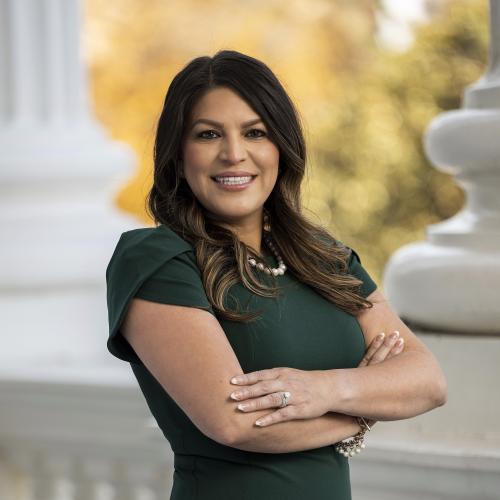
Asm. Esmeralda Soria
Sponsored bills
Existing law authorizes a court to grant pretrial diversion to a defendant suffering from a mental disorder, on an accusatory pleading alleging the commission of a misdemeanor or felony offense, in order to allow the defendant to undergo mental health treatment. Existing law prohibits defendants charged with specified offenses, including murder, from being placed in this diversion program. This bill would add attempted murder to the list of charged offenses that prohibit a defendant from being placed in this diversion program.
Existing law, until January 1, 2026, requires a person, upon a criminal conviction for driving under the influence (DUI) with a prior conviction for DUI, to install a functioning, certified ignition interlock device (IID) for a specified period of time. Existing law also authorizes a court, upon the first criminal conviction of a person for DUI, to order installation of an IID for a specified period of time, or, if the court does not order the installation of the device, authorizes the person to apply for a restricted license, as specified. This bill would establish a pilot program under the Department of Motor Vehicles that would, between July 1, 2025, and July 1, 2030, require the courts in the Counties of Los Angeles, Orange, Sacramento, San Bernardino, and San Diego, to order the installation of an IID for any DUI conviction, as specified. The bill would require the department to prepare and submit a report to the Legislature, after the conclusion of the program, summarizing the effect of the program on reducing first-time and repeat DUI offenses.
Maddy summaryThis bill designates October 2024 as Menopause Awareness Month in California to highlight the health and societal impacts of menopause on women. It acknowledges that millions of women face symptoms that can affect their daily lives and work, noting that women of color are at higher risk for complications like premature menopause and heart disease. The resolution encourages the state to provide better health information and services to support women's well-being before, during, and after this transition. While the text outlines these goals, the bill itself is a formal recognition rather than a law that creates new funding or mandates specific programs.
This measure would proclaim the week of April 14, 2024 to April 20, 2024, to be Cities Week, and would encourage all Californians to be involved in their communities and be civically engaged with their local government.
This measure would join Asian and Pacific Islander communities throughout the state, nation, and world in celebrating April 13, 2024, to April 15, 2024, as the Songkran New Year Festival.
Maddy summaryThis bill is a House Resolution that formally recognizes May 2024 as Asian and Pacific Islander American Heritage Month in California. It directly affects the state legislature and the broader public by establishing an official period to honor the history and contributions of Asian and Pacific Islander communities. The resolution highlights the diverse backgrounds of these populations, their significant roles in California's development, and their ongoing achievements in various fields. By adopting this measure, the Assembly commends these communities for their accomplishments and acknowledges the hardships they have faced throughout history.
This measure would proclaim the week of April 7 through April 13, 2024, as Adult Education Week, and would salute the teachers, administrators, classified staff, and students of adult education programs statewide, honoring their efforts, persistence, and accomplishments.