

This measure would encourage each individual in the United States to become better informed and aware of kidney disease and APOL1-mediated kidney disease (AMKD) . The measure would encourage people from or with ancestry from Western and Central Africa to consider genetic testing for apolipoprotein L1 (APOL1) gene mutations. The measure would designate the last Tuesday of every April as APOL1-Mediated Kidney Disease (AMKD) Awareness Day.
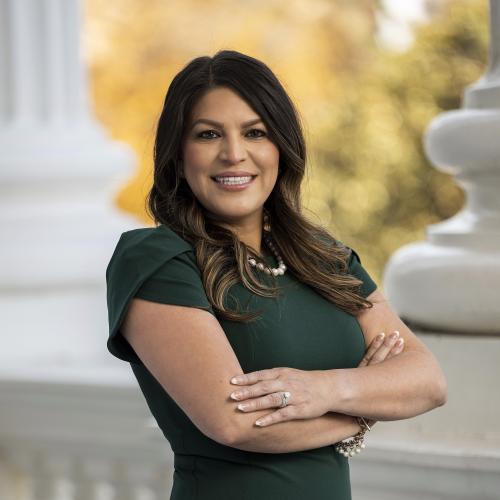
Asm. Esmeralda Soria
Sponsored bills
Maddy summaryThis legislative resolution officially designates the month of May as Necrotizing Fasciitis Awareness Month in California. The measure aims to increase public understanding of the condition, often known as flesh-eating bacteria, which is a rare but serious infection of the tissue under the skin. By recognizing this month, the state intends to encourage awareness and education about the disease's symptoms and causes without changing any laws or funding.
Maddy summaryThis bill formally recognizes April 2024 as Child Abuse Prevention Month in California. It encourages communities, schools, and organizations to focus on youth-serving prevention activities during this time and throughout the year. The measure does not create new laws or funding but serves to raise public awareness about the issue.
This measure would designate the month of May 2024 as Missing and Murdered Indigenous People Awareness Month in California and urge the Governor to declare a state of emergency due to the crisis of missing and murdered indigenous people.
Maddy summaryThis bill is a House Resolution that formally recognizes National Maritime Day on May 22, 2024, and expresses the California Assembly's support for the state's maritime industry. The resolution highlights the economic importance of California's ports and the domestic shipping sector, noting that it supports over 51,000 jobs and contributes billions to the state economy. It also acknowledges the critical role of maritime workers in transporting goods and developing renewable energy, while citing recent maritime incidents to underscore the value of professional crews and well-maintained vessels. Ultimately, the bill serves as a commemorative statement rather than creating new laws or changing existing policies.
Maddy summaryThis bill is a House Resolution that formally recognizes May 27, 2024, as Memorial Day in California. It serves as a commemorative measure to honor the men and women who have died while serving in the U.S. Armed Forces. The resolution does not alter laws or create new programs but instead expresses the state's gratitude for the sacrifices made by military personnel.
Maddy summaryThis bill designates May 17, 2024, as Bike to School Day in California to encourage students to ride bicycles or electric bikes to their schools. The resolution highlights the environmental, health, and recreational benefits of cycling while acknowledging the state's existing bike-friendly infrastructure and recent cycling events. It serves as a commemorative measure rather than a law that changes regulations or funding, and it directs the Assembly's Chief Clerk to distribute copies of the text for public awareness.
Maddy summaryThis bill establishes April 27 as Harvey Milk Day to honor the first openly gay man elected to public office in a major U.S. city. The resolution recognizes Milk's legacy as a civil rights leader who fought against discrimination and advocated for LGBTQ+ visibility and unity among minority communities. It recounts key events in his life, including his assassination in 1978 and the subsequent legal proceedings against his killer. The measure serves as a commemorative acknowledgment of Milk's impact on California and national history rather than creating new laws or policies.
Existing law makes theft a crime, and distinguishes between grand theft and petty theft. Existing law makes the theft of money, labor, or property petty theft punishable as a misdemeanor, whenever the value of the property taken does not exceed $950. Under existing law, if the value of the property taken exceeds $950, the theft is grand theft, punishable as a misdemeanor or a felony. Existing law makes a first conviction for petty theft involving merchandise taken from a merchant's premises punishable by a mandatory fine and as a misdemeanor. This bill would require the Department of Justice to determine the number of misdemeanor convictions for a crime of theft for which the property was taken from a retail establishment during the Governor's declared state of emergency related to the COVID-19 pandemic, and to report that information to the Legislature on or before January 1, 2026.
Existing law classifies certain substances, including cocaine, heroin, and fentanyl, as controlled substances and generally prohibits the possession, sale, transportation, and use of these substances. Existing law additionally prohibits the possession of certain of these controlled substances including cocaine, heroin, and methamphetamine while armed with a loaded and operable firearm. A violation of this prohibition is punishable as a felony punishable by incarceration in the state prison. This bill would additionally prohibit the possession of fentanyl, as specified, while armed with a loaded and operable firearm. By expanding the application of an existing crime, this bill would impose a state-mandated local program. The California Constitution requires the state to reimburse local agencies and school districts for certain costs mandated by the state. Statutory provisions establish procedures for making that reimbursement. This bill would provide that no reimbursement is required by this act for a specified reason.