

Existing law prohibits an employer or any other person from engaging in, or directing another person to engage in, an unfair immigration-related practice against a person for the purpose of, or with the intent of, retaliating against any person for exercising a right protected under state labor and employment laws or under a local ordinance applicable to employees, as specified. Existing law authorizes a civil action for equitable relief and damages or penalties, as specified, by an employee or other person who is the subject of an unfair immigration-related practice. This bill would expand the above-described prohibition to include retaliating against any person for exercising any right under any local, state, or federal statute or regulation applicable to employees, as defined, and would prohibit preventing a person from exercising such a right. The bill would also prohibit an employer or any other person from engaging in any other conduct, related to any person's perceived immigration status, that would reasonably tend to dissuade a person from engaging in conduct that the person has a legal right to engage in under any local, state, or federal statute or regulation applicable to employees, or to induce a person to engage in conduct that the person has a legal right to abstain from under any local, state, or federal statute or regulation applicable to employees. The bill would make an employer or other person who violates these provisions liable for a civil penalty not exceeding $10,000 per employee or person for each violation, as specified. The bill would also make related and conforming changes to these provisions.
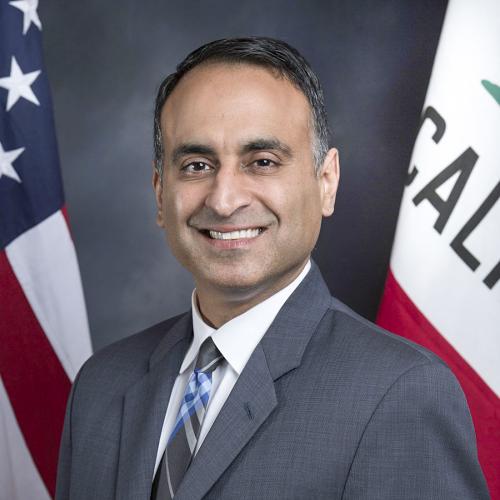
Asm. Ash Kalra
Sponsored bills
The State Bar Act provides for the licensure and regulation of attorneys by the State Bar of California (State Bar) , a public corporation governed by a board of trustees. Existing law authorizes the board of trustees, with the approval of the Supreme Court, to formulate and enforce rules of professional conduct for all licensees of the State Bar. Existing provisions of the Labor Code prohibit an employer from making, adopting, or enforcing any rule, regulation or policy preventing an employee from disclosing information to a government or law enforcement agency, to a person with authority over the employee, or to another employee who has authority to investigate, discover, or correct the violation or noncompliance, if the employee has reasonable cause to believe that the information discloses a violation of state or federal statute, or a violation of or noncompliance with a local, state, or federal rule or regulation. This bill would add provisions to the State Bar Act that would prohibit an employer, law firm, attorney, or any person acting on their behalf from retaliating against an individual for disclosing information in good faith, or because the employer, law firm, or attorney believes the individual disclosed or may disclose information in good faith, where the individual has reasonable cause to believe that the information reveals a violation of the State Bar Act, the California Rules of Professional Conduct, or any other state or federal statute, rule, or regulation governing the conduct of attorneys. Existing law requires certain contracts between an attorney and client to comply with specified requirements, including requiring contracts to represent a client on a contingency fee basis to be in writing and include the contingency fee rate and specified other information. This bill would require an attorney entering into a loan or financial assistance arrangement with a client to have a separate written contract that contains the total amount financed, repayment terms and contingencies, and all fees, costs, and charges. The bill would prohibit an attorney from charging the client interest on any loan or funds. The bill would make a violation of those requirements subject to a civil penalty of $15,000 per offense or injunctive relief, and subject to discipline by the State Bar. Existing law makes it unlawful for any person to act as a runner or capper for any attorneys or to solicit any business for attorneys, as specified. Existing law makes a violation of those provisions a misdemeanor or a felony, as specified, and also authorizes a person to bring a civil action for specified remedies for a violation of those provisions. Existing law authorizes the Supreme Court to disbar, including to summarily disbar, or suspend an attorney for specified acts, including conviction of a felony or misdemeanor involving moral turpitude. This bill would also make a violation of the provisions prohibiting capping or running subject to a civil penalty of $25,000 for each violation. The bill would require the State Bar to enact summarily disbarment procedures for any licensee for a felony conviction of the provisions prohibiting capping or running or a misdemeanor conviction under those provisions where the court finds, or the record establishes, that the licensee acted knowingly and for financial gain.
Existing law requires a social media platform to take certain actions with respect to child sexual abuse material on the social media platform, including requiring the platform to provide, in a mechanism that is reasonably accessible to users, a means for a user who is a California resident to report material to the platform that the user reasonably believes meets certain criteria, including that the reported material is child sexual abuse material and that the reporting user is depicted in the material. Existing law also requires the social media platform to collect information reasonably sufficient to enable the platform to contact, as specified, a reporting user. Existing law defines child sexual abuse material for these purposes to include obscene matter that depicts a minor personally engaging in, or personally simulating, sexual conduct. This bill would revise the definition of child sexual abuse material to instead include an intimate visual depiction, as defined, of an identifiable individual who is a minor. The bill would additionally require the above-described mechanism to be clear and conspicuous, as defined, and would delete the requirement that the reporting user be depicted in the material. The bill would require a social media platform to, among other things, ensure review by a natural person if there is not an established or known hash match to child sexual abuse material with respect to the reported material and the reported material is not otherwise blocked. The bill would require a social media platform to restore availability or functionality of the reporting mechanism if the reporting mechanism is unavailable or nonfunctional. Existing law makes a noncomplying social media company liable to a reporting user for actual damages and statutory damages, as specified. This bill would instead make a social media company liable to a depicted individual, as defined, for actual and statutory damages, as provided. The bill would also impose specified civil penalties on a noncomplying company to be collected in a civil action by certain public attorneys, including the Attorney General. Existing law establishes the Survivor Support Fund within the state treasury and makes moneys in the fund available, upon appropriation by the Legislature, for grants by the California Victim Compensation Board to community-based organizations that provide direct services to vulnerable individuals in areas with a high concentration of sex trafficking. This bill would require any penalty collected in a civil action by the Attorney General under these provisions to be deposited into the Survivor Support Fund. Existing law prohibits a social media platform from knowingly facilitating, aiding, or abetting commercial sexual exploitation, as defined. Existing law deems a social media platform to have knowledge for the purposes of this prohibition if material was reported to the social media platform using the reporting mechanism for 4 consecutive months, as provided. Existing law exempts a social media platform from being deemed in violation of this prohibition if it instituted a specified audit program and provided to each member of its board of directors a true and correct copy of each audit, as prescribed. This bill would remove the requirement that material was reported for 4 consecutive months to deem a social media platform to have knowledge for the purposes of the above-described prohibition. The bill would, in order to be exempt from that prohibition, require the social media platform to also submit the audit to the Attorney General, and if requested, to certain other public officials. The bill would provide that an audit submitted as described above is confidential and shall be exempt from disclosure under the California Public Records Act. This bill would declare its provisions severable. Existing constitutional provisions require that a statute that limits the right of access to the meetings of public bodies or the writings of public officials and agencies be adopted with findings demonstrating the interest protected by the limitation and the need for protecting that interest. This bill would make legislative findings to that effect. The California Constitution requires local agencies, for the purpose of ensuring public access to the meetings of public bodies and the writings of public officials and agencies, to comply with a statutory enactment that amends or enacts laws relating to public records or open meetings and contains findings demonstrating that the enactment furthers the constitutional requirements relating to this purpose. This bill would make legislative findings to that effect.
Existing law includes various provisions limiting how state and local entities may use their resources for immigration enforcement purposes. This bill would prohibit the use of state-owned property for purposes of immigration enforcement, as specified. In this regard, the bill would prohibit, among other uses, staging, assembling, mobilizing, or deploying vehicles, equipment, or personnel for immigration enforcement purposes. The bill would require the Department of General Services and state agencies to work together to identify state-owned property previously or likely to be used for immigration enforcement purposes. The bill would require state agencies to post signage at those properties regarding the prohibition and to use physical barriers limiting access, as provided. The bill would require state agencies to develop procedures to ensure that an attempted or actual use of state-owned property for immigration enforcement purposes is documented in writing, that the documentation includes any photographic or video evidence, and that the Attorney General's office or the Attorney General's designee is notified. The bill would direct state agencies to make educational materials available regarding the rights of employees, tenants, and security staff if federal agents enter state-owned property. The bill would further require the Attorney General's office to design standardized signage and to make the signage available to download free of charge on the Attorney General's internet website.
Existing law provides that the State of California recognizes and accepts responsibility for the harms and atrocities committed by the state in promoting, facilitating, enforcing, and permitting chattel slavery and apologizes for perpetuating the harms African Americans have faced, as specified. Existing law requires a plaque memorializing this apology to be publicly and conspicuously installed and maintained in the State Capitol Building. This bill, the Rowena Mae Ramos Act, would provide that the State of California recognizes and accepts responsibility for all of the harms and atrocities committed by its representatives who promoted, permitted, facilitated, and enforced policies of violence against California Native Americans. The bill would further provide that the State of California apologizes for perpetuating the harms experienced by California Native Americans as a result of policies enacted, sanctioned, or tolerated by the Legislature. The bill would require a plaque memorializing this apology to be publicly and conspicuously installed and maintained in the State Capitol Building. The bill would impose specified duties on the Department of General Services and the Joint Rules Committee relating to the installation and maintenance of the plaque. The bill would authorize the Department of General Services and the Joint Rules Committee to receive money from grants and private donations and would continuously appropriate those funds for this purpose, as specified. The bill would require the Legislature to prepare the formal apology and would request it be signed by specified state leaders. The bill would require the Secretary of State to submit a final copy of this formal apology to the State Archives, where it would be available for viewing by the general public in perpetuity. The bill would include related legislative findings.
Existing law generally prohibits an employment contract from requiring a worker to pay certain penalties, fees, costs, or debts related to employment or education if the worker's employment or work relationship terminates, as provided. Existing law provides that a contract that is unlawful under that prohibition is void and contrary to public policy as a restraint of engaging in a lawful profession, trade, or business. Existing law authorizes a worker, among other persons, to bring a civil action for specified civil penalties and relief for a violation of these provisions. Existing law applies these provisions to contracts entered into on or after January 1, 2026. This bill would instead apply those provisions to contracts entered into on or after January 1, 2027. The bill would establish exceptions to the above-described prohibition for contracts. Among these exceptions, the bill would except contracts for bonuses relating to specified recruitment and retention programs, and repayment obligations arising from advanced paid time off upon voluntary separation, as prescribed. The bill would further except certain affiliation contracts between a securities broker-dealer, insurance producer, or investment adviser and its agents or representatives that are registered and licensed, as specified, and their affiliates if the contract satisfies certain conditions. The bill would make related findings and declarations. This bill would declare that it is to take effect immediately as an urgency statute.
Existing law establishes the California State University, under the administration of the Trustees of the California State University, the University of California, under the administration of the Regents of the University of California, the California Community Colleges, under the administration of the Board of Governors of the California Community Colleges, and independent institutions of higher education, as defined, as 4 segments of postsecondary education in the state. This bill would establish the Designation of California Asian American- and Native Hawaiian Pacific Islander-Serving Institutions to recognize campuses of those segments of postsecondary education that excel at providing academic resources to Asian American, Native Hawaiian, and Pacific Islander students. The bill would establish a California Asian American- and Native Hawaiian Pacific Islander-Serving Institutions governing board to designate colleges and universities as California Asian American- and Native Hawaiian Pacific Islander-Serving Institutions and would require the office of the Chancellor of the California Community Colleges to, among other duties, develop the application processes and to process and present initial and renewal applications to receive this designation to the governing board, as specified. The bill would make an initial and renewal designation valid for 5 years.
Existing law authorizes a borrower who is experiencing financial hardship that prevents the borrower from making timely payments on a specified residential mortgage loan due directly to a specified state of emergency proclaimed by the Governor, or a specified federally declared disaster, to request forbearance on their residential mortgage loan, as prescribed. Existing law requires a mortgage servicer, except as specified, to offer mortgage payment forbearance for an initial 90-day period that may be extended up to a maximum forbearance period of 12 months and prohibits a mortgage servicer from assessing any late fees to the borrower's account or charging a default rate of interest during the forbearance period. This bill would, among other things, similarly authorize a borrower to request forbearance on a residential mortgage loan, as defined, secured by residential real property that has become uninhabitable as a direct result of a disaster, which the bill would define to mean the conditions described in a declaration of a disaster issued by the federal government. The bill would require the borrower to affirm that as a direct result of a disaster, a residential unit is uninhabitable. Because the bill would expand the crime of perjury, the bill would impose a state-mandated local program. This bill would, except as specified, require a mortgage servicer to offer mortgage payment forbearance of a period of up to an initial 180 days, to be extended at the request of the borrower in 90-day increments, up to a maximum forbearance period of 12 months. The bill would provide that the forbearance period includes any period of forbearance related to the disaster that a mortgage servicer has provided to a borrower before the date upon which a declaration of a disaster was issued. The bill would also prohibit a mortgage servicer from assessing any late fees to the borrower's account or charging a default rate of interest during the forbearance period. This bill would require a mortgage servicer to report the credit obligations of borrowers under a disaster-related forbearance plan in compliance with the federal Fair Credit Reporting Act. For an account granted disaster-related mortgage payment relief, the bill would prohibit a mortgage servicer from furnishing information during the forbearance period indicating that the payments are in forbearance and would require the mortgage servicer to report the credit obligation or account as current. This bill would authorize a civil action to enforce these provisions to be brought by the Attorney General, a district attorney, or a county counsel. The California Constitution requires the state to reimburse local agencies and school districts for certain costs mandated by the state. Statutory provisions establish procedures for making that reimbursement. This bill would provide that no reimbursement is required by this act for a specified reason.
Existing law requires every retail seller and manufacturer doing business in this state and having annual worldwide gross receipts that exceed $100,000,000 to disclose, as specified, its efforts to eradicate slavery and human trafficking from its direct supply chain for tangible goods offered for sale. Existing law also requires a person that submits a bid or proposal to, or otherwise proposes to enter into or renew a contract with, a state agency with respect to any contract in the amount of $100,000 or more to certify, under penalty of perjury, at the time the bid or proposal is submitted or the contract is renewed that they have complied with the Unruh Civil Rights Act and the California Fair Employment and Housing Act, and that any policy that they have adopted against any sovereign nation or peoples recognized by the government of the United States is not used as a pretext for discrimination in violation of the Unruh Civil Rights Act or the California Fair Employment and Housing Act. This bill, upon appropriation by the Legislature, would require any business or enterprise that is doing business in the state that was in existence or whose predecessor company was in existence on or before December 31, 1964 and has annual worldwide gross receipts that exceed $100,000,000 to complete an affidavit, under penalty of perjury, verifying that it has searched through any and all records in its and its related entities', as defined, possession, control, and knowledge for records that the covered entity or its related entities bought or sold persons subjected to slavery, used persons subjected to slavery as collateral, provided loans to purchase persons subjected to slavery, insured such transactions or the persons subjected to slavery, or provided related or other services to aid or otherwise facilitate those transactions. The bill would set forth the contents of the affidavit, the timeline and manner of submission, and reporting requirements. This bill would require the Civil Rights Department to create a public, digital platform within one year after an appropriation is made, that would make available affidavits and records made pursuant to the bill and disaggregated data, as described. The bill would additionally require the above-described business or entity, that submits a bid or proposal to, or otherwise proposes to enter into or renew a contract with, a state agency, as described above, to additionally certify, under penalty of perjury, that they have submitted the affidavit in compliance with the above-described provisions. By requiring an affidavit and to certify under penalty of perjury regarding compliance with the above-described affidavit requirements, and thus expanding the crime of perjury, the bill would impose a state-mandated local program. The California Constitution requires the state to reimburse local agencies and school districts for certain costs mandated by the state. Statutory provisions establish procedures for making that reimbursement. This bill would provide that no reimbursement is required by this act for a specified reason.
Existing law generally provides various benefits, including grant programs and tax credits. Existing law, the California Values Act, generally prohibits California law enforcement agencies from using their moneys or personnel for immigration enforcement purposes, except as specified. This bill would prohibit a business entity that is directly invested in, owns, operates, or manages a private detention facility, or that contracts with the federal government for immigration enforcement purposes, as specified, from receiving any state-provided grant or loan, as specified. The bill would also prohibit a disqualified taxpayer, as defined, from receiving any tax credits, except as provided. The bill would define "disqualified taxpayer" to mean a taxpayer that is directly invested in, owns, operates, or manages a private detention facility, or a taxpayer that contracts with a private detention facility or agency engaging in immigration enforcement, as specified. The bill would not apply these provisions to a provider of health care, as defined, that contracts with a private detention facility or agency engaging in immigration enforcement, as specified. The bill would establish the Due Process for All Fund and would require the Controller to transfer each year from the General Fund to the Due Process for All Fund the amount of tax collected that is attributable to business entities being made ineligible for tax credits by this bill. The bill would make moneys in the fund available upon appropriation by the Legislature for immigration-related services and programs. This bill would include a change in state statute that would result in a taxpayer paying a higher tax within the meaning of Section 3 of Article XIIIA of the California Constitution, and thus would require for passage the approval of 23 of the membership of each house of the Legislature.