

The California Global Warming Solutions Act of 2006, until January 1, 2031, authorizes the State Air Resources Board to adopt a regulation establishing a system of market-based declining aggregate emissions limits for sources or categories of sources that emit greenhouse gases (market-based compliance mechanism) that meets certain requirements. Existing law establishes the Greenhouse Gas Reduction Fund and requires all moneys, except for fines and penalties, collected by the state board from the auction or sales of allowances as a part of a market-based compliance mechanism to be deposited into the fund and requires the Legislature to appropriate moneys in the fund for the purpose of reducing greenhouse gas emissions in the state, as provided. Existing law, the California Climate Crisis Act, declares that it is the policy of the state both to achieve net-zero greenhouse gas emissions as soon as possible, but no later than 2045, and achieve and maintain net-negative greenhouse gas emissions thereafter, and to ensure that by 2045, statewide anthropogenic greenhouse gas emissions are reduced to at least 85% below the 1990 levels. This bill would enact the Polluters Pay Climate Superfund Act of 2025 and would establish the Polluters Pay Climate Superfund Program to be administered by the California Environmental Protection Agency to require fossil fuel polluters to pay their fair share of the damage caused by greenhouse gases released into the atmosphere during the covered period, which the bill would define as the time period between the 1990 and 2024 calendar years, inclusive, resulting from the extraction, production, refining, sale, or combustion of fossil fuels or petroleum products, to relieve a portion of the burden to address cost borne by current and future California taxpayers. The bill would require the agency, within 90 days of the effective date of the act, to determine and publish a list of responsible parties, which the bill would define as an entity with a majority ownership interest in a business engaged in extracting or refining fossil fuels that, during the covered period, did business in the state or otherwise had sufficient contact with the state, and is determined by the agency to be responsible for more than 1,000,000,000 metric tons of covered fossil fuel emissions, as defined, in aggregate globally, during the covered period. This bill would require the agency, within one year of the effective date of the act, to conduct and complete a climate cost study to, among other things, quantify the total damage amount, which the bill would define as all past and future climate harms and damages to the state from January 1, 1990, through December 31, 2045, inclusive. The bill would require the agency to update the climate cost study, not less frequently than every 5 years, through January 1, 2045, as provided. The bill would require the agency, within 60 days of the completion of the climate cost study, to determine and assess, as provided, a cost recovery demand for each responsible party listed, which represents the responsible party's proportionate share of the total damage amount. The bill would require responsible parties to pay their cost recovery demand, as provided. The bill would require the collected cost recovery demands to be deposited in the Polluters Pay Climate Superfund, which the bill would create in the State Treasury. The bill would, upon appropriation by the Legislature, require moneys in the Polluters Pay Climate Superfund be expended for, among other things, qualifying expenditures, which the bill would define to include expenditures for projects and programs to mitigate, adapt, or respond to the damages and costs caused to the state from climate change. The bill would require the agency to determine the initial implementation costs for the act, as provided, and would require the agency to assess an amount allocated equitably among responsible parties to cover those costs. This bill would require the Director of Finance, within 45 days of the effective date of the act, to perform an initial assessment of the reasonable and appropriate initial implementation costs that will be incurred by the agency. This bill would declare that it is to take effect immediately as an urgency statute.
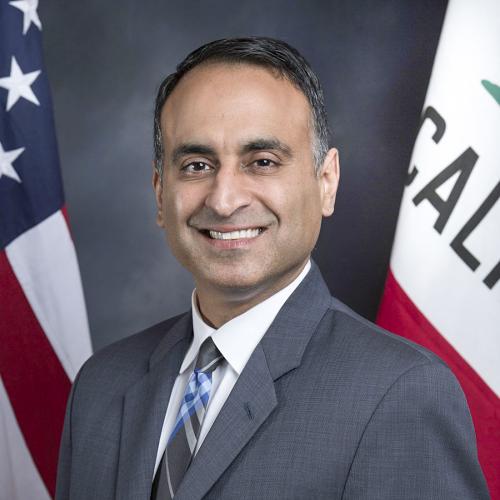
Asm. Ash Kalra
Sponsored bills
Existing law establishes the California State University and its various campuses under the administration of the Trustees of the California State University. Existing law requires the trustees to establish an internal audit staff with prescribed duties, including auditing, reviewing, cost and systems analysis, analyzing, and recommending operating procedures for the university. Existing law also requires the university's internal audit staff to perform audits, at least once every 5 years, of the activities of the university, as provided. This bill would require an external financial audit of each campus of the California State University to be conducted at least once every 3 years. The bill would also require all audits of the California State University or any of its campuses, including audits conducted by the university's internal audit staff, to be available to the public.
Existing law establishes the California Farmland Conservancy Program in the Department of Conservation and authorizes the program to offer financial assistance, including grants or contracts, for projects and activities on agricultural lands that support agricultural conservation and sustainable land management. Existing law creates the California Farmland Conservancy Program Fund and requires moneys in the fund, upon appropriation by the Legislature in the annual Budget Act, to be used for purposes of the program. Notwithstanding that provision, existing law continuously appropriates moneys in the fund from federal grants and gifts and donations to the department for purposes of the program. This bill would require the Controller to transfer $20,000,000 on July 1 of each fiscal year, commencing with the 2025–26 fiscal year, from the General Fund to the California Farmland Conservancy Program Funding Account, which the bill would create within the California Farmland Conservancy Program Fund. The bill would continuously appropriate moneys in the account to the department for expenditure as provided. The bill would require that the funding only be awarded for agricultural conservation easements on agricultural land, as defined.
Existing law requires a social media platform to take certain actions with respect to child sexual abuse material on the social media platform, including by requiring the social media platform to provide, in a mechanism that is reasonably accessible to users, a means for a user who is a California resident to report material to the social media platform that the user reasonably believes meets certain criteria, including that the reported material is child sexual abuse material and that the reporting user is depicted in the material. Existing law also requires the social media platform to collect information reasonably sufficient to enable the social media platform to contact, as specified, a reporting user. This bill would delete the requirement for reporting material that the reporting user be depicted in the material, would require that the depicted individual be depicted as a minor, and would additionally require the mechanism to be clear and conspicuous. The bill would require a social media platform to ensure that any report submitted using the reporting mechanism is reviewed through a hash matching process and would require a social media company to ensure review by a natural person if there is not an established or known hash match to child sexual abuse material with respect to the reported material and the reported material is not otherwise blocked. Existing law makes a noncomplying social media company liable to a reporting user for actual damages and statutory damages, as specified. This bill would also impose a civil penalty on a noncomplying social media company to be collected in a civil action by certain public attorneys, including the Attorney General. The bill would make a social media company liable to a depicted individual, as defined, for specified violations. Existing law prohibits a social media platform from knowingly facilitating, aiding, or abetting commercial sexual exploitation, as defined, and exempts a social media platform from being deemed in violation of that prohibition if it instituted a specified audit program and provided to each member of its board of directors a true and correct copy of each audit, as prescribed. This bill would revise those provisions to, instead, require a social media platform to submit to third-party audits and release audit reports to the public in order to be exempt from being deemed in violation that prohibition, as prescribed. This bill would declare that its provisions are severable.
Existing law authorizes a peace officer, as defined, or a regularly employed and salaried employee, who is engaged in directing traffic or enforcing parking laws and regulations, of a city, county, or jurisdiction of a state agency in which a vehicle is located, to remove a vehicle located within the territorial limits in which the officer or employee may act, under designated circumstances, including, but not limited to, when a vehicle is found upon a highway or public land, or removed pursuant to the Vehicle Code, and it is known that the vehicle has been issued 5 or more notices of parking violations to which the owner or person in control of the vehicle has not responded within designated time periods, or the registered owner of the vehicle is known to have been issued 5 or more notices for failure to pay or failure to appear in court for traffic violations for which a certificate has not been issued by the magistrate or clerk of the court hearing the case, as specified. Under existing law, a vehicle that has been removed and impounded under those circumstances that is not released may be subject to a lien sale to compensate for the costs of towage and for caring for and keeping safe the vehicle. This bill would remove the authority of a peace officer or public employee, as appropriate, to remove a vehicle under the above-described circumstances, and make conforming changes. Existing law similarly authorizes a peace officer, as defined, or a regularly employed and salaried employee, who is engaged in directing traffic or enforcing parking laws and regulations, of a city, county, or jurisdiction of a state agency in which a vehicle is located, to remove a vehicle from an off-street parking facility located within the territorial limits in which the officer or employee may act, when the vehicle is known to have been issued 5 or more notices of parking violation over a period of 5 or more days, to which the owner or person in control of the vehicle has not responded or when any vehicle is illegally parked so as to prevent the movement of a legally parked vehicle. Existing law authorizes the vehicle to be impounded until the owner or person in control of the vehicle furnishes to the impounding law enforcement agency evidence of their identity and an address within this state at which they can be located and furnishes satisfactory evidence that bail has been deposited for all notices of parking violation issued for the vehicle. In lieu of requiring satisfactory evidence that the bail has been deposited, existing law authorizes the impounding law enforcement agency to, in its discretion, issue a notice to appear for the offenses charged, as specified. In lieu of either furnishing satisfactory evidence that the bail has been deposited or accepting the notice to appear, existing law authorizes the owner or person in control of the vehicle to demand to be taken without unnecessary delay before a magistrate within the county in which the offenses charged are alleged to have been committed and who has jurisdiction of the offenses and is nearest or most accessible with reference to the place where the vehicle is impounded. This bill would delete the authorization to remove a vehicle from an off-street parking facility when the vehicle is known to have been issued 5 or more notices of parking violation over a period of 5 or more days, to which the owner or person in control of the vehicle has not responded. The bill would also delete the impounding provisions described above. Existing law authorizes a peace officer, as defined, or a regularly employed and salaried employee who is engaged in directing traffic or enforcing parking laws and regulations of the jurisdiction in which a vehicle is located, to immobilize the vehicle that is located on a highway or public lands located within the territorial limits in which the officer or employee may act, if the vehicle is found upon a highway or public lands and it is known to have been issued 5 or more notices of parking violations that are delinquent because the owner or person in control of the vehicle has not responded to the agency responsible for processing notices of parking violation within designated time periods, or the registered owner of the vehicle is known to have been issued 5 or more notices for failure to pay or failure to appear in court for traffic violations for which no certificate has been issued by the magistrate or clerk of the court hearing the case, as specified. Existing law authorizes the vehicle to be immobilized until the person furnishes to the immobilizing law enforcement agency evidence of their identity and an address within this state at which they can be located and furnishes satisfactory evidence that the full amount of parking penalties been deposited for all notices of parking violation issued for the vehicle and any other vehicle registered to the registered owner of the immobilized vehicle and that bail has been deposited for all traffic violations of the registered owner that have not been cleared. This bill would delete that provision.
The California Coastal Act of 1976 requires oceanfront land suitable for recreational use to be protected for recreational use and development unless present and foreseeable future demand for public or commercial recreational activities that could be accommodated on the property is already adequately provided for in the area. Existing law establishes the State Coastal Conservancy with prescribed powers and responsibilities for implementing and administering various programs intended to preserve, protect, and restore the state's coastal areas. Existing law establishes surfing as the official state sport. This bill would require, on or before July 1, 2026, the conservancy to establish criteria and an application process for purposes of designating an area of the coastline as a state surfing reserve, as defined. The bill would authorize a local government, as defined, to apply to the conservancy for purposes of designating an area of the coastline within the jurisdiction of the local government as a state surfing reserve. The bill would require the local government to include in its application, among other things, a description of the proposed surfing reserve. The bill would require the conservancy to approve the application if the area of the coastline meets the established criteria. The bill would require, once the application is approved, the conservancy to designate the area as a state surfing reserve. The bill would require the conservancy to, upon appropriation, publicize the state surfing reserve and partner with local governments to erect signs designating an approved surfing reserve, and would authorize the conservancy to accept donations for these purposes. The bill would authorize the conservancy to revoke the designation if the surfing reserve no longer meets the established criteria. The bill would require the conservancy to transmit notice of the approval of a designated surfing reserve to the Ocean Protection Council for consideration and inclusion in the state's 30x30 goal.
Existing law creates specified programs that employ inmates, including the joint venture program, which is established by the Secretary of Department of Corrections and Rehabilitation within state prisons that allows a public entity, nonprofit or for-profit entity, organization, or business to employ inmates confined in the state prison system for the purpose of producing goods or services. Existing law also establishes the Prison Industry Authority within the department for the purpose of developing and operating industrial, agricultural, and service enterprises employing prisoners in institutions under the jurisdiction of the department and for the purpose of creating and maintaining working conditions within the enterprises to ensure prisoners employed have the opportunity to work productively, to earn funds, and to acquire or improve effective work habits and occupational skills. Existing law requires, upon appropriation by the Legislature, the Office of Small Business Advocate within the Governor's Office of Business and Economic Development to establish the California Employee Ownership Hub that would, among other things, work with all California state agencies whose regulations and programs affect employee-owned companies, and businesses with the potential to become employee owned, to enhance opportunities and reduce barriers. Existing law, the Cooperative Corporation Law, governs the organization and operation of cooperatives, including, among others, worker cooperatives. Existing law defines a worker cooperative as a corporation formed under the Cooperative Corporation Law that includes a class of worker-members who are natural persons whose patronage consists of labor contributed to or other work performed for the corporation. Existing law requires specified information to be included in the articles of incorporation or bylaws, including, among other things, the apportionment and distribution of net earnings and losses of a worker cooperative. Existing law makes the violation of specified provisions under the Cooperative Corporation Law a crime. This bill would require the Department of Corrections and Rehabilitation to establish the Inmate Cooperative Program to facilitate operations of inmate worker cooperatives within state prison facilities. The bill would authorize a group of inmates who seek to establish a worker cooperative to apply to the program by submitting an application to the warden of the facility. The bill would require the warden to approve an application only if the applicant, or a cooperative community partner acting on their behalf, submits a plan of operation to the warden containing specified information, including, among other things, the cooperative's draft bylaws, which describe the cooperative's mission, the cooperative's internal governance structure, an initial management structure, and compensation structure. The bill would define a cooperative community partner as a nonprofit organization, cooperative association, cooperative corporation, or individual that supports the inmates with the establishment, operation, and governance of certified inmate cooperatives. This bill would require a group of inmates seeking to form a worker cooperative to incorporate as a worker cooperative following the approval of an application by the warden. The bill would require the Inmate Cooperative Program to certify the worker cooperative following approval of an application by the warden and incorporation of the cooperative. The bill would require the department to enter into a contract with the cooperative to outline the terms of operation, responsibilities, and compliance requirements. The bill would require a certified cooperative, as a condition to operate in a state prison facility, to write into their bylaws that their cooperative community partner is required to deduct 40% from each inmate's gross wages and deposit the wages into a specified account. The bill would authorize a certified cooperative to engage in the production of goods, agricultural products, or services for the cooperative's use and sale. This bill would require the California Employee Ownership Hub to choose a cooperative institution, which would, among other things, assist in the selection of a financial institution that would steward and manage an account that would be used to, among other things, create economic opportunities for survivors of crime and other persons impacted by their interactions with the criminal justice system with grants for specified purposes. The bill would define a cooperative institution as a nongovernmental nonprofit organization, cooperative association, or similar entity that is dedicated to supporting, overseeing, and promoting cooperative enterprises. The bill would require the financial institution to submit an annual report to the Governor detailing the account's activities, resource allocations, and measurable outcomes of funded initiatives. This bill would also require the department to deduct from inmate wages mandatory deductions for restitution orders and fines, among other things. The bill would require the department to provide certified cooperatives with access to necessary equipment, materials, and resources to support their operations, with no obligation for the department to fund these resources. The bill would prohibit an employee of the department from serving as a member, officer, or board member of any cooperative established under the Inmate Cooperative Program or from having any direct or indirect financial interest in the cooperative or its operations.
Existing law authorizes the governing board of a school district that determines during a fiscal year that its revenues are less than the amount necessary to meet its current year expenditure obligations to request an emergency apportionment through the Superintendent of Public Instruction, subject to specified requirements. Existing law authorizes emergency apportionments to be provided through an interim loan from the General Fund and lease financing made available by the California Infrastructure and Economic Development Bank, which is authorized to issue bonds for purposes of the emergency apportionments and related costs, or as an alternative to lease financing, as an emergency apportionment from the General Fund. Existing law prescribes the financing conditions on emergency apportionments, including the calculation of the interest rate. Existing law, notwithstanding any other law, authorizes the Inglewood Unified School District, through the State Department of Education, to request cashflow loans from the General Fund for a total of up to $55,000,000 for emergency operational purposes, as provided. Existing law requires the interest on these loans to be charged at the annual rate of return of the Pooled Money Investment Account, plus an additional 2%. This bill, notwithstanding any other law, and once the Inglewood Unified School District has successfully repaid at least 10 years of a General Fund cashflow loan made pursuant to those provisions, would authorize the school district to seek, and would require the Department of Finance to grant, a waiver of interest on that loan for the next succeeding fiscal year if specified conditions are met, including, among other conditions, that the Los Angeles County Superintendent of Schools, in consultation with the County Office Fiscal Crisis and Management Assistance Team, determines that the school district is making substantial progress towards fiscal solvency and that a waiver of interest would help the school district to exit receivership, as provided. In each subsequent fiscal year, the bill would authorize the school district to seek, and would require the Department of Finance to grant, a subsequent waiver of interest for the applicable fiscal year if the school district again meets those same requirements. To the extent the bill would impose additional duties on the Los Angeles County Superintendent of Schools, the bill would impose a state-mandated local program. This bill would make legislative findings and declarations as to the necessity of a special statute for the Inglewood Unified School District. The California Constitution requires the state to reimburse local agencies and school districts for certain costs mandated by the state. Statutory provisions establish procedures for making that reimbursement. This bill would provide that, if the Commission on State Mandates determines that the bill contains costs mandated by the state, reimbursement for those costs shall be made pursuant to the statutory provisions noted above.
The Wildlife Conservation Law of 1947 establishes the Wildlife Conservation Board within the Department of Fish and Wildlife to investigate, study, and determine what areas within the state are most essential and suitable for wildlife production and preservation, among other things. Under existing law, the board administers various habitat conservation programs. This bill would require the board to establish and administer, through the Department of Fish and Wildlife, the Diablo Range Conservation Program and, pursuant to the program, to approve projects to acquire, preserve, restore, and enhance habitat within the Diablo Range, as defined, consistent with conservation strategies approved by the department. The bill would authorize the board to provide grants to local public agencies, nonprofit organizations, and California Native American tribes to be used for various purposes, including the acquisition, restoration, and enhancement of fish and wildlife habitat and other natural resources within and adjacent to the Diablo Range. The bill would establish the Diablo Range Conservation Fund in the State Treasury and would make moneys in the fund available, upon appropriation by the Legislature, for purposes of the program. The bill would authorize the board to accept moneys, grants, goods, or services contributed to it by public agencies or private entities or persons and would require those moneys to be deposited in the Donation Account, which the bill would establish in the fund. The bill would continuously appropriate the moneys in the account to the board for purposes of the program, thereby making an appropriation.
Existing law appropriates $10,000,000 from the General Fund for the 2021–22 fiscal year to the Superintendent of Public Instruction to administer the Dual Language Immersion Grant Program for the purpose of expanding access to quality dual language learning and fostering languages that English learners bring to California's education system. Under that program, the State Department of Education is required to award a minimum of 25 one-time Dual Language Immersion Grants over a period of 3 fiscal years of up to $380,000 per grant to an eligible entity to expand or establish dual language immersion programs. This bill would establish the Dual Language Immersion Education Instructional Materials Grant Program, to be administered by the Superintendent, for purposes of providing one-time grants of $100,000 to school districts, county offices of education, and charter schools to increase available instructional materials in partner languages for dual language immersion programs at one or more schoolsites, as provided. The bill would require a grant recipient to report to the department, on or before June 29, 2029, on how grant funds were expended, including a list of any materials obtained or developed. The bill would require the department to submit a report to the appropriate policy and fiscal committees of the Legislature, on or before December 31, 2029, that includes the data received from the grant recipients. The bill would make implementation of these provisions contingent upon an appropriation by the Legislature for these purposes in the annual Budget Act or another statute.