

The Alcoholic Beverage Control Act generally prohibits a manufacturer, winegrower, distiller, bottler, or wholesaler, among other licensees, or agents of these licensees, from paying a retailer for advertising. The act creates a variety of exceptions from this prohibition, including permitting specified licensees to purchase advertising space and time from, or on behalf of, an on-sale retail licensee that, unless otherwise limited, is an owner, manager, or major tenant of certain stadiums, parks, entertainment complexes, and arenas, subject to specified conditions. Existing law requires the purchase of advertising space or time in this context to be conducted pursuant to a written contract with the on-sale licensee, with a specified exception. Existing law makes it a crime for an on-sale licensee to coerce certain licensees to purchase advertising space or time, as specified. This bill would expand the exceptions described above to allow beer manufacturers, winegrowers, distilled spirits rectifiers, distilled spirits manufacturers, or distilled spirits manufacturer's agents to purchase advertising space and time, in connection with described events, from, or on behalf of, on-sale retail licensees, as described above, at specified stadiums located in the City of San Jose. The bill, with regard to a specified fully enclosed arena in San Jose, would expand the definition of on-sale retail licensee to include an owner, manager, or major tenant. By expanding the definition of a crime, this bill would impose a state-mandated local program. This bill would make legislative findings and declarations as to the necessity of a special statute for the City of San Jose. The California Constitution requires the state to reimburse local agencies and school districts for certain costs mandated by the state. Statutory provisions establish procedures for making that reimbursement. This bill would provide that no reimbursement is required by this act for a specified reason. This bill would incorporate additional changes to Section 25503.6 of the Business and Professions Code proposed by AB 2146 to be operative only if this bill and AB 2146 are enacted and this bill is enacted last.
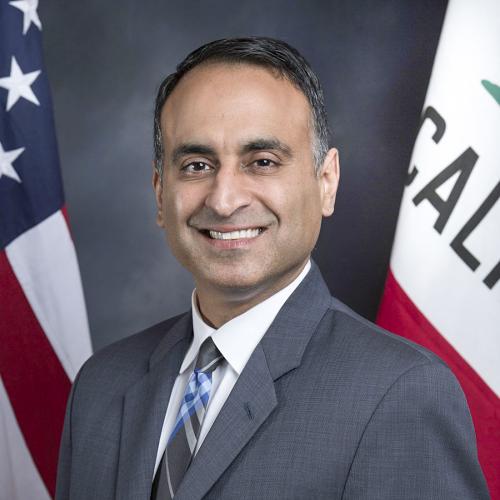
Asm. Ash Kalra
Sponsored bills
Existing law requires the Natural Resources Agency by July 1, 2017, and every 3 years thereafter, to update the state's climate adaptation strategy to identify vulnerabilities to climate change by sectors, including the biodiversity and habitat sector, and priority actions needed to reduce the risks in those sectors. As part of the update, existing law requires the Natural Resources Agency to coordinate with other state agencies to identify a lead agency or group of agencies to lead adaptation efforts in each sector. This bill would add 3 new sectors to the climate adaptation strategy: the land use and community development sector, the climate justice sector, and the parks, recreation, and California culture sector. The bill would also specify that the biodiversity and habitat sector includes habitat resilience areas, as defined.
Existing law provides that the Department of Transportation has full possession and control of the state highway system, including associated property. Existing law authorizes the department to lease certain property, including the area above or below a state highway, and certain property held for future highway purposes, to public agencies under specified terms and conditions, including specific provisions governing leases of airspace and other property in the City and County of San Francisco for purposes of an emergency shelter or feeding program, and at a lease cost of $1 per month and payment of an administrative fee not to exceed $500 per year. Existing law also requires that a lease be offered on a right of first refusal by the department to the city and county or a political subdivision of the city and county and authorizes leases of property for park, recreational, or open-space purposes, subject to certain additional terms and conditions. This bill would authorize the department to offer leases to the Cities of Los Angeles and San Jose on a right of first refusal basis for any airspace under a freeway or certain real property acquired for highway purposes located in each city for purposes of an emergency shelter or feeding program for a lease amount, for up to 10 parcels, of $1 per month, and a payment of an administrative fee not to exceed $500 per year, as specified.
(1) The Sherman Food, Drug, and Cosmetic Law, among other things, regulates the labeling of cosmetics and authorizes the State Department of Public Health to require a cosmetic label to list ingredients under specified circumstances. The law generally defines the term "cosmetic" as an article, or its components, intended to be applied to the human body, or any part of the human body, for cleansing, beautifying, promoting attractiveness, or altering the appearance. The law makes a violation of its provisions a crime. This bill would require a professional cosmetic manufactured on or after July 1, 2020, for sale in this state to have a label affixed on the container that satisfies all of the labeling requirements for any other cosmetic pursuant to specific federal laws. By expanding the requirements of this law, the bill would expand the scope of a crime, and thus would impose a state-mandated local program. The bill would define terms for its purposes and make legislative findings in support of its provisions. (2) The California Constitution requires the state to reimburse local agencies and school districts for certain costs mandated by the state. Statutory provisions establish procedures for making that reimbursement. This bill would provide that no reimbursement is required by this act for a specified reason.
Existing law authorizes the legislative body of an incorporated city and the county board of supervisors to license businesses carried on within their respective jurisdictions and to set license fees as specified. This bill would require a city, including a charter city, county, and city and county that licenses businesses carried on within its jurisdiction to accept a California driver's license or identification number, individual taxpayer identification number, or municipal identification number in lieu of a social security number if the city, county, or city and county otherwise requires a social security number for the issuance of a business license. The bill would require these jurisdictions to require the applicant to provide an address where the individual consents to receive service of process, and would require the jurisdictions to accept a post office box or private mailbox that meets certain requirements. The bill would prohibit personal information, as defined to include these identification numbers, collected for purposes of issuing the business license from being disclosed, except as specified. By increasing the duties of local officials, this bill would impose a state-mandated local program. The California Constitution requires the state to reimburse local agencies and school districts for certain costs mandated by the state. Statutory provisions establish procedures for making that reimbursement. This bill would provide that no reimbursement is required by this act for a specified reason. The California Constitution authorizes cities and counties to make and enforce within their limits all local, police, sanitary, and other ordinances and regulations not in conflict with general laws, and further authorizes cities organized under a charter to make and enforce all ordinances and regulations in respect to municipal affairs, which supersede inconsistent general laws. The bill would declare that its provisions constitute a matter of statewide concern. Existing constitutional provisions require that a statute that limits the right of access to the meetings of public bodies or the writings of public officials and agencies be adopted with findings demonstrating the interest protected by the limitation and the need for protecting that interest. This bill would make legislative findings to that effect.
(1) Existing law prescribes various requirements to be satisfied before the exercise of a power of sale under a mortgage or deed of trust. In this regard, existing law requires that a notice of default and a notice of sale be recorded and that specified periods of time elapse between the recordings and the sale. Certain laws enacted in 2012 and repealed on January 1, 2018, commonly referred to as the California Homeowner Bill of Rights, established a variety of requirements in connection with foreclosures on mortgages and deeds of trust, including restrictions on mortgage servicers actions while a borrower is attempting to secure a loan modification or has submitted a loan modification application. The foreclosure provisions of the act were generally limited to first lien mortgages and deeds of trust on owner-occupied residences, as specified. This bill would reenact various provisions of the California Homeowner Bill of Rights, as described above, and make other changes. With regard to first lien mortgages or deeds of trust on residential real property, as specified, the bill would prohibit an entity that forecloses on more than 175 real properties from recording a notice of default or notice of sale, or conducting a trustee's sale after a borrower submits a complete application for a first lien loan modification and that application is pending. The bill would require that the complete application be submitted at least 5 business days before a scheduled foreclosure sale. The prohibition on recording a notice of default or a notice of sale would continue until one of 3 specified events occur. The bill would grant a borrower 30 days to appeal if the loan modification is denied and authorize the borrower to provide evidence that the mortgage servicer's determination was in error. During this appeal period, the bill would prohibit filing a notice of default, or if that notice has already been filed, from recording a notice of sale or conducting a trustee's sale until the later of specified events. The bill would require a mortgage servicer to send a written notice to the borrower that identifies the reasons for denial and that includes certain information in connection with the denial. The bill would provide that a mortgage servicer satisfies specified telephone contact requirements if the borrower makes a written request to cease communications. This bill would also prohibit these entities from recording a notice of default until a mortgage servicer provides the borrower specified information in writing, 30 days have passed after contacting the borrower or after making diligent effort, as specified, to do so, and after compliance by the mortgage servicer with the requirements for completed applications for loan modification described above, as may be applicable. The bill would require that a notice of default include a specified declaration regarding contact with a borrower. The bill would make technical changes to provisions requiring a mortgage servicer to establish a single point of contact for a borrower requesting a foreclosure prevention alternative. In connection with the entities and mortgages and deeds of trust described above, among other things, the bill also would require a mortgage servicer that offers a foreclosure prevention alternative to send a written communication containing specified information regarding the alternative to a borrower within 5 days after recording a notice of default, except as specified. The bill would require a mortgage servicer to provide a borrower who submits a complete first lien loan modification application, or any document connected to that modification, written acknowledgment of receipt within 5 business days of receipt along with other information regarding the loan modification process. The bill would define "complete" for these purposes. The bill would prohibit recording a notice of default if a foreclosure prevention alternative is approved in writing before the notice is recorded and other specified conditions are met. If a foreclosure prevention alternative is approved after recording the notice, the bill would prohibit recording a notice of sale or conducting a trustee sale if specified conditions are met. The bill would require that a notice of default be rescinded or a pending trustee sale canceled when a borrower executes a permanent foreclosure alternative. The bill would prohibit a mortgage servicer from charging fees for a first lien loan modification or other foreclosure prevention alternative, as specified, and would require modifications and prevention alternatives previously approved to be honored following transfer or sale to another servicer. The bill would provide for liability to borrowers for material violations of these provisions, as specified, and would permit a court to award the greater of treble actual damages or specified statutory damages in cases of intention or reckless violations. Violations of certain of the provisions described above by licensees of the Department of Corporations, the Department of Financial Institutions, and the Department of Real Estate would also be deemed violations of those respective licensing laws. Because certain violations of those licensing laws are crimes, the bill would impose a state-mandated local program. The bill would provide that a mortgage servicer that engages in multiple and repeated filing of unsubstantiated documents related to foreclosure is liable for a civil penalty of up to $7,500 per mortgage or deed of trust, in an action brought by specified state and local government entities, and would also authorize administrative enforcement against specified licensees by their regulatory agencies. With regard to first lien mortgages or deeds of trust on residential real property, as specified, in connection with an entity that forecloses on fewer than 175 real properties in a reporting period, as specified, the bill would prohibit recording a notice of default, notice of sale, or conducting a trustee's sale while a complete first lien loan modification application is pending and until the mortgage servicer provides the borrower a written determination regarding his or her eligibility for the requested modification. The bill would require that the complete application be submitted at least 5 business days before a scheduled foreclosure sale. The bill would prohibit recording a notice of default if a foreclosure prevention alternative is approved in writing before the notice is recorded and other specified conditions are met. If a foreclosure prevention alternative is approved after recording the notice, the bill would prohibit recording a notice of sale or conducting a trustee sale if specified conditions are met. The bill would prescribe a process by which these entities become subject to the provisions described above that are applicable to entities that foreclose on more than 175 real properties. The bill would require modifications and prevention alternatives previously approved to be honored following transfer or sale to another servicer. The bill would authorize a borrower to seek injunctive relief to enjoin material violations certain of its provisions if a trustee's deed upon sale has not been recorded. If the deed has been recorded, the bill would provide for liability to borrowers for material violations of these provisions, as specified, and would permit a court to award the greater of treble actual damages or specified statutory damages in cases of intention or reckless violations. The bill would authorize a court to award attorney's fees and costs, as specified. Violations of certain of the provisions described above by licensees of the Department of Corporations, the Department of Financial Institutions, and the Department of Real Estate would also be deemed violations of those respective licensing laws. Because certain violations of those licensing laws are crimes, the bill would impose a state-mandated local program. The bill would make a statement of legislative intent regarding the amendment, addition, or repeal of provisions of the California Homeowner Bill of Rights that took effect on January 1, 2018, on liability incurred prior to January 1, 2018. The bill would make conforming changes and repeal duplicate provisions of law. (2) The California Constitution requires the state to reimburse local agencies and school districts for certain costs mandated by the state. Statutory provisions establish procedures for making that reimbursement. This bill would provide that no reimbursement is required by this act for a specified reason.
This measure would urge the Congress and the President of the United States to support the retention of, and investment in, the Amtrak National Network of passenger trains, specifically the California Zephyr, the Coast Starlight, the Southwest Chief, and the Sunset Limited, as vital components of the state's rail program and would also urge Congress to reject President Trump's proposed Fiscal Year 2019 federal budget cuts to Amtrak and restore full funding for the Amtrak National Network through the appropriations process.
This measure would designate the month of October 2018 as California Hindu American Awareness and Appreciation Month. The measure would also recognize and acknowledge the significant contributions made by Californians of Hindu heritage to the state and seek to increase awareness and understanding of the Hindu American community.
This measure would urge the federal government and the United States Section of the International Boundary and Water Commission to take immediate action to adequately address cross-border pollution in the Tijuana River Valley.
This measure would, among other things, call upon stakeholders in the health professions to foster the well-being of children born with variations of sex characteristics through the enactment of policies and procedures that ensure individualized, multidisciplinary care, as provided.