

Existing law imposes various restrictions on employers with respect to contracts and applications for employment. A violation of those restrictions is a misdemeanor. Existing law creates the Division of Labor Standards Enforcement, which is under the direction of the Labor Commissioner, and generally commits to the commissioner the authority and responsibility for the enforcement of employment laws. This bill would prohibit a person from, as a condition of employment, continued employment, the receipt of any employment-related benefit, or as a condition of entering into a contractual agreement, prohibiting an applicant for employment, employee, or independent contractor from disclosing to any person an instance of sexual harassment that the employee or independent contractor suffers, witnesses, or discovers in the workplace or in the performance of the contract, or otherwise opposing any lawful practice, or from exercising any right or obligation or participating in any investigation or proceeding with respect to unlawful harassment or discrimination. The bill would also prohibit an employer from requiring any applicant for employment or any employee to waive any right, forum, or procedure for a violation of any provision of the California Fair Employment and Housing Act (FEHA) or other specific statutes governing employment, as a condition of employment, continued employment, the receipt of any employment-related benefit, or as a condition of entering into a contractual agreement. The bill would also prohibit an employer from threatening, retaliating or discriminating against, or terminating any applicant for employment or any employee because of the refusal to consent to the waiver of any right, forum, or procedure for a violation of specific statutes governing employment. The bill would establish a specific exemption from those prohibitions. Because a violation of these prohibitions would be a crime, the bill would impose a state-mandated local program. FEHA makes specified employment and housing practices unlawful and provides procedures for enforcement by the Department of Fair Employment and Housing. FEHA authorizes a person alleging a violation of specified provisions of the act relating to employment discrimination to submit a verified complaint to the Department of Fair Employment and Housing, and requires the department to take actions to investigate and conciliate that complaint. FEHA authorizes the department to bring a civil action on behalf of the person who submitted the complaint upon the failure to eliminate an unlawful practice under these provisions. FEHA requires the department to issue a right-to-sue notice to a person who submitted the complaint if certain conditions occur, and FEHA requires a person who has been issued a right-to-sue notice to bring an action within one year from when the department issued that notice. This bill would additionally make violations of the prohibitions described above, relating to sexual harassment and waivers, unlawful employment practices under FEHA. The California Constitution requires the state to reimburse local agencies and school districts for certain costs mandated by the state. Statutory provisions establish procedures for making that reimbursement. This bill would provide that no reimbursement is required by this act for a specified reason.
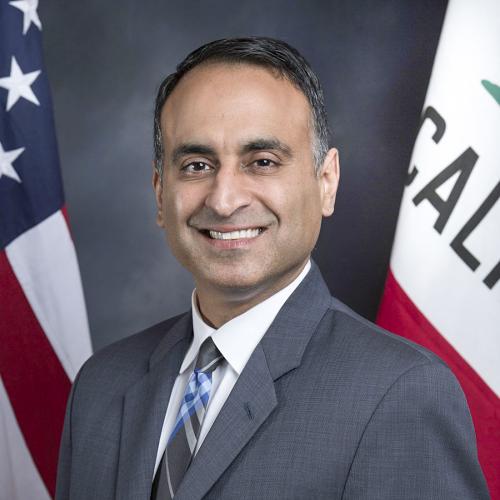
Asm. Ash Kalra
Sponsored bills
(1) Existing law, the California Beverage Container Recycling and Litter Reduction Act, requires the Department of Resources Recycling and Recovery to annually designate convenience zones and requires that at least one certified recycling center that meets certain requirements be located within every convenience zone. Existing law authorizes the department to grant a convenience zone an exemption from certain redemption requirements, including certain dealer and recycling center redemption requirements, based on certain factors. Existing law limits the total number of exemptions that may be granted to 35% of the total number of convenience zones identified as having one or more of those factors applicable. This bill, if there is a certified recycling center located within one mile of an unserved convenience zone, would require the department to grant that convenience zone an exemption from the redemption requirements and would increase the total number of exemptions that may be granted otherwise to 50% of the number identified as eligible. The bill would require the department to review exemptions every 5 years to determine if each exemption still meets the prescribed exemption criteria. (2) The act requires dealers within a convenience zone where no recycling location has been established, or within a convenience zone that is unserved for 60 days and not exempt from convenience zone requirements, to submit an affidavit to the department stating that the dealer has met specified standards for redemption, including, among others, that the dealer is redeeming all empty beverage container types at all open cash registers or at one designated location on the dealer's premises, during all hours that the dealer is open for business. If the dealer does not submit that affidavit, existing law requires the dealer to pay $100 per day to the department, for deposit in the California Beverage Container Recycling Fund, a continuously appropriated fund described in (3) , until a recycling location is established or until the dealer meets the standards for redemption specified in the affidavit provision. This bill would revise these convenience zone redemption duties and exempt from those duties dealers with gross annual sales of less than $2,000,000 and dealers that are not supermarkets and that have less than 5,000 square feet of interior retail space. The bill, until January 1, 2021, would also exempt certain other dealers from these requirements. (3) The act establishes the California Beverage Container Recycling Fund and, except for administrative costs, continuously appropriates moneys in the fund to the department for specified purposes, including the amount necessary to pay handling fees to certain types of recyclers to provide an incentive for the redemption of empty beverage containers in convenience zones. The act also continuously appropriates from the fund $15,000,000 annually for payments for curbside programs and neighborhood dropoff programs and $10,500,000 annually for payments to cities and counties for beverage container recycling and litter cleanup activities. The act authorizes the department to withhold beverage container recycling and litter cleanup activities payments to any city, county, or city and county that has restricted or prohibited the siting of a supermarket site, as provided. This bill would require the department to offer a handling fee payment from the fund to certain certified recyclers within unserved convenience zones. The bill would make an appropriation by changing the terms and conditions under which the department is authorized to make payments from a continuously appropriated fund. The bill, until July 1, 2021, would require the handling fee to be set at the rate in effect on July 1, 2015. The bill would authorize the department, until July 1, 2021, to annually expend $3,000,000 from the fund for specified supplemental handling fee payments to low-volume recycling centers. By authorizing the expenditure of a continuously appropriated fund for new purposes, this bill would make an appropriation. The bill would require the department to develop and submit to the Legislature recommended revisions to the handling fee provisions, as specified. The bill would authorize the department to withhold payments to curbside programs and neighborhood dropoff programs in any city, county, or city and county that has restricted or prohibited the siting of a certified recycling center, as provided. The bill would require the department, on or before July 1, 2019, to convene a public hearing, as specified, for purposes of discussing and receiving public testimony on the development of guidelines for evaluating the circumstances that might prompt the department to withhold beverage container recycling and litter cleanup activities payments to any city, county, or city and county that has restricted or prohibited the siting of a supermarket site. (4) The act requires the department to pay a market development payment to a reclaimer, as defined, for empty plastic beverage containers that have been collected for recycling in the state, and that the reclaimer washes and processes into flake, pellet, sheet, or any other form that is then usable as input for the manufacture of new plastic products, as defined, by product manufacturers in the state. The act also requires the department to pay a market development payment to a product manufacturer, as defined, for plastic flake, pellet, sheet, or any other form of plastic purchased from a reclaimer and used by that product manufacturer to manufacture a plastic product in the state. This bill would require the department to pay market development payments to a reclaimer that uses the services of a 3rd party to process the empty plastic beverage containers into a form usable for the manufacture of new plastic products and to a product manufacturer that uses the services of a 3rd party to process the plastic purchased from a reclaimer in manufacturing the plastic product. The bill would clarify that certain moneys are not available for market development payments to these additional product manufacturers. By changing the purposes for which continuously appropriated moneys may be expended, this bill would make an appropriation. (5) Under the act, the department is required to calculate a processing fee for each beverage container with a specified scrap value, which is required to be paid by beverage manufacturers for each beverage container sold or transferred to a distributor or dealer. The department is required to calculate the processing fee in a specified manner, so that the actual processing fee generally equals 65% of the processing payment that the department is required to pay to processors if the scrap value of the container having a refund value pursuant to the act is less than the cost of recycling. The department is required to determine the statewide weighted average cost to recycle each beverage container type by conducting a survey, as specified. The department is required to establish a processing fee account in the continuously appropriated California Beverage Container Recycling Fund for each material type and to deposit processing fees and other amounts in the applicable account. This bill would, for purposes of calculating processing payments, require the department, until January 1, 2021, to use the actual cost of recycling that was in effect on December 30, 2015, adjusted as specified. The bill would make an appropriation by changing the terms and conditions under which the department is authorized to make payments from a continuously appropriated fund. The bill would provide that the processing fees established by the department between the effective date of the bill and December 31, 2018, inclusive, shall not be higher than they would be absent these new provisions. The bill would require the department to suspend usage of surveys and calculations of recycling costs until at least January 1, 2020, and would authorize the department to redirect any contract funds for cost surveys and calculations to provide for a specified assessment and to utilize any contract funds available for the development of amendments to be recommended to the Legislature regarding specified provisions of the act. (6) This bill would declare that it is to take effect immediately as an urgency statute.
Existing law imposes certain obligations in the context of particular transactions, and provides mechanisms to enforce those obligations. This bill would enact the California Internet Consumer Protection and Net Neutrality Act of 2018. This act would prohibit fixed and mobile Internet service providers, as defined, that provide broadband Internet access service, as defined, from engaging in specified actions concerning the treatment of Internet traffic. The act would prohibit, among other things, blocking lawful content, applications, services, or nonharmful devices, impairing or degrading lawful Internet traffic on the basis of Internet content, application, or service, or use of a nonharmful device, and specified practices relating to zero-rating, as defined. It would also prohibit fixed and mobile Internet service providers from offering or providing services other than broadband Internet access service that are delivered over the same last-mile connection as the broadband Internet access service, if those services have the purpose or effect of evading the above-described prohibitions or negatively affect the performance of broadband Internet access service.
Existing law establishes the Division of Labor Standards Enforcement within the Department of Industrial Relations. The division is headed by the Labor Commissioner and the department is headed by the Director of Industrial Relations. Existing law establishes certain protections for janitorial workers, including a requirement that the division, by January 1, 2019, establish a biennial in-person sexual violence and harassment prevention training requirement for certain employees and employers with the assistance of a prescribed advisory committee to be convened by the director. Existing law, effective July 1, 2018, requires employers of at least one employee and one or more covered workers, as defined, who provide janitorial services, as specified, to register with the commissioner annually and prohibits them from conducting business without a registration. Existing law requires an application for registration to be in a form prescribed by the commissioner and subscribed and sworn to by the employer, as specified. This bill would prohibit the division from approving a registration, as described above, if the employer does not include in his or her written application the name of any subcontractor or franchise servicing contracts affiliated with a branch location and the number of subcontracted or franchise employees servicing each of those contracts, the total number of employees working out of a listed branch office, and the address of each work location serviced by a branch office. The bill would require the director, by July 1, 2019, to also convene an advisory committee, with membership as prescribed, to develop requirements for qualified organizations and peer trainers that employers would be required to use to provide the biennial training described above. The bill would require the division to adopt advisory committee requirements for qualified organizations and peer trainers by January 1, 2020. The bill would require the division to require employers subject to the training requirements to use the training content created by the committee. The bill would require such an employer, upon request, to provide to an employee a copy of all training materials used during a training he or she attended. The bill would require employers to use a qualified organization from the list of qualified organizations developed and maintained by the director to provide the required training, and would require qualified organizations to provide peer trainers for employers to use in the training, as specified. The bill would require the employer to pay the qualified organization. The bill would require the qualified organization to ensure that the peer trainer is paid at least twice the state minimum wage per hour. The bill would require an employer to document and certify compliance with the training to nonsupervisors and payment of the qualified organization, as specified, on a form prescribed by, and available to, the division. A qualified organization would be required to submit a specified report to the director of a training within 48 hours of completion. By expanding the scope of the crime of perjury, this bill would impose a state-mandated local program. The bill would require the advisory committee to approve and recommend the qualified organizations to the director. The bill would authorize a qualified organization to work with a training partner, as defined, to provide the required training. The bill would prescribe certain minimum qualifications for qualified organizations and peer trainers. The bill would require the director to develop, maintain, and update as prescribed a list of qualified organizations and qualified peer trainers, as recommended by the advisory committee. The bill would authorize the director, with the recommendation of the advisory committee, to waive the requirement to use a qualified organization or qualified peer trainer, as specified. Existing law prohibits the division from registering or renewing the registration of an employer, as described above, in specified circumstances. This bill would, additionally, prohibit the division from registering or renewing the registration of an employer if the employer has not fully satisfied a final judgment for certain unlawful employment practices, as specified. The California Constitution requires the state to reimburse local agencies and school districts for certain costs mandated by the state. Statutory provisions establish procedures for making that reimbursement. This bill would provide that no reimbursement is required by this act for a specified reason. This bill would incorporate additional changes to Sections 1421, 1429, 1429.5, and 1434 of the Labor Code proposed by AB 2732 to be operative only if this bill and AB 2732 are enacted and this bill is enacted last.
Existing law requires the court, when imposing a sentence for a serious felony, in addition and consecutive to the term imposed for that serious felony, to impose a 5-year enhancement for each prior conviction of a serious felony. Existing law generally authorizes a judge, in the interests of justice, to order an action dismissed, but precludes a judge from striking any prior serious felony conviction in connection with imposition of the 5-year enhancement. This bill would delete the restriction prohibiting a judge from striking a prior serious felony conviction in connection with imposition of the 5-year enhancement described above and would make conforming changes. The bill would make additional technical nonsubstantive changes.
Existing law, the Home Furnishings and Thermal Insulation Act, a violation of which is a misdemeanor, provides for the regulation of persons engaged in businesses relating to upholstered furniture, bedding and filling materials, and insulation, and provides for the enforcement and administration of those provisions by a chief under the Director of Consumer Affairs. Existing law authorizes the Bureau of Electronic and Appliance Repair, Home Furnishings, and Thermal Insulation to establish grades, specifications, and tolerances for materials used in upholstered furniture and bedding or filling materials and requires a manufacturer of upholstered furniture to indicate whether a product contains flame retardant chemicals. This bill, on and after January 1, 2020, would prohibit a person, including a manufacturer, from selling or distributing in commerce in this state new, not previously owned juvenile products, mattresses, or upholstered furniture that contains, or a constituent component of which contains, covered flame retardant chemicals, as defined, at levels above 1,000 parts per million, except as specified, and would prohibit a custom upholsterer from, among other things, repairing upholstered furniture or reupholstered furniture using replacement components that contain covered flame retardant chemicals at levels above 1,000 parts per million, except as specified. The bill would authorize the director to adopt regulations and rules to implement and enforce the bill's provisions. The bill would require the bureau to (1) enforce and ensure compliance with these requirements, (2) provide the Department of Toxic Substances Control with a selection of samples from products regulated by the bill's provisions for testing, and (3) reimburse the department for certain testing costs. The bill would also authorize the bureau to assess fines against manufacturers for a violation of the bill's provisions, as specified. The bill would require the bureau to receive complaints from consumers concerning these regulated products that are sold in this state. The bill would require the International Sleep Products Association to conduct surveys of mattress producers, including those registered with the bureau, and to submit a survey report with prescribed information to the bureau by January 31, 2020, and every 3 years thereafter. The bill would require registered producers of new mattresses to respond to the survey. The bill would require the association to submit to the bureau a list of any producers who fail to respond to the survey and to post the list of nonresponders on its Internet Web site. The bill would define various other terms for these purposes. The bill would also make various findings and declarations in this regard. Because a violation of the bill's provisions would be a misdemeanor, the bill would impose a state-mandated local program. The California Constitution requires the state to reimburse local agencies and school districts for certain costs mandated by the state. Statutory provisions establish procedures for making that reimbursement. This bill would provide that no reimbursement is required by this act for a specified reason.
(1) Existing law establishes the Home Care Services Consumer Protection Act, which provides for the licensure and regulation of home care organizations, as defined, by the State Department of Social Services, and for the registration of home care aides. The act requires the department to establish and maintain a registry of registered home care aides and home care aide applicants on the department's Internet Web site, as provided. The act prohibits the registry on the Internet Web site from providing any additional, individually identifiable information about a registered home care aide or home care aide applicant. Existing law authorizes the department to maintain additional information for registered home care aides or home care aide applicants, as necessary for the administration of the act, but prohibits the department from making that information publicly available on the registry. A violation of the act is a misdemeanor, punishable by a fine not to exceed $1,000, by imprisonment in a county jail for a period not to exceed 180 days, or by both that fine and imprisonment. This bill would require, for any new registration or renewal of registration of a home care aide occurring on and after July 1, 2019, the department to provide, upon request, a labor organization an electronic copy of a registered home care aide's name, telephone number, and cellular telephone number, as specified. The bill would require the department to establish a simple opt-out procedure that would allow a home care aide to prohibit the department from sharing his or her information and would require the department, at the time of registration or renewal of registration, to inform a home care aide how to use the simple opt-out procedure. The bill would prohibit a labor organization from using or disclosing the shared information, except for certain purposes. Because a violation of the Home Care Services Consumer Protection Act is punishable as a misdemeanor and this bill would expand requirements under the act, this bill would impose a state-mandated local program. (2) The California Constitution requires the state to reimburse local agencies and school districts for certain costs mandated by the state. Statutory provisions establish procedures for making that reimbursement. This bill would provide that no reimbursement is required by this act for a specified reason.
Existing law establishes the Medi-Cal program, which is administered by the State Department of Health Care Services and under which qualified low-income individuals receive health care services. The Medi-Cal program is, in part, governed and funded by federal Medicaid program provisions. Existing law requires the State Department of Health Care Services to develop a federal waiver program, known as the Assisted Living Waiver program, to test the efficacy of providing an assisted living benefit to beneficiaries under the Medi-Cal program. Existing law requires that the benefit include, but not be limited to, the care and supervision activities specified for residential care facilities for the elderly. Existing law requires implementation of the program only to the extent federal financial participation is available and funds are appropriated or otherwise available for the program. This bill would require the department to submit, in 2019, to the federal Centers for Medicare and Medicaid Services a request for renewal of the Assisted Living Waiver program with specified amendments. The bill would require, as part of the amendments, additional slots, as specified, in the 15 existing waiver counties, expansion of the program beyond those counties on a regional basis, and modification to the provider reimbursement tiers while also maintaining the program's budget-neutral provisions. The bill would require the department, before the submission of the waiver renewal request, to notify specified legislative committees about certain information relating to the additional slots and the regional expansion, to conduct open in-person meetings with stakeholders, as specified, and to release a draft of the proposed waiver renewal for stakeholder comment. The bill would condition implementation of the waiver amendments on obtaining the necessary federal approvals and on the availability of federal financial participation. The bill would require implementation of the waiver amendments to commence within 6 months of the department's receipt of authorization for the necessary resources, as specified. The bill would also make legislative findings and declarations relating to the Assisted Living Waiver program.
Existing law prohibits manufacturers and contract testing facilities from using traditional animal testing methods within this state when an appropriate alternative test method has been scientifically validated and recommended by the Interagency Coordinating Committee on the Validation of Alternative Methods (ICCVAM) or other specified agencies. This bill would make it unlawful for a manufacturer to import for profit, sell, or offer for sale in this state, any cosmetic, as defined, if the cosmetic was developed or manufactured using an animal test that was conducted or contracted by the manufacturer, or any supplier of the manufacturer, on or after January 1, 2020, except as specified. The bill would specify that a violation of its provisions is punishable by an initial fine of $5,000 and an additional fine of $1,000 for each day the violation continues, and may be enforced by the district attorney or city attorney in the county or city in which the violation occurred, as specified. The bill would not apply to a cosmetic in its final form or to an ingredient, if the cosmetic or ingredient was sold in California or tested on animals before January 1, 2020, as specified. The bill would authorize cosmetic inventory in violation of the bill's provisions to be sold for a period of 180 days. The bill would prohibit a county or political subdivision of the state from establishing or continuing any prohibition on or relating to animal tests that is not identical to the prohibitions in the bill and that does not include the exemptions contained in the bill.
(1) Existing law prohibits a person from using or operating, or assisting in using or operating, a boat, aircraft, net, trap, line, or other appliance to take fish for commercial purposes unless the person holds a commercial fishing license issued by the Department of Fish and Wildlife. Existing law prohibits the taking of shark and swordfish for commercial purposes with drift gill nets except under a valid drift gill net shark and swordfish permit (DGN permit) issued to that person that has not been suspended or revoked and is issued to at least one person aboard the boat, except as provided. Existing law authorizes the Director of Fish and Wildlife to close the drift gill net shark and swordfish fishery if, after a public hearing, the director determines the action is necessary to protect the swordfish or thresher shark and mako shark resources and requires the director to reopen the fishery if he or she determines that the conditions that necessitated the closure no longer exist. Existing law authorizes a DGN permit to be transferred to another person under certain circumstances. Under existing law, a violation of these provisions is a crime. The California Ocean Protection Act creates the California Ocean Protection Trust Fund in the State Treasury and authorizes moneys deposited in the fund, upon appropriation by the Legislature, to be expended by the Ocean Protection Council for, among other things, grants or loans to public agencies, nonprofit corporations, or private entities for, or direct expenditures on, projects or activities that protect, conserve, and restore coastal waters and ocean ecosystems including through the acquisition from willing sellers of vessels, equipment, licenses, harvest rights, permits, and other rights and property, to reduce threats to ocean ecosystems and resources. This bill would require the department by March 31, 2020, to establish a voluntary permit transition program that includes specified conditions, including a condition that a permittee who voluntarily surrenders his or her DGN permit and shark or swordfish gill net or nets receive, to the extent that funds for the transition program are available, a specified payment, as prescribed. The bill would require the department to enter into an agreement with a fiscal agent, as defined, for the fiscal agent to receive state and nonstate funds for purposes of the transition program and, upon receipt of adequate funds, to make the payment to a participating permittee. If the department enters into an agreement with a fiscal agent that is a state entity, the bill would continuously appropriate any funds received from nonstate sources to that state entity for purposes of the transition program. The bill would require the Ocean Protection Council to use $1 million of an appropriation made to it in the Budget Act of 2018 for whale and sea turtle entanglement to fund the transition program. The bill would require the department to notify the Legislature within 10 days of the date that the fiscal agent receives $1 million from nonstate sources and secures $1 million through an agreement with the Ocean Protection Council. The bill would require a DGN permit issued pursuant to these provisions to be surrendered or revoked as of January 31 of the 4th year following the department's notification to the Legislature. Because a violation of this provision would be a crime, the bill would impose a state-mandated local program. The bill would, beginning March 31, 2019, prohibit the transfer of a DGN permit. The bill would provide that the provisions dealing with the drift gill net shark and swordfish fishery do not create or recognize a property right in fish expected to be caught using a DGN permit. (2) Existing law establishes a swordfish permit that authorizes a person holding that permit to take, possess aboard a boat, and land swordfish for commercial purposes using specified methods but not including use of a drift gill net. Existing law establishes a fee of $330 for a swordfish permit, as adjusted pursuant to the above-described index, but exempts the holder of a DGN permit from payment of that fee. This bill would also exempt any person who participates in the permit transition program established by the department from payment of the fee for a swordfish permit. (3) Existing law makes it unlawful to use fishing lines, including, but not limited to, troll lines and handlines more than 900 feet in length unless they are used as set lines, as specified. This bill would also exempt from this prohibition fishing lines more than 900 feet in length if they are used as part of deep-set buoy gear authorized under federal law. (4) The California Constitution requires the state to reimburse local agencies and school districts for certain costs mandated by the state. Statutory provisions establish procedures for making that reimbursement. This bill would provide that no reimbursement is required by this act for a specified reason.