

Passed Sep 9, 2019
1 co-sponsor
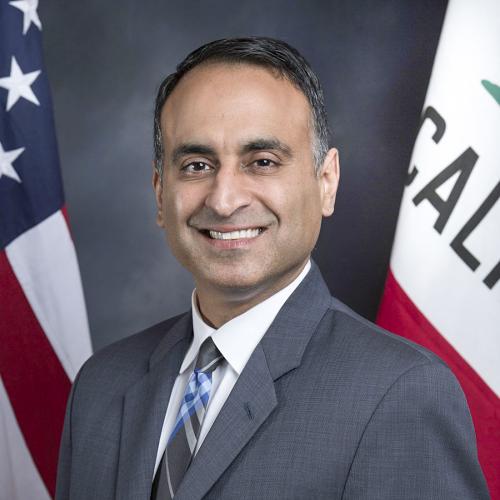
Asm. Ash Kalra
Total votes
23,603
all sessions
Attendance
97%
541 missed
Near the chamber average
With party
99%
of cast votes
Near the chamber average
Bipartisan score
0%
crosses aisle rarely
Near the chamber average
Sponsored
2,377
bills & resolutions
Higher than 97% of chamber peers
Committees
12
assignments
2,377 bills and resolutions
Sponsored bills
Total
2,377
Primary
290
Co-sponsor
2,087
This page
2,377
matching current filters
Relative to India's Independence Day.
This measure would recognize August 15, 2019, as India's Independence Day, and urge all Californians to join in celebrating India's independence.
Signed into law Sep 9, 2019
0 co-sponsors
Relative to Special Olympics.
This measure would call for continued support and recognition of the many benefits provided by Special Olympics.
Signed into law Sep 9, 2019
1 co-sponsor
Santa Clara Valley Water District: contracts.
Existing law requires a contract and prescribes competitive bidding procedures for any improvement or unit of work not performed by the personnel of the Santa Clara Valley Water District if the district estimates the work to cost over $25,000. This bill would raise that competitive bidding threshold for work not performed by district personnel to work estimated to cost over $50,000. The bill would subject a contract for work not performed by district personnel and estimated to exceed the threshold to the approval of the board, in accordance with board policy that has been adopted in an open meeting. The bill, with certain exceptions, would prohibit the estimated cost of any improvement or unit of work done by district personnel from exceeding $50,000. The bill would authorize the district to elect to participate in the Uniform Public Construction Cost Accounting Act. The bill would define terms for purposes of existing law.
Signed into law Sep 6, 2019
0 co-sponsors
Employment: motion picture production workers.
Existing law provides for the payment of unemployment compensation benefits to eligible persons who are unemployed through no fault of their own. Unemployment compensation benefits are paid from the Unemployment Fund, which is continuously appropriated for this purpose. Existing law defines "employment," for purposes of determining eligibility for unemployment compensation benefits, to mean service, including service in interstate commerce, performed by an employee for wages under any contract of hire, written or oral, express or implied. Existing law provides that employment includes an individual's entire service, performed within, or both within and without this state, if the service is either (1) localized in the state, or (2) not localized in the state, some of the service is performed in the state and one of 2 requirements are met, including that the base of operations or place from which such service is directed or controlled is not in any state in which some part of the service is performed but the individual's residence is in this state. The bill would provide, for purposes of determining employment of a motion picture production worker when the service is not localized in the state but some of the service is performed in the state, that the worker's entire service qualifies as employment if their residence is in the state. Existing law provides that as individual's service is localized in a state for purposes of unemployment compensation benefits as described above, if the service is either performed entirely within the state or performed within and outside the state and the service outside the state is incidental to the service performed within the state. Existing law further provides that service is incidental for these purposes if it is temporary or transitory in nature, or only consists of isolated transactions. The bill would provide that service performed by a motion picture production worker outside the state will be considered temporary or transitory for the purposes described above if the worker is a resident of the state, is hired and dispatched from the state, and intends to return to the state to seek reemployment at the conclusion of the assignment outside the state. The bill would also provide legislative findings and declarations in support of these provisions. Because this bill would expand the number of persons who are eligible for benefits from the Unemployment Fund, which is a continuously appropriated fund, it would make an appropriation.
Signed into law Sep 5, 2019
1 co-sponsor
New or modified railroad crossings: approval.
Under existing law, the Public Utilities Commission has the exclusive power to, among other things, determine and prescribe the manner and the terms of installation, operation, maintenance, use, and protection of specified railroad crossings and to authorize on an application-by-application basis and supervise the operation of pilot projects to evaluate proposed crossing warning devices, new technology, or other additional safety measures at designated crossings, with the consent of the local jurisdiction, the affected railroad, and other interested parties, including, but not limited to, represented railroad employees. This bill would require the commission, if a city or county develops and adopts, by resolution upon a majority vote of the city council or the board of supervisors, a plan to improve mobility for multimodal access that calls for new or modified railroad crossings, to make an engineer available from the Rail Crossings and Engineering Branch to assist and advise that city or county on the safety of the planned railroad crossings before the filing of an application to the commission for the approval of the new or modified railroad crossings.
Signed into law Sep 5, 2019
1 co-sponsor
Relative to Valley Fever Awareness Month.
This measure would declare August 2019 as Valley Fever Awareness Month.
Signed into law Sep 5, 2019
1 co-sponsor
Health care data disclosure.
Existing law, the Knox-Keene Health Care Service Plan Act of 1975, provides for the licensure and regulation of health care service plans by the Department of Managed Health Care, and makes a willful violation of the act a crime. Existing law provides for the regulation of health insurers by the Department of Insurance. Existing law generally requires a health care service plan or health insurer in the individual, small group, or large group markets to file rate information with the appropriate department, but specifies alternative information to be filed by a health care service plan or health insurer that exclusively contracts with no more than 2 medical groups. Existing law establishes the Office of Statewide Health Planning and Development (OSHPD) in the California Health and Human Services Agency to regulate health planning and research development. Existing law generally requires a health care facility to report specified data to OSHPD, but requires OSHPD to establish specific reporting provisions for a health facility that receives a preponderance of its revenue from associated comprehensive group practice prepayment health care service plans. Existing law authorizes hospitals to report specified financial and utilization data to OSHPD, and file cost data reports with OSHPD, on a group basis, and exempts hospitals authorized to report as a group from reporting revenue separately for each revenue center. This bill would eliminate alternative reporting requirements for a plan or insurer that exclusively contracts with no more than 2 medical groups or a health facility that receives a preponderance of its revenue from associated comprehensive group practice prepayment health care service plans and would instead require those entities to report information consistent with any other health care service plan, health insurer, or health facility, as appropriate. The bill would also eliminate the authorization for hospitals to report specified financial and utilization data to OSHPD, and file cost data reports with OSHPD, on a group basis, but would authorize a health facility that receives a preponderance of its revenue from associated comprehensive group practice prepayment health care service plans and that is operated as a unit of a coordinated group of health facilities under common management to report specified information for the group and not for each separately licensed health facility. Because a willful violation of the bill's requirements relative to health care service plans would be a crime, the bill would impose a state-mandated local program. The California Constitution requires the state to reimburse local agencies and school districts for certain costs mandated by the state. Statutory provisions establish procedures for making that reimbursement. This bill would provide that no reimbursement is required by this act for a specified reason.
Signed into law Sep 5, 2019
1 co-sponsor
Upholding democracy through civic education in public schools.
This measure would endorse activities in public schools that instruct pupils in upholding and sustaining American democracy, encourage, in the strongest terms, California schools to pursue certain recognized designations that reflect specified ethos and values, and encourage publicly elected officials to conduct themselves in ways that strengthen civic engagement and participation in civil society.
Passed Sep 4, 2019
1 co-sponsor
Appointed legal counsel in civil cases.
Existing law requires legal counsel to be appointed to represent low-income parties in civil matters involving critical issues affecting basic human needs in specified courts. Existing law requires the Judicial Council to develop one or more pilot projects in selected courts to receive grants to, among other things, provide legal counsel to low-income persons who require legal services in civil matters involving housing-related matters, domestic violence and civil harassment restraining orders, probate conservatorships, guardianships of the person, elder abuse, or actions by a parent to obtain sole legal or physical custody of a child. Existing law places the highest priority for funding on proposals to provide counsel in child custody cases, particularly when one side is represented and the other is not, and requires up to 20% of available funds to be directed to projects regarding civil matters involving actions by a parent to obtain sole legal or physical custody of a child. This bill would instead require the Judicial Council to develop and provide grants for programs in selected courts that provide legal counsel to low-income persons in matters involving child custody, when the parent is seeking to obtain any level of legal or physical custody, and would require that up to 20% of the available funds be directed at civil matters involving an action under the Family Code, as specified. The bill also would place the highest priority for funding on proposals to provide counsel in child custody cases, irrespective of whether one side is represented and the other is not. The bill would also authorize the Judicial Council to accept donations from public or private entities for the purposes of providing grants. Existing law requires the Judicial Council to conduct a study to demonstrate the effectiveness and continued need for the pilot program and to report its findings and recommendations to the Governor and the Legislature on or before January 31, 2016. This bill would require the Judicial Council to conduct the study and report its findings and recommendations for the programs every 5 years, commencing June 1, 2020. Existing law provides for the assessment of fees for various court services, including, among others, issuing an abstract of judgment and issuing an order of sale. Existing law requires an amount equivalent to $10 of each fee collected to be used by the Judicial Council to implement and administer the civil representation pilot program described above. This bill would increase the amount assessed for the above services by $15, and would require those funds to be used by the Judicial Council to implement and administer the civil representation programs, thereby imposing a tax. This bill would include a change in state statute that would result in a taxpayer paying a higher tax within the meaning of Section 3 of Article XIIIA of the California Constitution, and thus would require for passage the approval of 23 of the membership of each house of the Legislature.
Signed into law Sep 4, 2019
1 co-sponsor
Ask Maddy
·
AI policy assistant
Ask Maddy about Ash Kalra
Scope: CA
Hi! I can help you understand Ash Kalra's legislative record. What would you like to know?
Try one of these
i
Maddy answers using official bill text and legislative records. Always verify before sharing.
Sources cited inline