

Existing law, the Hazardous Substances Information and Training Act, prescribes the rights and duties of employers who use hazardous substances, people who sell a hazardous substance to employers in California, and manufacturers who produce or sell hazardous substances. Existing law requires the Director of Industrial Relations to establish a list of hazardous substances and make the list available to manufacturers, employers, and the public. Existing law requires the manufacturer of a hazardous substance on that list to prepare and provide its direct purchasers of the hazardous substance a material safety data sheet, referred to as an MSDS, containing specified information that is current, accurate, and complete. This bill, beginning July 1, 2020, would require an entity that manufactures or imports a hazardous substance or mixture of substances that constitutes a cosmetic or is used as a disinfectant, as defined, that is required to create a safety data sheet (SDS) for that product, to post and maintain the SDS on its internet website, as prescribed, by its brand name or other commonly known name in a manner generally accessible to the public. If a separate SDS based on color or tint exists, the bill would require the entity to post and translate each SDS. The bill would require the entity to translate the SDS into Spanish, Vietnamese, Chinese, and Korean, and other languages that the director may determine are common to the beauty care industry, and to make these translations also publicly available on its website.
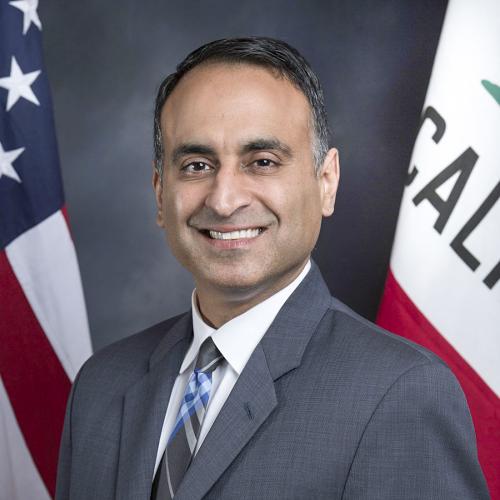
Asm. Ash Kalra
Sponsored bills
This measure would proclaim the month of November 2019 as California Runaway and Homeless Youth Prevention Month to recognize the need for individuals, schools, communities, businesses, local governments, and the state to take action on behalf of runaway and homeless youth in California.
Existing law, as established in the case of Dynamex Operations West, Inc. v. Superior Court of Los Angeles (2018) 4 Cal.5th 903 (Dynamex) , creates a presumption that a worker who performs services for a hirer is an employee for purposes of claims for wages and benefits arising under wage orders issued by the Industrial Welfare Commission. Existing law requires a 3-part test, commonly known as the "ABC" test, to establish that a worker is an independent contractor for those purposes. Existing law, for purposes of unemployment insurance provisions, requires employers to make contributions with respect to unemployment insurance and disability insurance from the wages paid to their employees. Existing law defines "employee" for those purposes to include, among other individuals, any individual who, under the usual common law rules applicable in determining the employer-employee relationship, has the status of an employee. This bill would state the intent of the Legislature to codify the decision in the Dynamex case and clarify its application. The bill would provide that for purposes of the provisions of the Labor Code, the Unemployment Insurance Code, and the wage orders of the Industrial Welfare Commission, a person providing labor or services for remuneration shall be considered an employee rather than an independent contractor unless the hiring entity demonstrates that the person is free from the control and direction of the hiring entity in connection with the performance of the work, the person performs work that is outside the usual course of the hiring entity's business, and the person is customarily engaged in an independently established trade, occupation, or business. The bill, notwithstanding this provision, would provide that any statutory exception from employment status or any extension of employer status or liability remains in effect, and that if a court rules that the 3-part test cannot be applied, then the determination of employee or independent contractor status shall be governed by the test adopted in S. G. Borello & Sons, Inc. v. Department of Industrial Relations (1989) 48 Cal.3d 341 (Borello) . The bill would exempt specified occupations from the application of Dynamex, and would instead provide that these occupations are governed by Borello. These exempt occupations would include, among others, licensed insurance agents, certain licensed health care professionals, registered securities broker-dealers or investment advisers, direct sales salespersons, real estate licensees, commercial fishermen, workers providing licensed barber or cosmetology services, and others performing work under a contract for professional services, with another business entity, or pursuant to a subcontract in the construction industry. The bill would also require the Employment Development Department, on or before March 1, 2021, and each March 1 thereafter, to issue an annual report to the Legislature on the use of unemployment insurance in the commercial fishing industry. The bill would make the exemption for commercial fishermen applicable only until January 1, 2023, and the exemption for licensed manicurists applicable only until January 1, 2022. The bill would authorize an action for injunctive relief to prevent employee misclassification to be brought by the Attorney General and specified local prosecuting agencies. This bill would also redefine the definition of "employee" described above, for purposes of unemployment insurance provisions, to include an individual providing labor or services for remuneration who has the status of an employee rather than an independent contractor, unless the hiring entity demonstrates that the individual meets all of specified conditions, including that the individual performs work that is outside the usual course of the hiring entity's business. Because this bill would increase the categories of individuals eligible to receive benefits from, and thus would result in additional moneys being deposited into, the Unemployment Fund, a continuously appropriated fund, the bill would make an appropriation. The bill would state that addition of the provision to the Labor Code does not constitute a change in, but is declaratory of, existing law with regard to violations of the Labor Code relating to wage orders of the Industrial Welfare Commission. The bill would also state that specified Labor Code provisions of the bill apply retroactively to existing claims and actions to the maximum extent permitted by law while other provisions apply to work performed on or after January 1, 2020. The bill would additionally provide that the bill's provisions do not permit an employer to reclassify an individual who was an employee on January 1, 2019, to an independent contractor due to the bill's enactment. Existing provisions of the Labor Code make it a crime for an employer to violate specified provisions of law with regard to an employee. The Unemployment Insurance Code also makes it a crime to violate specified provisions of law with regard to benefits and payments. By expanding the definition of an employee for purposes of these provisions, the bill would expand the definition of a crime, thereby imposing a state-mandated local program. The California Constitution requires the state to reimburse local agencies and school districts for certain costs mandated by the state. Statutory provisions establish procedures for making that reimbursement. This bill would provide that no reimbursement is required by this act for a specified reason.
This measure would state that the Legislature strongly and unequivocally objects to federal preemption of state authority relating to the regulation of vessel discharges in California waters, remains steadfast in its commitment to protect California's waters from aquatic invasive species introductions, and is resolved to consider any appropriate actions to overturn the federal preemption of California authority.
Existing law, the Stop Tobacco Access to Kids Enforcement (STAKE) Act, prohibits the sale, distribution, or nonsale distribution of tobacco products, as defined, directly or indirectly to any person under 21 years of age through the United States Postal Service or through any other public or private postal or package delivery service. Existing law requires a person selling or distributing tobacco products directly to a consumer through the United States Postal Service or by another postal or package delivery service to comply with specified age-verification policies and deliver only to the consumer's verified mailing or billing address, as applicable. Existing law authorizes enforcing agencies to assess civil penalties for violations of the STAKE Act. This bill would additionally require sellers, distributors, and nonsale distributors to deliver tobacco products only in conspicuously marked containers, as specified, and to obtain the signature of a person 21 years of age or older before delivering a tobacco product. The bill would allow a person to designate an address for delivery that is different from the person's mailing or billing address, if the person's mailing or billing address has been verified in accordance with specified provisions.
Existing law authorizes the Occupational Safety and Health Standards Board (board) to adopt, amend, or repeal occupational safety and health standards and orders, as prescribed. Existing law requires the Division of Occupational Safety and Health in the Department of Industrial Relations, known as Cal-OSHA, to propose to the board for its review and adoption, a standard that protects the health and safety of employees who engage in lead-related construction work and meets all requirements imposed by the federal Occupational Safety and Health Administration. Existing regulations promulgated by the division require an employer to ensure that an employee is not exposed to lead at concentrations greater than 50 micrograms per cubic meter of air averaged over an 8-hour period. This bill would require Cal-OSHA to conduct rulemaking, in conjunction with the standards board, as specified, to complete the rulemaking and adopt the lead standards in the regulations described above no later than February 1, 2020. The bill would authorize the adoption of emergency regulations by the standards board as necessary to implement these provisions.
This measure would, among other things, designate the year 2019 as "State of California Year of Commemoration of the Anniversary of the Armenian Genocide of 1915–1923," would designate April 24, 2019, as "State of California Day of Commemoration of the 104th Anniversary of the Armenian Genocide of 1915–1923," and would call upon the President of the United States and the United States Congress to formally and consistently reaffirm the historical truth that the atrocities committed against the Armenian people constituted genocide.
This measure would request the Trustees of the California State University and the Regents of the University of California to conduct a study on the usefulness, effectiveness, and need for the SAT and ACT to determine student admissions, and would provide that the study should include evaluation of specified admissions eligibility and qualifications measures and testing issues. The measure would also provide that the study should include recommendations and, if determined necessary, a plan for phasing out the use of the SAT and ACT as a basis for admission.
This measure would request the President and the Congress of the United States to enact legislation that would strengthen the communication between federal, state, local, and tribal officials, and that would require the United States Department of Justice, United States Department of the Interior, and United States Department of Health and Human Services to seek recommendations from tribes in enhancing the safety of Native American women and girls. The measure would also request that the Attorney General of the State of California begin the collection of data as it relates to missing and murdered Native American women and girls.