

Passed Aug 27, 2020
1 co-sponsor
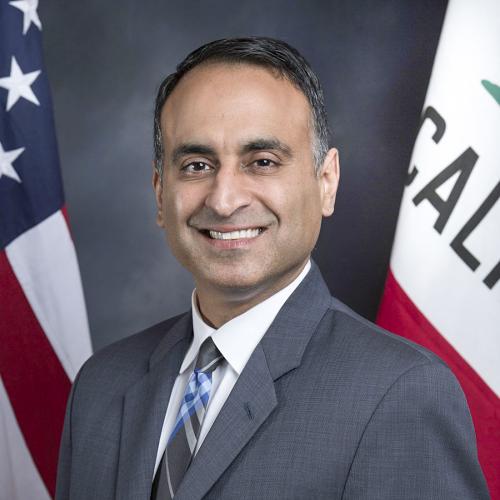
Asm. Ash Kalra
Total votes
23,729
all sessions
Attendance
97%
547 missed
Higher than 75% of chamber peers
With party
99%
of cast votes
Near the chamber average
Bipartisan score
0%
crosses aisle rarely
Near the chamber average
Sponsored
2,377
bills & resolutions
Higher than 97% of chamber peers
Committees
12
assignments
2,377 bills and resolutions
Sponsored bills
Total
2,377
Primary
290
Co-sponsor
2,087
This page
2,377
matching current filters
Peace Officers: certification: civil rights.
(1) Under existing law, the Tom Bane Civil Rights Act, if a person or persons, whether or not acting under color of law, interferes or attempts to interfere, by threats, intimidation, or coercion, with the exercise or enjoyment by any individual or individuals of rights secured by the Constitution or laws of the United States, or of the rights secured by the Constitution or laws of this state, the Attorney General, or any district attorney or city attorney, is authorized to bring a civil action for injunctive and other appropriate equitable relief in the name of the people of the State of California, in order to protect the exercise or enjoyment of the right or rights secured. Existing law also authorizes an action brought by the Attorney General, or any district attorney or city attorney, to seek a civil penalty of $25,000. This bill would provide that a threat, intimidation, or coercion under the act may be inherent in any interference with a civil right and would describe intentional acts for these purposes as an act in which the person acted with general intent or a conscious objective to engage in particular conduct. The bill would, with a specified exception, eliminate certain immunity provisions for peace officers or public entities employing peace officers sued under the act. The bill would also authorize specified persons to bring an action under the act for the death of a person. (2) Existing laws defines persons who are peace officers and the entities authorized to appoint them. Existing law requires certain minimum training requirements for peace officers including the completion of a basic training course, as specified. Existing law prescribes certain minimum standards for a person to be appointed as a peace officer, including moral character and physical and mental condition, and certain disqualifying factors for a person to be employed as a peace officer, including a felony conviction. This bill would disqualify a person from being employed as a peace officer if that person has been convicted of, or has been adjudicated in an administrative, military, or civil judicial process as having committed, a violation of certain specified crimes against public justice, including the falsification of records, bribery, or perjury. The bill would also disqualify any person who has been certified as a peace officer by the Commission on Peace Officer Standards and Training and has surrendered that certification or had that certification revoked by the commission, or has been denied certification. The bill would require a law enforcement agency employing certain peace officers to employ only individuals with a current, valid certification or pending certification. (3) Existing law establishes the Commission on Peace Officer Standards and Training to set minimum standards for the recruitment and training of peace officers and to develop training courses and curriculum. Existing law authorizes the commission to establish a professional certificate program that awards basic, intermediate, advanced, supervisory, management, and executive certificates on the basis of a combination of training, education, experience, and other prerequisites, for the purpose of fostering the professionalization, education, and experience necessary to adequately accomplish the general police service duties performed by peace officers. Existing law authorizes the commission to cancel a certificate that was awarded in error or obtained through misrepresentation or fraud, but otherwise prohibits the commission from canceling a certificate that has properly been issued. This bill would grant the commission the power to investigate and determine the fitness of any person to serve as a peace officer in the state. The bill would direct the commission to issue or deny certification, which includes a basic certificate or proof of eligibility, to a peace officer in accordance with specified criteria. The bill would require the commission to issue a proof of eligibility or basic certificate, as specified, to certain persons employed as a peace officer on January 1, 2021, who do not otherwise possess a certificate. The bill would require a proof of eligibility or basic certificate to be renewed at least every 2 years and would require the commission to assess a fee, in an amount determined by the commission, for the application and renewal of the certificate or proof of eligibility, as well as an annual certification fee. The bill would require the fees to be deposited into the Peace Officer Certification Fund, created by the bill, and would continuously appropriate those funds to the commission for the administration of the certification program, as specified, thereby making an appropriation. The bill would declare certificates or proof of eligibility awarded by the commission to be property of the commission and would authorize the commission to revoke a proof of eligibility or certificate on specified grounds, including the use of excessive force, sexual assault, making a false arrest, or participating in a law enforcement gang, as defined. The bill would create the Peace Officer Standards Accountability Division within the commission to investigate and prosecute proceedings to take action against a peace officer's certification. The bill would require the division to review and investigate grounds for decertification and make findings as to whether grounds for action against an officer's certification exist. The bill would require the division to notify the officer subject to decertification of their findings and allow the officer to request review. The bill would also create the Peace Officer Standards Accountability Advisory Board with 9 members to be appointed as specified. The bill would require the board to hold public meetings to review the findings after investigation made by the division and to make a recommendation to the commission. The bill would require the commission to adopt the recommendation of the board if supported by clear and convincing evidence and, if action is to be taken against an officer's certification, return the determination to the division to commence formal proceedings consistent with the Administrative Procedures Act. The bill would require the commission to notify the employing agency and the district attorney of the county in which the officer is employed of this determination, as specified. The bill would make all records related to the revocation of a peace officer's certification public and would require that records of an investigation be retained for 30 years. The bill would require an agency employing peace officers to report to the commission the employment, appointment, or separation from employment of a peace officer, any complaint, charge, allegation, or investigation into the conduct of a peace officer that could render the officer subject to revocation, findings by civil oversight entities, and civil judgements that could affect the officer's certification. In case of a separation from employment or appointment, the bill would require each agency to execute an affidavit-of-separation form adopted by the commission describing the reason for separation. The bill would require the affidavit to be signed under penalty of perjury. By creating a new crime, this bill would impose a state-mandated local program. The bill would require the board to report annually on the activities of the division, board, and commission, relating to the certification program, including the number of applications for certification, the events reported, the number of investigations conducted, and the number of certificates surrendered or revoked. By imposing new requirements on local agencies, this bill would impose a state-mandated local program. This bill would incorporate additional changes to Section 832.7 of the Penal Code proposed by SB 776 to be operative only if this bill and SB 776 are enacted and this bill is enacted last. The California Constitution requires the state to reimburse local agencies and school districts for certain costs mandated by the state. Statutory provisions establish procedures for making that reimbursement. This bill would provide that with regard to certain mandates no reimbursement is required by this act for a specified reason. With regard to any other mandates, this bill would provide that, if the Commission on State Mandates determines that the bill contains costs so mandated by the state, reimbursement for those costs shall be made pursuant to the statutory provisions noted above.
Passed Aug 27, 2020
1 co-sponsor
Employment: garment manufacturing.
Existing law makes garment manufacturers liable for guaranteeing payment of wages to employees of their contractors. This bill would expand the definition of garment manufacturing to include dyeing, altering a garment's design, and affixing a label to a garment. The bill would prohibit any employee engaged in the performance of garment manufacturing to be paid by the piece or unit, or by the piece rate, except as specified. The bill would impose a statutory penalty of $200 against a garment manufacturer or contractor, payable to the employee, for each pay period in which the employee is paid by the piece rate. This bill would define "brand guarantor" for purposes of these provisions as a person contracting for the performance of garment manufacturing, as specified, regardless of whether the person with whom they contract performs manufacturing operations or hires a contractor or subcontractor to perform manufacturing operations. This bill would specify that a garment manufacturer or brand guarantor who contracts with another person for the performance of garment manufacturing operations shares joint and several liability with any manufacturer and contractor for the full amount of unpaid wages, any other compensation, damages, and penalties to any and all employees who performed manufacturing operations for any violation, liquidated damages, attorney's fees, and civil penalties, as specified. This bill would create a rebuttable presumption in a claim filed with the Labor Commissioner to recover unpaid wages, if an employee has provided the Labor Commissioner with labels or other information that the commissioner finds credible relating to the identity of any brand guarantor or garment manufacturer that the brand guarantor or garment manufacturer is liable with the contractor for any amounts found to be due to the employee. The bill would also give the Labor Commissioner authority to enforce these provisions by issuing a stop order or a citation. Existing law requires every employer engaged in the business of garment manufacturing to keep certain records for three years, including, among other things, contract worksheets indicating the price per unit agreed to between the contractor and manufacturer. This bill would also require every employer engaged in the business of garment manufacturing and brand guarantors to keep all contracts, invoices, purchase orders, work orders, style or cut sheets, and any other documentation pursuant to which garment manufacturing work was, or is being, performed for 4 years. Existing law requires the commissioner to deposit $75 of each garment manufacturer's registration fee into a separate account to be disbursed by the commissioner only to persons determined by the commissioner to have been damaged by the failure to pay wages and benefits by a garment manufacturer, contractor, or subcontractor. Existing law requires the commissioner to promulgate all regulations and rules necessary to carry out the provisions of this part. The commissioner, upon good cause, may impose, in their discretion, the terms of penalties, the revocation of registrations, and the confiscation or disposal of goods in accordance with those rules and regulations. This bill would name the separate account into which a portion of a garment manufacturer's registration fee is deposited the Garment Manufacturers Special Account. The bill would require the Labor Commissioner to determine which claims for payment from the Garment Manufacturer's Special Account are accepted, and the amount of money, if any, that is to be disbursed from the account on an accepted claim.
Passed Aug 25, 2020
1 co-sponsor
Preneed funeral arrangements: unclaimed property.
Existing law, the Cemetery and Funeral Act, establishes the Cemetery and Funeral Bureau within the Department of Consumer Affairs and sets forth its powers and duties relating to the regulation of cemeteries, crematoria, funeral establishments, and their personnel. Existing law requires all securities purchased by, and all money received from, the trustor, as defined, for deposit in trust to be placed in trust within 30 days of receipt by the funeral establishment pursuant to a trust agreement executed by the funeral establishment, the trustor, and the trustee. Existing law requires the trustee, upon the signature of a majority of the trustees, to deliver the corpus of the trust and any income accrued in trust, as specified. Existing law specifies that a willful violation of the act is a crime. Existing law, the Unclaimed Property Law, provides that all intangible personal property maintained in a deposit or account, and the income or increment on that property held in a fiduciary capacity for the benefit of another that has remained unclaimed by the owner for more than 3 years escheats to the state. Under existing law, a person who claims to have been the owner, as defined, of property paid or delivered to the Controller under that law may file a claim to the property or to the net proceeds from its sale. Existing law requires to Controller to consider each claim, as specified, to determine if the claimant is the owner. This bill, commencing January 1, 2022, would recast provisions of the Cemetery and Funeral Act to permit the corpus of the trust and any income accrued in the trust, including interest, dividends, and capital gains, to escheat to the state, in accordance with the Unclaimed Property Law, if for more than 3 years after the funds became payable and distributable, as defined, to the funeral establishment or the trustor, the beneficiary or trustor has not corresponded electronically or in writing concerning the property or otherwise indicated an interest. The bill would require a funeral establishment to report and pay or deliver all unclaimed preneed funeral trust funds, including the corpus of the trust, together with any income accrued, less a revocation fee, to the Controller, as specified. This bill would also specify that all funds maintained in a preneed funeral trust held by a trustee for a funeral establishment that has been dissolved, sold, closed, or had its license revoked shall be returned to the beneficiary, trustor, or the legal representative of either the beneficiary or trustor within 30 days of providing specified written notice to the trustee according to specified procedures, if the funeral establishment does not transfer its preneed funeral agreements, or within 30 days of the beneficiary, trustor, or legal representative canceling the preneed funeral agreement according to specified procedures, if the funeral establishment transfers its agreements. The bill would also provide that if that person cannot be located or, in the case of a funeral establishment that does not transfer its preneed funeral agreements, if that person does not provide written direction to the trustee to return the funds to them within 6 months of receiving specified notice, the funds escheat to the state in accordance with the Unclaimed Property Law, as specified. The bill would make other conforming changes. This bill would require, commencing January 1, 2022, a funeral establishment that intends to cease engaging in business operations pursuant to the act by reason of dissolution, closure, sale, or revocation to also send notices to the bureau, beneficiaries or trustors, or their legal representatives, and trustees of preneed funeral agreements, as provided. The bill would require the notices to include specified information depending on whether the funeral establishment plans to transfer or not transfer its agreements to a licensed successor funeral establishment. The bill would require the notices to be sent on forms developed by the bureau and would require the bureau to develop the forms by January 1, 2022. The bill would also require the bureau to adopt and post on their internet website, by January 1, 2022, regulations regarding the type of proof the funeral establishment ceasing operations and the licensed successor funeral establishment are required to retain or provide, as specified. Because this bill would change the definition of a crime, the bill would impose a state-mandated local program. The California Constitution requires the state to reimburse local agencies and school districts for certain costs mandated by the state. Statutory provisions establish procedures for making that reimbursement. This bill would provide that no reimbursement is required by this act for a specified reason.
Passed Aug 20, 2020
0 co-sponsors
Tenancy: rental payment default: mortgage forbearance: state of emergency: COVID-19.
(1) Existing law provides that a tenant is guilty of unlawful detainer if the tenant continues to possess the property without permission of the landlord after the tenant defaults on rent or fails to perform a condition or covenant of the lease under which the property is held, among other reasons. Existing law requires a tenant be served a 3 days' notice in writing to cure a default or perform a condition of the lease, or return possession of the property to the landlord, as specified. Existing law, the Mobilehome Residency Law, prohibits a tenancy from being terminated unless specified conditions are met, including that the tenant fails to pay rent, utility charges, or reasonable incidental service charges and 3 days' notice in writing is provided to the tenant, as specified. This bill would enact the COVID-19 Tenant Relief Act of 2020. This bill would require that any 3 days' notice that demands payment of COVID-19 rental debt that is served on a tenant during the covered time period meet specified criteria, including that the notice include an unsigned copy of an attestation of COVID-19-related financial distress and that the notice advise the tenant that the tenant will not be evicted for failure to comply with the notice if the tenant delivers a signed attestation of COVID-19-related financial distress to the landlord, as specified. The bill would define "covered time period" for purposes of these provisions as the time between March 4, 2020, and either 90 days after the termination of the COVID-19 state of emergency or April 1, 2021, whichever occurs earlier. The bill would provide that a tenant is not guilty of an unlawful detainer if the tenant makes the demanded payment, vacates the property, or delivers a signed attestation of COVID-19-related financial distress within 15 days of the service of the notice. The bill would deem a 3 days' notice that fails to comply with this criteria void and insufficient to support a judgment for unlawful detainer or to terminate a tenancy under the Mobilehome Residency Law. The bill would prohibit a tenant that delivers an attestation of COVID-19-related financial distress pursuant to these provisions from being deemed in default with regard to the COVID-19 rental debt. Existing law regulates specified terms and conditions of tenancies. Existing law authorizes a landlord to demand security at the beginning of a tenancy for residential property and specifies the purposes for which the security may be used, including, among others, compensating the landlord for the tenant's default in payment of rent. The bill would prohibit a landlord from applying a security deposit to satisfy COVID-19 rental debt or applying a monthly rental payment to any COVID-19 rental debt, unless the tenant agrees in writing. The bill would define "COVID-19 rental debt" as unpaid rent or any other unpaid financial obligation under the tenancy that accrued during the covered time period. The bill would prohibit a landlord from charging a tenant, or attempting to collect from a tenant, fees for a late payment of COVID-19 rental debt. The bill would prohibit a landlord from terminating a tenancy or threatening to terminate a tenancy, in retaliation against a tenant for having COVID-19 rental debt. This bill would prohibit a housing provider, credit reporting agency, tenant screening company, or other specified entities from using an alleged COVID-19 rental debt as a negative factor in evaluating creditworthiness, as specified. The bill would prohibit a cause of action to recover COVID-19 rental debt until 15 months after the date the COVID-19 state of emergency terminates or April 1, 2022, whichever is earlier. This bill would provide that any provision of a stipulation settlement agreement, or other agreement that conflicts with or purports to waive these provisions is prohibited and void as contrary to public policy. The bill would provide that if a local initiative, ordinance, regulation, or other policy conflicts with these provisions, the provision that provides the greater protection to tenants controls. (2) Existing law prescribes various requirements to be satisfied before the exercise of a power of sale under a mortgage or deed of trust. In this regard, existing law requires that a notice of default and a notice of sale be recorded and that specified periods of time elapse between the recording and the sale. Existing law establishes certain requirements in connection with foreclosures on mortgages and deeds of trust, including restrictions on the actions mortgage servicers may take while a borrower is attempting to secure a loan modification or has submitted a loan modification application. This bill would enact the Small Landlord and Homeowner Relief Act of 2020. The bill would authorize a borrower to request forbearance during the effective time period from any mortgage obligation by submitting a request to the borrower's mortgage servicer, either orally or in writing, affirming that the borrower is experiencing a financial hardship that prevents the borrower from making timely payments on the mortgage obligation due, directly or indirectly, to the COVID-19 emergency. The bill would define "borrower" for these purposes as a natural person who is a mortgagor, trustor, or confirmed successor in interest; an entity other than a natural person provided that the secured property is currently occupied by one or more residential tenants; or a mobilehome owner who is the borrower on a security agreement relating to a loan or conditional sale contract that gives the secured party the right to foreclose its security interest in a manufactured home or mobilehome, except as specified. The bill would define "effective time period" as the time period between the operational date of these provisions and either 90 days after the termination of the COVID-19 state of emergency or April 1, 2021, whichever occurs first. This bill would also authorize a mobilehome owner who is the borrower on any security agreement relating to a loan or conditional sale contract which, according to its terms, gives the secured party the right to foreclose its security interest in a manufactured home or mobilehome to request forbearance during the effective time period, as specified. This bill would require a mortgage servicer or lienholder to, if certain requirements are met, offer the forbearance requested for an initial period of up to 180 days, which may be extended at the request of the borrower or mobilehome borrower, as specified. The bill would authorize a mortgage servicer or lienholder to limit the total forbearance provided to 360 days and authorize the mortgage servicer or lienholder to count any forbearance already provided to the borrower between March 4, 2020, and the date of the mobilehome borrower's initial request against that 360 days. The bill would prohibit a mortgage servicer or lienholder from assessing, accruing, or applying any fees, penalties, or additional interest during the forbearance period, as specified. The bill would require a mortgage servicer or lienholder to attempt to contact the borrower, including a mobilehome borrower, with diligent effort at least 30 days before the end of any forbearance period granted pursuant to these provisions to inquire whether the borrower is able to resume making preforbearance mortgage or loan payments. The bill would, if the borrower indicates that they will not be able to resume preforbearance payments, require the mortgage servicer or lien holder to evaluate the borrower for loss mitigation and foreclosure prevention, as specified. Alternatively, if the borrower affirms they are able to resume preforbearance payments or fails to respond to the mortgage servicer, the bill would require the mortgage servicer or lienholder to reinstate the preforbearance payments and provide a specified notice to the borrower that includes, among other things, a description of any options available to the borrower to address the amount unpaid during the forbearance. This bill would authorize a multifamily borrower that was current on its payments as of February 1, 2020, to submit a written request for forbearance to the mortgage servicer affirming that the multifamily borrower is experiencing a financial hardship during the COVID-19 emergency. The bill would define "multifamily borrower" for purposes of these provisions as a borrower of a residential mortgage loan that is secured by a lien against a property comprising 5 or more dwelling units. The bill would require a mortgage servicer to provide an initial forbearance period of 30 days and grant additional 30-day extension periods upon the request of the borrower, as specified. The bill would authorize a mortgage servicer to limit the total forbearance provided to 180 days and authorize the mortgage servicer to count any forbearance already provided to the borrower between March 4, 2020, and the date of the mobilehome borrower's initial request against that 180 days. The bill would authorize a mortgage servicer to condition forbearance on the receipt of reasonable documentation from the borrower that demonstrates a decrease of at least 10% or more of the multifamily borrower's gross rental revenue, as specified. The bill would authorize a mortgage servicer to condition any extension of the forbearance period on the receipt of payment equal to the net operating income derived from the property and the borrower keeping all property tax and insurance payments current. This bill would authorize a borrower, including a mobilehome borrower and multifamily borrower, who is likely to suffer material harm from a violation of these provisions to bring an action to obtain injunctive relief, damages, and restitution, as specified. The bill would require a court to award a prevailing borrower reasonable attorney's fees and costs in any action based on a violation of these provisions. This bill would provide that any waiver by a borrower of these provisions is contrary to public policy and void.
Passed Aug 20, 2020
1 co-sponsor
Resource conservation: land and ocean conservation goals.
Existing law declares it to be the policy of the state that the protection and management of natural and working lands, as defined, is an important strategy in meeting the state's greenhouse gas emissions reduction goals, and requires all state agencies, departments, boards, and commissions to consider this policy when revising, adopting, or establishing policies, regulations, expenditures, or grant criteria relating to the protection and management of natural and working lands. This bill would declare it to be the goals of the state by 2030 to protect at least 30% of the state's land areas and waters; to help advance the protection of 30% of the nation's oceans; and to support regional, national, and international efforts to protect at least 30% of the world's land areas and waters and 30% of the world's ocean. The bill would declare it a further goal of the state to improve access to nature for all people in the state and to provide for recreational and educational opportunities, including wildlife-dependent recreational activities, with a specific emphasis on increasing access for communities of color and economically disadvantaged communities. The bill would authorize the state to achieve these goals through specified activities. The bill would require the Natural Resources Agency to ensure that actions made in furtherance of these goals are conducted in a specified manner.
Passed Aug 20, 2020
0 co-sponsors
Economic development: housing: workforce development: climate change infrastructure.
Existing law establishes various housing programs administered by the Department of Housing and Community Development, including the Multifamily Housing Program, pursuant to which the department provides financial assistance in the form of deferred payment loans to pay for the eligible costs of development for specified types of housing projects. Existing law also establishes the Homeless Housing, Assistance, and Prevention program, administered by the Business, Consumer Services, and Housing Agency, for the purpose of providing jurisdictions with one-time grant funds to support regional coordination and expand or develop local capacity to address their immediate homelessness challenges, as provided. Existing law requires that the California Workforce Development Board and each local workforce development board ensure that programs and services funded by the federal Workforce Innovation and Opportunity Act of 2014 and directed to apprenticeable occupations are conducted in coordination with apprenticeship programs approved by the Division of Apprenticeship Standards, as specified. Existing law also establishes the Strategic Growth Council and, among other things, requires the council to manage and award grants and loans to support the planning and development of sustainable communities. Existing law also establishes the State Coastal Conservancy in the Natural Resources Agency with prescribed powers and responsibilities for implementing a program of agricultural land protection, area restoration, and resources enhancement within the coastal zone, as defined. Existing law establishes the Governor's Office of Business and Economic Development, known as "GO-Biz," within the Governor's office to serve the Governor as the lead entity for economic strategy and the marketing of California on issues relating to business development, private sector investment, and economic growth. This bill, upon appropriation by the Legislature, would make up to $2,000,000,000 available in each fiscal year for the purpose of providing emergency economic recovery and development, climate change, and disaster response. Of the amount made available for any fiscal year, the bill would require the Controller to allocate $1,808,000,000, or a proportional amount of the total available amount for the applicable fiscal year, among various housing programs administered by the Department of Housing and Community Development, the Homeless Housing, Assistance, and Prevention program, and for distribution by the California Workforce Development Board among local agencies to participate in, invest in, or partner with new or existing preapprenticeship training programs established as described above. The bill would require the Business, Consumer Services, and Housing Agency to establish deadlines for applications and submitting final reports under the Homeless Housing, Assistance, and Prevention program with respect to moneys allocated to that program under the bill. Of the amount made available for any fiscal year under its provisions, the bill would require the Controller to allocate $192,000,000, or a proportional amount of the total available amount for the applicable fiscal year, to the State Coastal Conservancy, the Strategic Growth Council, and GO-Biz, to be used for the Climate, Sea Level, and Natural Disaster Program and the Community Economic Development Program. The bill would require the State Coastal Conservancy and the Strategic Growth Council, in consultation with the Office of Planning and Research or any other appropriate state agency, to allocate $100,000,000, or a proportional amount, under the Climate, Sea Level, and Natural Disaster Program among specified eligible entities for the purpose of protecting communities dealing with the effects of climate change, as specified. The bill would require GO-Biz, in consultation with the Department of Housing and Community Development and any other appropriate state agency, council, or department, to allocate $92,000,000, or a proportional amount, under the Community Economic Development Program among these specified eligible entities for various purposes relating to community development. The bill would require eligible applicants to comply with specified requirements, including submitting plans for outreach to, and retention of, women, minority, disadvantaged youth, formerly incarcerated, and other underrepresented subgroups and, subject to certain exceptions, certifying that a skilled and trained workforce, as defined, will be used to complete any project funded under those programs. By requiring the certification of certain information, thereby expanding the scope of the crime of perjury, the bill would impose a state-mandated local program. The California Constitution requires the state to reimburse local agencies and school districts for certain costs mandated by the state. Statutory provisions establish procedures for making that reimbursement. This bill would provide that no reimbursement is required by this act for a specified reason.
Passed Aug 20, 2020
1 co-sponsor
California State University: graduation requirement: ethnic studies.
Existing law establishes the California State University and its various campuses under the administration of the Board of Trustees of the California State University. Existing law requires the trustees to adopt rules and regulations not inconsistent with the laws of this state for the governance of the trustees, their appointees and employees, and the California State University. Existing regulations require students of the California State University to complete courses in American history and American government or pass comprehensive examinations in those fields in order to graduate, with specified requirements and exceptions. This bill, commencing with the 2021–22 academic year, would require the California State University to provide for courses in ethnic studies at each of its campuses. The bill, commencing with students graduating in the 2024–25 academic year, would require the California State University to require, as an undergraduate graduation requirement, the completion of, at minimum, one 3-unit course in ethnic studies, as specified.
Signed into law Aug 17, 2020
1 co-sponsor
Wealth tax.
Existing law imposes taxes upon income and real property, as well as taxes upon certain transactions and excise taxes. This bill would impose an annual tax at a rate of 0.4% of a resident of this state's worldwide net worth in excess of $30,000,000, or in excess of $15,000,000 in the case of a married taxpayer filing separately. The bill would describe worldwide net worth with reference to specific federal provisions and would provide that worldwide net worth does not include specific assets, including directly held real property or liabilities related to directly held real property. The bill would also authorize the Franchise Tax Board to adopt regulations to carry out these provisions, including regulations regarding the valuation of certain assets that are not publicly traded. Existing law requires the Franchise Tax Board to administer the Personal Income Tax Law. This bill would require the Franchise Tax Board to amend or create returns with regard to the Wealth Tax. This bill would include a change in state statute that would result in a taxpayer paying a higher tax within the meaning of Section 3 of Article XIIIA of the California Constitution, and thus would require for passage the approval of 23 of the membership of each house of the Legislature. This bill would take effect immediately as a tax levy.
In committee Aug 17, 2020
1 co-sponsor
Homelessness: California Access to Housing and Services Act.
Existing law establishes the Homeless Housing, Assistance, and Prevention program for the purpose of providing jurisdictions with one-time grant funds to support regional coordination and expand or develop local capacity to address their immediate homelessness challenges informed by a best-practices framework focused on moving homeless individuals and families into permanent housing and supporting the efforts of those individuals and families to maintain their permanent housing. Upon appropriation, existing law requires the Business, Consumer Services, and Housing Agency to distribute $650,000,000 among continuums of care, cities, and counties pursuant to the program. By executive order, the Governor required the Department of Finance to establish the California Access to Housing and Services Fund, administered by the State Department of Social Services, to provide funding for additional affordable housing units, providing rental and operating subsidies, and stabilizing board and care homes. This bill, the California Access to Housing and Services Act, would establish the California Access to Housing and Services Fund in the State Treasury and continuously appropriate moneys in the fund solely for the purpose of implementing and administering the bill's provisions. The bill, for the 2020–21 fiscal year and each fiscal year thereafter, would require, upon appropriation by the Legislature, the Controller to transfer up to $2,000,000,000 from the General Fund to the fund and require the Department of Housing and Community Development and the State Department of Social Services to jointly administer the fund pursuant to a memorandum of understanding, as provided. The bill would provide that deposits into the fund may also include, but are not limited to, other state funds; private, nonprofit, or philanthropic donations; local government contributions; and any recoveries or reversions resulting from activities pursuant to the act. The bill would require the departments, in collaboration with the California Health and Human Services Agency and after deduction for administrative costs and certain allocations to the Governor's Office to End Homelessness, if the bill establishing that office is enacted, to allocate 55% of the moneys in the fund to counties and continuums of care that apply jointly, 45% to large cities, and 5% to developers operating in unincorporated areas and cities that are not eligible for an allocation. The bill would define various terms for these purposes. The bill would require that recipients and subrecipients ensure that any expenditure of moneys allocated to them serve the eligible population, as defined, unless otherwise expressly provided in the bill. The bill would require eligible recipients to apply for allocations and require the departments to evaluate those applications based on specified criteria and make annual allocations, as provided. The bill would require recipients to contractually obligate 100% of the amount allocated to them under the bill within 4 years, and expend the entirety of that amount within 5 years, of entering into a grant agreement with the departments, except for moneys used to provide a capitalized operating subsidy reserve, which the bill would require to be expended over a period of at least 17 years. If a developer awarded moneys under the bill does not comply with these time periods, the bill would require that the allocation revert to the fund. If a county and continuum of care or a large city does not comply with these time periods, is otherwise not in compliance with specified requirements under the bill, or does not apply for an allocation, the bill would require the departments to designate an alternate entity to administer the allocation until the departments approve a compliance plan submitted by the recipient, as provided. The bill would require the departments to evaluate the outcomes of the program and submit a report to specified committees of the Legislature every 5 years, beginning on January 1, 2023, as provided. The bill would specify various requirements for counties and continuums of care to jointly apply, and for a large city to apply, for allocations from the fund. The bill would also specify various eligible activities for which moneys allocated to counties and continuums of care that apply jointly or to large cities may be expended, which generally include services offered in connection with providing permanent housing and supportive housing, in the case of joint allocations to counties and continuums of care, and capital expenditures to fund the creation of affordable housing and supportive housing, in the case of allocations to large cities. The bill would require recipients under these provisions to comply with specified requirements, including a requirement that the recipient match 25% of the amount allocated to it, and quality standards for housing units assisted under the bill. The bill would require the departments to establish a process for awarding grants to these recipients in subsequent years. The bill would also require the Department of Housing and Community Development to provide grants to eligible developers based on a competitive application process and require the recipient to use that grant for development, acquisition, rehabilitation, preservation, motel conversion, and capitalized operating subsidy reserves in accordance with specified requirements. The California Environmental Quality Act (CEQA) requires a lead agency, as defined, to prepare, or cause to be prepared, and certify the completion of, an environmental impact report on a project that it proposes to carry out or approve that may have a significant effect on the environment or to adopt a negative declaration if it finds that the project will not have that effect. If a local agency determines that a project is not subject to CEQA and approves or determines to carry out the project, CEQA authorizes the local agency to file a notice of exemption with the county clerk of each county in which the project will be located in a specified manner. This bill would exempt from CEQA specified actions taken by a large city in connection with making land available or approving the development of low barrier interim interventions, affordable housing, or supportive housing funded under the bill. The bill would require the large city to file a notice of exemption with the clerk of the county in which the large city is located and the Office of Planning and Research in the manner specified above.
Passed Aug 4, 2020
1 co-sponsor
Ask Maddy
·
AI policy assistant
Ask Maddy about Ash Kalra
Scope: CA
Hi! I can help you understand Ash Kalra's legislative record. What would you like to know?
Try one of these
i
Maddy answers using official bill text and legislative records. Always verify before sharing.
Sources cited inline