

(1) Existing law provides that the Department of Toxic Substances Control regulates the handling and management of hazardous substances, materials, and waste. Existing law requires the department to, among other things, issue hazardous waste facilities permits to facilities handling hazardous waste and to enforce the requirements of the hazardous waste control laws. This bill would create the Board of Environmental Safety in the California Environmental Protection Agency. The bill would provide requirements for the membership of the board and would require the board to conduct no less than 6 public meetings per year. The bill would provide for the duties of the board, which would include, among others, reviewing specified policies, processes, and programs within the hazardous waste control laws; proposing statutory, regulatory, and policy changes; and hearing and deciding appeals of hazardous waste facility permit decisions and certain financial assurance decisions. The bill would establish an office of ombudsperson in the board to receive complaints and suggestions, to evaluate complaints received, to report findings and make recommendations to the Director of Toxic Substances Control and the board, and to render assistance. (2) Existing law requires the department to prepare and adopt a state hazardous waste management plan with certain elements, to be reviewed annually and revised at least every 3 years. Existing law requires the plan to be prepared in conjunction with, and to take into account, hazardous waste management plans adopted by counties and regional councils of governments. Existing law requires the department to conduct at least 2 public workshops, as provided, as part of the preparation and adoption of the plan. This bill would repeal those requirements and instead require the department, by March 1, 2024, and every 3 years thereafter, to prepare and present to the board for approval a state hazardous waste management plan containing certain information, goals, and recommendations. The bill would require the department, by March 1, 2022, and every 3 years thereafter, to prepare a report containing an analysis of available data related to hazardous waste and hazardous waste management facilities, and would require the state hazardous waste management plan to be based on the information contained in that report and any other relevant source of information. The bill would require the board, before approving the plan, to conduct at least 3 public hearings to receive comments from the public and would require the board and department to consider the comments received and revise the plan as they deem appropriate. (3) Existing law imposes various fees, including a disposal fee, generator fee, and facility fee, that are deposited in the Hazardous Waste Control Account and that, upon appropriation by the Legislature to the department, are authorized to be expended for, among other things, the administration and implementation of the hazardous waste control laws. Existing law establishes the Toxic Substances Control Account in the General Fund and requires that specified funds be deposited in that account, including the charge imposed on organizations that use, generate, store, or conduct activities in this state related to hazardous materials, and penalties imposed pursuant to the hazardous waste control laws or the Carpenter-Presley-Tanner Hazardous Substance Account Act. Existing law authorizes the appropriation of funds from the Toxic Substances Control Account to the department for specified purposes, including, among other things, site remediation and response costs. This bill would require the Secretary for Environmental Protection to convene a fee task force with specified membership to review the existing fee structure supporting the Hazardous Waste Control Account and the funding structure supporting the Toxic Substances Control Account. The bill would require the Secretary to provide recommendations to the Legislature by January 10, 2022, as part of the Governor's Budget, on a fee system for the Hazardous Waste Control Account and a funding structure for the Toxic Substances Control Account, as provided. (4) Existing law requires a person who disposes of hazardous waste in this state to pay a disposal fee for the disposal of hazardous waste to land, based on the type of waste placed in the disposal site. Existing law imposes, except for certain specified exceptions, a manifest fee for each California Hazardous Waste Manifest form or electronic equivalent used by a person. Existing law authorizes the Department of Toxic Substances Control to impose an annual verification fee on certain generators, transporters, and facility operators that possess a valid identification number issued by the Department of Toxic Substances Control or by the United States Environmental Protection Agency. This bill would repeal the provisions establishing the disposal fee, manifest fee, and verification fee. (5) Existing law requires specified money to be deposited in the Hazardous Waste Control Account, including money from the disposal fee, generator fee, facility fee, and manifest fee, from specified fees for the oversight of corrective action, and from the federal government pursuant to the federal Resource Conservation and Recovery Act of 1976. Existing law authorizes funds deposited in the account to be expended, upon appropriation by the Legislature, for specified purposes, including for the administration and implementation of the hazardous waste control laws, including, but not limited to, for programs regulating specific products, including, among others, metal-containing jewelry, lead wheel weights, and consumer products. This bill, on January 1, 2022, would revise those provisions to require the generation and handling fee to be deposited in the account, as discussed in paragraph (6) , and to authorize other money to be deposited in the account only if that money is for costs at sites that are not operated by authorized hazardous waste facilities, as provided. The bill would prohibit expenditure from the account for hazardous waste regulatory activities at sites operated by an authorized hazardous waste facility and for other specified programs regulating specific products under the hazardous waste control laws. The bill would additionally authorize expenditure from the account to the department for costs incurred by the Board of Environmental Safety, as provided. The bill would make other conforming changes. The bill, on January 1, 2022, would establish the Hazardous Waste Facilities Account in the Hazardous Waste Control Account, to be administered by the Director of Toxic Substances Control. The bill would require specified money for costs at sites operated by authorized hazardous waste facilities to be deposited in the Hazardous Waste Facilities Account, as provided. The bill would authorize expenditure from the account, upon appropriation by the Legislature, for specified purposes relating to hazardous waste regulatory activities at sites operated by an authorized hazardous waste facility or related to the owner or operator of an authorized hazardous waste facility, as provided. (6) Existing law requires a generator of hazardous waste who generated 5 or more tons of hazardous waste in the prior calendar year to pay a generator fee, pursuant to a tiered payment structure, based on a specified base rate. Existing law authorizes the California Department of Tax and Fee Administration to annually adjust the base rate to reflect the increase or decrease in the cost of living, as provided. Existing law provides certain exemptions to the generator fee. Existing law requires the generator fee to be deposited in the Hazardous Waste Control Account. Existing law requires the department, upon appropriation by the Legislature, to pay refunds to generators from surplus funds in the Hazardous Waste Control Account, as provided. This bill would repeal the generator fee and would instead require a generator to pay to the California Department of Tax and Fee Administration a generation and handling fee of $35.50 for each ton of hazardous waste generated. The bill would require the generation and handling fee to be deposited in the Hazardous Waste Control Account. The bill would not extend certain generator fee exemptions to the generation and handling fee. The bill would repeal the provision requiring the department to provide refunds to generators from surplus funds in the Hazardous Waste Control Account. Because the failure to pay the generation and handling fee would be a crime, the bill would impose a state-mandated local program. (7) Existing law requires an operator of a hazardous waste facility to pay a facility fee for each reporting period, or any portion of a reporting period, to the California Department of Tax and Fee Administration based on the size and type of the facility. Existing law sets the amount of the facility fee in a flat amount for facilities with a postclosure permit or a standardized permit and sets the facility fee for all other facilities pursuant to a tiered payment structure, based on a specified base rate. Existing law requires the California Department of Tax and Fee Administration to annually adjust the base rate to reflect the increase or decrease in the cost of living, as provided. Existing law provides certain exemptions to the facility fee, including, among others, for household hazardous waste collection facilities and facilities operated by a local government agency. Existing law requires the facility fee to be deposited in the Hazardous Waste Control Account. This bill would increase the base rate and revise the tiered payment structure for the facility fee, as provided. The bill would require the facility fee to be deposited in the Hazardous Waste Facilities Account, instead of the Hazardous Waste Control Account. The bill would eliminate certain exemptions to the facility fee, as provided. By eliminating certain exemptions to the facility fee, of which the failure to pay would be a crime, the bill would impose a state-mandated local program. (8) Existing law requires a facility handling hazardous waste to obtain a hazardous waste facilities permit from the department. Existing law requires the department to impose certain conditions on each hazardous waste facilities permit and authorizes the department to impose other conditions on a hazardous waste facilities permit, as specified. Existing law prohibits the department from issuing or renewing a permit to operate a hazardous waste facility unless the owner or operator of the facility establishes and maintains financial assurances. This bill would require the department to review, at least once every 5 years, the financial assurances required to operate a hazardous waste facility and the cost estimates used to establish the amount of financial assurances required. If the department's review finds that the cost estimates forming the basis for the financial assurances for a facility are inadequate, the bill would require the department to notify the owner or operator of the facility and would require the owner or operator to provide an updated cost estimate and establish financial assurance mechanisms for the approved revised cost estimate amounts within 60 days of the department's approval of the revised cost estimate. (9) Existing law requires an owner or operator of a facility intending to renew the facility's permit to submit a complete Part A application for a permit renewal before the expiration of the permit. Existing law requires the owner or operator to submit a complete Part B application when requested by the department. Existing law, when a complete Part A renewal application, and any other requested information, has been submitted before the end of a permit's fixed term, deems the permit extended until the renewal application is approved or denied and the owner or operator has exhausted all applicable rights of appeal. Existing law requires the department to issue a permit if the facility meets specified requirements. Existing law provides for the issuance of standardized hazardous waste facilities permits in lieu of other specified permit procedures under prescribed circumstances. This bill would require the department to issue a permit decision within specified deadlines, as discussed below. If the department has not issued a final permit decision by the applicable deadline, the bill would require the department to, among other things, issue a report, to be released publicly, that includes the reasons why the final permit decision was not made on time and a proposed schedule for issuing the final permit decision. The bill would require the department, after preparation of a report, to do certain things, including requesting that the board schedule a hearing for the department to present the report. The bill would require, for a hazardous waste facilities permit that will expire before January 1, 2024, the owner or operator of a facility intending to extend the term of that permit to submit a Part A and Part B application for a permit renewal at least 180 days before the fixed term of the permit expires. The bill would require, for a hazardous waste facilities permit that will expire on or after January 1, 2024, the owner or operator to submit a Part A and Part B application for a permit renewal at least 2 years before the fixed term of the permit expires. The bill would provide that, if a Part A and Part B renewal application and any other requested information has been submitted in accord with these requirements, the permit is deemed extended until the application is approved and the new permit is effective or denied and all parties have exhausted all applicable rights of appeal. The bill would require the department, no later than 90 days after receiving an application for a hazardous waste facilities permit, to post on its internet website a timeline with the estimated dates of key milestones in the application review process, to note on its internet website that these dates are estimates, and to update the dates as needed. The bill would require the department, on or before March 31, 2021, to post a timeline with those estimated dates for a hazardous waste facility permit application under review as of January 1, 2021. (10) Existing law requires an applicant for a final hazardous waste facilities permit who receives a notice of deficiency from the department concerning the permit application to submit the information specified in the notice of deficiency by a specified date. The bill would require that an applicant not be required to submit a full application, but only that information that is required within the department's notice of deficiency, when submitting information pursuant to a notice of deficiency. The bill would require the department to review the information and determine if it is complete within 60 days of receipt of the information. (11) Existing law requires the department, in the case of a release of hazardous waste or hazardous waste constituents into the environment from a hazardous waste facility that is required to obtain a permit, to pursue available remedies, including the issuance of an order for corrective action, before using available legal remedies, except in specified circumstances. A violation of the hazardous waste control law is a crime. This bill would require the department, under specified circumstances, to request an owner or operator of a hazardous waste facility to submit to the department for review and approval a written cost estimate to cover activities associated with a corrective action based on available data, history of releases, and site activities, as specified. The bill would require the owner or operator to submit the corrective action cost estimate within 60 days of the department's request. The bill would require the owner or operator, within 90 days of the approval of a corrective action cost estimate, as specified, to fund the cost estimate or enter into a schedule of compliance for assurances of financial responsibility for completing the corrective action. The bill would establish procedures for an owner, operator, or responsible party to demonstrate and maintain financial assurance under specified circumstances. Because a violation of these provisions would be a crime, the bill would impose a state-mandated local program. (12) Existing law requires a person who applies for, or requests, among other things, a hazardous waste facilities permit or a renewal of an existing hazardous waste facilities permit, to enter into a written agreement with the department to reimburse the department for the costs incurred by the department in processing the application or responding to the request, as provided. Existing law requires that agreement, except for an agreement entered into by a facility owned by a federal agency, to provide for at least 25% of the reimbursement to be made in advance of the processing of the application or the response to the request. This bill would additionally exempt from that requirement relating to advanced reimbursement an agreement entered into by a facility operated by a federal agency. (13) The California Constitution requires the state to reimburse local agencies and school districts for certain costs mandated by the state. Statutory provisions establish procedures for making that reimbursement. This bill would provide that no reimbursement is required by this act for a specified reason.
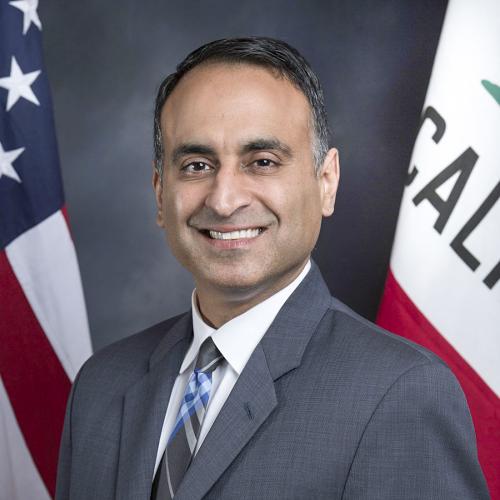
Asm. Ash Kalra
Sponsored bills
Existing law, the Knox-Keene Health Care Service Plan Act of 1975, provides for the licensure and regulation of health care service plans by the Department of Managed Health Care, and makes a willful violation of the act a crime. Existing law provides for the regulation of health insurers by the Department of Insurance. Existing law requires a health care service plan or health insurer offering a contract or policy in the individual, small, and large group markets to file specified information, including total earned premiums and total incurred claims for each contract or policy form, with the appropriate department at least 120 days before implementing a rate change. Existing law requires a large group market health care service plan or insurer to report additional information relating to cost sharing and specified aggregate rate information. Existing law requires the Department of Managed Health Care and the Department of Insurance to conduct an annual public meeting regarding large group rates. This bill would require a health care service plan and health insurer, excluding for a specialized health care service plan or specialized health care policy, to report to the Department of Managed Health Care and the Department of Insurance, respectively, by October 1, 2021, and annually thereafter, for products in the individual and small group markets, and for rates effective during the 12-month period ending January 1 of the following year, on specified information, including premiums, cost sharing, benefits, enrollment, and trend factors, and would exclude prescribed information from the reporting requirements until January 1, 2023. The bill would also require a health care service plan and health insurer, excluding a specialized health care service plan or specialized health care policy, to annually report to the Department of Managed Health Care and the Department of Insurance, respectively, the above-described information for all grandfathered and nongrandfathered products, as specified. The bill would require each department, beginning in 2022, to annually present the reported information at various meetings, as specified. The bill would also require each department to post the information reported under this section on its internet website no later than December 15 of each year. The bill would also authorize the Department of Managed Health Care to implement, interpret, or make specific these provisions by means of all-plan letters, forms, or similar instructions, without taking regulatory action until January 1, 2024. The bill would exempt the Department of Insurance from the Administrative Procedure Act in order to issue guidance to health insurers regarding compliance with these provisions until January 1, 2024. Because a violation of the bill by a health care service plan would be a crime, the bill would impose a state-mandated local program. The California Constitution requires the state to reimburse local agencies and school districts for certain costs mandated by the state. Statutory provisions establish procedures for making that reimbursement. This bill would provide that no reimbursement is required by this act for a specified reason.
Existing law, the California Occupational Safety and Health Act of 1973, requires employers to comply with certain standards ensuring healthy and safe working conditions, as specified. Existing law charges the Division of Occupational Safety and Health within the Department of Industrial Relations with enforcement of the act, subject to oversight by the Chief of the Division of Occupational Safety (chief) . Existing law makes a violation of the act a crime. Existing law defines "employment," for purposes of the act, to include the carrying on of any trade, enterprise, project, industry, business, occupation, or work, including all excavation, demolition, and construction work, or any process or operation in any way related thereto, in which any person is engaged or permitted to work for hire, except household domestic service. This bill would delete the above-described exception for household domestic service, thereby making it subject to the act. The bill would provide, however, that "employment" does not include household domestic service that is publicly funded, as specified, unless it is subject to certain regulatory provisions. The bill would make coverage for household domestic service operative on January 1, 2022, as specified. By expanding the scope of a crime, the bill would impose a state-mandated local program. The bill would require the chief or a representative of the chief to convene an advisory committee and, within 6 months of convening, in consultation with the Commission on Health and Safety and Workers' Compensation, make findings and recommendations to the Occupational Safety and Health Standards Board for industry-specific regulations related to household domestic service. The bill would require the board to adopt industry-specific regulations pursuant to these provisions within a reasonable time and no later than January 1, 2022. Existing law authorizes the chief and all qualified and authorized division inspectors and investigators to have free access to any place of employment to make an investigation or inspection during regular working hours, and at other reasonable times when necessary, for the protection of safety and health. This bill would require the chief or their representative, when the workplace is a residential dwelling, to initiate telephone contact with the employer in response to an alleged violation received from a domestic service employee within a specified timeframe. The bill would require the chief or their representative to provide specified notice to the employer about the alleged violation and to investigate the violation in accordance with certain procedures. The bill would require the employer to provide specified information to the division regarding mitigation efforts to correct the violation and to provide copies of all correspondence received from the division to the domestic service employee or to post the correspondence, as specified. The bill would authorize the chief or their authorized representative, for complaints alleging serious illness or injury or death in household domestic service, to enter the premises with permission or with an inspection warrant without first initiating telephone contact, as specified. The bill would require investigations of complaints in household domestic service employment to be conducted in a manner that avoids any unwarranted invasion of personal privacy and to not contain any personal, financial, or medical information of residents residing in the residential dwelling that is not pertinent to the investigation of the complaint. The California Constitution requires the state to reimburse local agencies and school districts for certain costs mandated by the state. Statutory provisions establish procedures for making that reimbursement. This bill would provide that no reimbursement is required by this act for a specified reason.
Existing law, the California Occupational Safety and Health Act of 1973, provides the Division of Occupational Safety and Health within the Department of Industrial Relations with the power, jurisdiction, and supervision over all employment and places of employment necessary to enforce and administer all occupational health and safety laws and standards and to protect employees. Under the act, the Occupational Safety and Health Standards Board within the division is authorized to adopt, amend, or repeal occupational safety and health standards and orders. This bill would require the division to disseminate, in both English and Spanish, information on best practices for COVID-19 infection prevention, as specified, consistent with the Guidance Documents available on the division's internet website, including, but not limited to, the Guidance Document entitled, "Cal/OSHA Safety and Health Guidance: COVID-19 Infection Prevention for Agricultural Employers and Employees." The bill would also require the division to work collaboratively with community organizations and organizations representing employees and employers to conduct a statewide outreach campaign, targeted at agricultural employees, to assist with the statewide dissemination of the best practices information and to educate employees on any COVID-19-related employment benefits to which they are entitled, including access to paid sick leave and workers' compensation. The bill would require the campaign to include public service announcements on local Spanish radio stations and the distribution of workplace signs. The bill would require the division to routinely compile and report, via its internet website, information relating to the subject matter, findings, and results of any investigation by the division relating to practices or conditions prescribed in the Guidance Documents or a COVID-19 illness or injury at a workplace of agricultural employees, as specified. The bill would repeal these provisions when the state of emergency has been terminated by proclamation of the Governor or by concurrent resolution of the Legislature, as specified. The bill would also direct the division to enforce the Guidance Documents to the extent any specific Guidance Document applies to any specific workplace and to the extent the division has existing regulatory authority. This bill would declare that it is to take effect immediately as an urgency statute.
(1) The Trial Jury Selection and Management Act requires all persons be selected for jury service at random and from sources inclusive of a representative cross section of the population of the area served by the court. The act specifies that the list of registered voters and list of licensed drivers and identification cardholders who are resident within the area served by the court are appropriate source lists for the selection of jurors, and further specifies that these 2 source lists, when substantially purged of duplicate names, are considered inclusive of a representative cross section of the population. This bill would deem the list of resident state tax filers as an appropriate source list for selection of jurors, and beginning on January 1, 2022, would deem the list of resident state tax filers, when substantially purged of duplicate names, to be considered inclusive of a representative cross section of the population, along with the two source lists described above. This bill would require the Franchise Tax Board to annually furnish the jury commissioner of each county with a list of resident state tax filers for their county in consultation with the Judicial Council. The bill would also require the Franchise Tax Board to revise the California resident income tax return to include a space for the taxpayer's address of their principal residence and their county of principal residence. (2) Existing law generally makes it a misdemeanor for specified persons, including, among others, officers or employees of the state or its political subdivisions, to disclose information set forth or disclosed in returns, reports, or documents required to be filed under the franchise and income tax laws. This bill would expressly state that this misdemeanor is applicable to jury commissioners who disclose that information.
The Housing Crisis Act of 2019 prohibits an affected county or affected city, as defined, from enacting a development policy, standard, or condition that would change the general plan land use designation, specific plan land use designation, or zoning of a parcel or parcels of property to a less intensive use below what was allowed under the land use designation and zoning ordinances of the affected county or affected city in effect on January 1, 2018. The act does not prohibit an affected county or an affected city from changing a land use designation or zoning ordinance to a less intensive use if the city or county concurrently changes the development standards, policies, and conditions applicable to other parcels within the jurisdiction to ensure that there is no net loss in residential capacity. This bill would authorize the City of San Jose to proactively change a zoning ordinance to a more intensive use and use the added capacity to subsequently change a zoning ordinance applicable to an eligible parcel, as defined, to a less intensive use as long as there is no net loss in residential capacity. The bill would require that the change to a zoning ordinance to a less intensive use pursuant to these provisions occur within one year of the change to the zoning ordinance to a more intensive use. The Planning and Zoning Law requires a city or county to adopt a general plan for land use development within its boundaries that includes, among other things, a housing element. That law requires the planning agency of a city or county to provide by April 1 of each year an annual report to, among other entities, the Department of Housing and Community Development that includes, among other specified information, the number of net new units of housing that have been issued a completed entitlement, a building permit, or a certificate of occupancy, thus far in the housing element cycle, as provided. This bill would require the City of San Jose to report each zoning ordinance amendment establishing a less intensive use pursuant to these provisions on an internet website by the time the zoning ordinance amendment is in effect and in its annual report, and would require the City of San Jose to send the annual report to the relevant policy committees of the Legislature, as specified. The Planning and Zoning Law requires each local government to review and revise its housing element according to specified deadlines. This bill would provide that the provisions described above that authorize the City of San Jose to change zoning ordinances become inoperative upon the date that the City of San Jose's housing element update for the sixth cycle is due. This bill would make legislative findings and declarations as to the necessity of a special statute for the City of San Jose.
Existing law, the Moore-Brown-Roberti Family Rights Act, commonly known as the California Family Rights Act, makes it an unlawful employment practice for a government employer or any employer with 50 or more employees, as specified, to refuse to grant a request by an employee, who has at least 1,250 hours of service with the employer during the previous 12-month period, to take up to 12 workweeks of unpaid protected leave during any 12-month period to bond with a new child of the employee or to care for themselves, a child, a parent, or a spouse, as specified. Existing law authorizes an employer to refuse to grant the request if the employer employs less than 50 employees within 75 miles of the worksite where the employee is employed or if the employee is a salaried employee who is among the highest paid 10% of the employer's employees, as provided. Existing law, if both parents of a child are employed by the same employer, authorizes the employer to only grant both employees a total of 12 workweeks of unpaid protected leave during the 12-month period. Existing law prohibits an employer from refusing to allow a female employee disabled by pregnancy, childbirth, or a related medical condition to take a leave for a reasonable time of up to 4 months before returning to work. Existing law also prohibits an employer from refusing to maintain and pay for coverage under a group health plan for an employee who takes that leave, as specified. The California Family Rights Act specifies that those existing pregnancy, childbirth, or a related medical condition leave provisions are separate and distinct from the protections provided by the California Family Rights Act. Existing law, the New Parent Leave Act, makes it an unlawful employment practice for any employer to refuse to grant a request by an employee to take up to 12 workweeks of unpaid protected leave during any 12-month period to bond with a new child. The New Parent Leave Act defines employee as a parent who has more than 12 months of service with the employer, who has at least 1,250 hours of service with the employer during the previous 12-month period, and who works at a worksite in which the employer employs at least 20 employees within 75 miles. This bill would expand the California Family Rights Act to make it an unlawful employment practice for any employer with 5 or more employees to refuse to grant a request by an employee to take up to 12 workweeks of unpaid protected leave during any 12-month period to bond with a new child of the employee or to care for themselves or a child, parent, grandparent, grandchild, sibling, spouse, or domestic partner, as specified. The bill would require an employer who employs both parents of a child to grant leave to each employee. The bill would also make it an unlawful employment practice for any employer to refuse to grant a request by an employee to take up to 12 workweeks of unpaid protected leave during any 12-month period due to a qualifying exigency related to the covered active duty or call to covered active duty of an employee's spouse, domestic partner, child, or parent in the Armed Forces of the United States. The bill would define employee for these purposes as an individual who has at least 1,250 hours of service with the employer during the previous 12-month period, unless otherwise provided.
This measure would designate a specified portion of State Route 50 in the County of El Dorado as the Deputy Sheriff Brian "Ish" Ishmael Memorial Highway. The measure would request that the Department of Transportation determine the cost of appropriate signs showing this special designation and, upon receiving donations from nonstate sources covering that cost, erect those signs.
Existing law authorizes a court to allow a defendant sentenced to county jail for a felony to withdraw their plea of guilty or plea of nolo contendere and enter a plea of not guilty, after the lapse of one or 2 years following the defendant's completion of the sentence, provided that the defendant is not under supervision, and is not serving a sentence for, on probation for, or charged with the commission of any offense. Existing law requires the defendant to be released from all penalties and disabilities resulting from the offense of which the defendant was convicted, except as specified. This bill would allow a defendant who successfully participated in the California Conservation Camp Program or a county incarcerated individual hand crew as an incarcerated individual hand crew member, and has been released from custody, to petition to withdraw their plea of guilty or plea of nolo contendere and enter a plea of not guilty. The bill would make persons convicted of specified violent felonies and sex offenses ineligible for relief. The bill would allow the court, if the defendant is eligible for relief, to dismiss the accusations or information against the defendant at the court's discretion and in the interest of justice and would release the defendant from all penalties and disabilities resulting from the offense, except as provided. In granting this relief, the bill would require the court to order the early termination of probation, parole, or supervised release if the court determines that the defendant has not violated any of the terms or conditions of their release during the pendency of the petition.
(1) The California Integrated Waste Management Act of 1989, administered by the Department of Resources Recycling and Recovery, generally regulates the disposal, management, and recycling of solid waste, including, among other solid waste, single-use plastic straws. The Sustainable Packaging for the State of California Act of 2018 prohibits a food service facility located in a state-owned facility, operating on or acting as a concessionaire on state property, or under contract to provide food service to a state agency from dispensing prepared food using a type of food service packaging unless the type of food service packaging is on a list that the department publishes and maintains on its internet website that contains types of approved food service packaging that are reusable, recyclable, or compostable. Existing law makes a legislative declaration that it is the policy goal of the state that not less than 75% of solid waste generated be source reduced, recycled, or composted by 2020. This bill would enact the California Circular Economy and Plastic Pollution Reduction Act, which would impose a comprehensive regulatory scheme on producers, retailers, and wholesalers of single-use packaging, as defined, and priority single-use products, as defined, made partially or entirely of plastic, to be administered by the department. As part of that regulatory scheme, the bill would require producers, as defined, (A) to source reduce, to the maximum extent feasible, single-use packaging and priority single-use products, and (B) to ensure that all single-use packaging and priority single-use products that are manufactured on or after January 1, 2032, and that are offered for sale, sold, distributed, or imported in or into the state are recyclable or compostable. The bill would require the department to achieve and maintain, by January 1, 2032, a statewide 75% reduction of the waste generated from single-use packaging and priority single-use products offered for sale, sold, distributed, or imported in or into the state through source reduction, recycling, or composting. The bill would require the department, by January 1, 2025, to adopt regulations to implement the act and, before adopting the regulations, to conduct extensive outreach, as prescribed, and to identify and evaluate specified provisions for potential inclusion in the regulations. The bill would require the department to establish a Circular Economy and Waste Pollution Reduction Panel for the purpose of identifying barriers and solutions to creating a circular economy consistent with the act. The regulatory scheme would include, among other requirements, registration, reporting, and recordkeeping requirements. The bill would require reports and data provided to the department pursuant to the act to be accurate and attested to under penalty of perjury, thereby imposing a state-mandated local program by expanding the crime of perjury. The bill would prohibit a retailer or wholesaler, as defined, from offering for sale or selling single-use packaging, products packaged in single-use packaging, or priority single-use products if the producer of the single-use packaging or priority single-use product is listed as noncompliant for that packaging or product category on the department's internet website on a list that the bill would require the department to post, as specified. The bill would prohibit certain online marketplaces, upon notification from the department, from allowing on the online marketplaces the offering for sale, sale, or distribution into the state of single-use packaging, a product packaged in single-use packaging, or a priority single-use product if the product or packaging is identified as noncompliant with the act in the notice provided by the department. The bill would require the department to develop criteria to determine whether the packaging or priority single-use products are reusable, recyclable, or compostable. The bill would authorize local governments, solid waste facilities, recycling facilities, and composting facilities to provide information requested by the department for purposes of developing that criteria. The bill would require single-use packaging and priority single-use products offered for sale, sold, distributed, or imported in or into the state by a producer to meet specified recycling rates that are based on date of manufacture and that increase over a prescribed timeframe, and would authorize the department to impose a higher or lower recycling rate for packaging or product categories, as specified. The bill would require the department to establish and post on its internet website a list of packaging and product categories, and current recycling rates being achieved in the state for those packaging and product categories, as specified. The bill would require the department to adopt regulations containing specified provisions authorizing the establishment of a stewardship program. The bill would authorize producers to collectively form one or more stewardship organizations that adopt a stewardship plan as an alternative to individually complying with the above-referenced comprehensive regulatory scheme. The bill would require the department to establish, and a producer to remit to the California Department of Tax and Fee Administration, the California circular economy regulatory fee. The bill would require the department to set the amount of the regulatory fee at no more than is necessary to cover the reasonable regulatory costs of the above-referenced comprehensive regulatory scheme and stewardship program, and would authorize a stewardship organization to pay the regulatory fee on behalf of its member producers, as specified. The bill would require the California Department of Tax and Fee Administration to collect the regulatory fee in accordance with the Fee Collection Procedures Law, as prescribed. The bill would require the regulatory fees to be deposited into the California Circular Economy Fund, which the bill would create. The bill would provide that moneys in the fund shall be available upon appropriation by the Legislature to the department to fund the regulatory activities of the act and to the California Department of Tax and Fee Administration for expenses incurred in the collection of the regulatory fee. The bill would require the department to report to the Legislature every 2 years its progress in implementing the act. The bill would provide for exceptions to, and enforcement of, the act, including authorizing the department to impose an administrative civil penalty in an amount not to exceed $50,000 per day per violation, except as specified, on an entity that is not in compliance with the act's requirements. The bill would require the department to deposit collected penalties into the Circular Economy Penalty Account, which the bill would create. The bill would provide that moneys in the account shall be available upon appropriation by the Legislature for purposes that further the act. (2) The California Integrated Waste Management Act of 1989 requires each city and county, and each regional agency formed pursuant to the act, to develop a source reduction and recycling element of an integrated waste management plan to divert 50% of all solid waste, through source reduction, recycling, and composting activities. This bill would prohibit a city, county, city and county, or other local public agency from requiring a grocery store, as defined, to use a certain type of food packaging for any food sold in the grocery store unless the majority of residential households within the jurisdiction of the local agency have access to a curbside program, as defined, that accepts the material from which that food packaging is made. The bill would also prohibit those local agencies from requiring a grocery store to use a food packaging container that does not meet specified criteria. The bill would repeal these provisions as of January 1, 2032. (3) The Alcoholic Beverage Control Act, administered by the Department of Alcoholic Beverage Control, regulates the granting of licenses for the manufacture, distribution, and sale of alcoholic beverages within the state. The act requires an out-of-state vendor shipping beer into the state to hold a certificate of compliance granted by the department, as prescribed. The act authorizes the department to suspend or revoke the certificate of compliance, as specified, if an out-of-state vendor, after obtaining the certificate, fails to submit a certain monthly report or fails to comply with a particular provision of the California Beverage Container Recycling and Litter Reduction Act. This bill would authorize the department to suspend or revoke the certificate of compliance of an out-of-state vendor that fails to comply with the California Circular Economy and Plastic Pollution Reduction Act. (4) Existing constitutional provisions require that a statute that limits the right of access to the meetings of public bodies or the writings of public officials and agencies be adopted with findings demonstrating the interest protected by the limitation and the need for protecting that interest. This bill would make legislative findings to that effect. (5) The California Constitution requires the state to reimburse local agencies and school districts for certain costs mandated by the state. Statutory provisions establish procedures for making that reimbursement. This bill would provide that no reimbursement is required by this act for a specified reason.